Gluten Free BBQ Chicken Pizza with Better Batter

When I was diagnosed with Celiac Disease in 2017, it was the beginning of a new chapter in my culinary life.  I had always considered myself to be a decent home cook and baker, who knew how to work around different dietary restrictions.

Gluten was a whole other matter though, with its own unique challenges.    In time I began to recreate all of my favorite recipes to be gluten free, one by one.  I started this blog!

Pizza was one of “the last frontiers”!  After so many attempts to make a gluten free pizza, I still felt that I was missing the real deal, like the pizza that I used to make back in the day.  Then along came Better Batter, with their gluten free flour blends that changed everything.

This post contains affiliate links.

With Better Batter, you can make a gluten free pizza with the most amazing crust.  Just the right balance of crisp and chewy.  If you haven’t tried their flour blends yet, I hope this post will inspire you!  
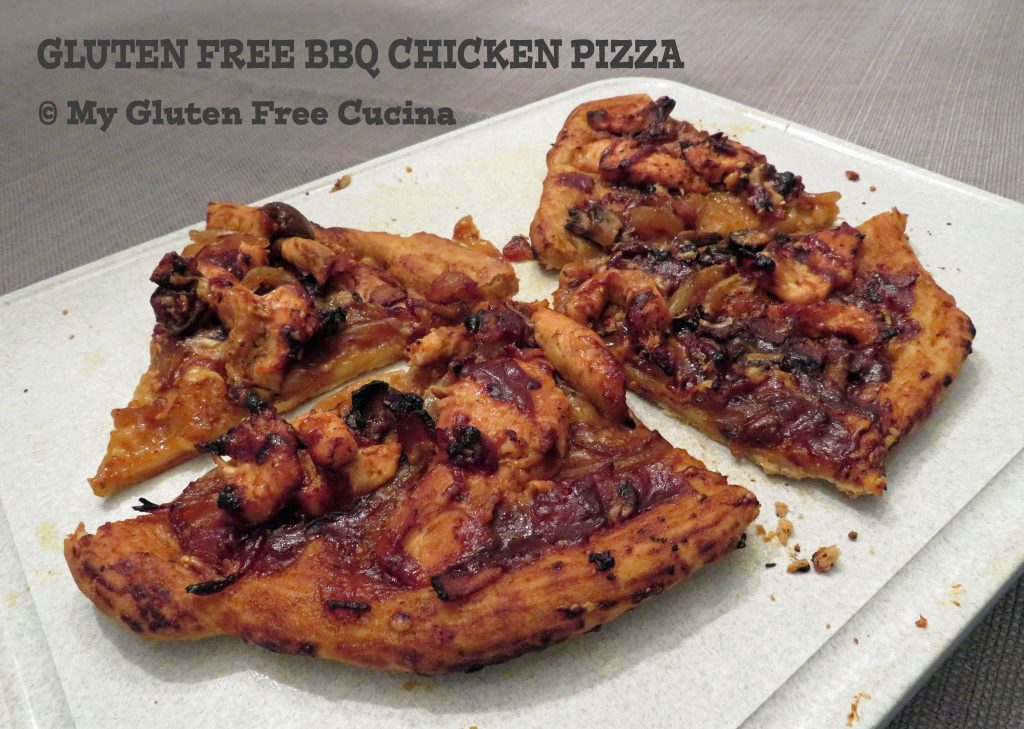
BBQ Chicken Pizza has always been my favorite, and my “go-to” recipe.  It’s a crowd pleaser that both kids and adults love.  The sweet and savory toppings compliment the crispy gluten free crust.  It is the closest thing to the wheat pizza that I remember so fondly.

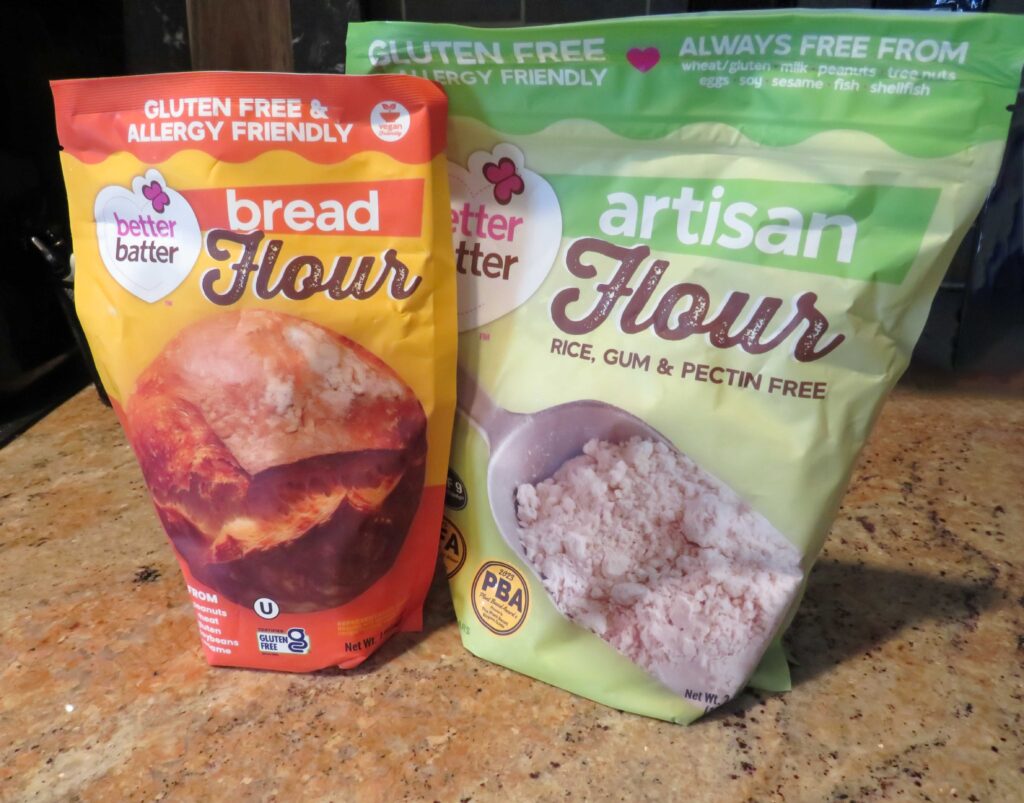
I used Better Batter Artisan Flour Blend in this recipe.  Of course, you can make it with their Pizza Crust Mix or their Bread Flour, so many choices!

*** When you shop Better Batter, use my Promo Code MGFC30 at checkout for 30% off any non-sale item! ***

Ingredients:

Dough Ingredients:

Topping Ingredients:

  • 12 oz. boneless chicken breast, cut into 1/4″ medallions
  • 4 strips of gluten free bacon, cut into 3/4″ dice
  • 1 medium sweet onion, sliced
  • 1 dozen mushrooms, sliced
  • other veggies like broccoli, optional
  • olive oil
  • gluten free BBQ Sauce (I like Stubbs)
  • gluten free BBQ Seasoning
  • 1-1/2 cups grated cheese

Preparation:

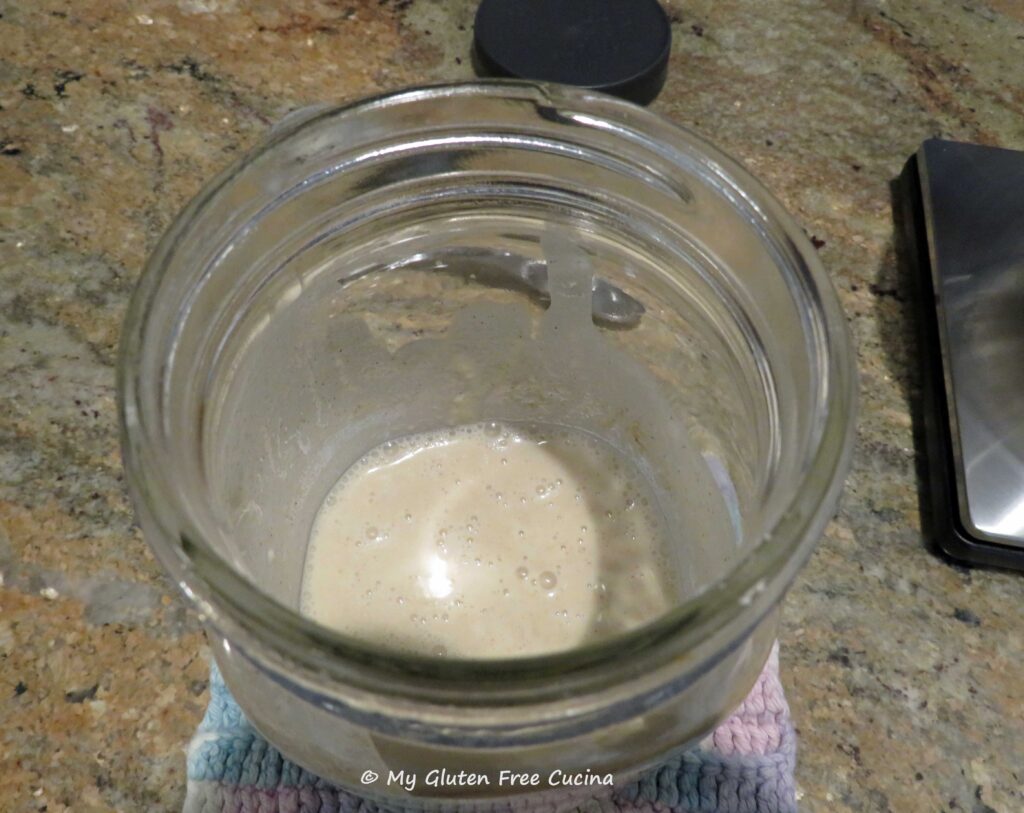
Combine warm water, yeast and sugar.  Proof for 10 minutes.

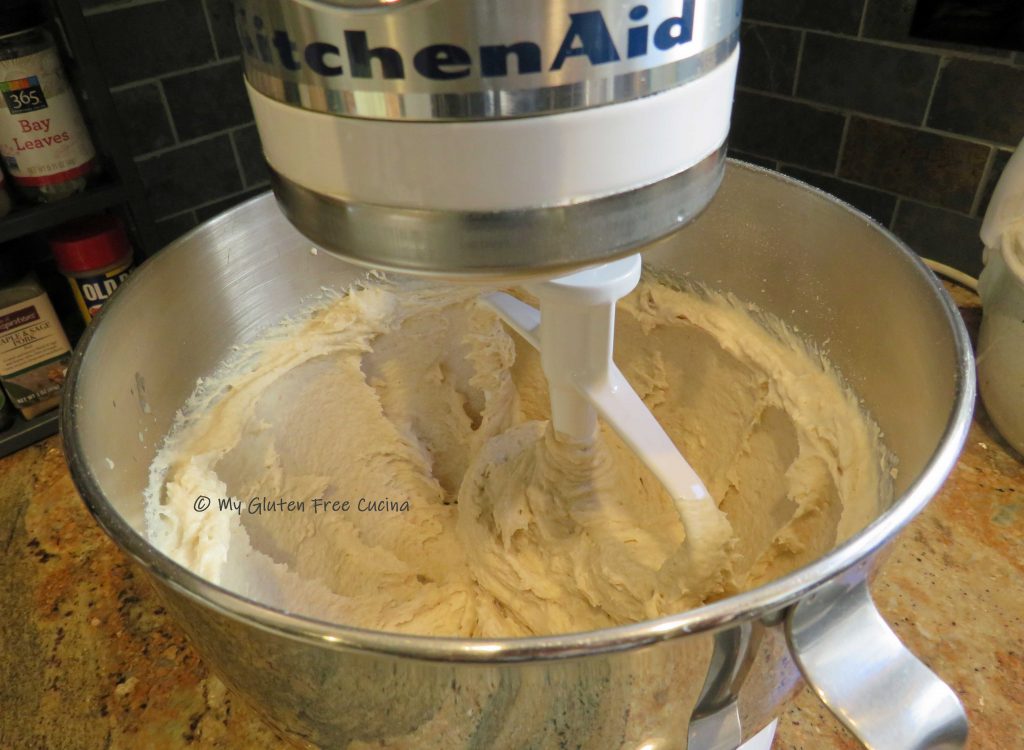
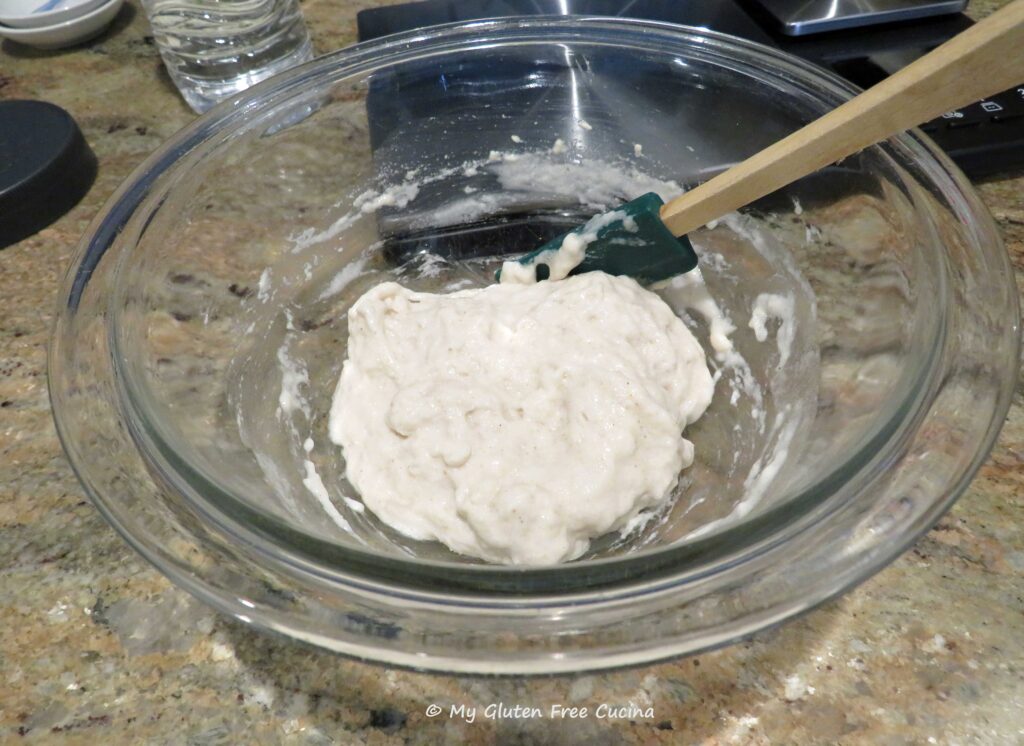
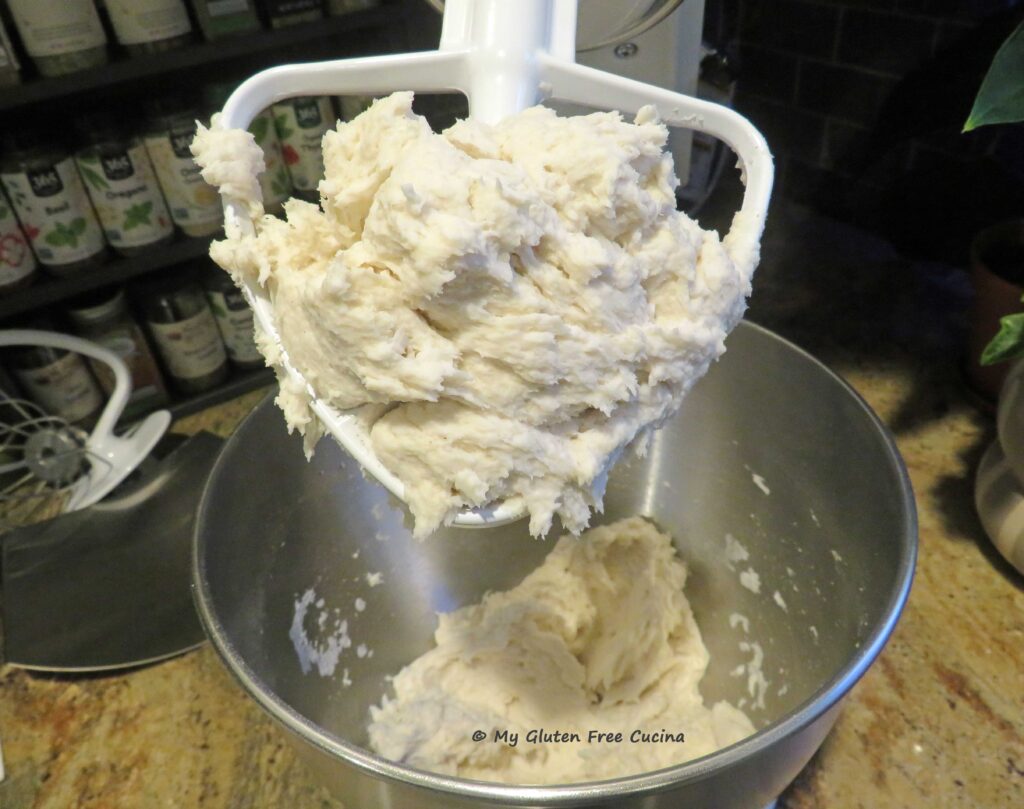
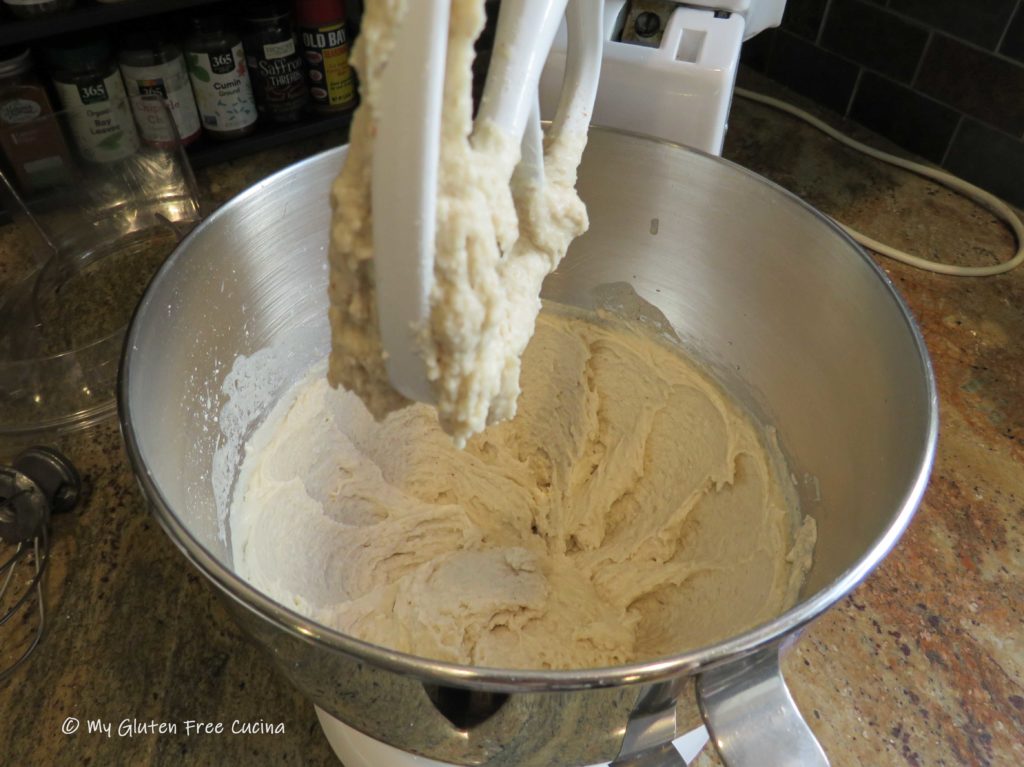
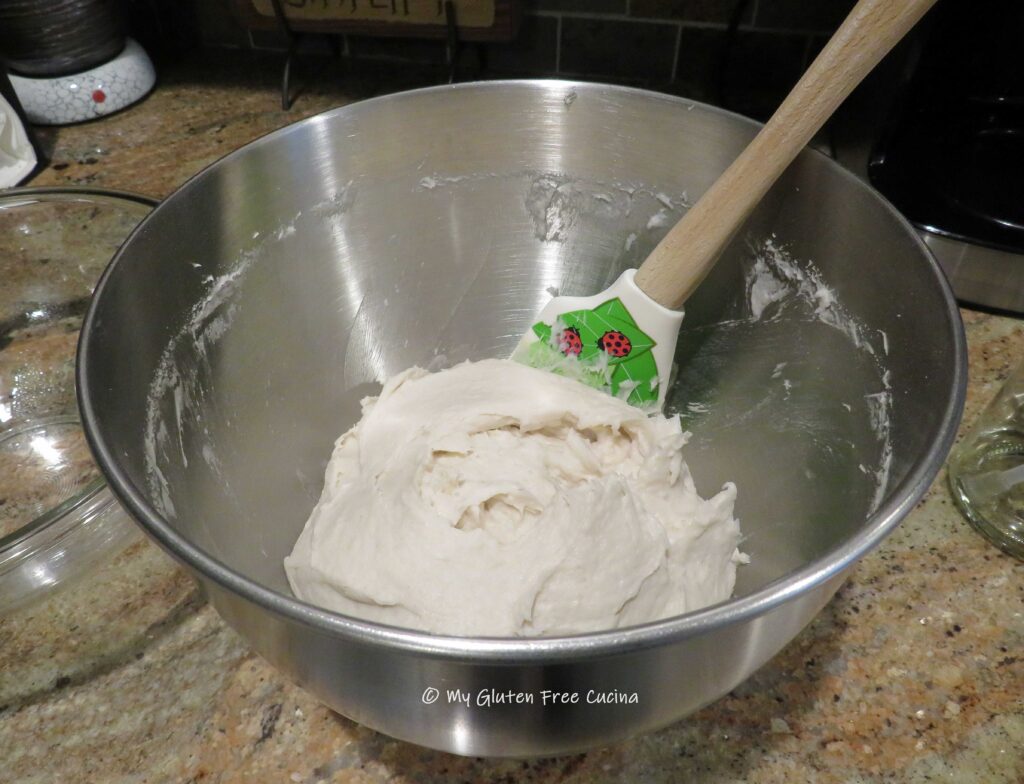
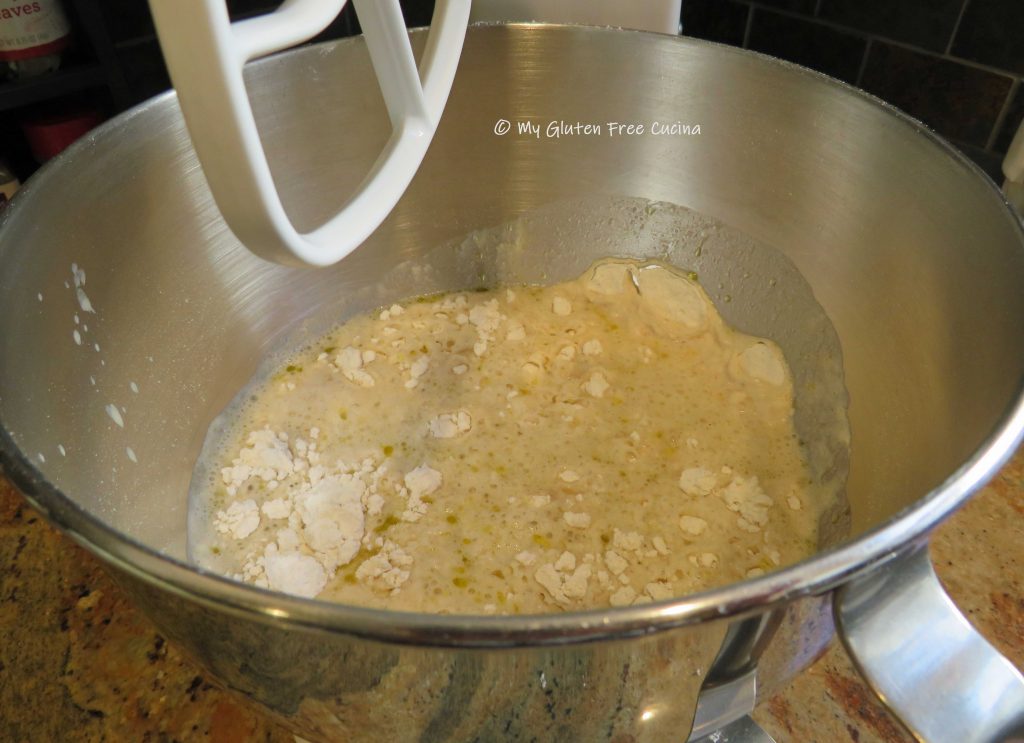
Sift the flour and salt into the bowl of a stand mixer.  Combine the yeast mixture, sifted flour and olive oil.  Beat for 6-8 minutes.

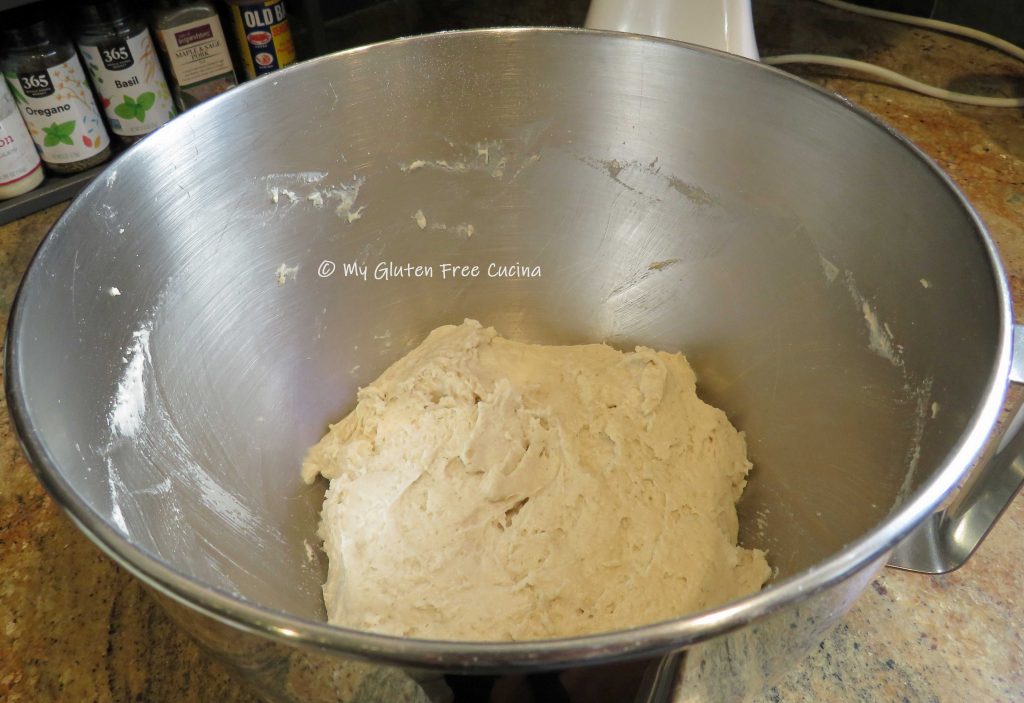
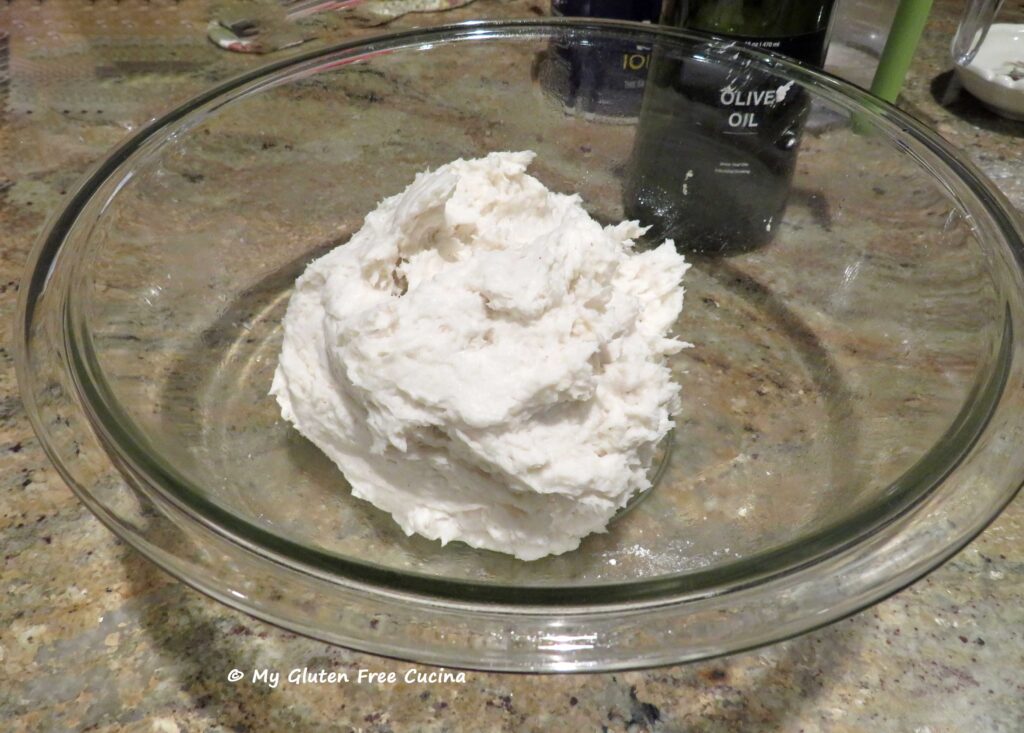
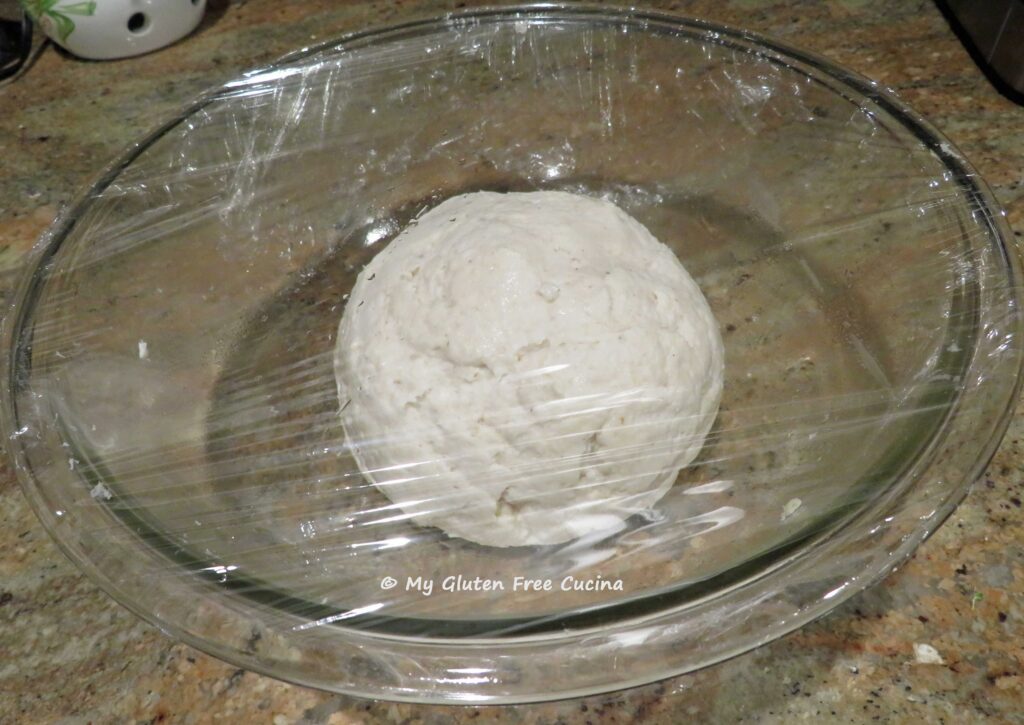
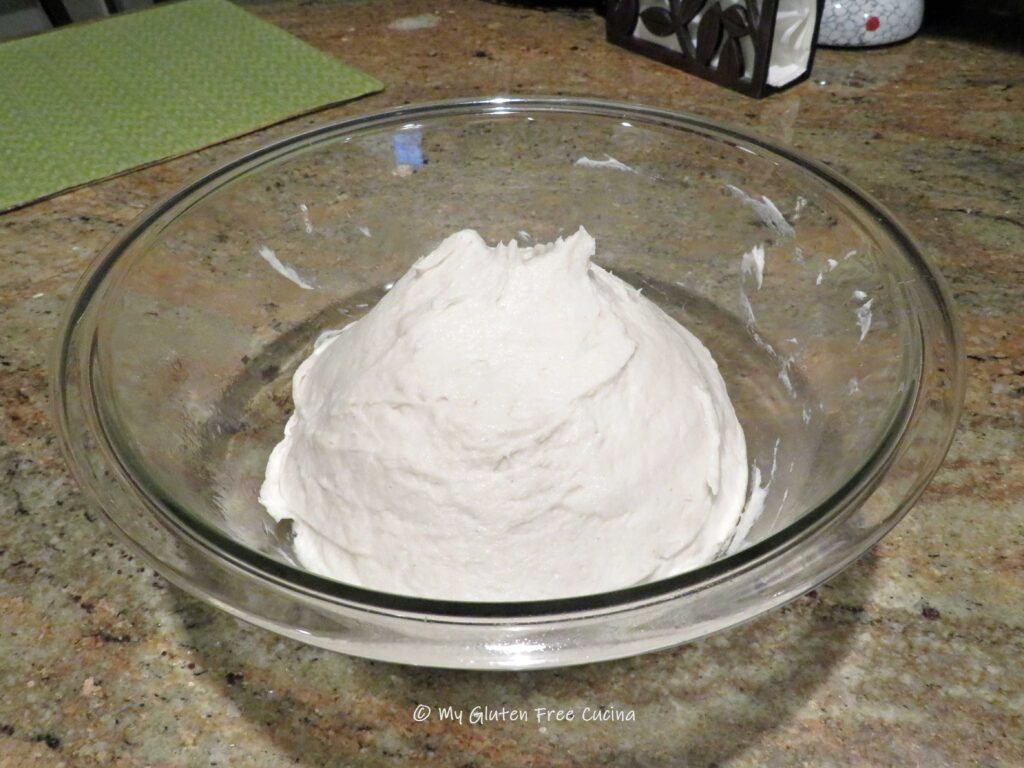
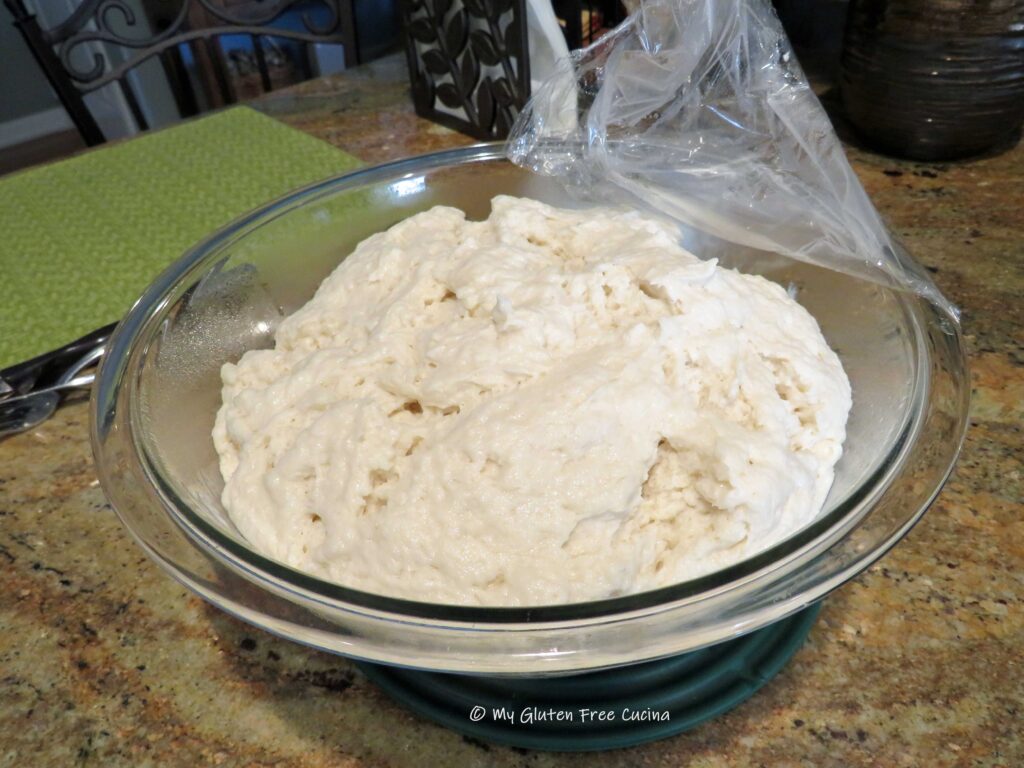
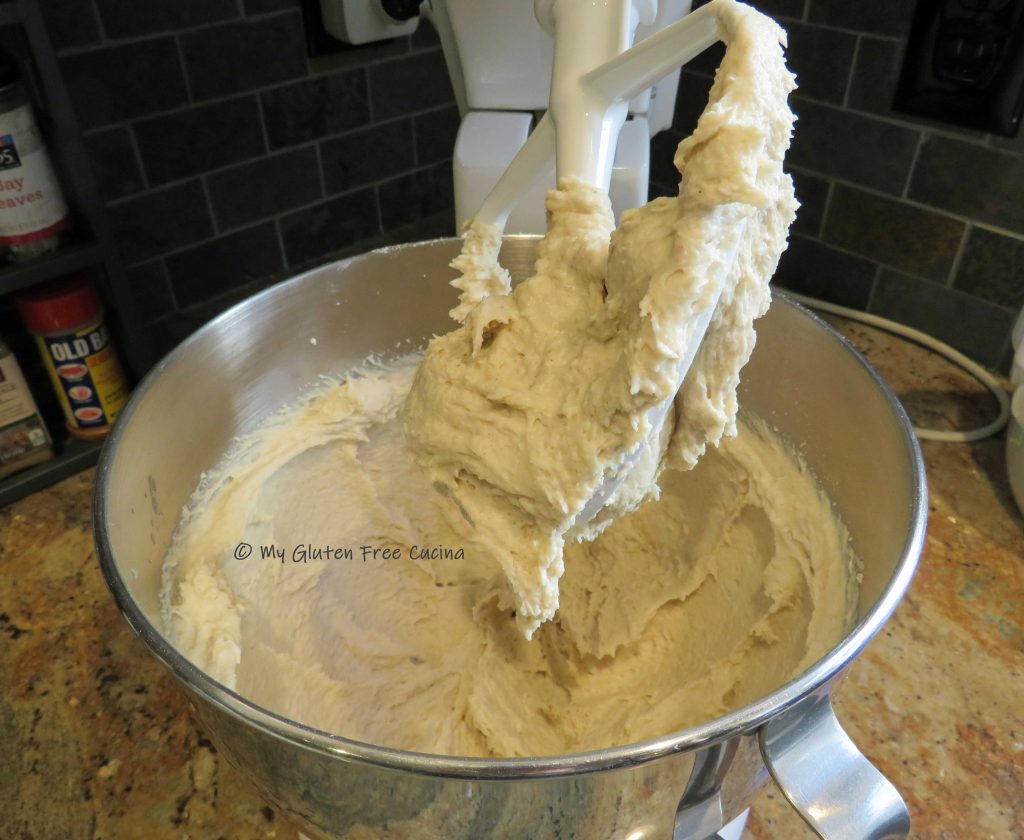
Bring the dough together in the bowl, cover and refrigerate for one hour.

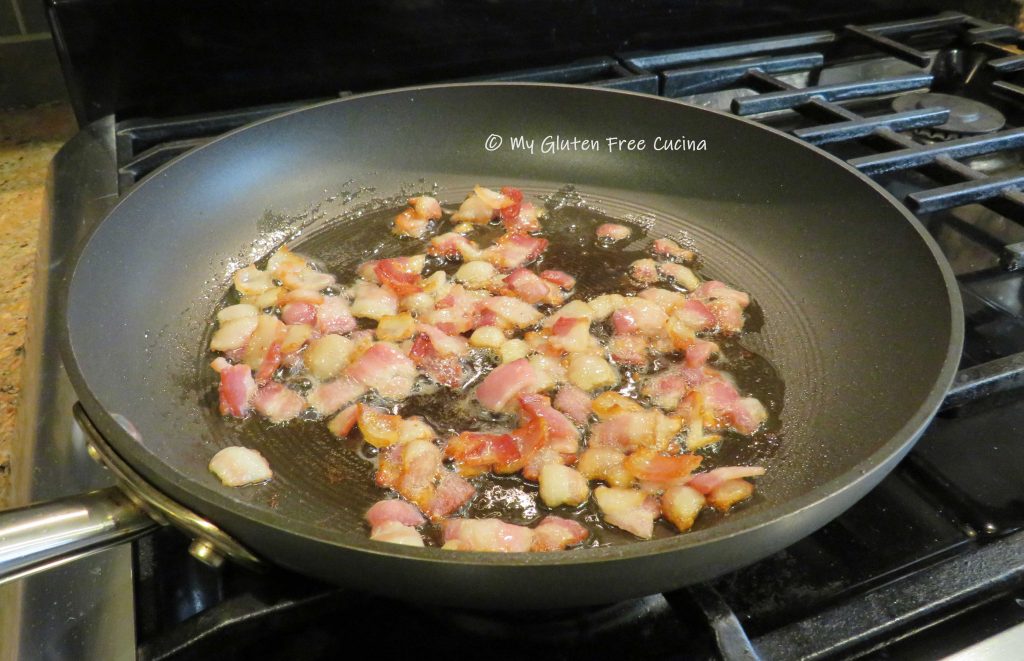
While the dough is resting, prepare the toppings.  Heat a large nonstick skillet on medium low.  First cook the bacon and drain on paper towels.  Leave the bacon fat in the skillet.

Cook the onions in the bacon fat until browned and soft, adding more olive oil as needed.  Drain the onions in a colander then transfer to a bowl.

Tip: Drain all of the toppings in a colander so your pizza dough won’t be soggy!

Next, add the mushrooms to the skillet with more olive oil and seasoning.  Cook until they release their liquid, then drain in a colander and transfer to a bowl.

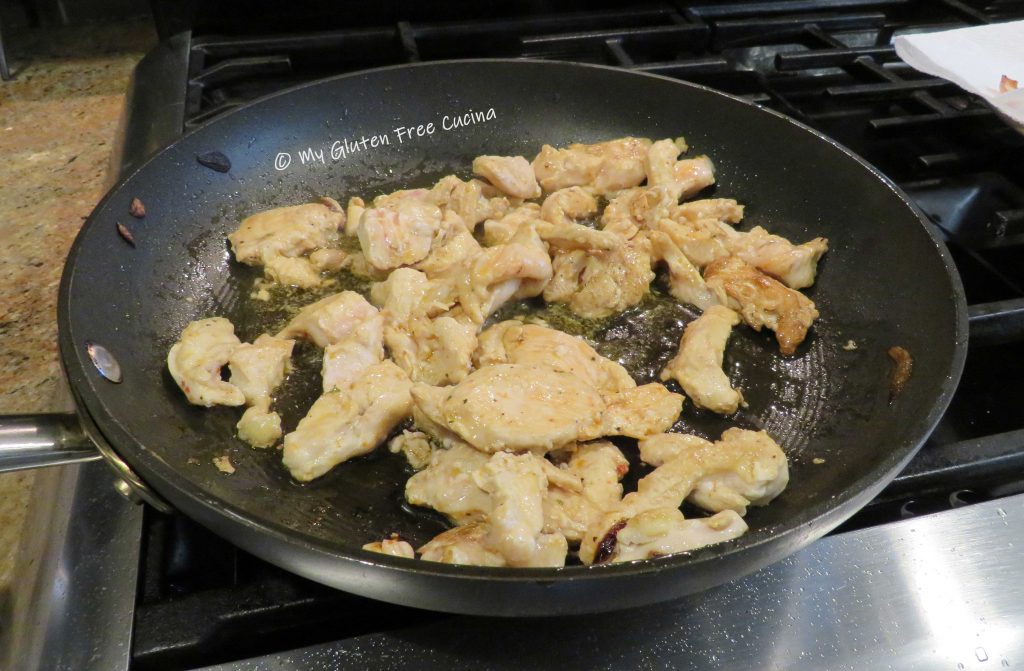
Finally, add the chicken medallions to the skillet with more olive oil and seasoning, turning to brown both sides.  Drain the chicken and transfer to a bowl, then toss with 2 tbsp. BBQ Sauce.

Trim 2 sheets of parchment paper to fit your pizza stone.  Place the pizza stone in the oven and preheat to 500º.  Remove the proofed dough from the refrigerator, it will have doubled in size.

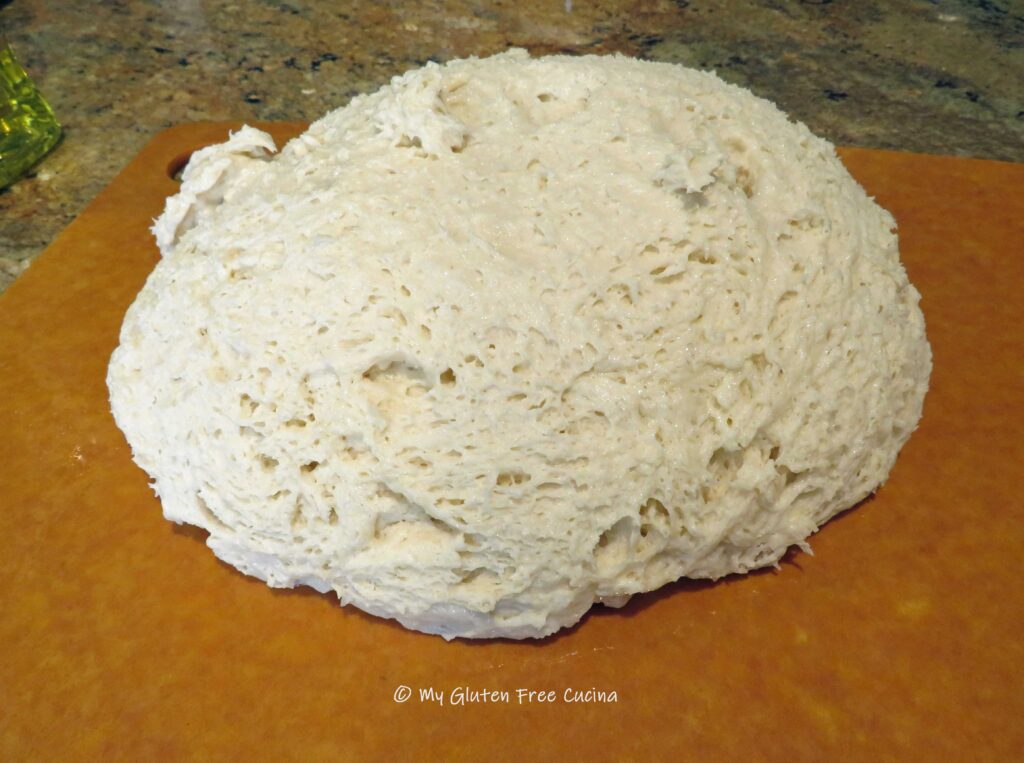
Divide the dough into 2 equal pieces, place each one on a sheet of the prepared parchment and roll each out into a 1/2″ thick circle.  Proof for an additional 30 minutes while the oven preheats.

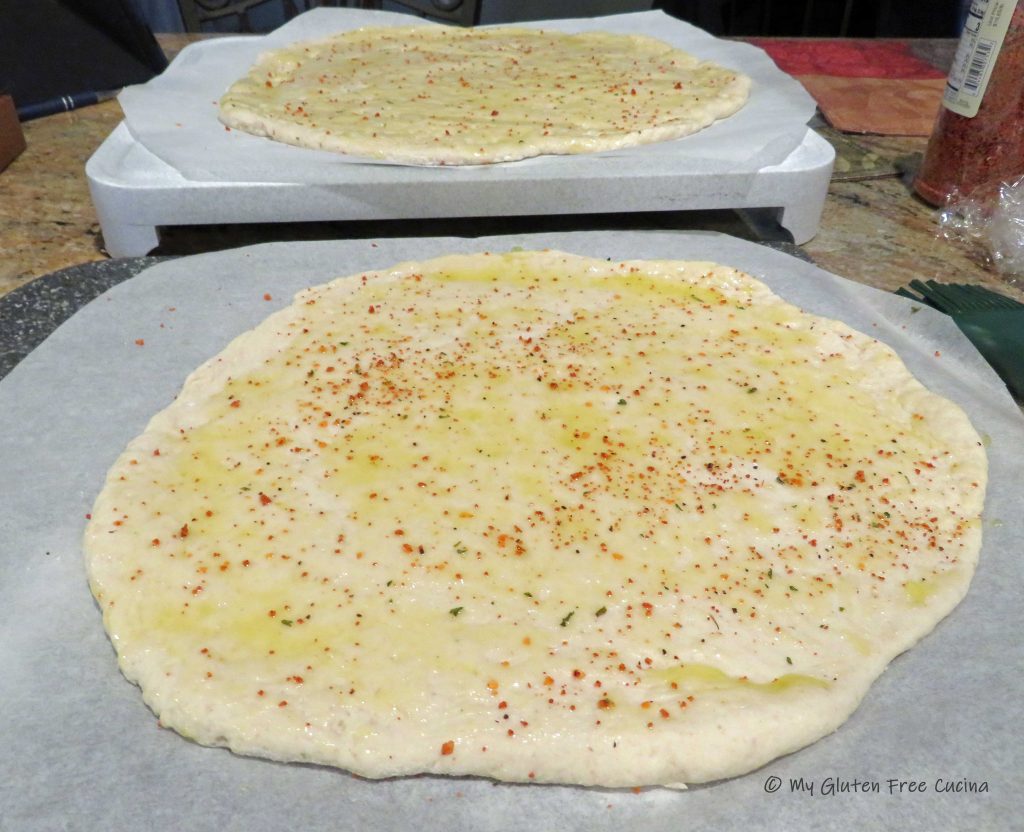
Brush each piece of dough with olive oil, sprinkle with seasoning then spread with 2-3 tbsp. of BBQ Sauce.

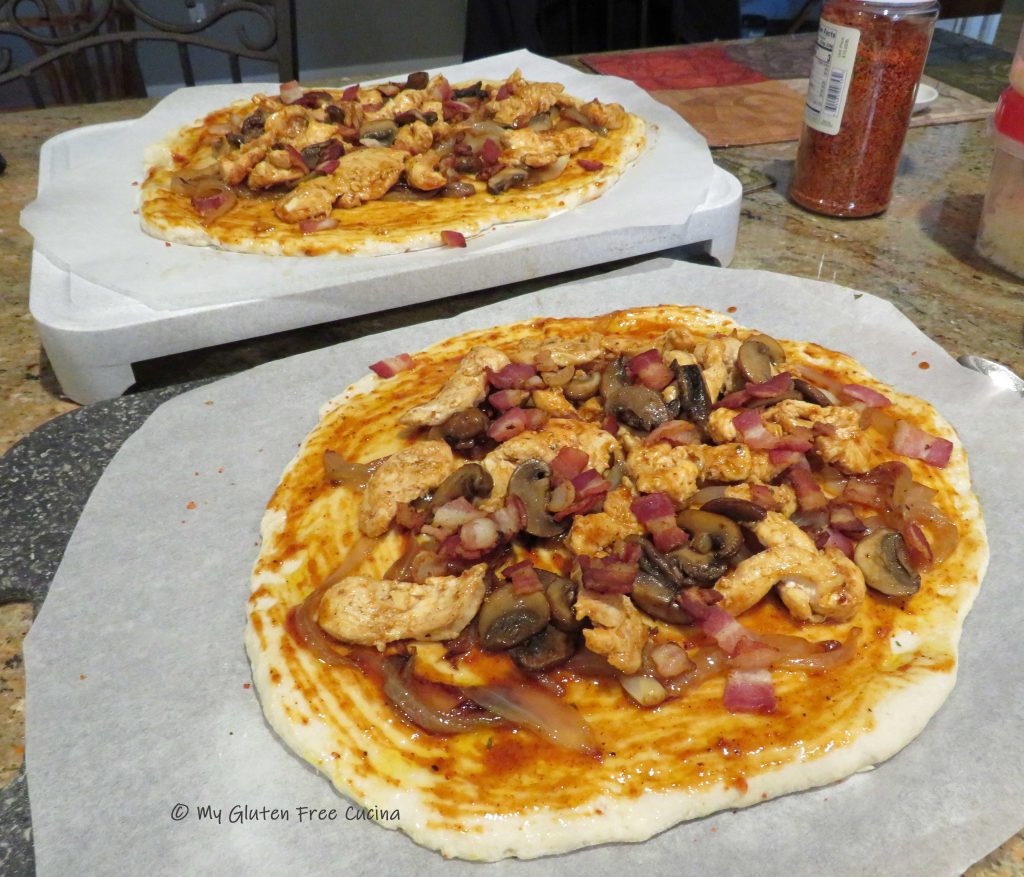
Divide the onions, mushrooms, chicken and bacon between the 2 pizzas.  Top with grated cheese and drizzle with more BBQ Sauce.

Use a large spatula or pizza peel to slide one pizza (including the parchment) onto the heated pizza stone.  After 5 minutes, carefully slide the spatula under the pizza and remove the parchment paper.  Continue baking for an additional 12-13 minutes.  When the first pizza is done, repeat with the second.  There it is!

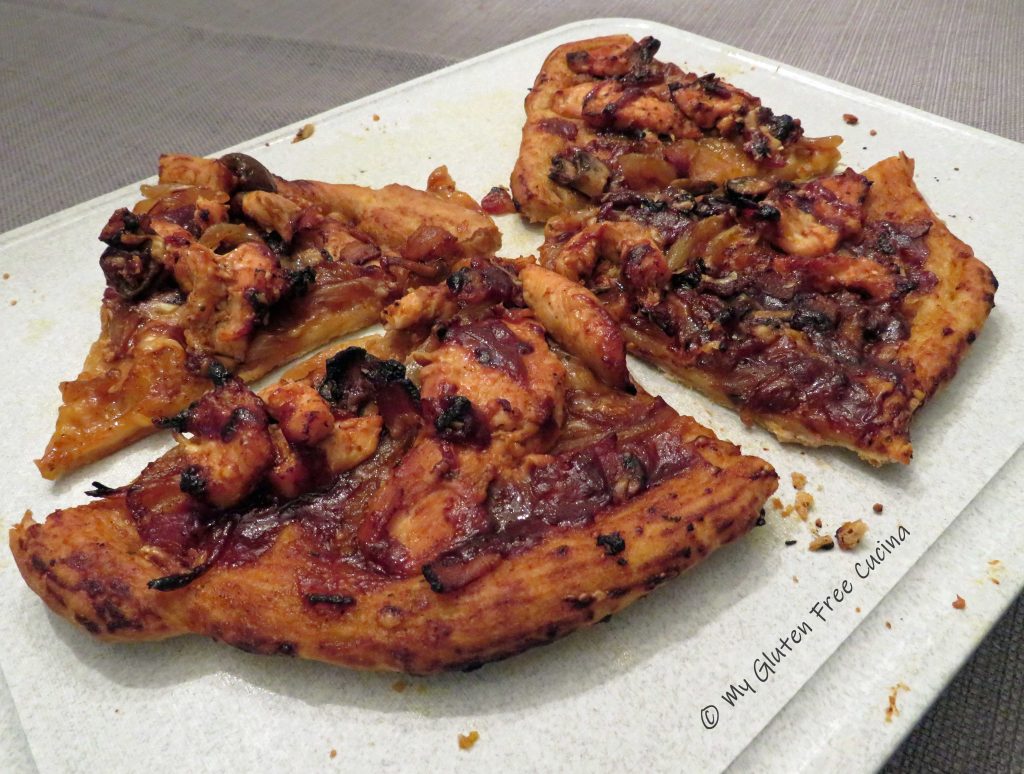
Two pizzas will generously feed 3-4 people.  The crust is nice and crisp, even in the middle!

Notes ♪♫ This pizza crust was made with Better Batter Artisan Flour Blend which I absolutely love and recommend.  Since writing this post, Better Batter has brought to market their new Bread Flour as well as a Pizza Mix.  You’re going to want to try them all!  Don’t forget to use my Promo Code MGFC30 for 30% off!

Originally published 04/09/2022          Updated 09/26/2026

Print
clock clock iconcutlery cutlery iconflag flag iconfolder folder iconinstagram instagram iconpinterest pinterest iconfacebook facebook iconprint print iconsquares squares iconheart heart iconheart solid heart solid icon

Gluten Free BBQ Chicken Pizza with Better Batter

5 Stars 4 Stars 3 Stars 2 Stars 1 Star No reviews
  • Author: © My Gluten Free Cucina
  • Yield: 4-6 servings 1x
  • Category: Gluten Free Pizza
  • Method: Baking
  • Cuisine: American
  • Diet: Gluten-Free

Description

BBQ Chicken Pizza has always been my favorite, and my “go-to” recipe.  It’s a crowd pleaser that both kids and adults love.  The sweet and savory toppings compliment the crispy gluten free crust.  It is the closest thing to the wheat pizza that I remember so fondly.


Ingredients

Units Scale

Dough Ingredients

  • · 350 g. Better Batter Artisan Flour Blend
  • · 1/2 tsp. salt
  • · 1 tbsp. active dry yeast
  • · 1-3/4 cups warm water
  • · 1 tbsp. sugar
  • · 2 tbsp. olive oil

Topping Ingredients

  • · 12 oz. boneless chicken breast, cut into 1/4" medallions
  • · 4 strips of gluten free bacon, cut into 3/4" dice
  • · 1 medium sweet onion, sliced
  • · 1 dozen mushrooms, sliced
  • · other veggies like broccoli, optional
  • · olive oil
  • · gluten free BBQ Sauce (I like Stubbs)
  • · gluten free BBQ Seasoning
  • · 1-1/2 cups grated cheese

Instructions

  1. Combine warm water, yeast and sugar. Proof for 10 minutes.
  2. Sift the flour and salt into the bowl of a stand mixer. Combine the yeast mixture, sifted flour and olive oil. Beat for 6-8 minutes.
  3. Bring the dough together in the bowl, cover and refrigerate for one hour.
  4. While the dough is resting, prepare the toppings. Heat a large nonstick skillet on medium low. First cook the bacon and drain on paper towels. Leave the bacon fat in the skillet.
  5. Cook the onions in the bacon fat until browned and soft, adding more olive oil as needed. Drain the onions in a colander then transfer to a bowl.
  6. Tip: Drain all of the toppings in a colander so your pizza dough won’t be soggy!
  7. Next, add the mushrooms to the skillet with more olive oil and seasoning. Cook until they release their liquid, then drain in a colander and transfer to a bowl.
  8. Finally, add the chicken medallions to the skillet with more olive oil and seasoning, turning to brown both sides. Drain the chicken and transfer to a bowl, then toss with 2 tbsp. BBQ Sauce.
  9. Trim 2 sheets of parchment paper to fit your pizza stone. Place the pizza stone in the oven and preheat to 500º. Remove the proofed dough from the refrigerator, it will have doubled in size.
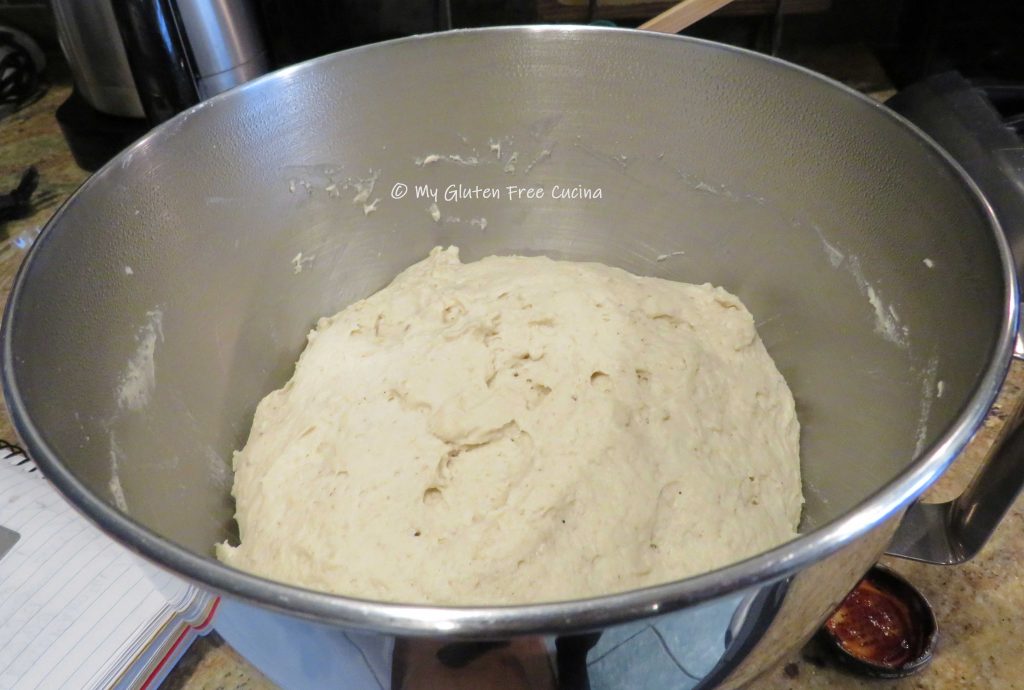
  10. Divide the dough into 2 equal pieces, place each one on a sheet of the prepared parchment and roll each out into a 1/2″ thick circle. Proof for an additional 30 minutes while the oven preheats.
  11. Brush each piece of dough with olive oil, sprinkle with seasoning then spread with 2-3 tbsp. of BBQ Sauce.
  12. Divide the onions, mushrooms, chicken and bacon between the 2 pizzas. Top with grated cheese and drizzle with more BBQ Sauce.
  13. Use a large spatula or pizza peel to slide one pizza (including the parchment) onto the heated pizza stone. After 5 minutes, carefully slide the spatula under the pizza and remove the parchment paper. Continue baking for an additional 12-13 minutes. When the first pizza is done, repeat with the second. There it is!
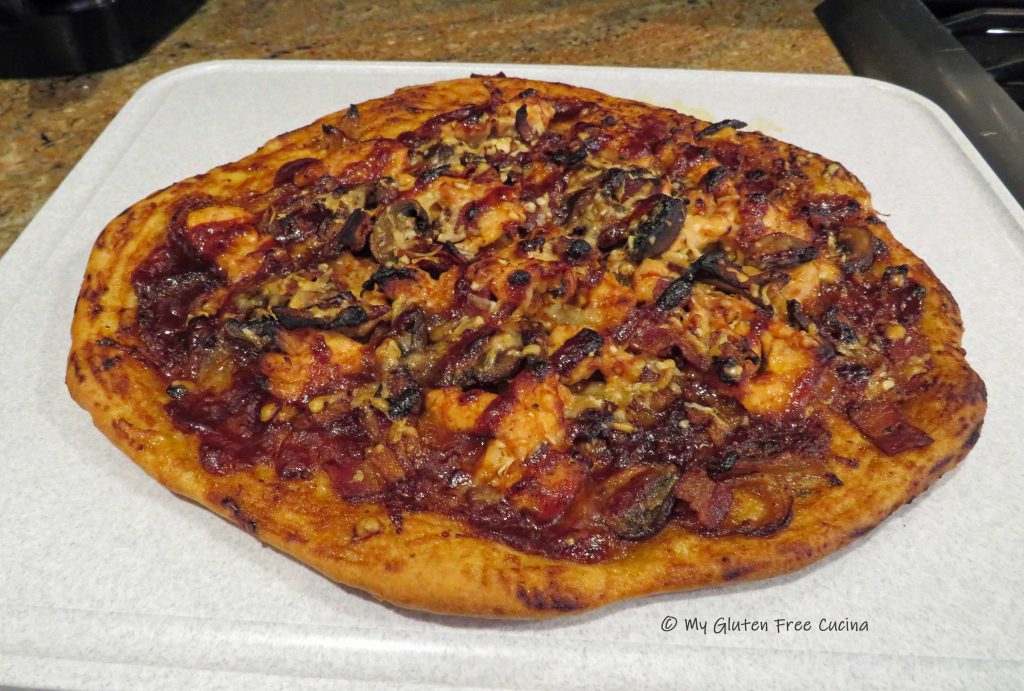
  14. Two pizzas will generously feed 3-4 people. The crust is nice and crisp, even in the middle!
Notes

Notes ♪♫ This pizza crust was made with Better Batter Artisan Flour Blend which I absolutely love and recommend.  Since writing this post, Better Batter has brought to market their new Bread Flour as well as a Pizza Mix. 

© My Gluten Free Cucina * All Rights Reserved

Unauthorized use and/or duplication of this material without express and written permission from this blog’s author and/or owner is strictly prohibited.

Better Batter Collaborator

When you shop Better Batter | Gluten Free Flour, use my Promo Code MGFC30 for 30% off your non-sale purchase!

Gluten Free Seeded Pumpernickel Bread

This Gluten Free Seeded Pumpernickel Bread is a little different than my usual.  It has a hard, chewy crust and seeds that are baked right into the dough rather than sprinkled on top.  Visual and textural interest aside, it’s delicious!

Rye flour is not gluten free, so as I thought about how to make a gluten free pumpernickel bread, the first consideration was of course, the flour substitution.  I used my favorite gluten free flour blend (see below) and added just the tiniest amount of cocoa and molasses to give it that darker shade, reminiscent of whole grain bread.

The verdict – I was hooked after one bite!

About the flour

Where are my Better Batter fans?  Have you ever tried mixing their Artisan Flour Blend and their Bread Flour together?  I know I’m not the only one who does this.  I used a 50/50 combination in this recipe and wow!  once you try working with this dough you will see why it’s my favorite.

Remember to use my Promo Code MGFC30 for 30% off at checkout!


This post contains affiliate links.

Ingredients:

Preparation:

You will need a fully active sourdough starter to make this bread.  * If your starter is not quite there yet, then it is fine to add a tiny amount (1/8 tsp.) of commercial yeast to the dough to help it along.  After experimenting with this recipe multiple times, I can attest that adding that little bit of commercial yeast will give this loaf the best rise and texture.

To make the dough, begin by adding the starter, vinegar, molasses, olive oil and water to the bowl of your stand mixer and whisk to combine.  In a separate bowl, whisk together the flours, yeast, salt, cocoa powder and seeds.

You can use different seeds for this bread, for a total weight of 70g.  I really like the way the black sesame seed stands out against the crumb.

With the mixer on low speed, combine the wet and dry ingredients with the paddle attachment.  Increase speed and beat for 3 more minutes to form a smooth dough.

Use a spatula to scrape down the bowl.  It will be stiff.  Cover and let it rest at room temperature for 30 minutes.

After 30 minutes, lightly flour a cutting board or countertop and turn the dough out.  You will be surprised at how you can actually knead this dough with your hands.  Pretty cool for gluten free dough!  Turn the dough onto itself several times, rotating with each turn then pull it toward the center to create tension and shape it into a ball.

Generously flour a 9″ round banneton and place the dough in the center.  Cover and let it proof on the counter for 4 hours, then refrigerate overnight.

In the morning, carefully invert the dough onto a sheet of parchment.  Preheat the oven to 450º with a baking stone.

Carefully brush off the excess flour and score the top of your loaf.  I did a box score.

Place the loaf in a baking dish, sheet pan or directly onto the baking stone.  I baked my loaf in a clay baking bowl for the first 25 minutes then moved it directly onto the baking stone for another 40 minutes.

Reduce the heat to 425º, spray the sides of the oven with water and throw a few ice cubes onto the bottom tray.  The steam will help with the rise and give your loaf and a nice crispy crust.

The bread needs to reach an internal temperature of 210º, don’t guess- use a thermometer.

Allow the bread to cool fully on a rack, then store in a plastic bag at room temperature.  While it cools, you can rotate the loaf every couple of hours, so that the moisture evaporates evenly (no gummy bottom!).

I recommend waiting 24 hours before slicing, to be sure the crumb has set.

This bread toasts up like a dream.  The texture of the seeds and the crispy crust were outstanding.  I wish you could hear the crunch!  I have not had real pumpernickel bread since before my Celiac diagnosis, almost 9 years ago so this was a treat!

If you don’t finish the loaf in a day or two, you’ll want to freeze it.  I wrap the individual slices in plastic wrap and place them in a freezer bag.

Notes ♪ This is a small loaf, perfect for a one or two-person household.  It is as beautiful to look at as it is to eat!  Toast it up for breakfast or use it for sandwiches, croutons or stuffing cubes.

Notes ♫ You can also bake this loaf in a Dutch oven.  Bake covered for the first 40 minutes then remove the cover for 25 minutes longer.


Print
clock clock iconcutlery cutlery iconflag flag iconfolder folder iconinstagram instagram iconpinterest pinterest iconfacebook facebook iconprint print iconsquares squares iconheart heart iconheart solid heart solid icon

Gluten Free Seeded Pumpernickel Bread

5 Stars 4 Stars 3 Stars 2 Stars 1 Star No reviews
  • Author: © My Gluten Free Cucina

Description

This Gluten Free Seeded Pumpernickel Bread has a hard, chewy crust and seeds that are baked right into the dough rather than sprinkled on top.


Ingredients

Units Scale

Instructions

You will need a fully active sourdough starter to make this bread.  * If your starter is not quite there yet, then it is fine to add a tiny amount (1/8 tsp.) of commercial yeast to the dough to help it along.  After experimenting with this recipe multiple times, I can attest that adding that little bit of commercial yeast will give this loaf the best rise and texture.

To make the dough, begin by adding the starter, vinegar, molasses, olive oil and water to the bowl of your stand mixer and whisk to combine.  In a separate bowl, whisk together the flours, yeast, salt, cocoa powder and seeds.

You can use different seeds for this bread, for a total weight of 70g.  I really like the way the black sesame seed stands out against the crumb.

With the mixer on low speed, combine the wet and dry ingredients with the paddle attachment.  Increase speed and beat for 3 more minutes to form a smooth dough.  Use a spatula to scrape down the bowl.  It will be stiff.  Cover and let it rest at room temperature for 30 minutes.

After 30 minutes, lightly flour a cutting board or countertop and turn the dough out.  Turn the dough onto itself several times, rotating with each turn then pull it toward the center to create tension and shape it into a ball.

Generously flour a 9″ round banneton and place the dough in the center.  Cover and let it proof on the counter for 4 hours, then refrigerate overnight.

In the morning, carefully invert the dough onto a sheet of parchment.  Preheat the oven to 450º with a baking stone.

Carefully brush off the excess flour and score the top of your loaf.  I did a box score.

Place the loaf in a baking dish, sheet pan or directly onto the baking stone.  I baked my loaf in a clay baking bowl for the first 25 minutes then moved it directly onto the baking stone for another 40 minutes.

Reduce the heat to 425º, spray the sides of the oven with water and throw a few ice cubes onto the bottom tray.  The steam will help with the rise and give your loaf and a nice crispy crust.

The bread needs to reach an internal temperature of 210º, don’t guess- use a thermometer.

Allow the bread to cool fully on a rack, then store in a plastic bag at room temperature.  While it cools, you can rotate the loaf every couple of hours, so that the moisture evaporates evenly (no gummy bottom!).

I recommend waiting 24 hours before slicing, to be sure the crumb has set.

If you don’t finish the loaf in a day or two, you’ll want to freeze it.  I wrap the individual slices in plastic wrap and place them in a freezer bag.


Notes

Notes ♪ This is a small loaf, perfect for a one or two-person household.  It is as beautiful to look at as it is to eat!  Toast it up for breakfast or use it for sandwiches, croutons or stuffing cubes.

Notes ♫ You can also bake this loaf in a Dutch oven.  Bake covered for the first 40 minutes then remove the cover for 25 minutes longer.

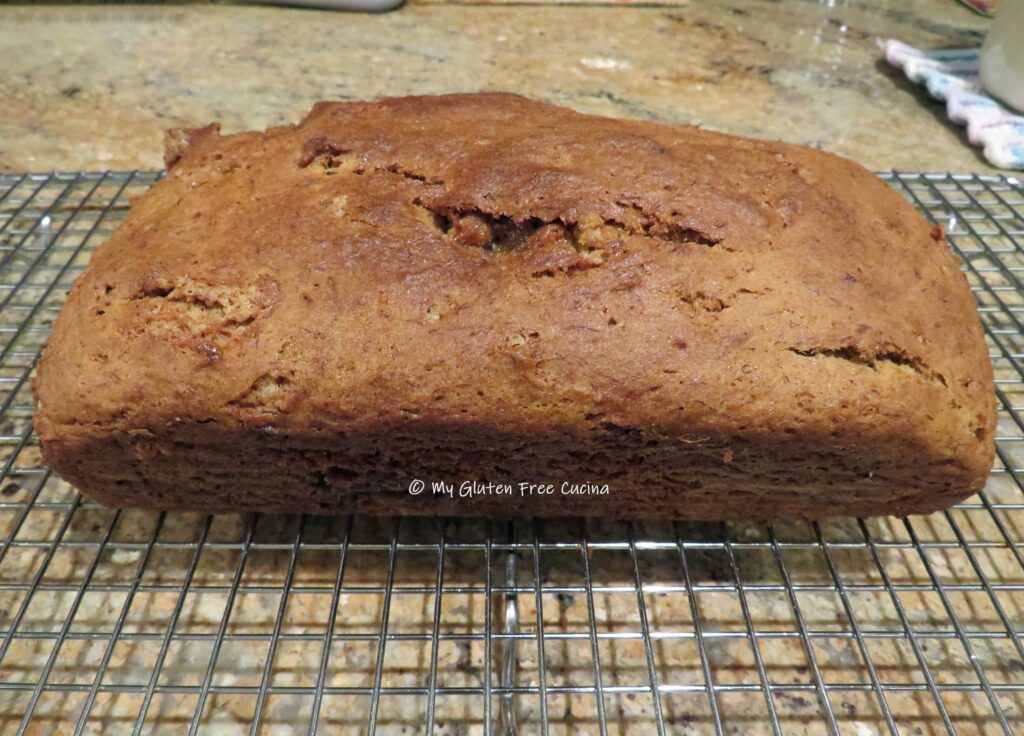
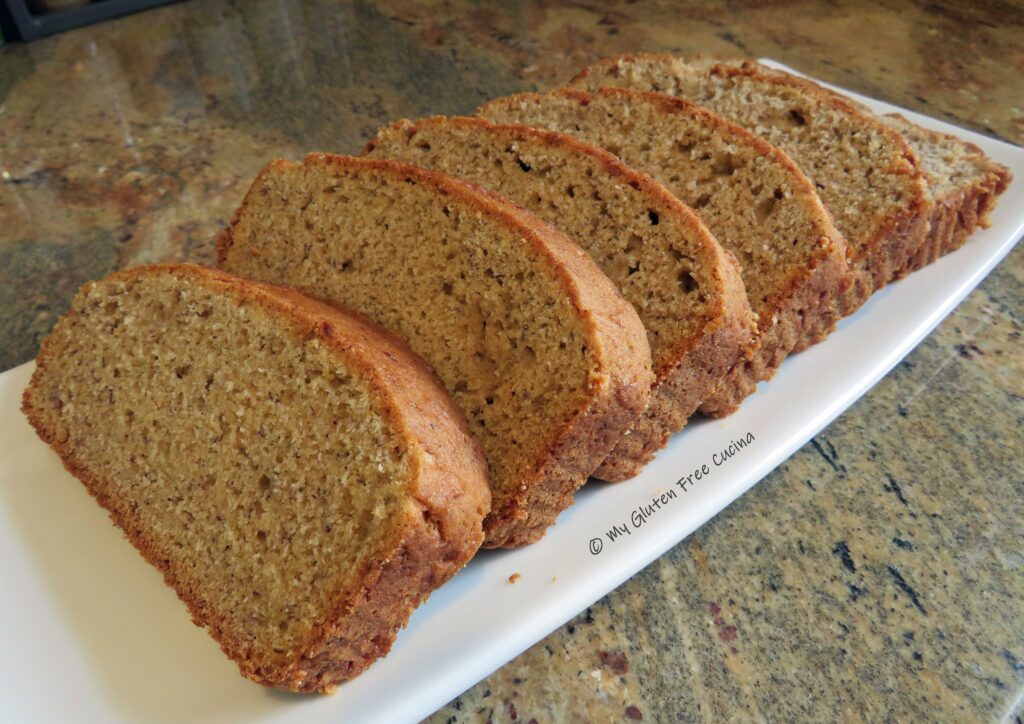
Gluten Free Banana Bread

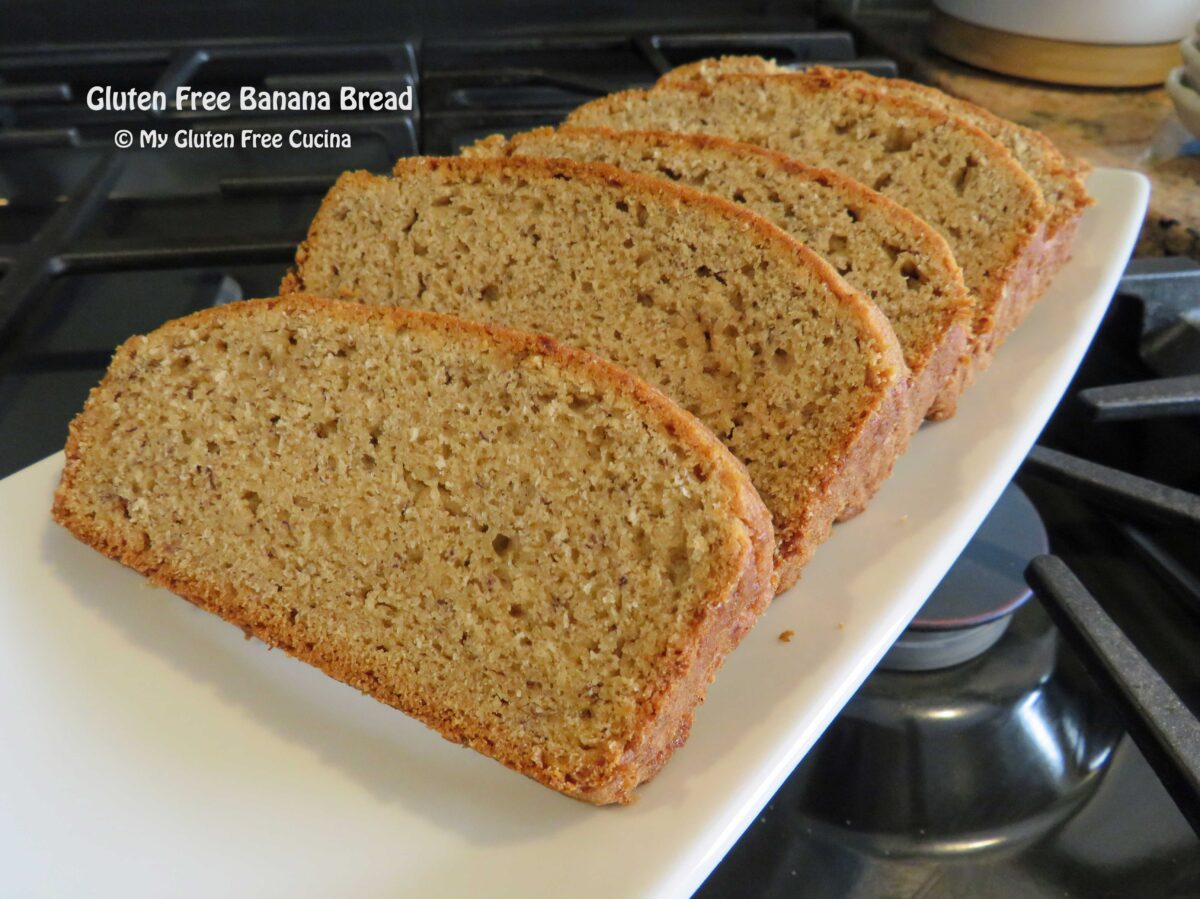
Gluten Free Banana Bread was one of my very first posts when I started this blog in 2018.  After 8 years, it was definitely in need of an update.  Not only am I a better photographer, but I also like to think I’m a better baker. 😉

Looking back at life before my Celiac diagnosis, making a quick bread was so second nature to me.  I could throw one together without a recipe!

Today things are different of course, but I still love a good quick bread and there are now some very high-quality, gluten free all-purpose flour blends to work with.

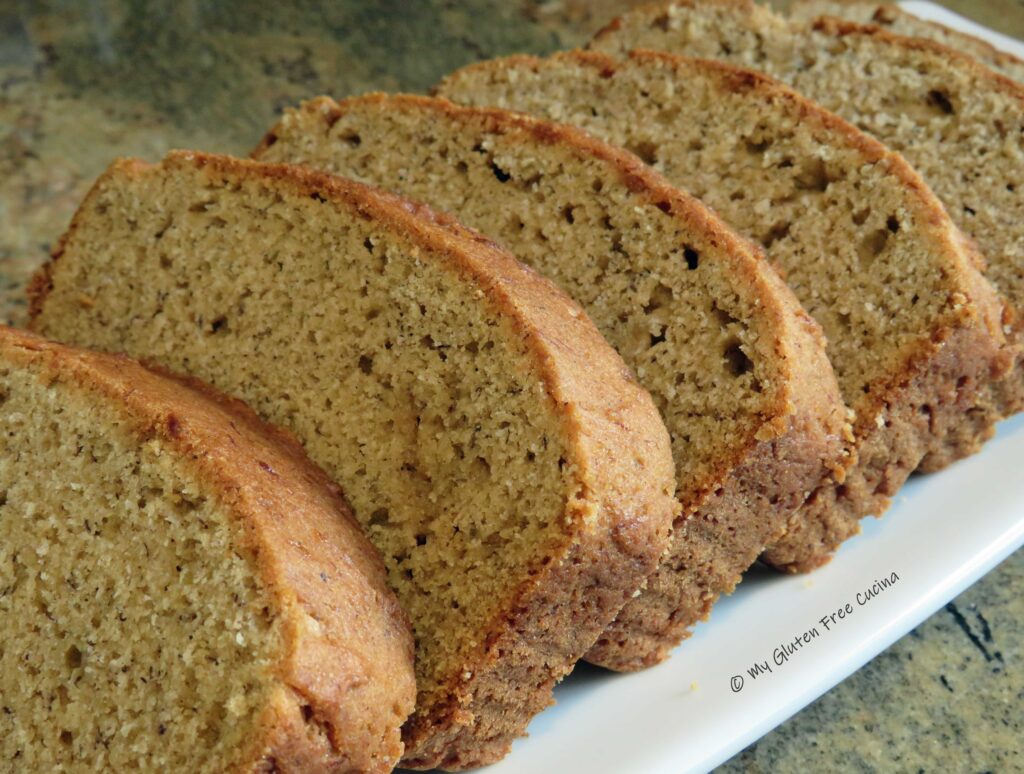
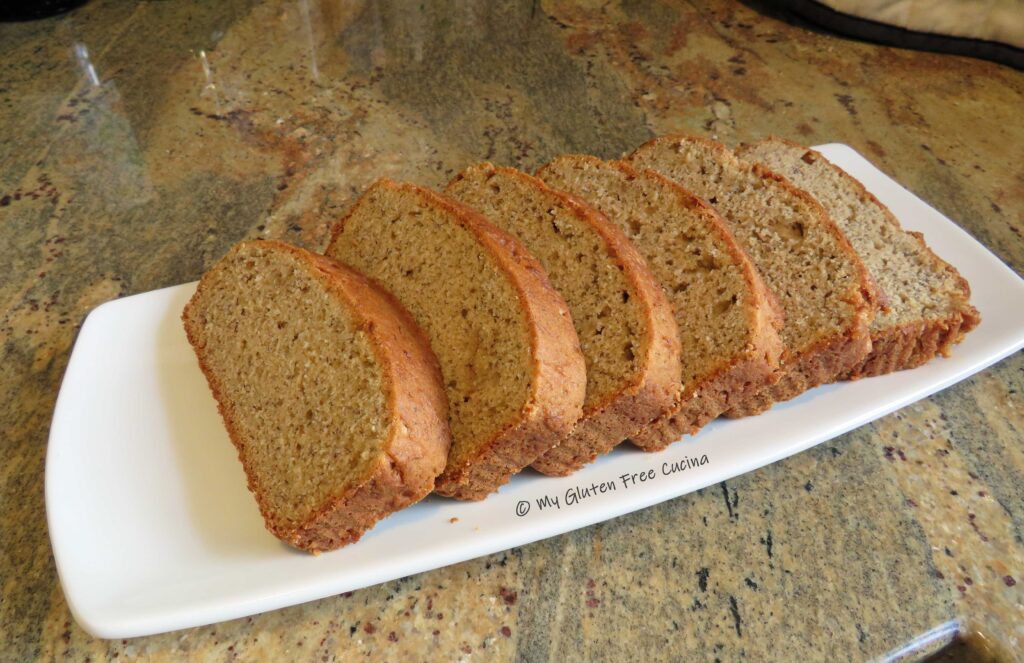
I promise, this moist, gluten free loaf will make you smile.  It is SO good and best of all it tastes just like a classic banana bread.

This post contains affiliate links.

Ingredients:

  • 260 g. gluten free all-purpose flour (2 cups)
  • 2 tsp. xanthan gum (omit if your flour already contains)
  • 1-1/2 tsp. baking powder
  • 1/2 tsp. baking soda
  • 1/2 tsp. salt
  • 1 tsp. cinnamon
  • 1/4 tsp. nutmeg
  • 1/8 tsp. cardamom
  • 1/2 cup granulated sugar
  • 1/2 cup dark brown sugar
  • 1 stick of room temperature butter, cubed
  • 1 cup mashed bananas (2 small)
  • 1/3 cup ricotta
  • 2 large eggs
  • 1 tsp. vanilla extract

Preparation:

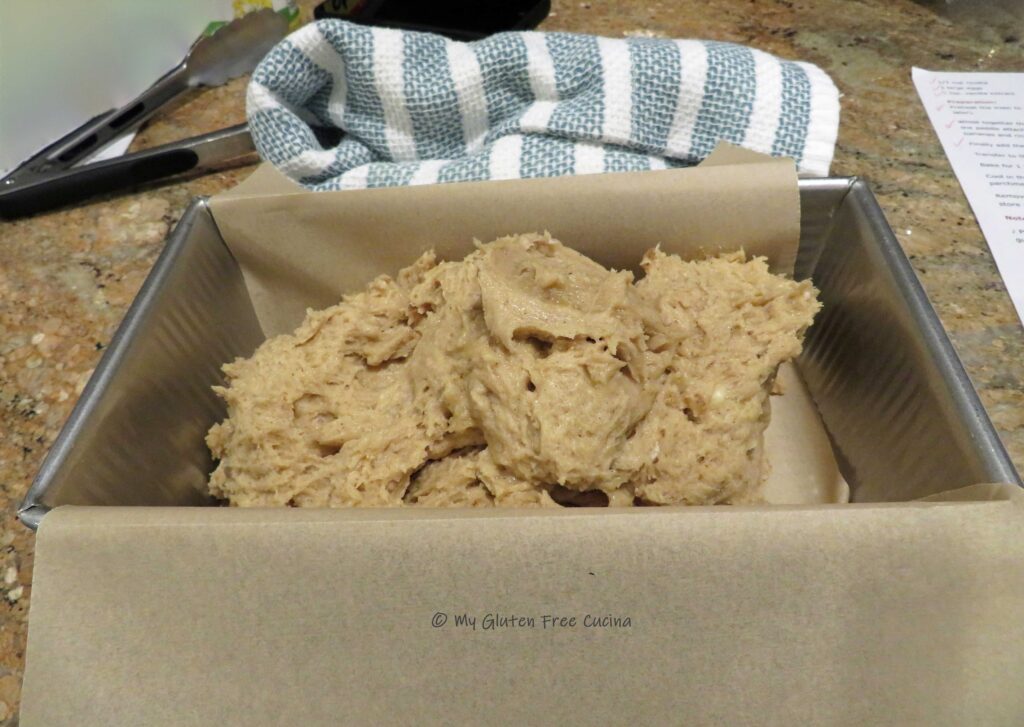
Preheat the oven to 350º.  Line a 9 x 5″ loaf pan (1.25 lb.) with parchment paper (do this, you’ll thank me later).

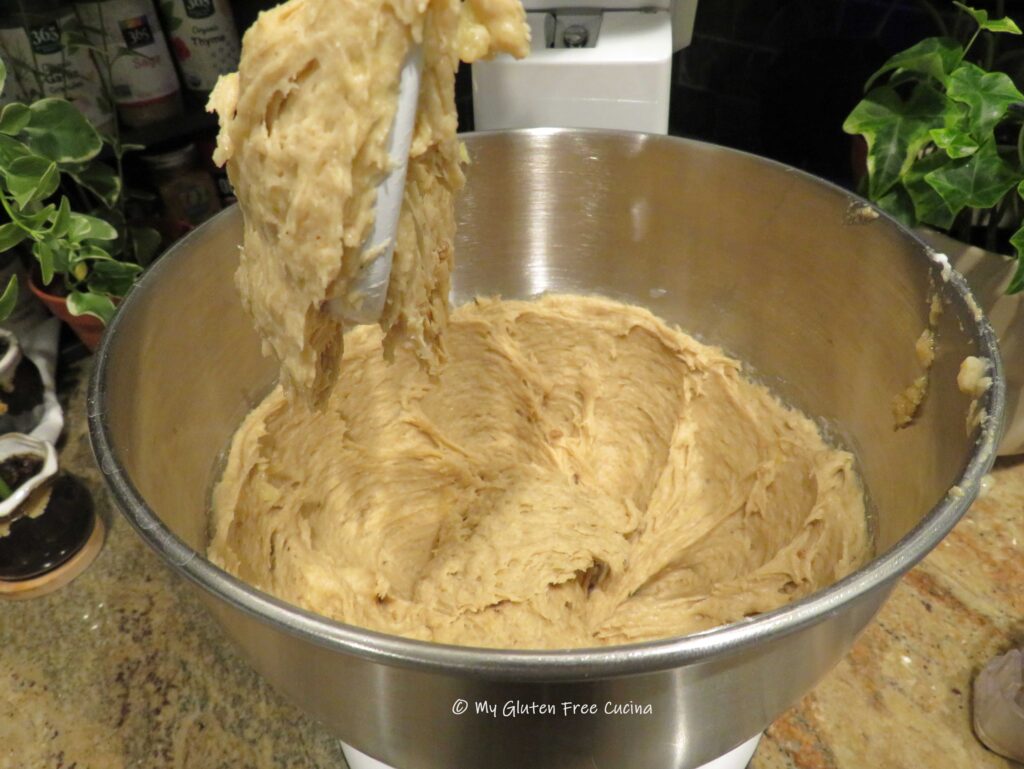
Whisk together the dry ingredients, flour through cardamom.  In the bowl of a stand mixer with the paddle attachment, beat together the sugars and the cubed butter.  Add the eggs, vanilla, bananas and ricotta.

Finally add the dry ingredients and beat until smooth.

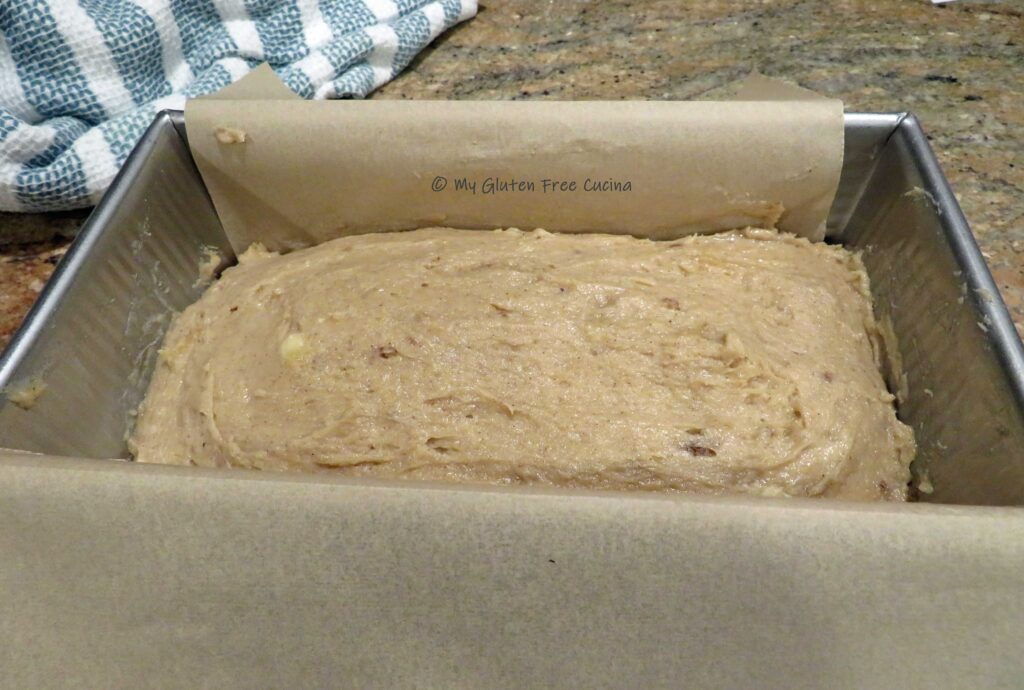
Transfer to the prepared loaf pan and use a wet spatula to smooth the top out.

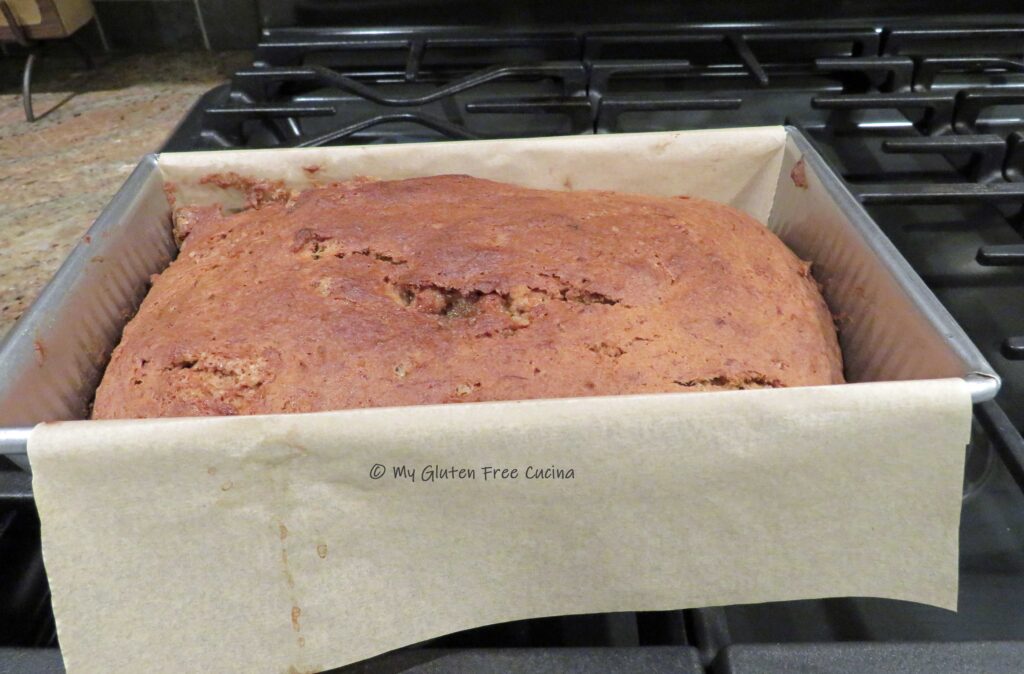
Bake for 1 hour and check the center with a toothpick.  The top should be nice and golden brown.

Cool in the pan for 10 minutes, then lift the loaf out of the pan by grasping both sides of the parchment paper (you’re welcome).

Remove the parchment and cool on a rack before slicing.  Cover any leftovers in plastic wrap and store at room temperature for up to 3 days.

Notes:

♪ Parchment paper provides an easy way to lift out the finished loaf without tipping the pan over and guarantees that your loaf won’t stick to the bottom of the pan.

♫ In my original recipe, I used 3/4 cup white rice flour, 1/2 cup sorghum flour, 1/2 cup cornstarch, 1/4 cup potato starch and 2 tsp. xanthan gum.  If you want to make your own flour blend, be sure to use superfine white rice flour for texture that is moist and not gritty.

Originally posted 04/16/2015       Updated 02/12/2026   

[print_link]

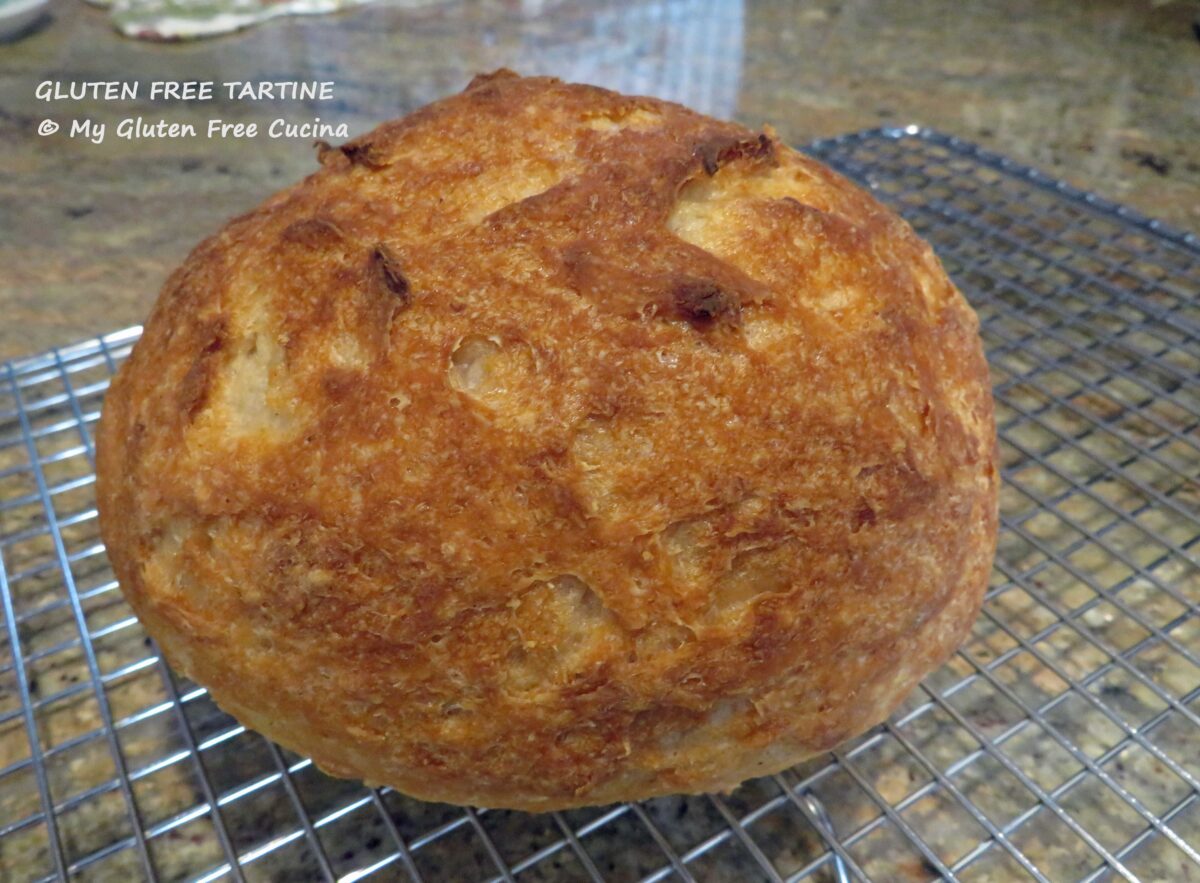
Gluten Free Tartine Country Loaf

GLUTEN FREE TARTINE COUNTRY LOAF BREAD
What is Tartine?

Tartine Bread is a type of sourdough originating from The Tartine Bakery in San Francisco.  It is a “no-knead” bread, made with a very small amount of sourdough starter (only 1 tbsp.) and no commercial yeast at all!  The dough is developed by stretching and folding it at intervals, instead of machine mixing.  

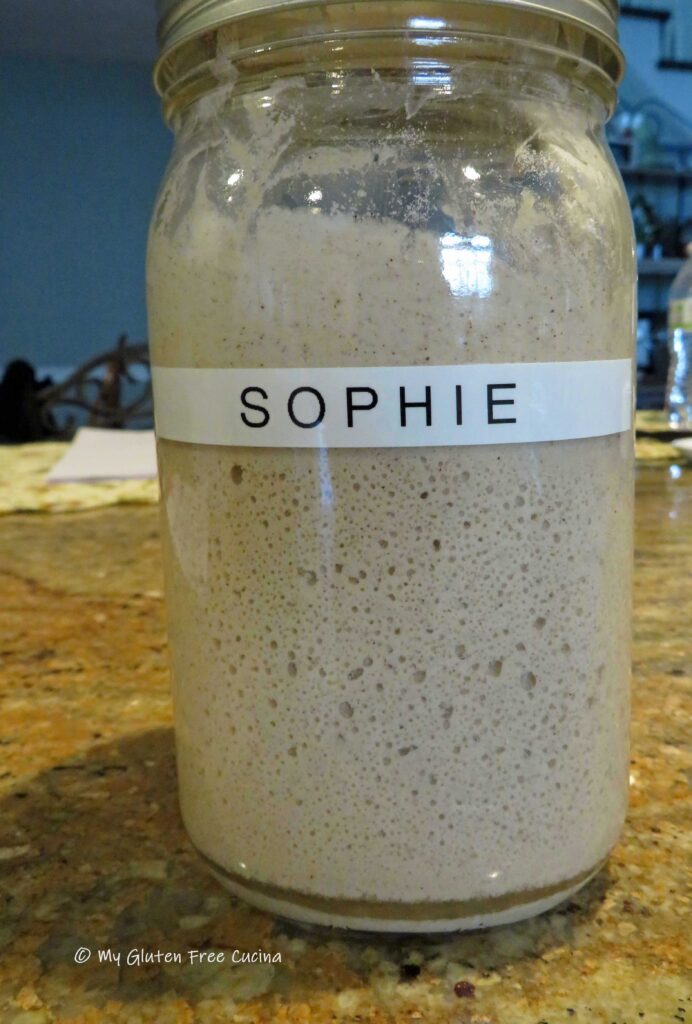
You will need a fully active and very robust sourdough starter to make this bread.  Honestly, I wondered if Sophie (my sourdough starter) was up to the task and was pleasantly surprised.  Way to go, Sophie!

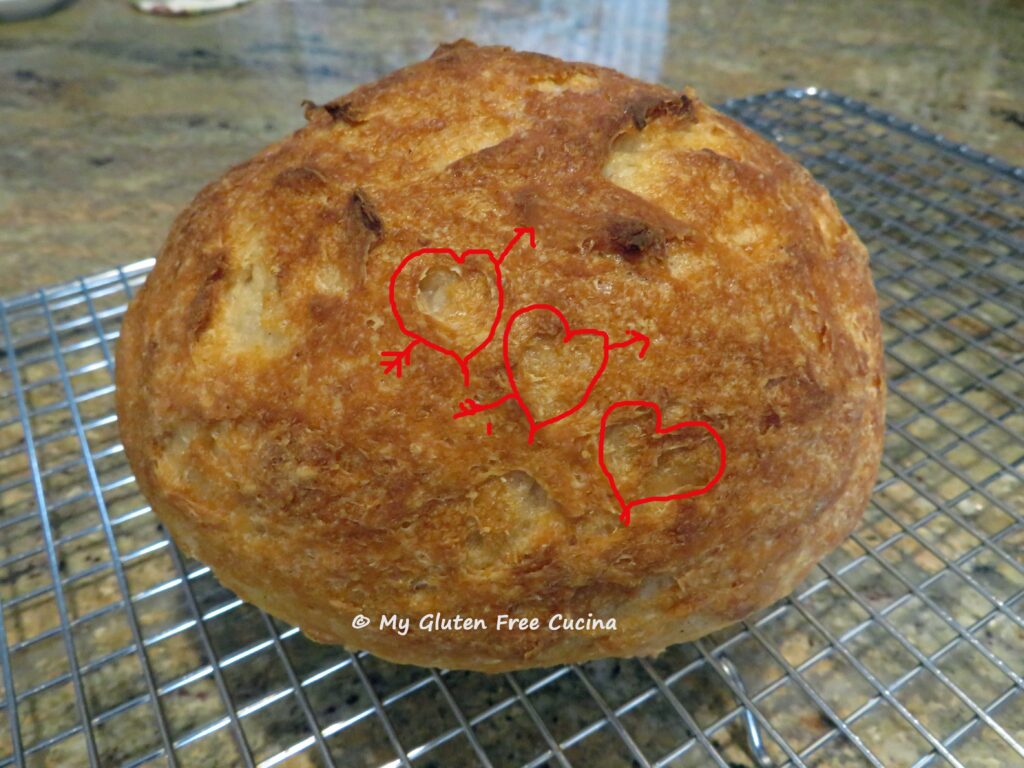
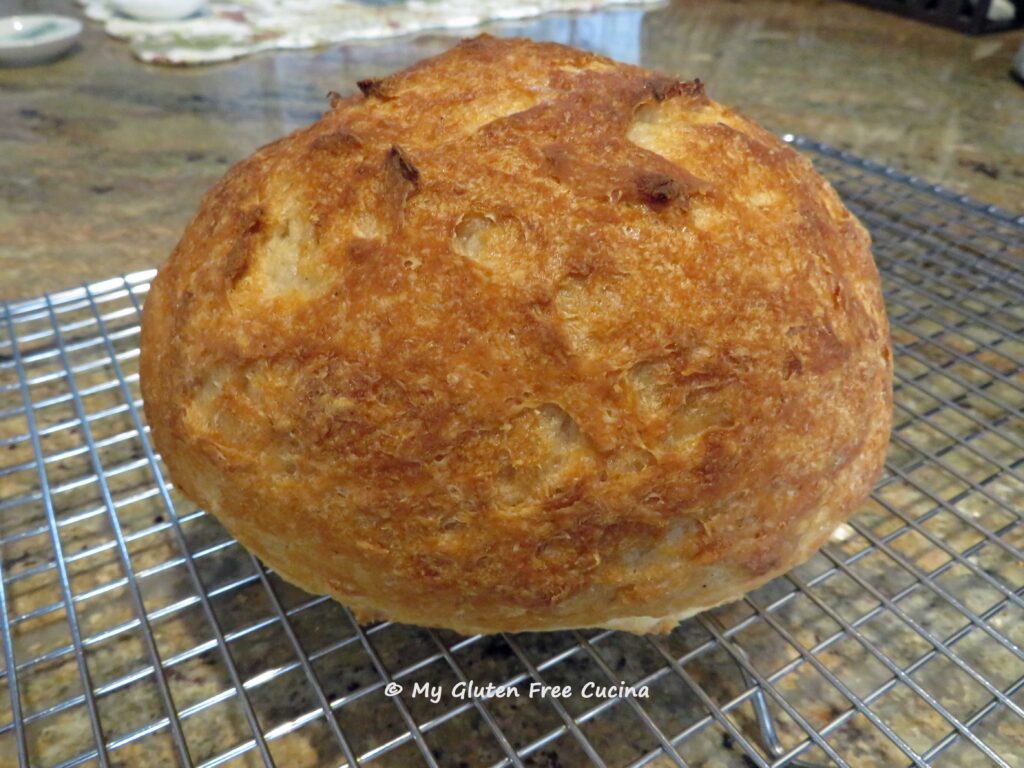
There was so much I wanted to get right with this bread.  The blistered, caramelized exterior and soft crumb.  After much trial and error, I was making some very nice loaves.  Do you see little hearts in the crust? 💕🥰

Do you see little hearts in the crust?

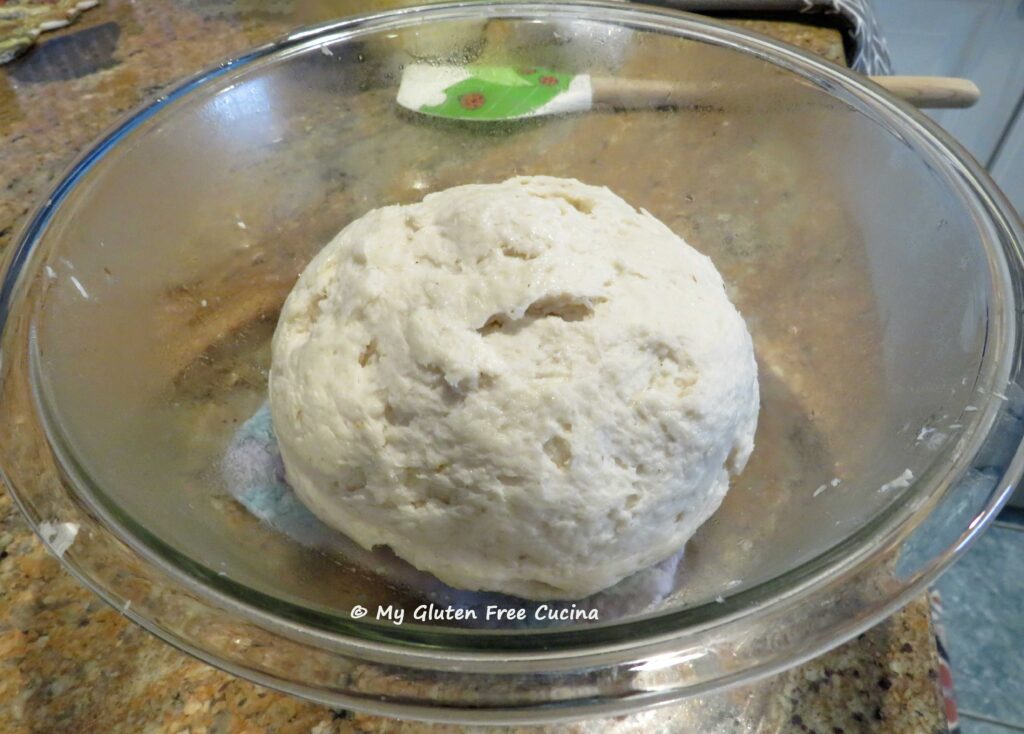
Developing the dough is a process, beginning with a well-fed starter, a preferment, and final dough.  After an overnight rest in the fridge, the loaf is baked in the morning.  This long fermentation is what takes you from a mere tablespoon of starter to the beautiful risen loaf you see in the photos.

Oh, and as if you hadn’t waited long enough, the baked loaf will need to rest a full day before slicing!  Most gluten free breads need extra time to release their moisture but for this one I don’t slice for a full 24 hours.  It is worth the wait.

This post contains affiliate links.

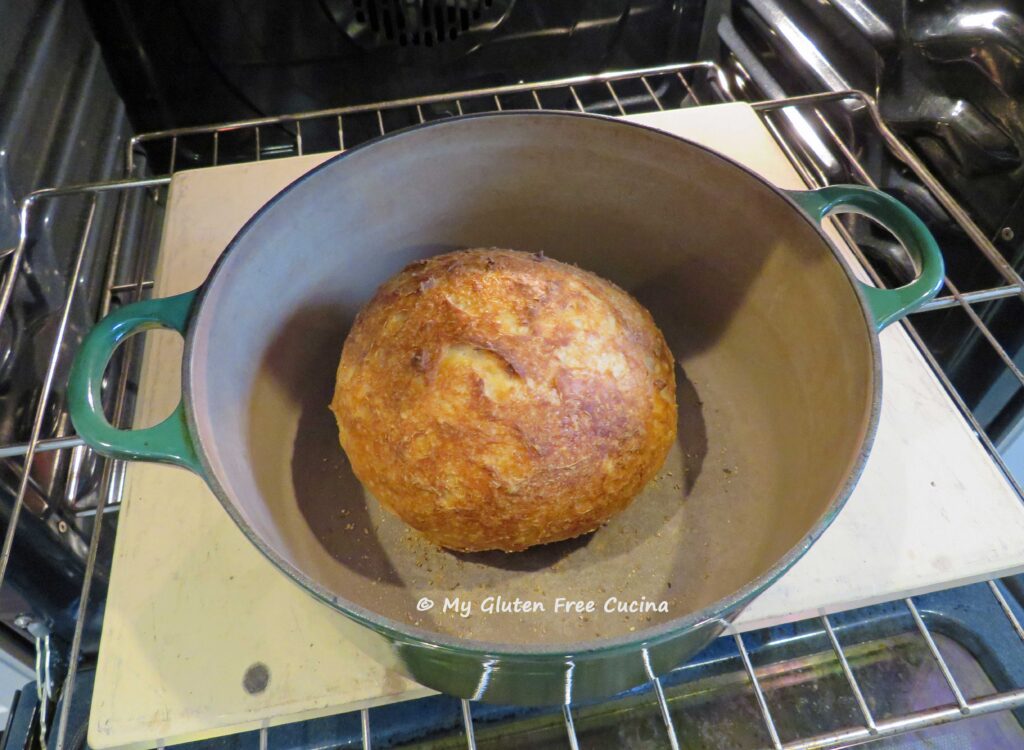
Like many sourdough loaves, Tartine is traditionally baked in a cast iron Dutch oven.  If you don’t have one, or if like me you find that cast iron pots are getting too heavy to lift, then a lighter weight enamel roasting pan or ceramic pan with a lid will get the job done.

Enough talk- let’s bake!

Ingredients:

Preferment:

  • 1 tbsp. fully active sourdough starter
  • 75 g. warm water
  • 50 g. gluten free all-purpose flour

Final dough:

  • all of the Preferment
  • 280 g. warm water
  • 250 g. gluten free all-purpose flour
  • 10 g. whole psyllium husk
  • 7 g. salt

Preparation:

If you work full time, you may be thinking “I don’t have time for all this”.  Rest assured though, you can fit this into your workday.  Just follow the steps!

Day 1 –

Evening – Take your starter out of the refrigerator, feed it and leave it out on the counter overnight.

Day 2 –

Morning – Stir together the preferment ingredients, cover with plastic wrap and let sit in a warm place for at least 7 hours (I used my proofing box).  As the day goes on, it will become increasingly puffy and smooth.

Late Afternoon – Combine the final dough ingredients with the preferment in the bowl of a stand mixer with the paddle attachment.  Mix just until combined to form a wet shaggy dough.  You can also mix the dough together by hand with a stiff spatula or dough whisk.

Transfer the dough to a lightly oiled bowl, cover with plastic wrap and let it rest 45 minutes while you have dinner.

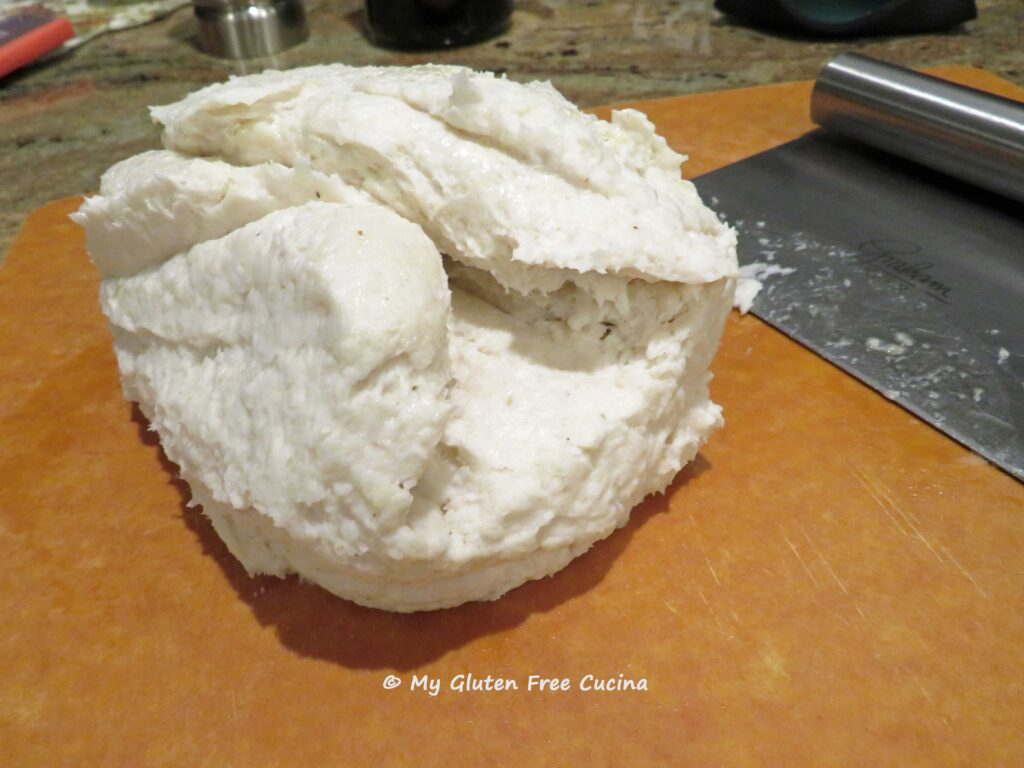
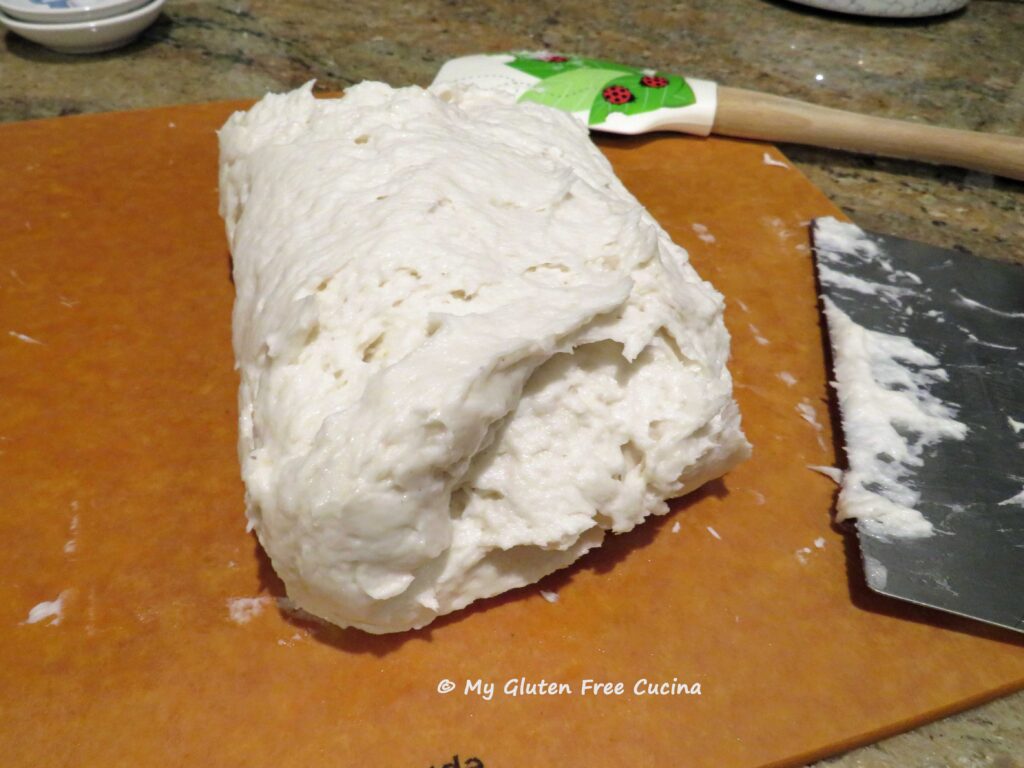
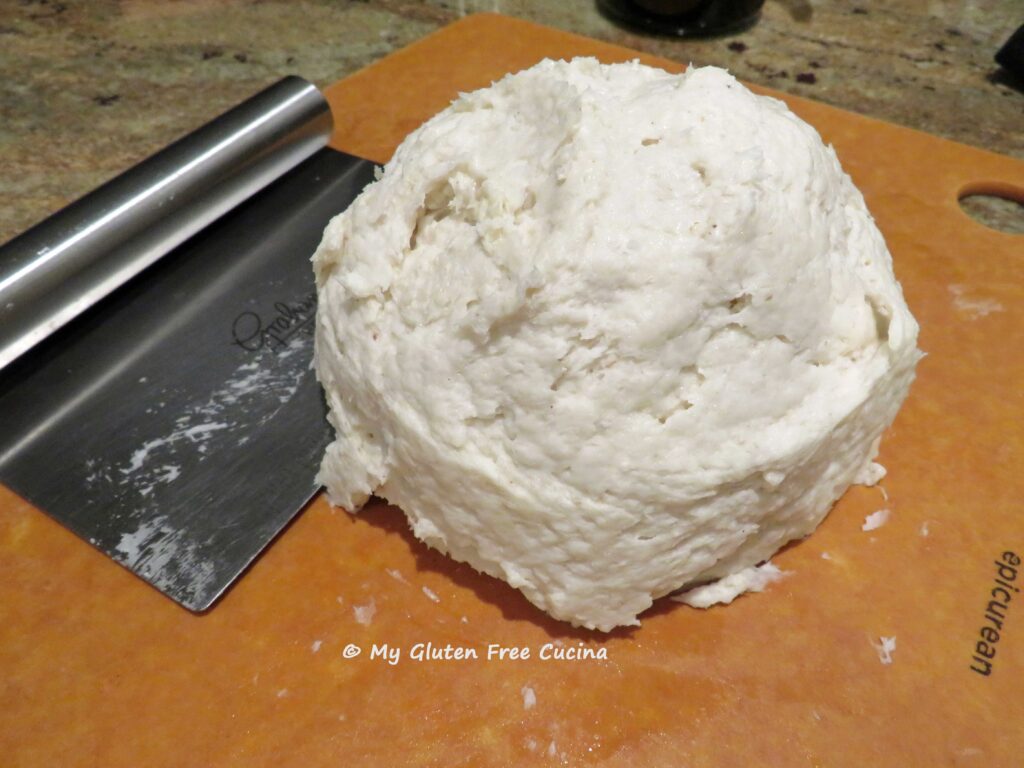
Evening – Rub a large cutting board with olive oil and turn the dough out.  Use a bench knife to spread the dough and fold it over on itself, rotating the cutting board as you fold.

The dough will be sticky, and you won’t be able to handle it like you would a wheat dough (i.e. “stretch and fold”).  But- after a few dozen folds you should have a nice smooth ball.

Return it to the bowl and cover with plastic wrap.  Leave it out on the counter until you go to bed.

Night – Refrigerate the dough overnight to be baked in the morning.

Day 3 –

Morning – Take the dough out of the refrigerator and let it stand at room temperature while you preheat the oven to 475º.  Place a Dutch oven on the middle shelf while the oven is heating for 1/2 hour prior to baking (note- if you are not using cast iron be careful, read the instructions for your pot to make certain it can withstand being heated while empty).

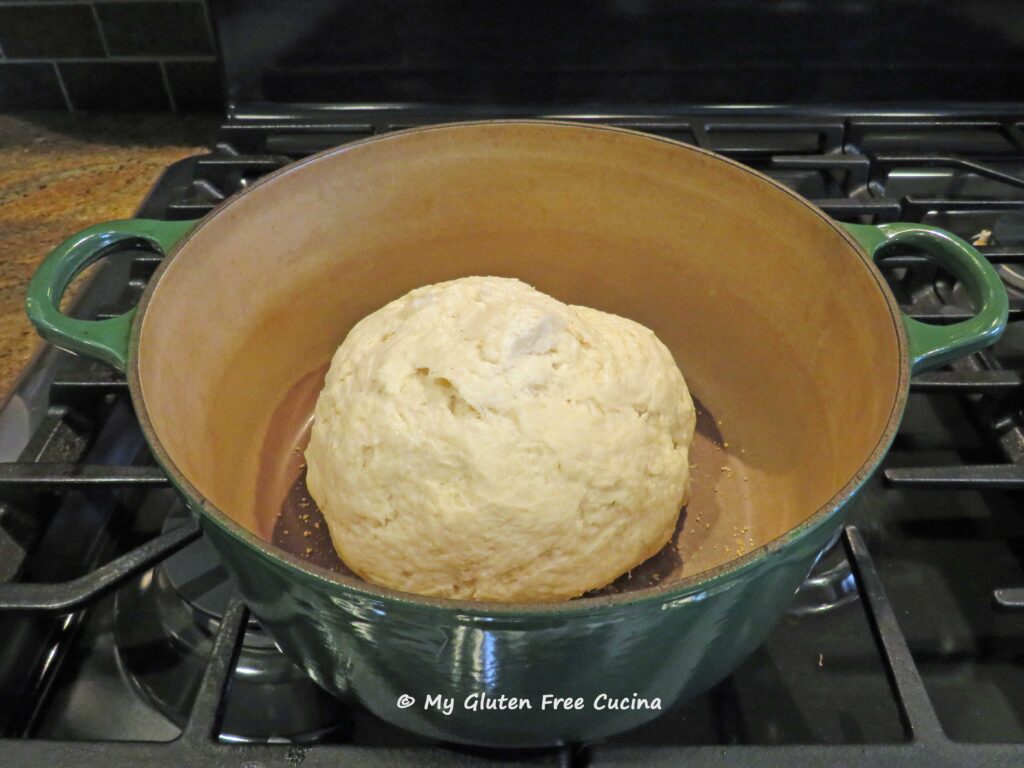
Remove the preheated Dutch oven to the stovetop, sprinkle the bottom with cornmeal and use a stiff spatula to carefully nudge the dough from the bowl without deflating it.  Cover and return the pot to the oven.

Reduce the oven temperature to 450º and bake for 30 minutes.  Then remove the cover and continue baking another 20 minutes.  Loaf is done when the internal temperature reaches 210º (check with a thermometer).

Carefully remove the loaf from the pan and place on a rack to cool.  Once it reaches room temperature you can put it in a bread bag or use plastic wrap.

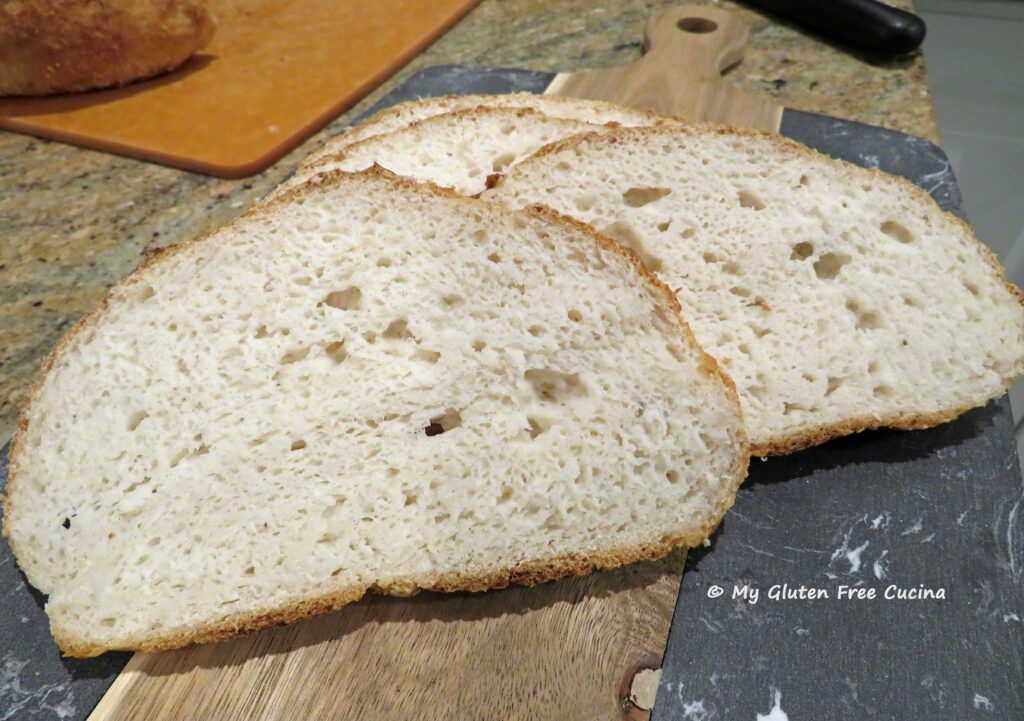
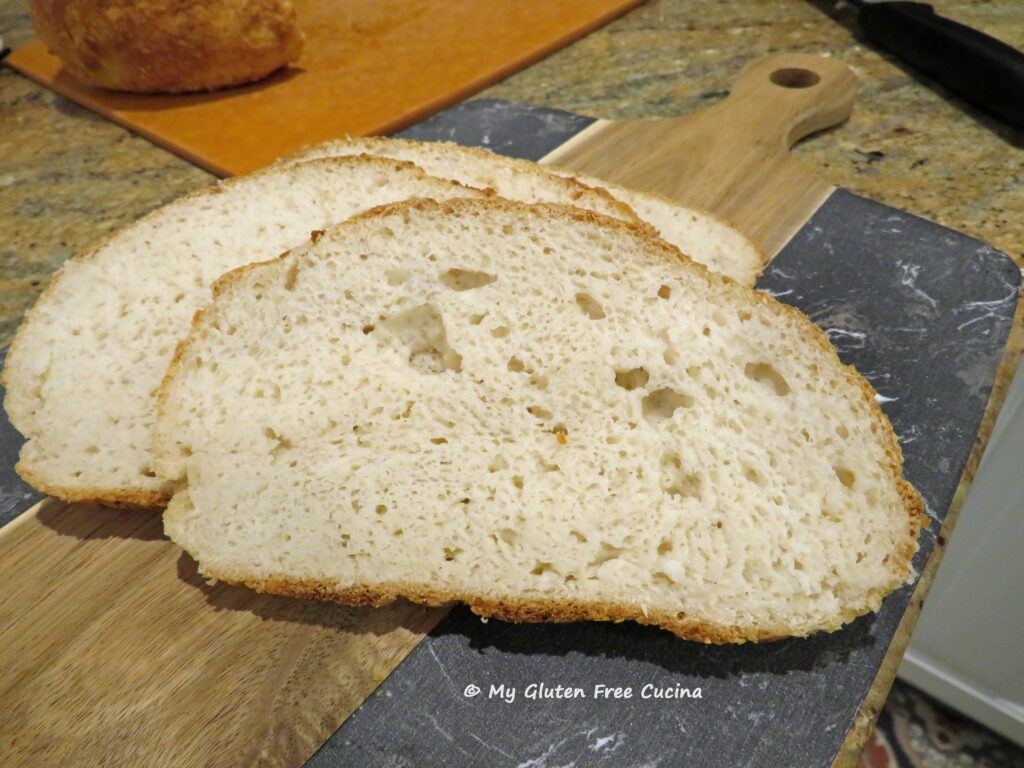
After all that, you will probably want to tear right into your loaf of bread.  But- please be patient!  This beautiful, artisanal loaf needs a full 24 hours to release its moisture.  Rushing it can mean a wet sticky loaf instead of a gorgeous crumb like this!

Day 4-

Finally, the long-awaited moment!  Slice and serve with dipping oil.  What do you think?  Was it worth the wait?

Notes:

♪ You do not need a stand mixer to make the preferment, but as mentioned above, I did use mine for the final dough.  You can also stir the final dough together with a dough whisk or stiff spatula, just enough to form a wet shaggy dough, kneading is not required.

♪♪ I used Better Batter Gluten Free Flour in this recipe.  When you shop Better Batter, remember to use my Promo Code MGFC30 for 30% off your full price purchase.

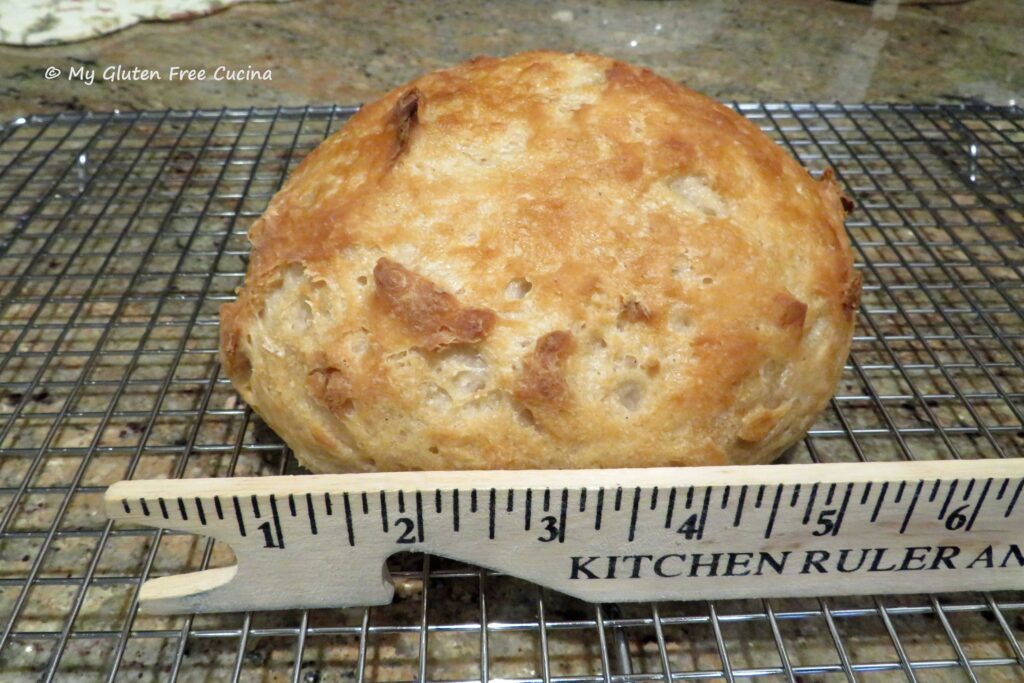
♪♪♪ Notice how small my loaf is?  This loaf size is perfect for solo households, or a dinner for two.  You can double the recipe if you wish, to make 2 small loaves or 1 large loaf.  I kept it small for testing, and it is just right for me, a great size for gifting too!

[print_link]


Gluten Free Sourdough Pain d’Epi (Wheatstalk Bread)

When I began baking with gluten free sourdough a couple of years ago, I couldn’t imagine all the things that I would make with my starter “Sophie“.  I started out with the usual rolls and loaves, made pancakes with discard, and even a quick bread.

Then one day, I decided to step out of my comfort zone with this beautiful Gluten Free Pain d’Epi, also known as Wheat Stalk Bread (I know, ironic).

Of all the bucket list recipes I had to try once I got my gluten free sourdough starter established (read about it here), this one was at the top of the list.

This was my first time making a gluten free version of Pain d’Epi and it was SO good.  The most important thing you need to know about this recipe is that your starter needs to be fully active, discard will not work.  That means there is some forethought involved, you will need to plan ahead depending on how long it takes for your starter to get up to full speed.   Also take into account the overnight proof, and you will likely need at least 2 days of (mostly hands off) time for preparation.

This post contains affiliate links.

The Flour

For the flour, I used the Artisan Flour Blend from Better Batter and as usual it did not disappoint.  The flavor was fantastic, and the bread was perfect for dipping.  You can absolutely use their Gluten Free Bread Flour, if you prefer a white bread.  Or use 100g of each, I love doing that!

Ingredients:

Preparation:

Combine the flour and salt and whisk well.  Add the starter, honey and olive oil to the bowl of a stand mixer with the paddle attachment. Gradually add the flour mixture with the warm water.  Increase the speed and knead for 5 minutes to form a soft, supple dough.

Transfer the dough to an oiled bowl, cover with plastic wrap and proof in a warm place for 4 hours.  I used my proofing box.

Here is the risen dough.  Place it in the refrigerator overnight to really develop the flavor.

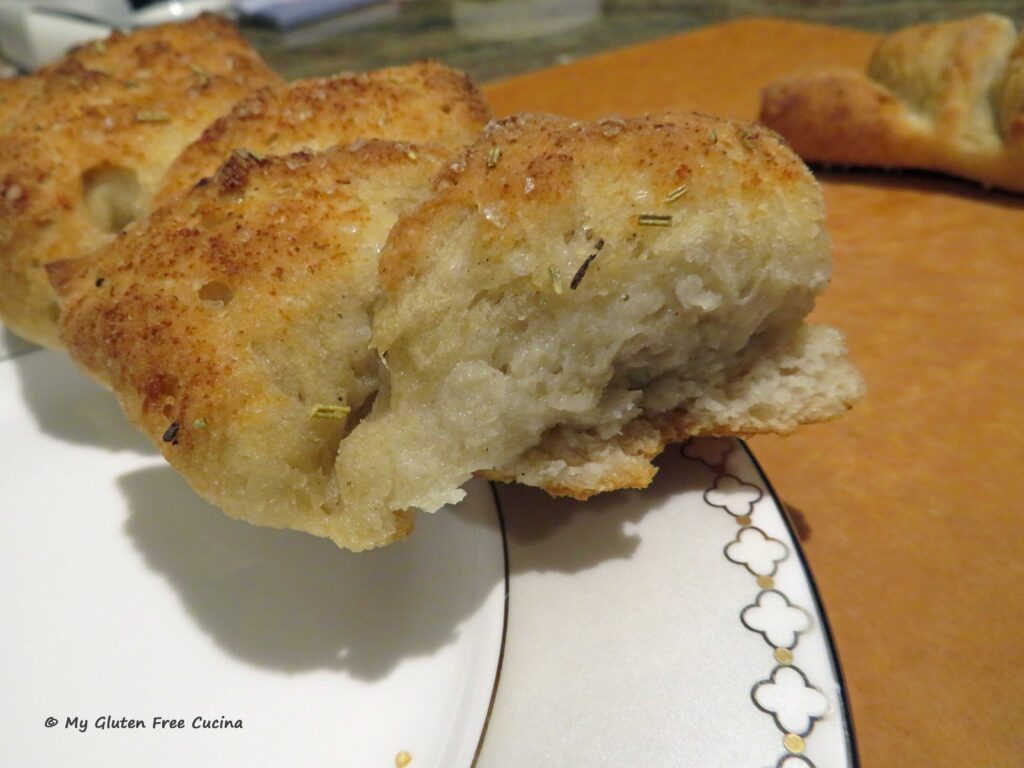
The next morning, bring to room temperature.  You can see how nicely the dough has puffed up, and there are lots of happy air bubbles!

It smells so good already!

Preheat the oven to 425º while you shape the dough.

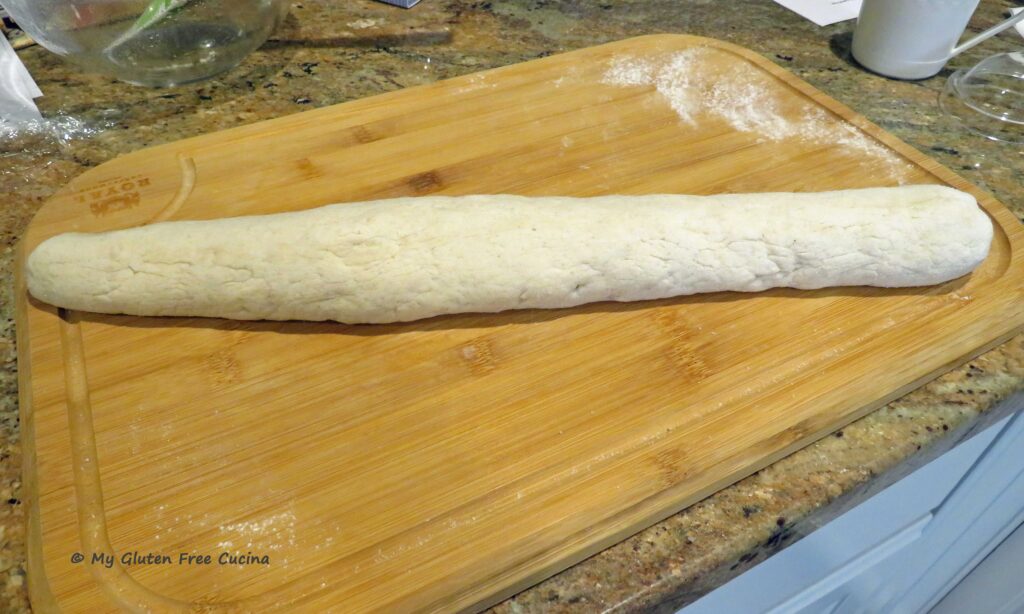
First, transfer the dough to a floured cutting board and gently roll and shape it into a long thin baguette, about 15″ x 2″.  Don’t apply pressure, you want to deflate as few of the air bubbles as possible.

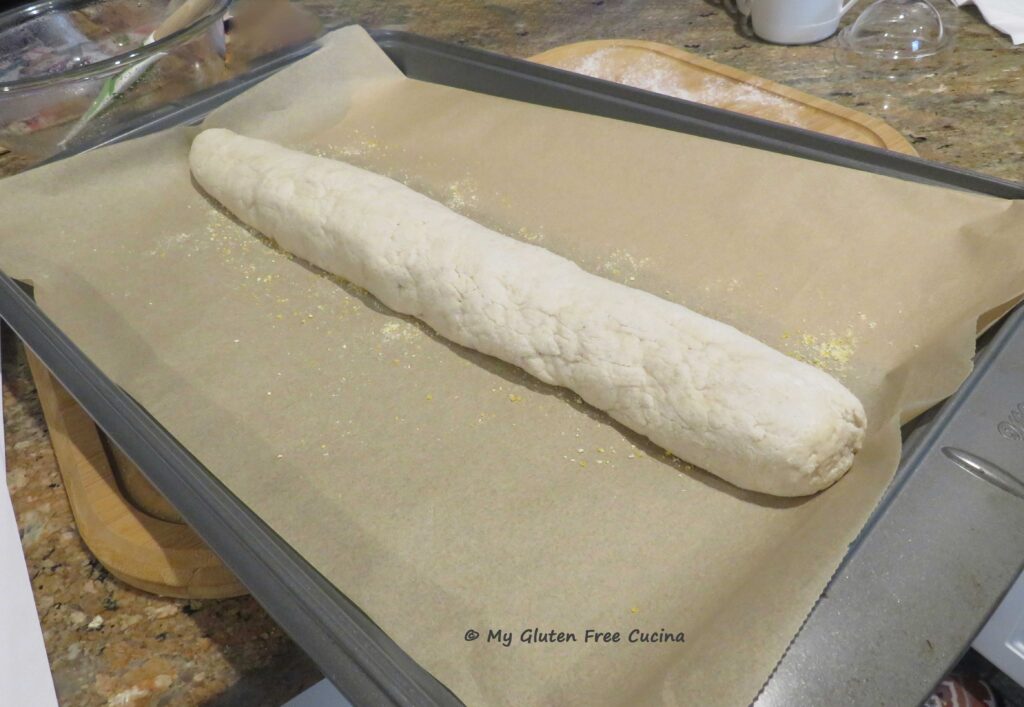
Line a baking sheet with parchment paper and sprinkle cornmeal down the center where you will lay out the loaf.

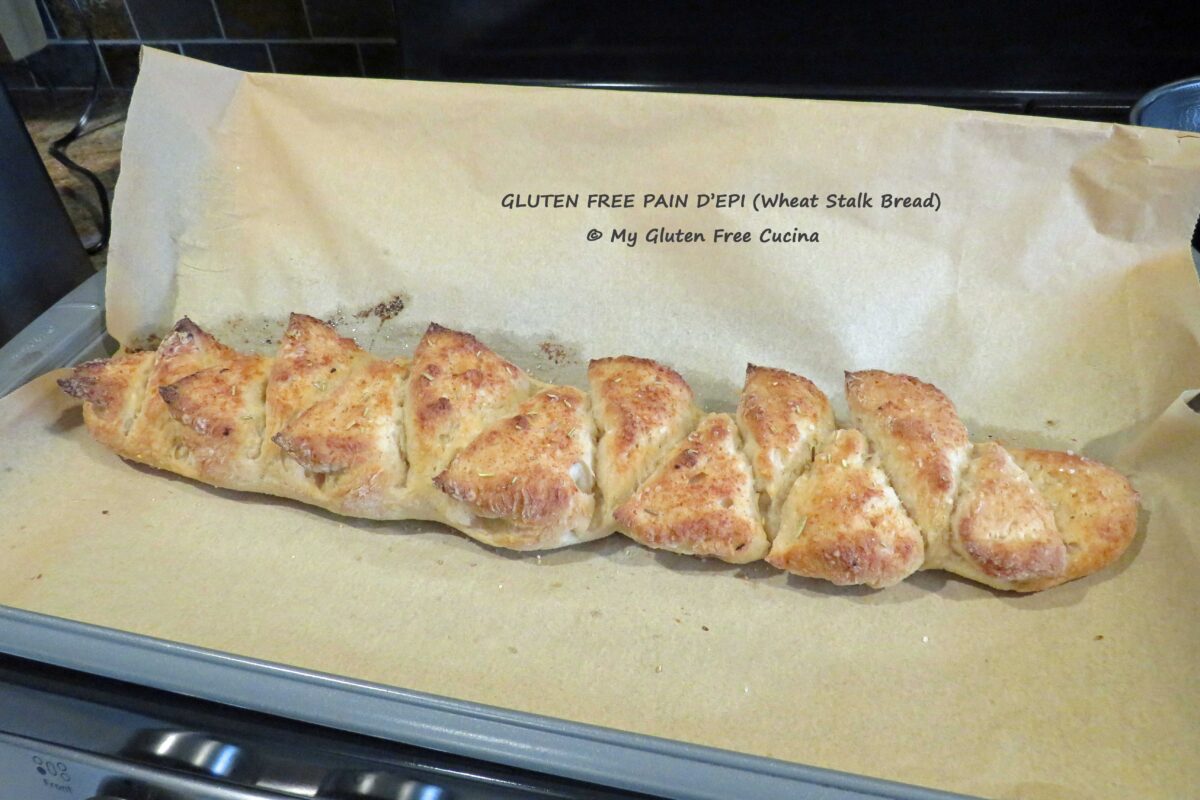
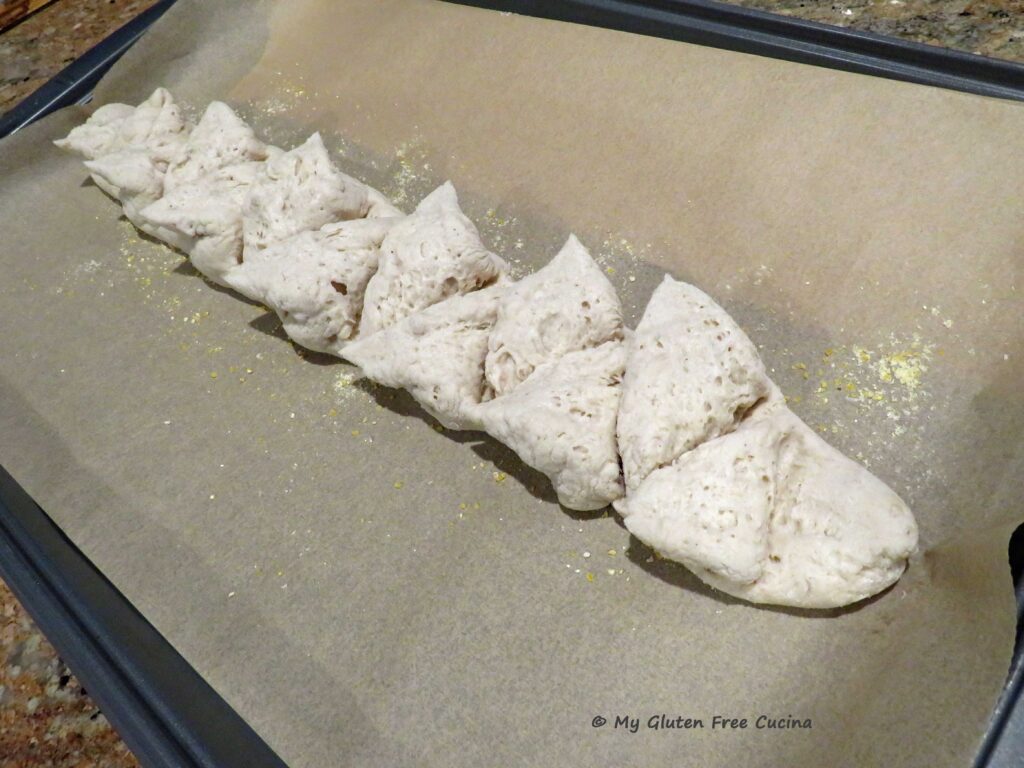
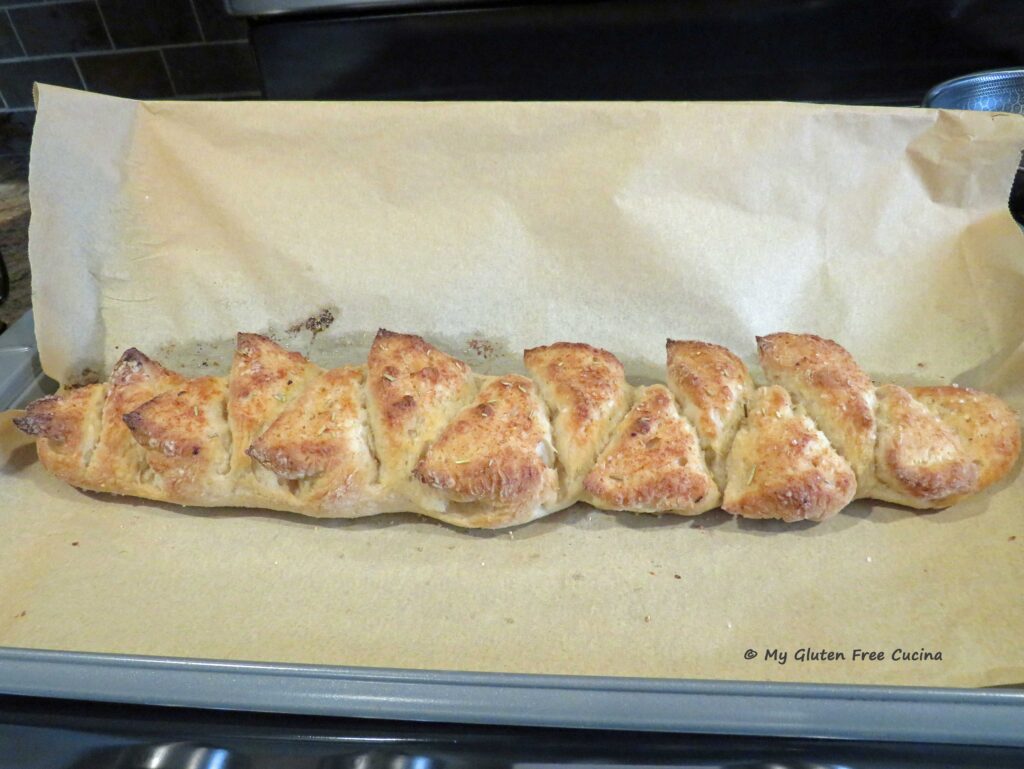
To create the wheat stalk pattern, use scissors to snip the loaf every few inches (cutting about ¾ of the way through), and as you snip each section, pull it over to one side, alternating left and right.

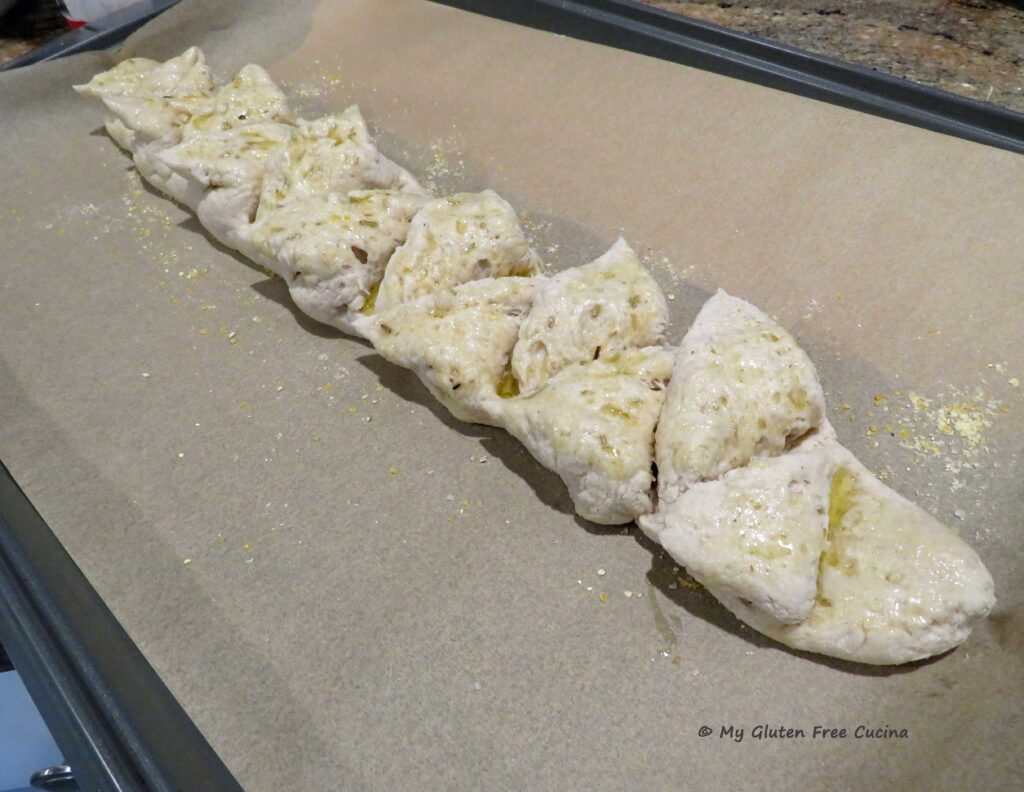
Now brush the loaf with olive oil and sprinkle with coarse salt.  I infused my olive oil with garlic and rosemary, and the aroma as it baked was wonderful.

Bake for 30 minutes on the middle rack.  The internal temperature should read 210º.  Cool in the pan for 10 minutes.

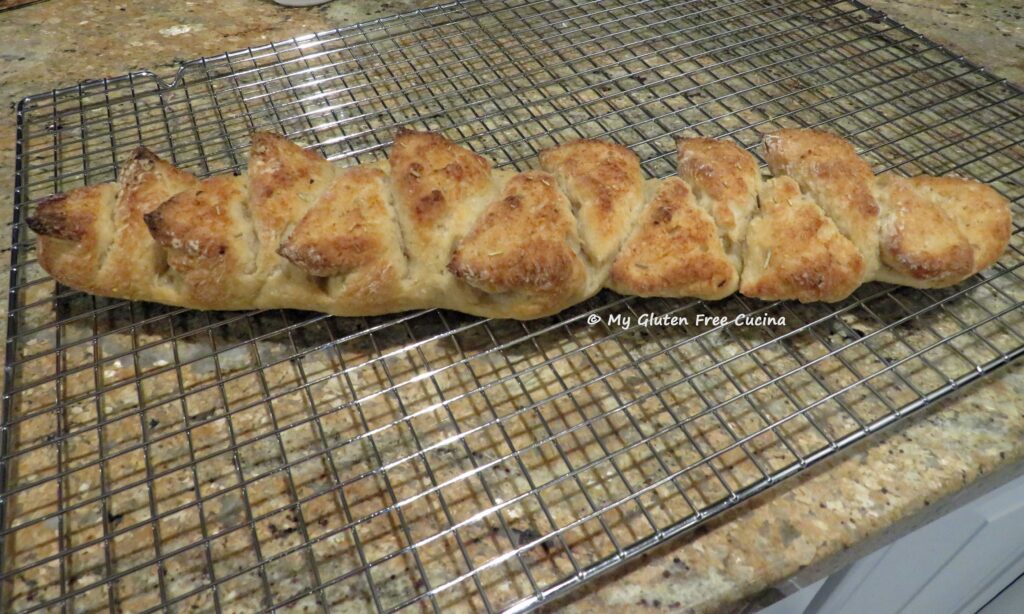
I love the smell of freshly baked bread filling my kitchen and was so pleased with how this loaf came out.

I recommend you allow the bread to cool for at least 4 hours before slicing, so the center won’t be gummy.  Trust me, you will have a hard time waiting!

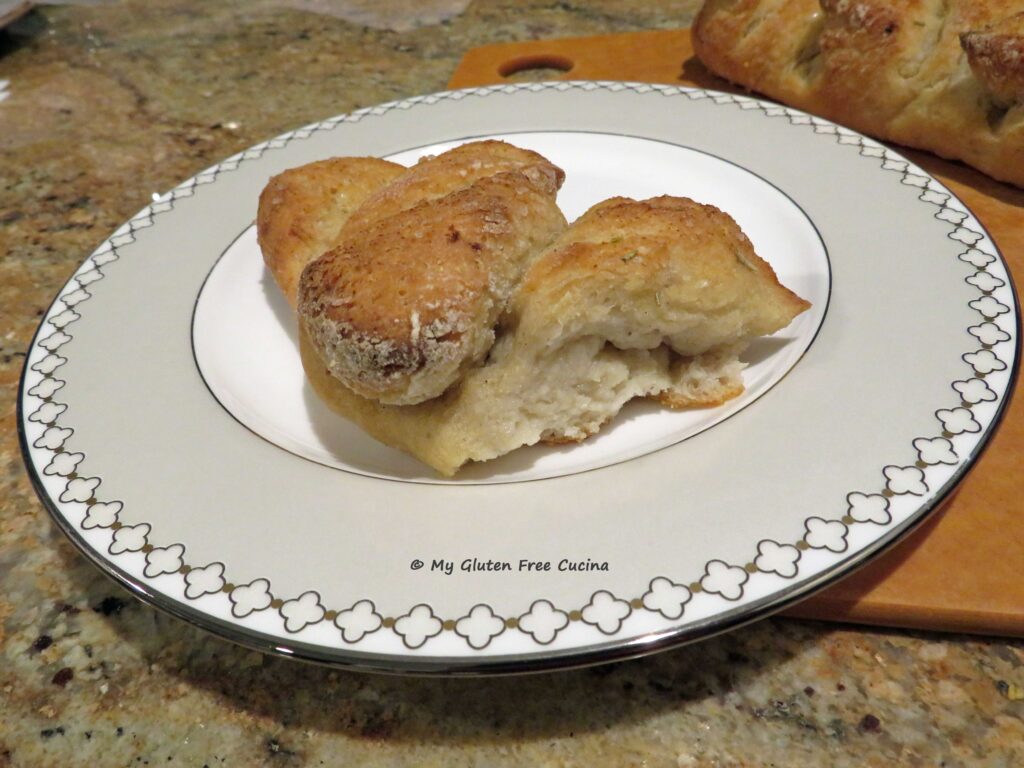
You can cut it into slices or just tear off a section and dip it in olive oil.  I made up a dipping oil with Tuscan seasoning, fresh garlic and rosemary.

This bread is best eaten the day it is baked.  Leftovers can be refreshed in the microwave or toasted.  Store at room temperature up to 1 day and freeze any remaining.

Notes ♪♫ A sourdough starter will take your gluten free baking to the next level with results you never dreamed possible.  Read about my sourdough starter Sophie here.

[print_link]

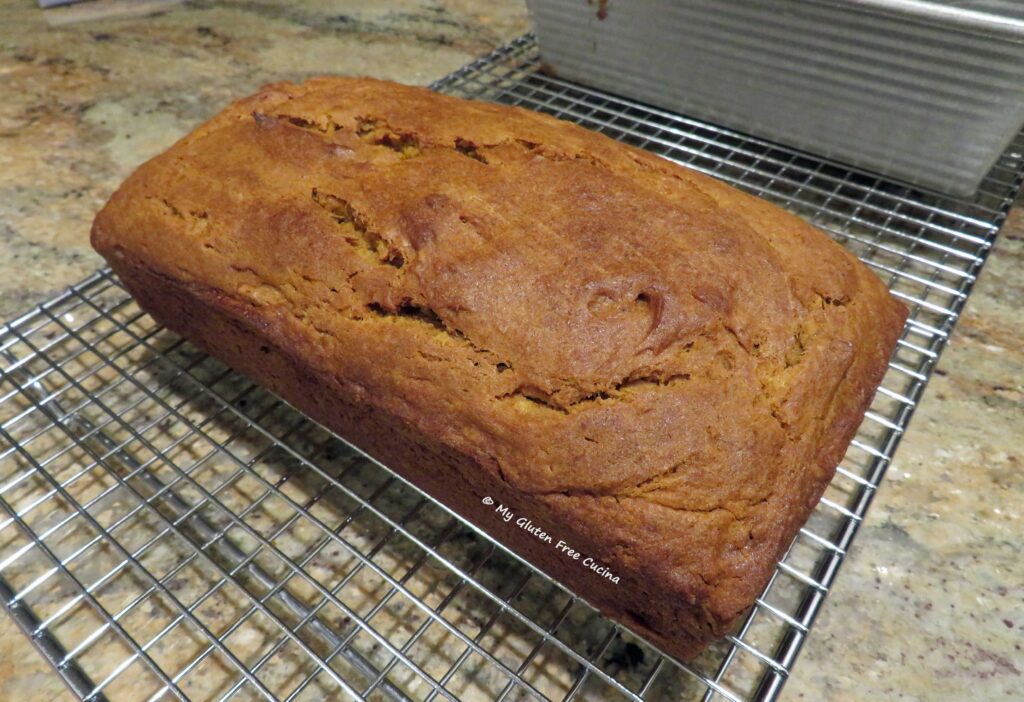
Gluten Free Pumpkin Bread

Gluten Free Pumpkin Bread

🎃

Looking back at my recipe notes, I was surprised to find that I have not made Pumpkin Bread since 2013.  Why I don’t know, because I had a really good recipe that everyone enjoyed.

So, this week I decided to dust off that old favorite and give it a gluten free makeover.  Would you believe, the only ingredient that had to be changed was the flour?  I find that’s the case with so many recipes.

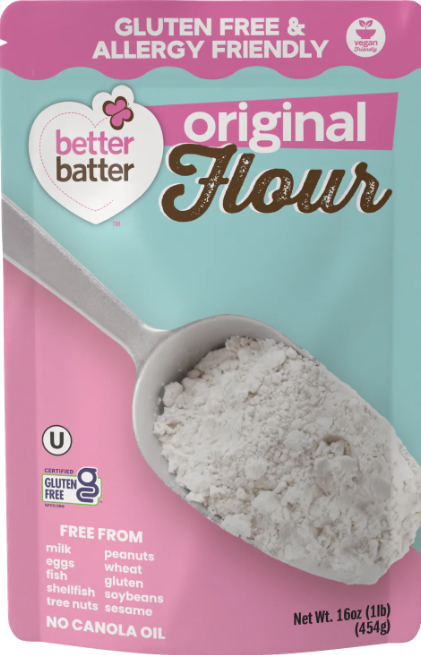
For my Gluten Free Pumpkin Bread, I used Better Batter Original Blend.

This easy pumpkin bread is super moist!  Serve it with ice cream for dessert and have the leftovers for breakfast!  It would be a fine addition to your Thanksgiving breadbasket.

This post contains affiliate links.

Ingredients:

Dry Ingredients:

Wet Ingredients:

  • 2 large eggs
  • 1/4 cup softened butter (1/2 stick)
  • 1/4 cup canola oil
  • 1 cup Pumpkin Puree
  • 1/4 cup milk (I used 2%)
  • 1/2 cup white sugar
  • 1/2 cup brown sugar

Use my Promo Code MGFC30 for 30% off at Better Batter!

Preparation:

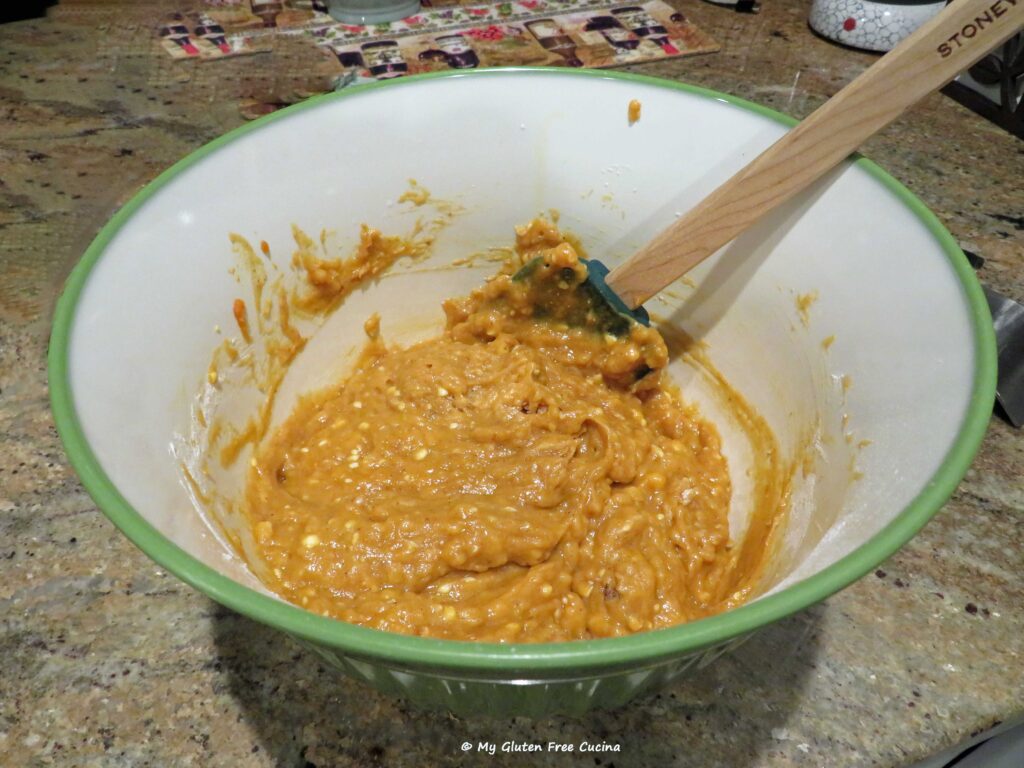
Whisk together all of the dry ingredients.  Combine the wet ingredients in a separate bowl and whisk until smooth and the butter breaks down into little bits.

Add the dry ingredients to the wet, and fold with a spatula just until moistened.  Let the batter rest while you preheat the oven to 350º.

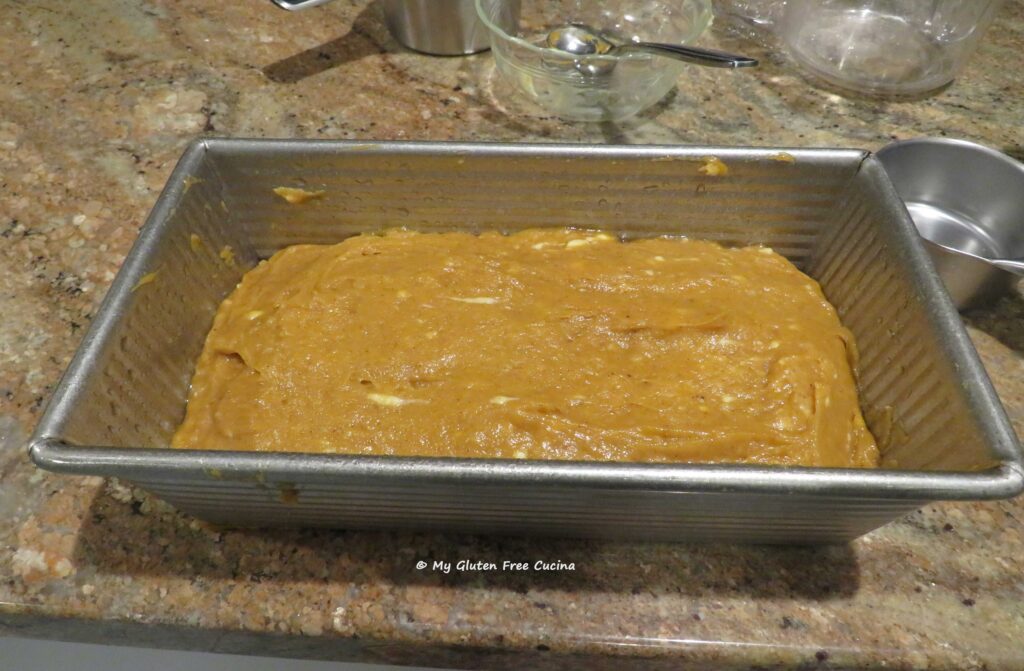
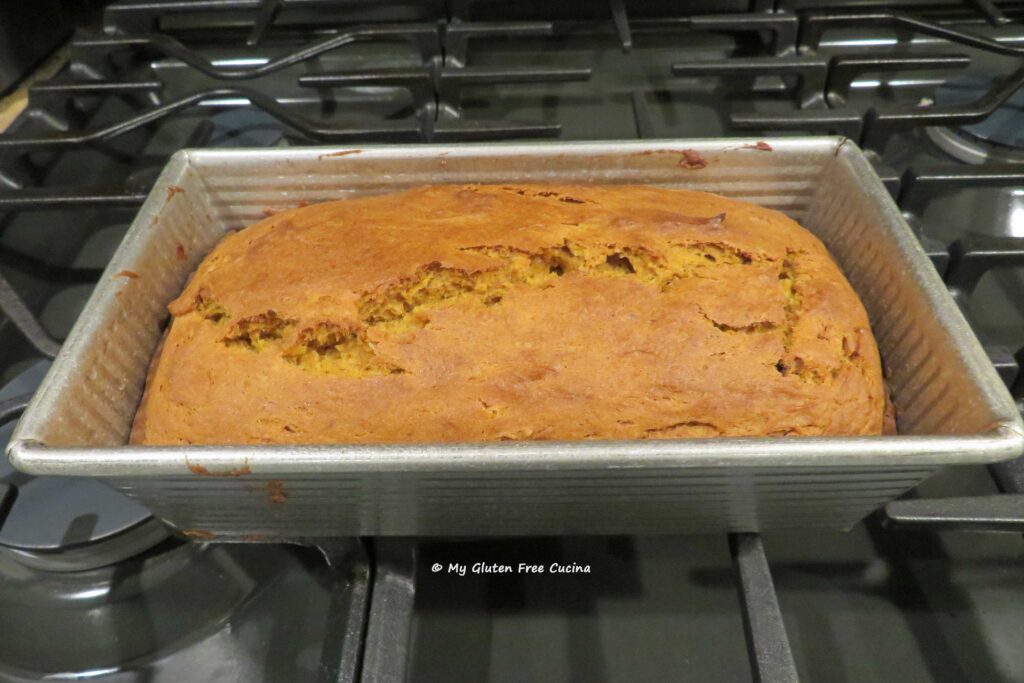
Scrape the batter into a greased 1 lb. loaf pan (8″ x 4″) and smooth it out evenly.  Bake for 60-65 minutes.

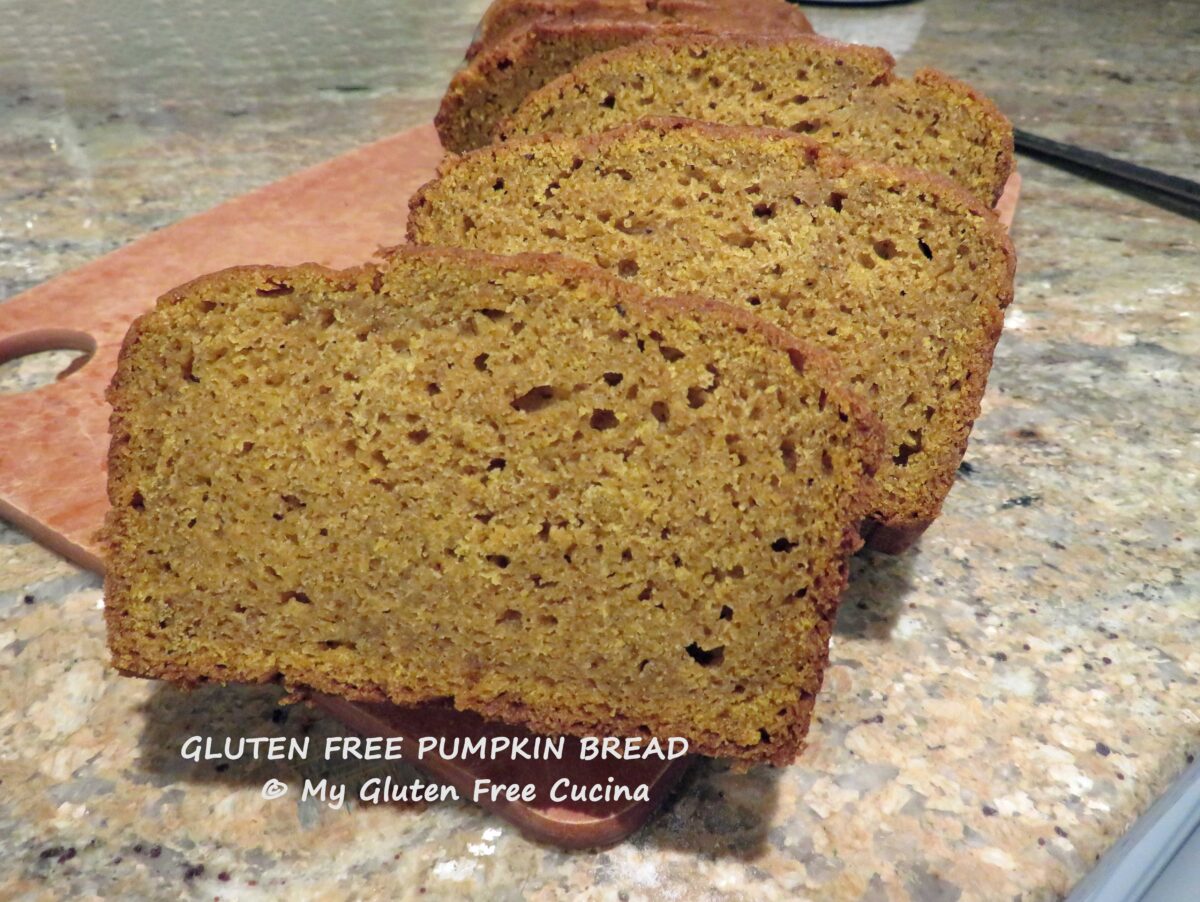
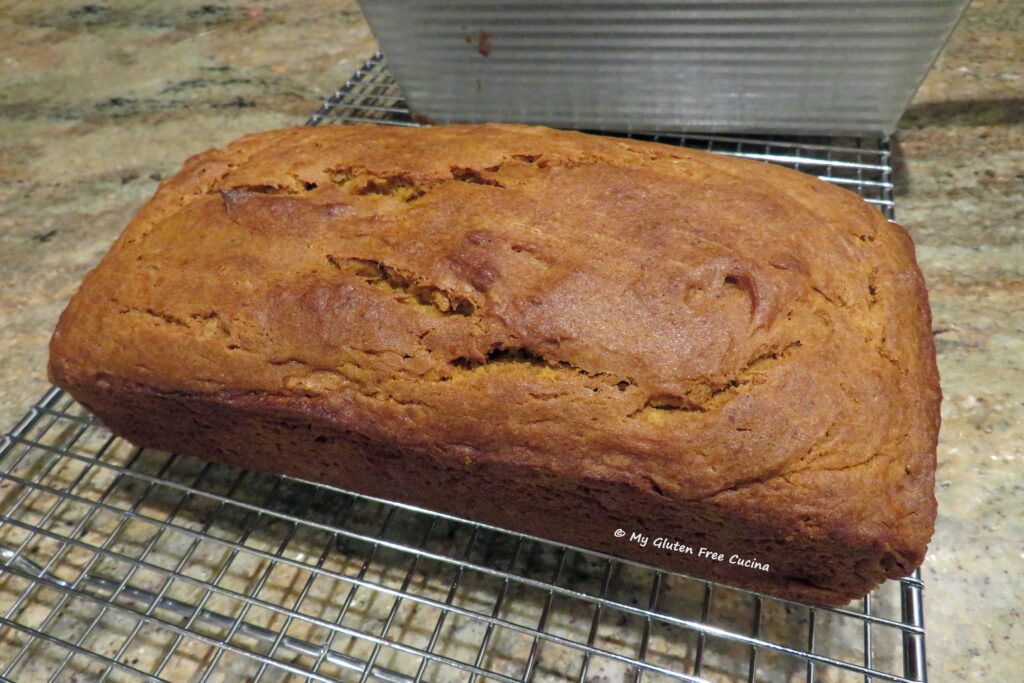
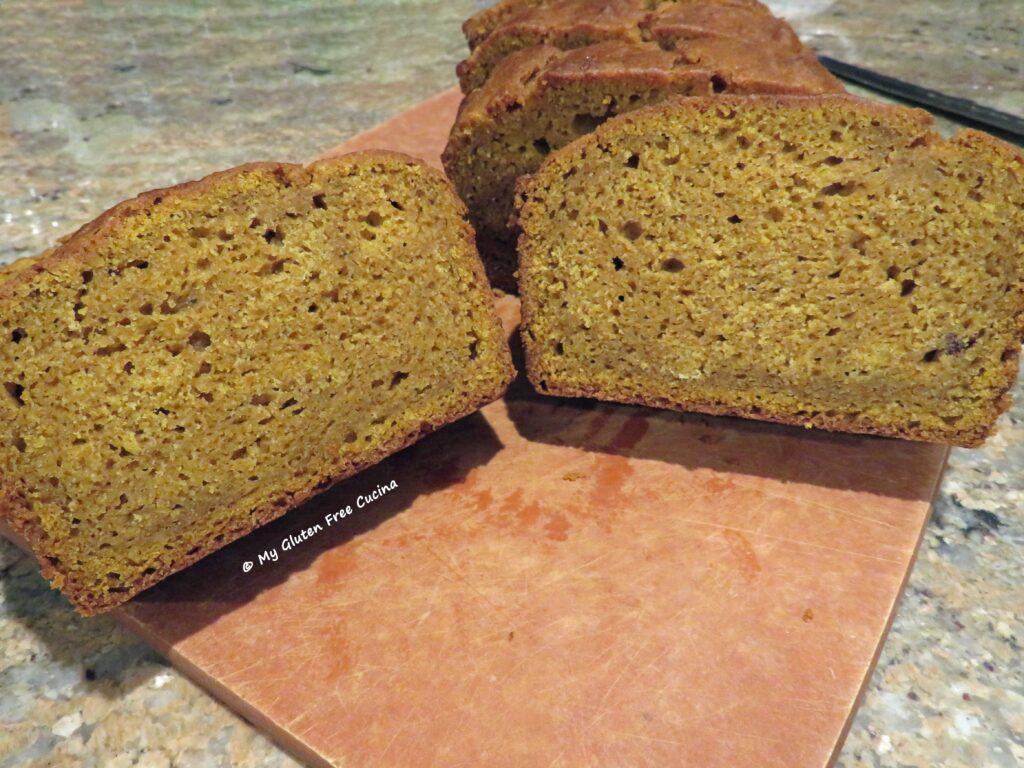
Test with a toothpick, it should come out clean, and the loaf will be starting to pull away from the sides of the pan.  Cool in the pan for 10 minutes then slide a thin spatula around the edges.  The loaf should remove easily.  Allow it to cool for at least 2 hours.  Bet you’ll have hard time waiting!

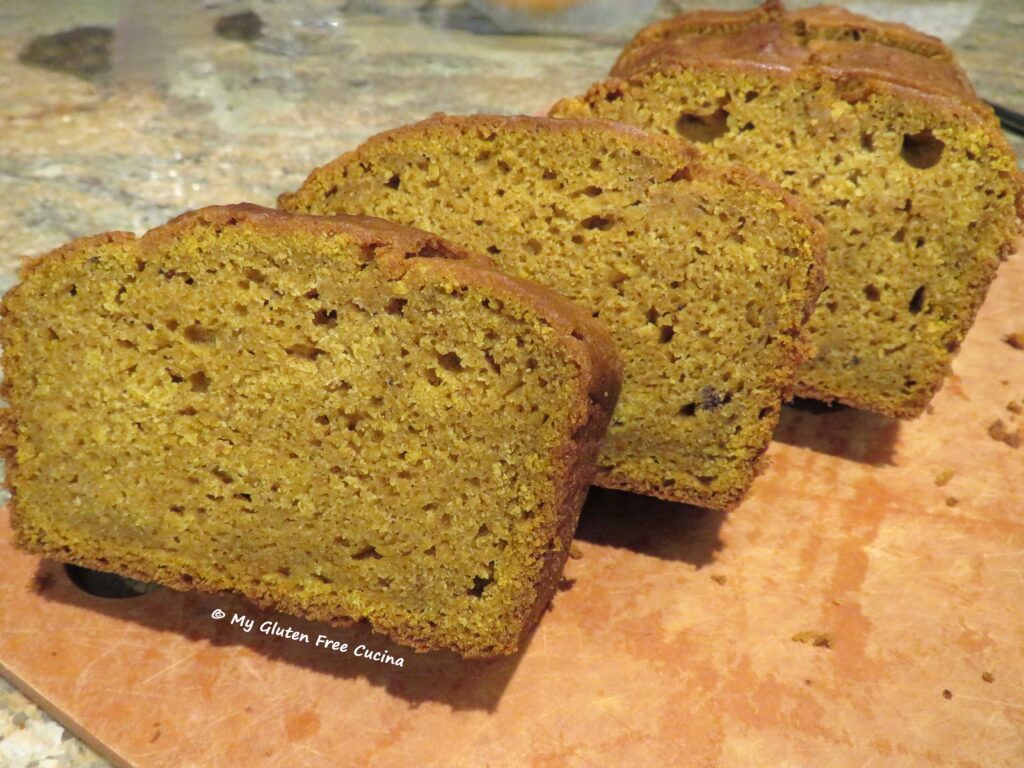
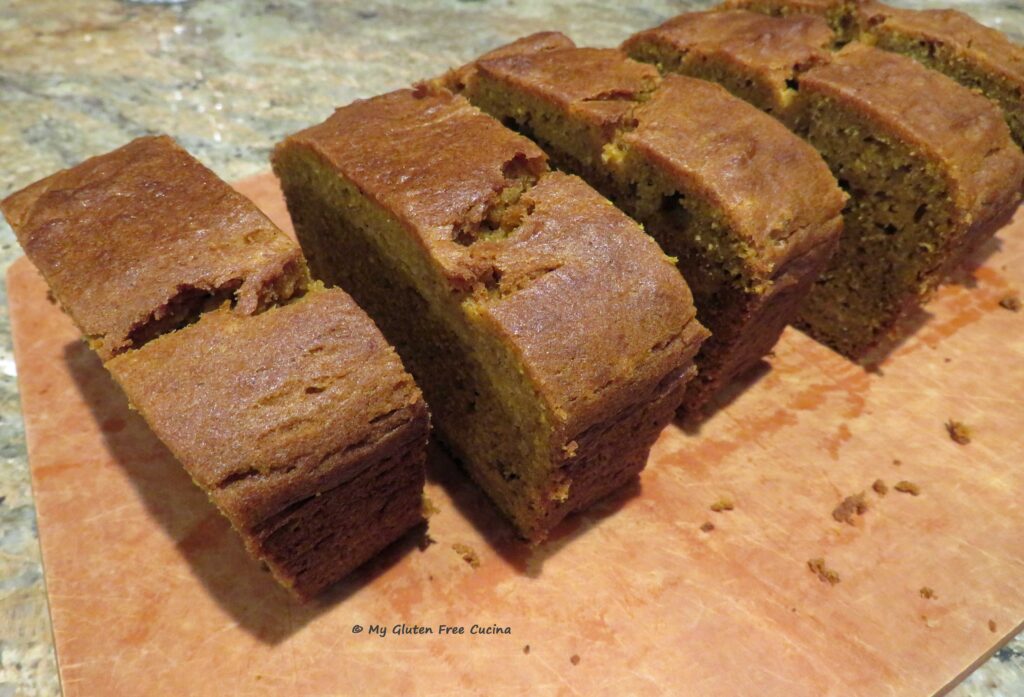
I let mine cool to room temperature, then stored it in a plastic bag on the counter overnight.  Look at that beautiful color! 🎃

I sliced my Pumpkin Bread into nice thick pieces and wrapped a few individually for the freezer.

I ate the 2 end slices on the spot (had to taste test!), then had another big slice for breakfast!  SOOOO good!

Notes ♪♫ Pan size is important.  Be sure to use a 1 lb. metal loaf pan.  I like this one, from USA Pan.  Larger loaf pans, like a 1.25 lb. pan will change the height and width of the loaf, as well as the cook time.

[print_link]

Gluten Free Malloreddus Pasta

What is Malloreddus Pasta?

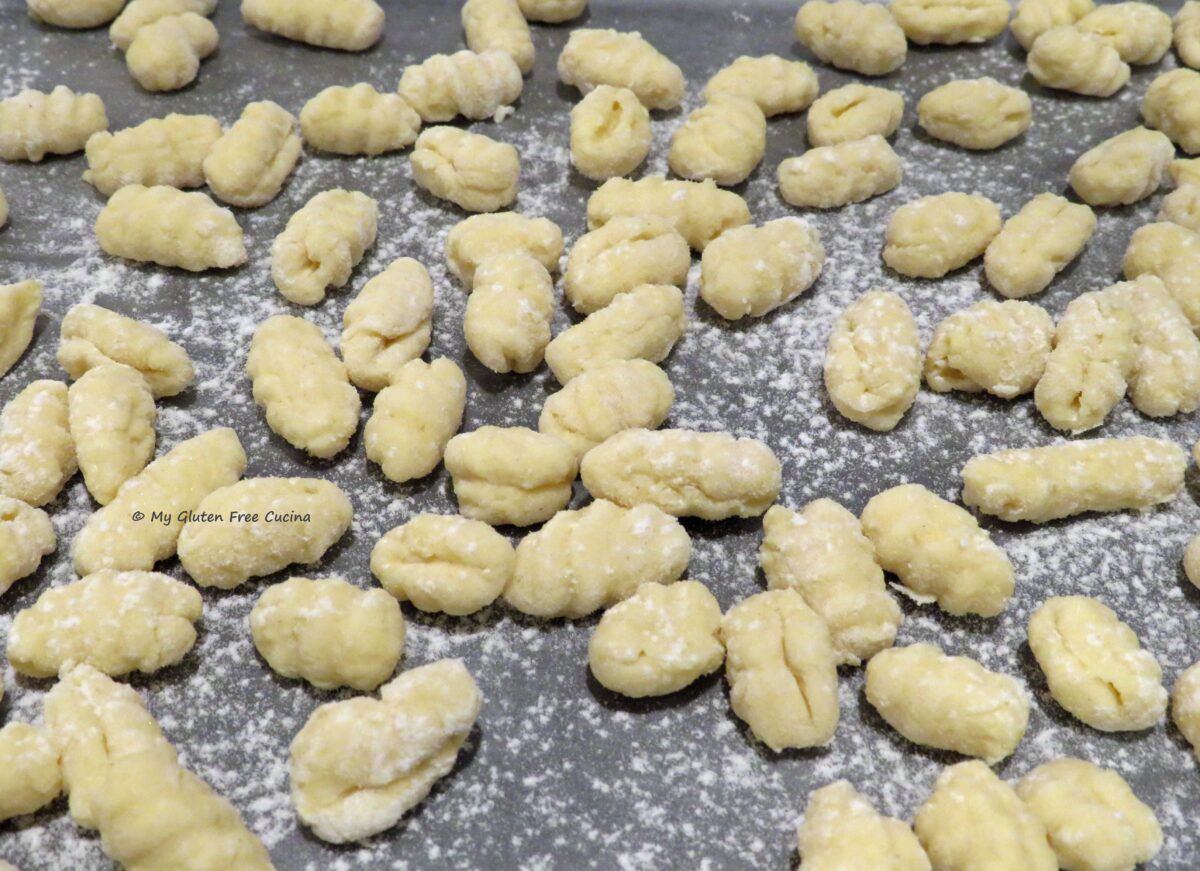
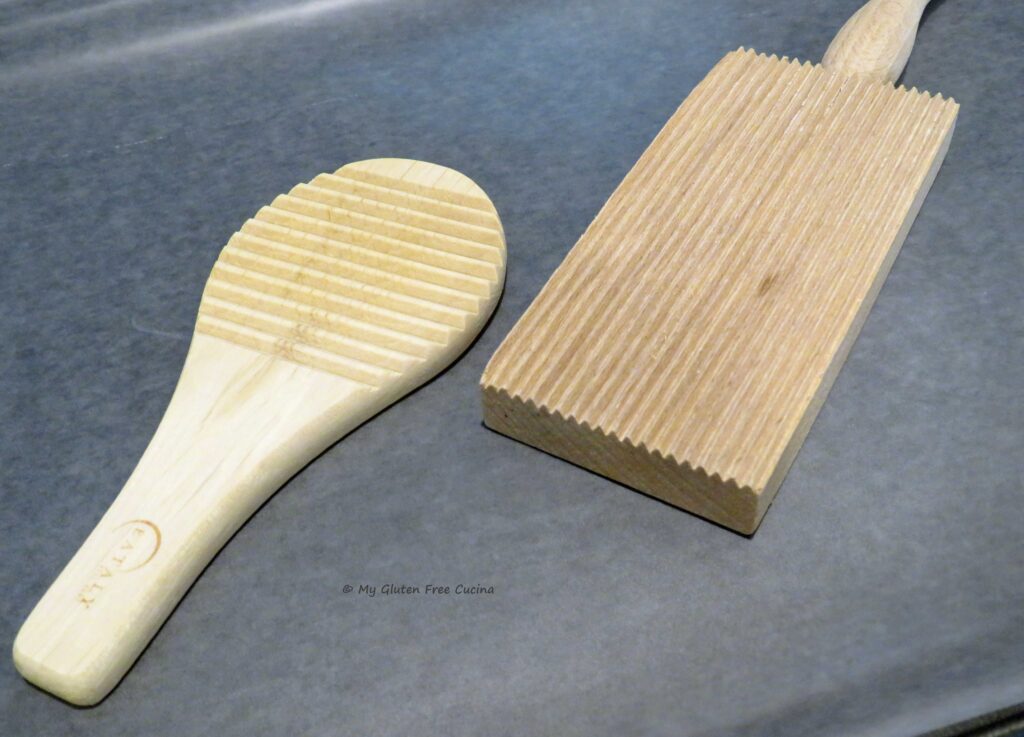
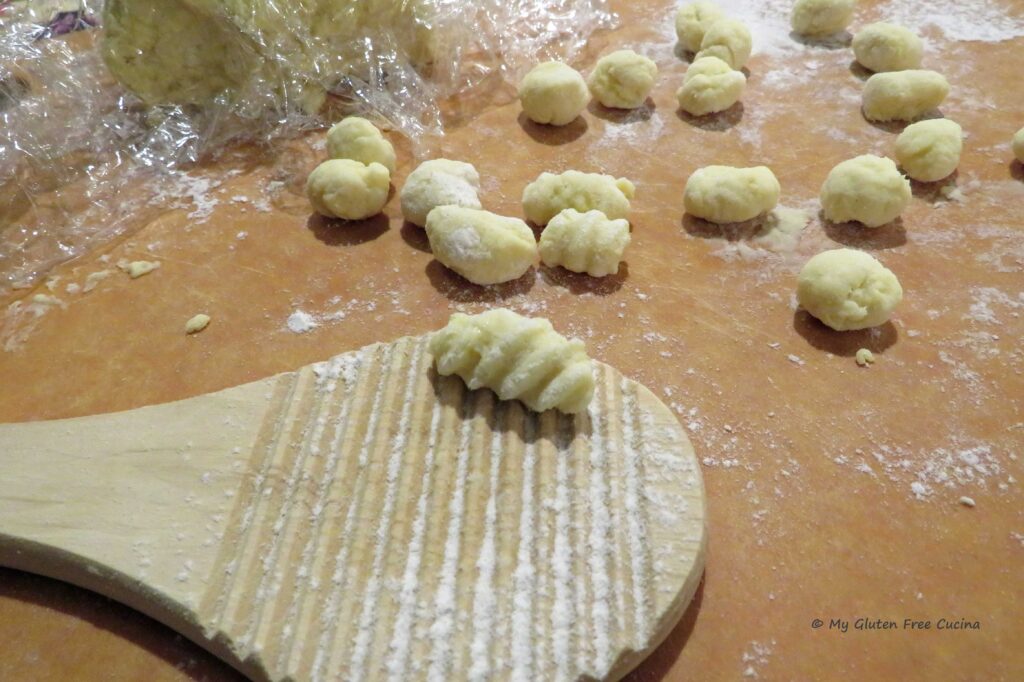
Malloreddus pasta is a type of gnocchi originating in Sardinia, Italy.  There are a few things that distinguish this regional pasta from other types of gnocchi.  First, look at the ridges on the Malloreddus paddle on the left, vs. a typical gnocchi paddle on the right.  The ridges are wider and deeper on the Malloreddus paddle, to create the distinctive grooves.  They really soak up the sauce!

What about gluten?

Malloreddus pasta is traditionally made with semolina flour and water.  Of course, semolina is off limits on the gluten free diet, so for my gluten free adaptation, I used the new Gluten Free Bread Flour from Better Batter.  You can try this recipe with any one-to-one gluten free all-purpose blend.  I added water, salt and just a bit of olive oil, to help the dough come together.

Wait, no eggs?

Did you notice that there are no eggs in the ingredient list?  Traditional Malloreddus Pasta is egg free.  Only flour, water and salt.  I know that some of my readers can’t have eggs, if you are one of them then this pasta is for you!

Another unique feature.

Did you know that Malloreddus pasta is sometimes infused with saffron?  Just a pinch gives the dough beautiful color, it almost looks like I added an egg yolk!

This post contains affiliate links.

4 Servings (depending on your appetite!)

Ingredients:

For the pasta

Preparation:

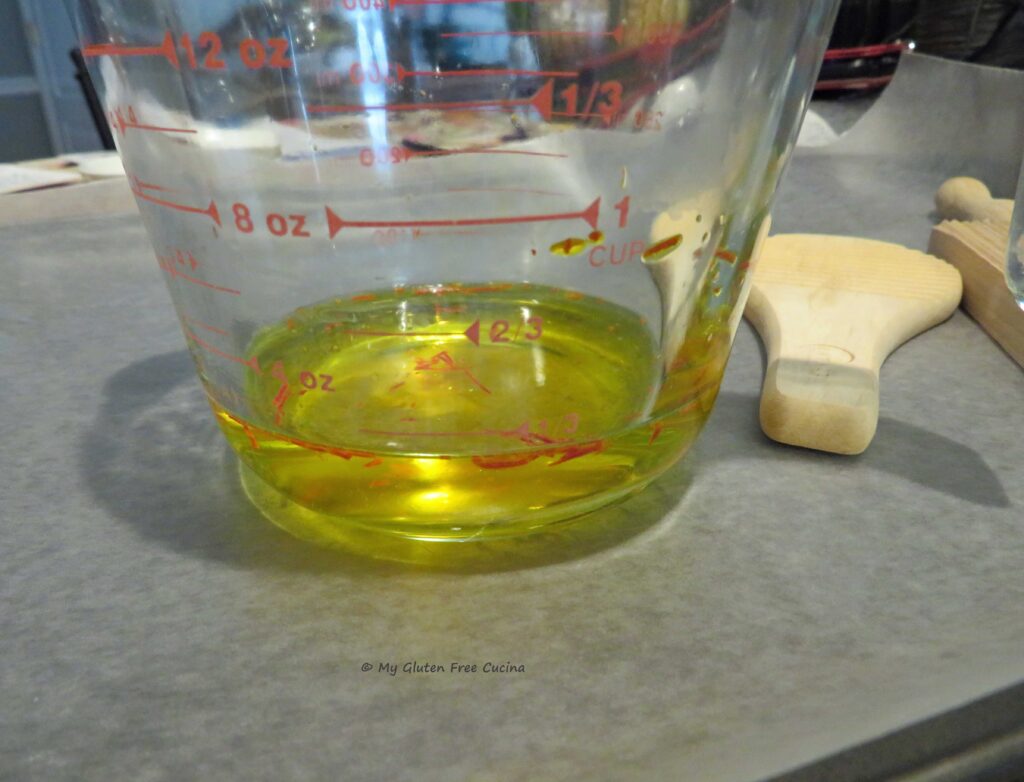
For the pasta, add a pinch of saffron to 1/4 cup warm water.  Let it steep for 15 minutes.

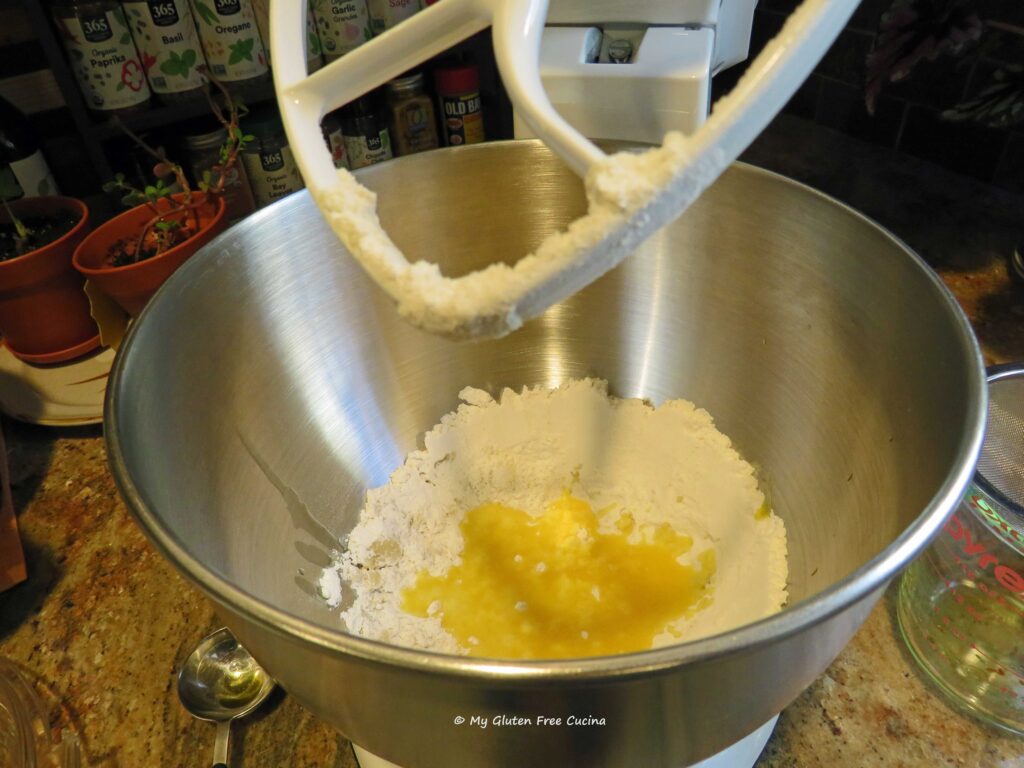
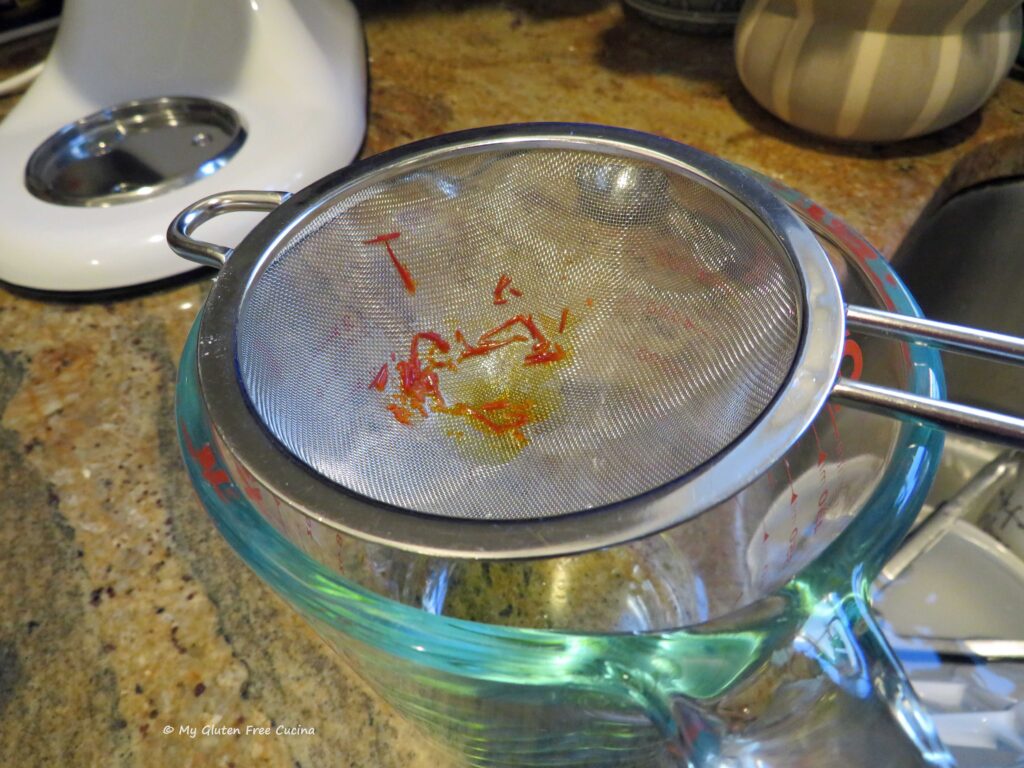
Whisk together the flour and salt in the bowl of a stand mixer.  Pour in the infused liquid through a sieve, reserving the saffron threads.

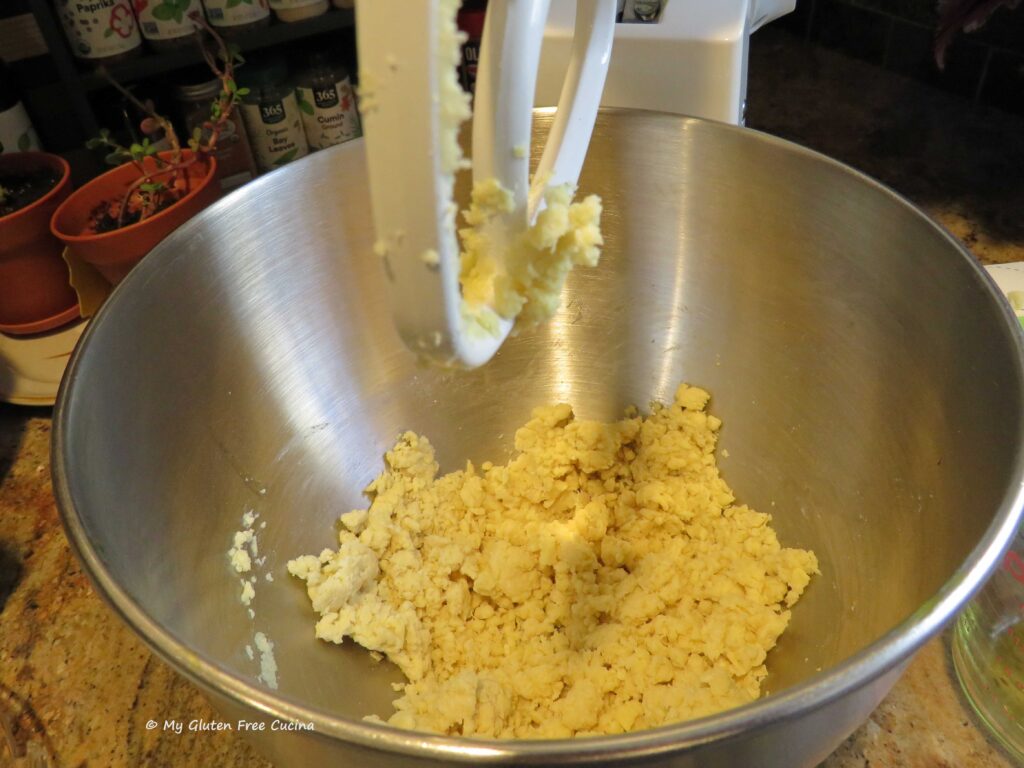
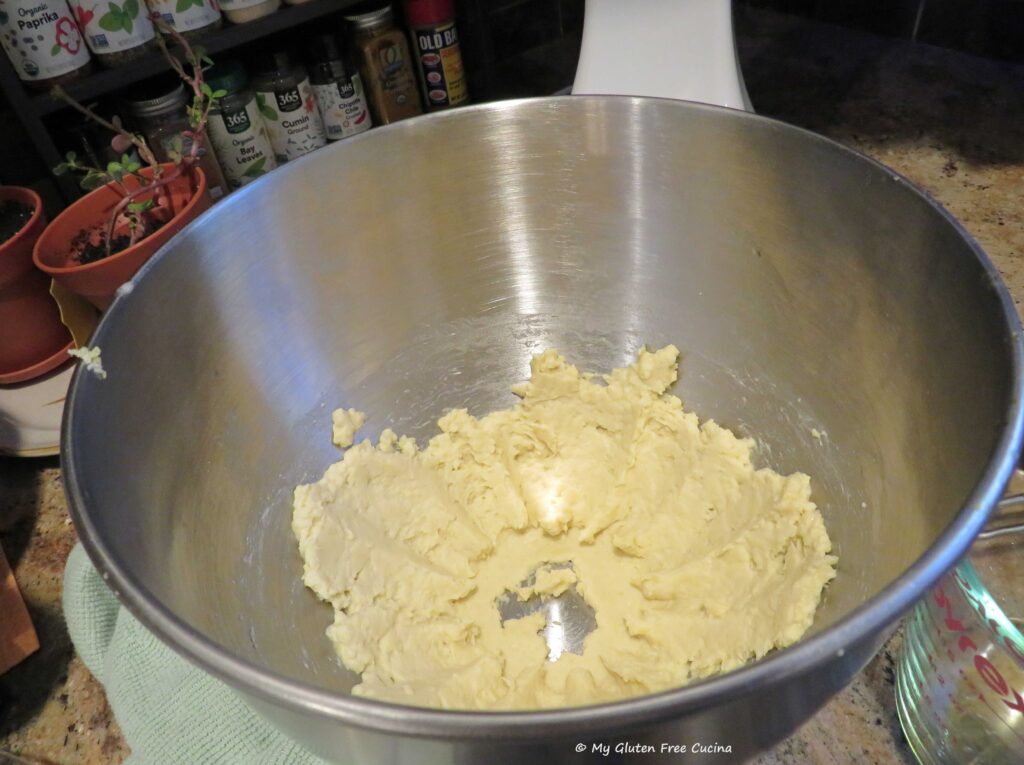
Drizzle in the olive oil and mix on low speed with the paddle attachment.  You may need up to 1/4 cup of additional water to achieve the right consistency.  If the dough looks crumbly like this, it is too dry.

Add the remaining water 1 tbsp. at a time until you have a very soft, smooth dough, like this.

Hint– If you need to add the additional water, pour it over the strained saffron threads so you get more of the coloring.

Use a spatula to gather the dough into a ball, then cover and let it rest at room temperature for about 20 minutes.

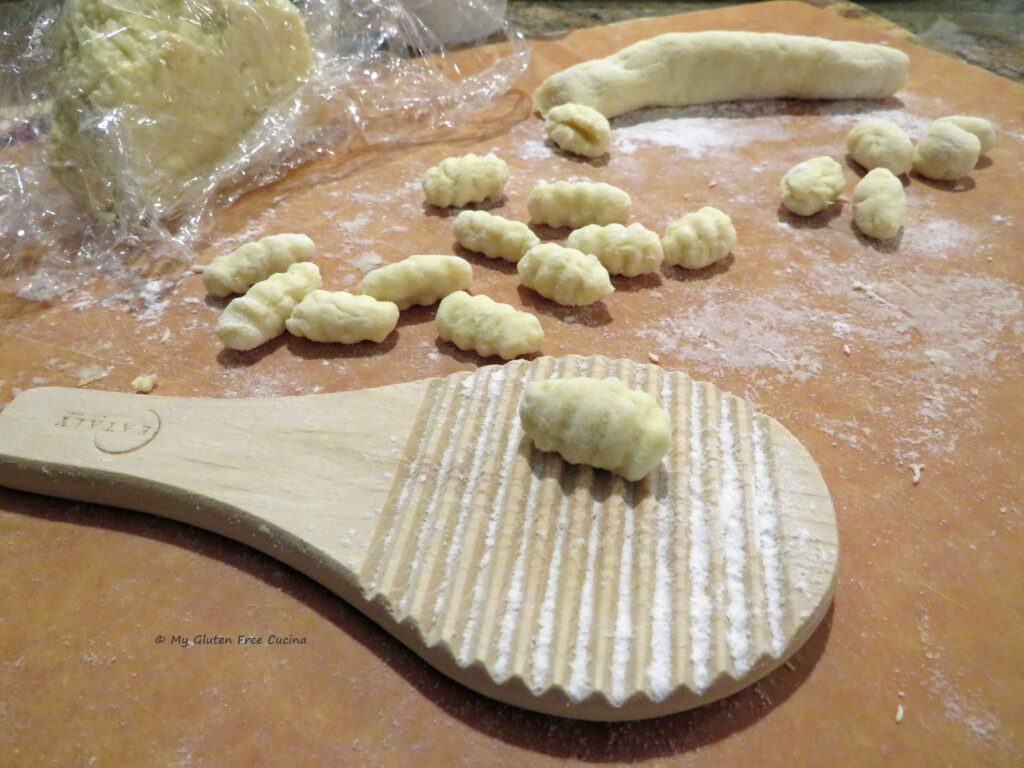
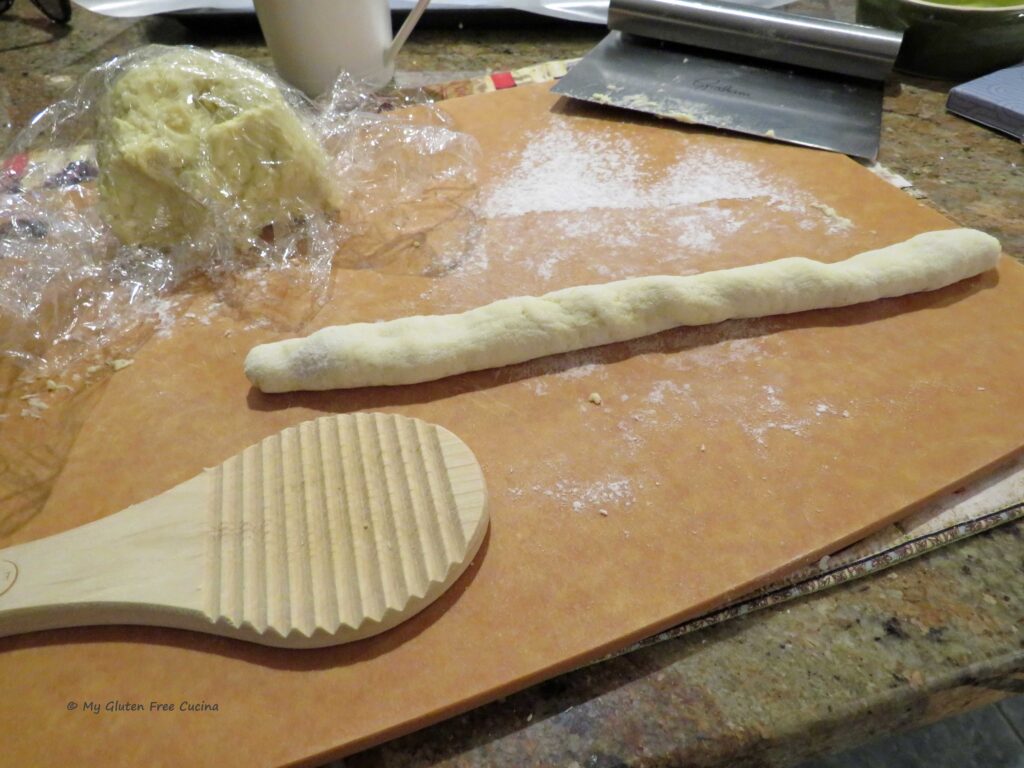
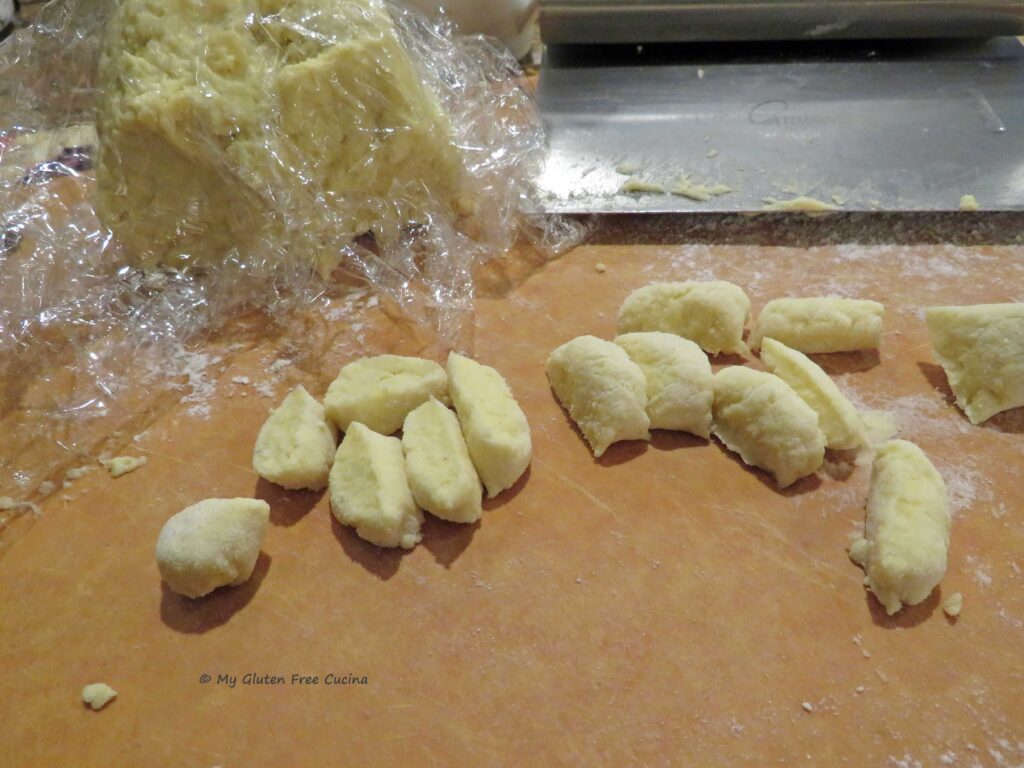
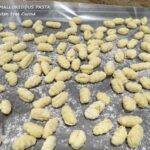
When you’re ready, flour a cutting board and divide the dough into 4 pieces.  Working with one section at a time, roll the dough into a thin rope, about 1/2″ wide.  Use a bench knife or butter knife to cut the rope into 1/2″ pieces, (this is a small pasta, don’t make the pieces too large).  Working quickly, roll each piece between floured palms to form small marbles.

Now roll each piece over the Malloreddus paddle, you can use your fingers or a bench knife.  Be sure to keep the paddle generously floured as you work.  A flour shaker is convenient to have on hand.

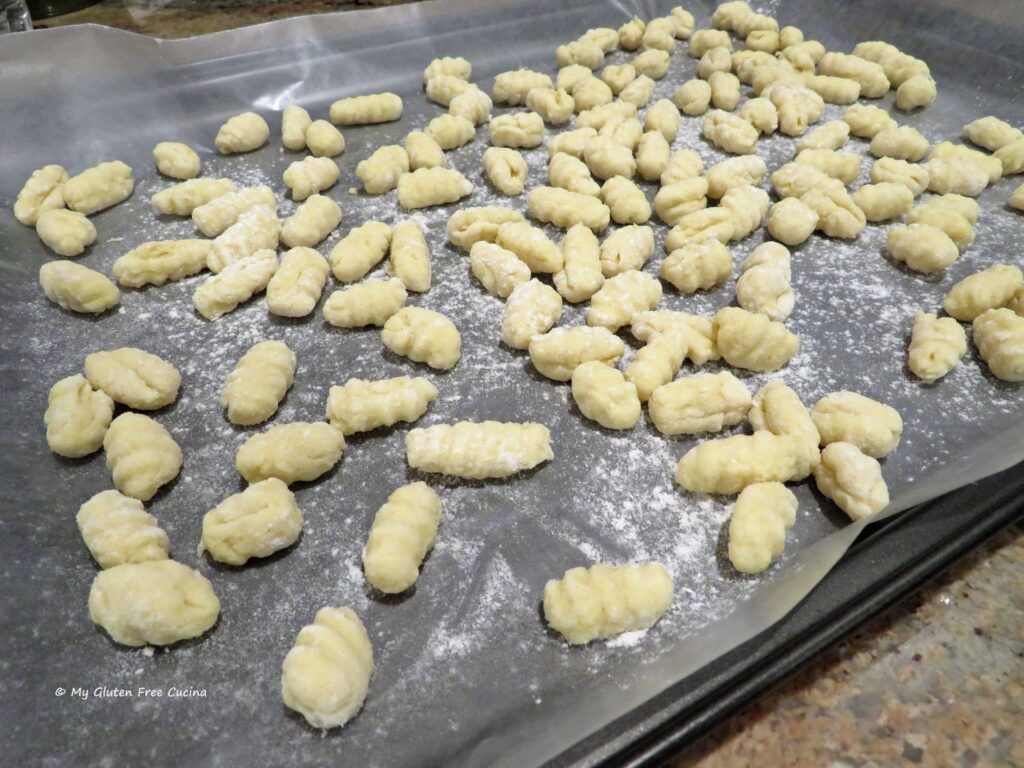
Arrange the pasta on a lightly floured baking pan in a single layer.  I lined mine with wax paper.  At this point, you can cover the pasta with plastic wrap and refrigerate it until you are ready to start cooking.

For longer term storage, place the pan in the freezer for a few hours, then transfer the pasta to a freezer safe bag.

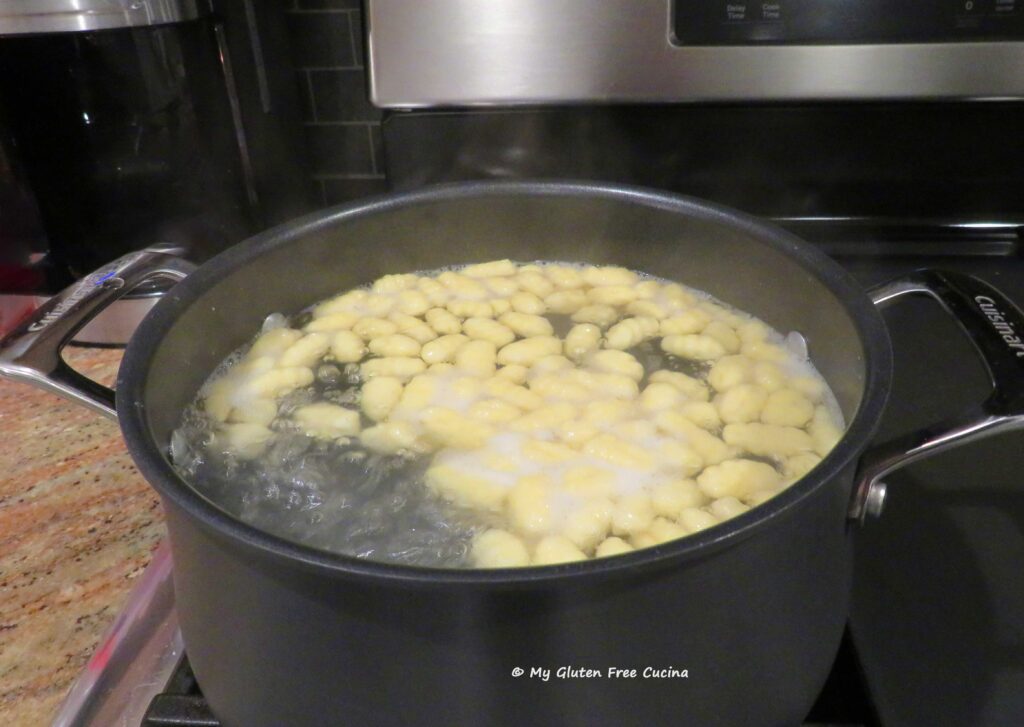
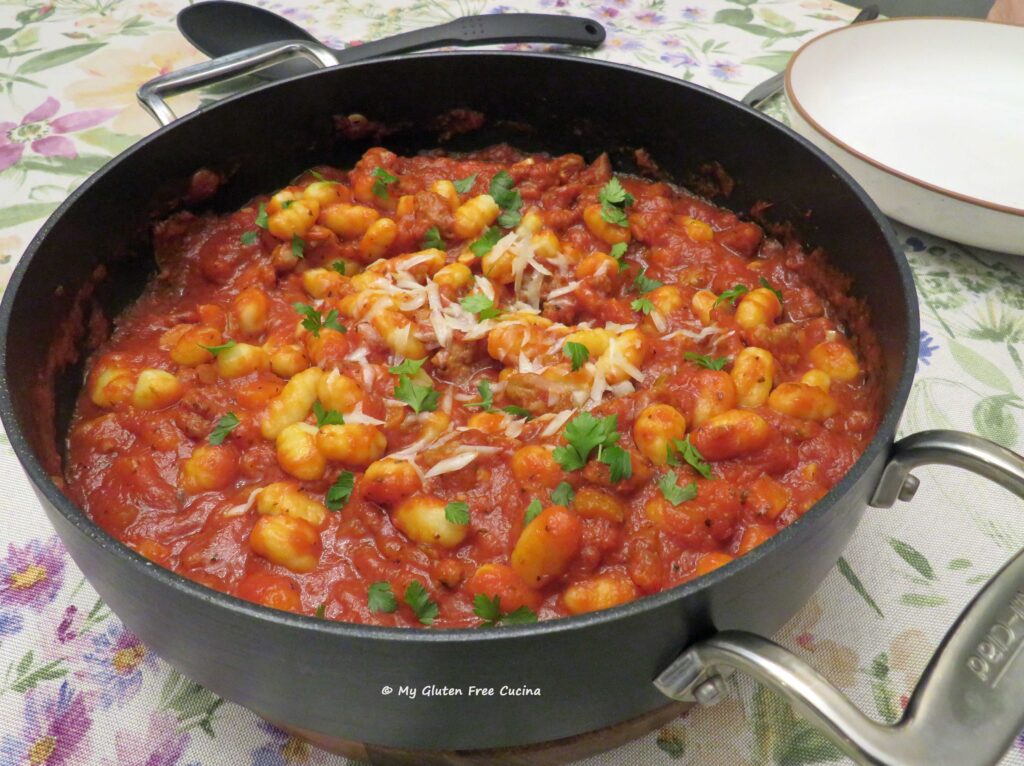
When your sauce is ready, heat a large pot of salted water to a rolling boil.  Add the pasta and set a timer for 3 minutes maximum.  Be careful not to overcook, as soon as the pasta floats to the top, it’s done!  Use a spider strainer to gently lift it out of the water, drain and place it directly into the sauce.  Finish with grated cheese and fresh Italian parsley.

I see you ogling that sauce! 😉 It’s a hearty Sausage Ragu, perfect for ridged pasta like this one.  Want to know more?  Be sure to check out the next recipe!

Notes ♪♫ Some of my readers have mentioned that they would like a gluten free pasta made without eggs.  This one is for you, friends.  The dough is every bit as soft and supple as egg pasta, so whether you can’t have eggs for dietary reasons, pricing or availability, this pasta is one you must try!

Print
clock clock iconcutlery cutlery iconflag flag iconfolder folder iconinstagram instagram iconpinterest pinterest iconfacebook facebook iconprint print iconsquares squares iconheart heart iconheart solid heart solid icon

Gluten Free Malloreddus Pasta

5 Stars 4 Stars 3 Stars 2 Stars 1 Star No reviews
  • Author: © My Gluten Free Cucina
  • Yield: 4 Servings 1x
  • Category: Dinner
  • Cuisine: Italian
  • Diet: Egg Free, Gluten-Free

Description

Malloreddus pasta is a type of gnocchi originating in Sardinia, Italy.  There are a few things that distinguish this regional pasta from other types of gnocchi.  The ridges on the Malloreddus paddle are wider and deeper than a traditional gnocchi board, to create the distinctive grooves.  They really soak up the sauce!


Ingredients

Units Scale
  • · 130 g. (1 cup) gluten free all-purpose flour
  • · 1/4 tsp. salt
  • · 1 tbsp. olive oil
  • · 1/2 cup warm water, divided
  • · pinch of saffron

Instructions

  1. Add a pinch of saffron to 1/4 cup warm water. Let it steep for 15 minutes.
  2. Whisk together the flour and salt in the bowl of a stand mixer. Pour in the infused liquid through a sieve, reserving the saffron threads.
  3. Drizzle in the olive oil and mix on low speed with the paddle attachment. You may need up to 1/4 cup of additional water to achieve the right consistency. If the dough looks crumbly, it is too dry.
  4. Add the remaining water 1 tbsp. at a time until you have a very soft, smooth dough.
  5. Hint- If you need to add the additional water, pour it over the strained saffron threads so you get more of the coloring.
  6. Use a spatula to gather the dough into a ball, then cover and let it rest at room temperature for about 20 minutes.
  7. When you’re ready, flour a cutting board and divide the dough into 4 pieces. Working with one section at a time, roll the dough into a thin rope, about 1/2″ wide. Use a bench knife or butter knife to cut the rope into 1/2″ pieces. Working quickly, roll each piece between floured palms to form small marbles.
  8. Now roll each piece over the Malloreddus paddle, you can use your fingers or a bench knife. Be sure to keep the paddle generously floured as you work. A flour shaker is convenient to have on hand.
  9. Arrange the pasta in a single layer on a lightly floured baking pan lined with wax paper. At this point, you can cover the pasta with plastic wrap and refrigerate it until you are ready to start cooking.
  10. For longer term storage, place the pan in the freezer for a few hours, then transfer the pasta to a freezer safe bag.
  11. When your sauce is ready, heat a large pot of salted water to a rolling boil. Add the pasta and set a timer for 3 minutes maximum. Be careful not to overcook, as soon as the pasta floats to the top, it’s done! Use a spider strainer to gently lift it out of the water, drain and place it directly into the sauce. Finish with grated cheese and fresh Italian parsley.

Notes

Some of my readers have mentioned that they would like a gluten free pasta made without eggs.  This one is for you, friends.  The dough is every bit as soft and supple as egg pasta, so whether you can’t have eggs for dietary reasons, pricing or availability, this pasta is one you must try!

© My Gluten Free Cucina * All Rights Reserved

Unauthorized use and/or duplication of this material without express and written permission from this blog’s author and/or owner is strictly prohibited.

Better Batter Collaborator

When you shop Better Batter | Gluten Free Flour, use my Promo Code MGFC30 for 30% off your non-sale purchase!


Gluten Free Corn Muffins

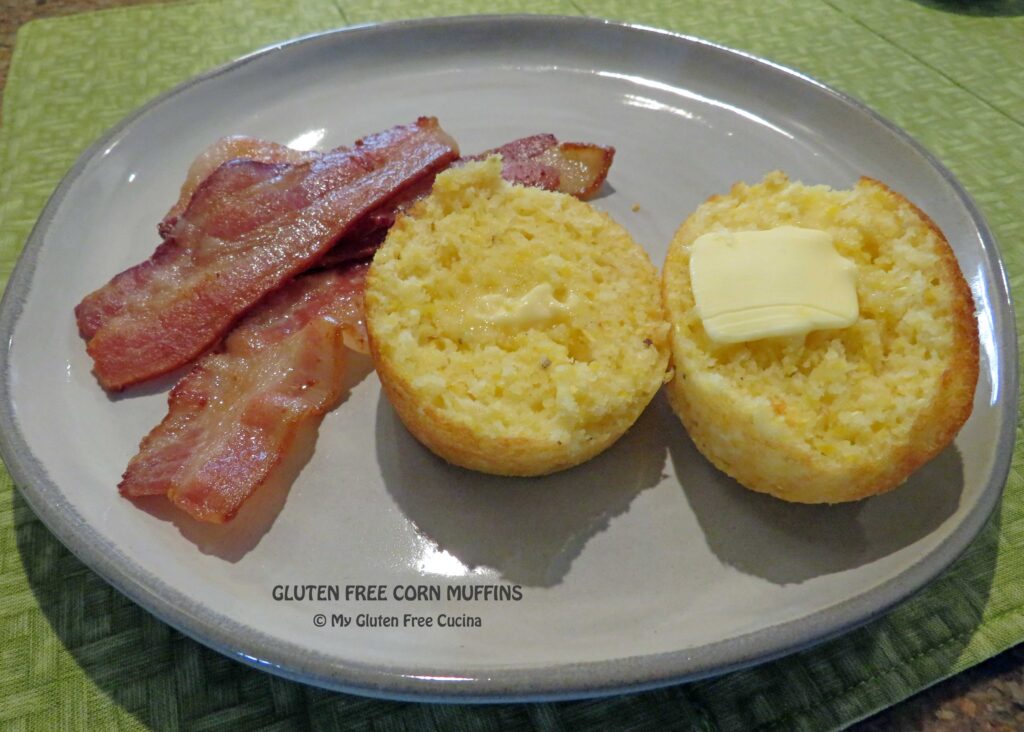
Corn muffins are classic comfort food, and they are easy enough for novice bakers to prepare.  The ingredients are pantry staples.  Flour, cornmeal, sugar, oil, eggs, and milk.  Recipes can be found online, in magazines and in practically every vintage cookbook.

Are corn muffins gluten free?

Any of these recipes can easily be adapted to gluten free by changing just one ingredient, the flour.  This is my gluten free adaptation, and the muffins are not overly sweet, making them perfect for breakfast.  So, ditch the mix and let’s bake some gluten free corn muffins from scratch!

This post contains affiliate links.

Ingredients:

  • 150 g. cornmeal (1 cup)
  • 100 g. gluten free all-purpose flour (3/4 cup)
  • 40 g. sugar (3 tbsp.)
  • 10 g. baking powder (2-1/2 tsp.)
  • 5 g. salt (3/4 tsp.)
  • 2 large eggs
  • 1 cup milk (I used 2%)
  • 1/4 cup canola oil
  • cooking spray
  • 1 tbsp. melted butter, for finishing

preparation:

Weigh the dry ingredients in one bowl and whisk together the wet ingredients in another.

Add the dry ingredients to the wet, and stir together with a batter whisk, just until moistened.  Let the batter rest while you preheat the oven to 400º.

Resting the batter allows the flour to hydrate and avoid that gritty texture.

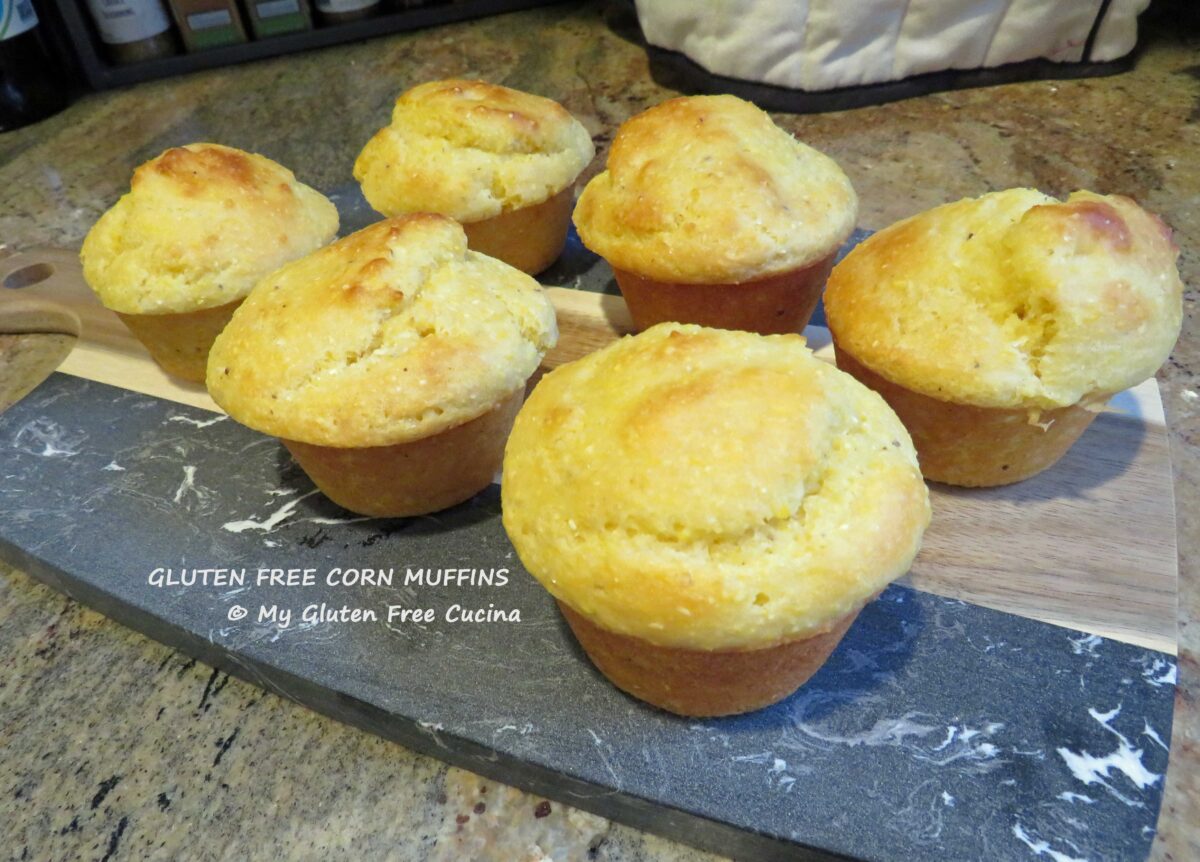
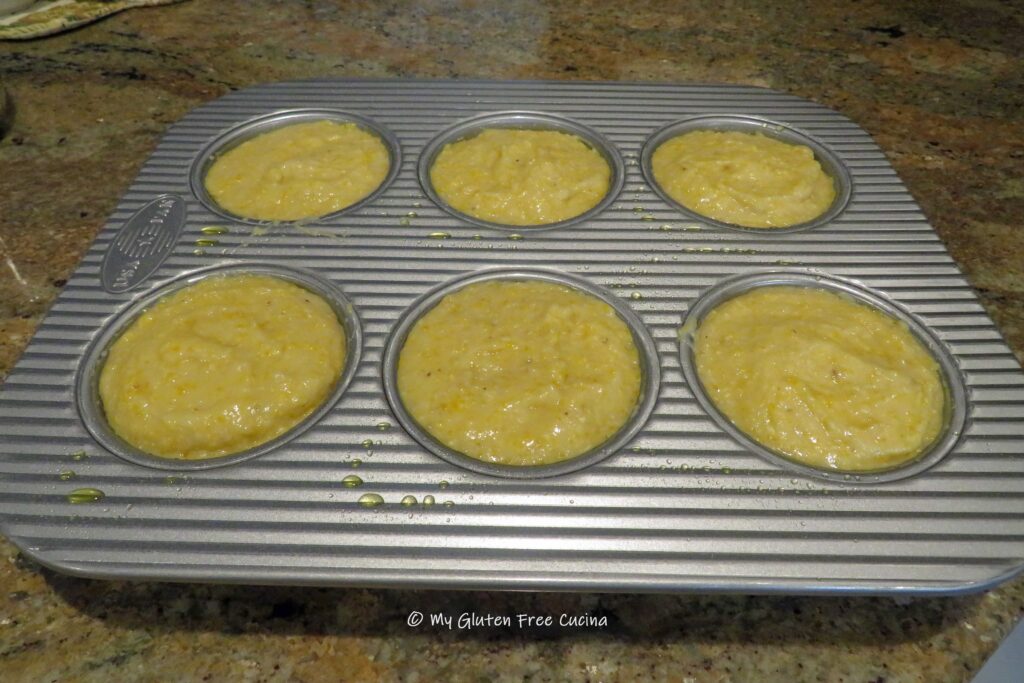
Mist a 12-cup muffin tin with cooking spray.  If you prefer smaller muffins (good for kids and small appetites), fill 12 muffin cups to about 2/3 full and bake for 15 minutes.  For mid-sized muffins, fill 9 muffin cups to about 3/4 full and bake for 15-17 minutes.   

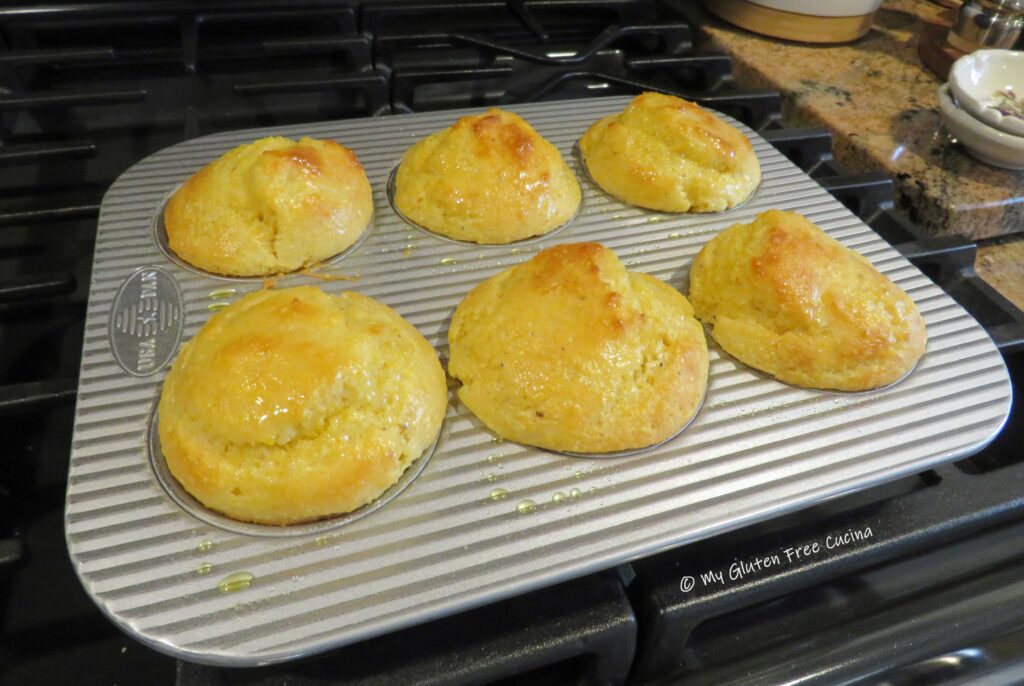
For big bakery size muffins use a 6-cup muffin tin and fill batter to the top.  Bake for 20 minutes.

Check the center with a toothpick, and if it comes out dry, they are done.  Brush the tops with melted butter, then transfer to a rack to cool.

Muffins can be stored at room temperature for one day, and any leftover after that can be frozen.

Notes ♪♫ You probably have most of the ingredients to make these corn muffins in your pantry.  I recommend Better Batter Original Blend for the flour, but you can use any one-to-one gluten free blend.  For the cornmeal, I used Bobs Red Mill.

Print
clock clock iconcutlery cutlery iconflag flag iconfolder folder iconinstagram instagram iconpinterest pinterest iconfacebook facebook iconprint print iconsquares squares iconheart heart iconheart solid heart solid icon

Gluten Free Corn Muffins

5 Stars 4 Stars 3 Stars 2 Stars 1 Star No reviews
  • Author: © My Gluten Free Cucina
  • Yield: 6-12 muffins 1x
  • Category: Breakfast, Snack
  • Method: Baking
  • Diet: Gluten-Free

Description

Corn muffins are classic comfort food, and they are easy enough for novice bakers to prepare.  The ingredients are pantry staples.


Ingredients

Units Scale
  • 150 g. cornmeal (1 cup)
  • 100 g. gluten free all-purpose flour (3/4 cup)
  • 40 g. sugar (3 tbsp.)
  • 10 g. baking powder (2-1/2 tsp.)
  • 5 g. salt (3/4 tsp.)
  • 2 large eggs
  • 1 cup milk (I used 2%)
  • 1/4 cup canola oil
  • cooking spray
  • 1 tbsp. melted butter, for finishing

Instructions

Weigh the dry ingredients in one bowl and whisk together the wet ingredients in another.

Add the dry ingredients to the wet, and stir together with a batter whisk, just until moistened.  Let the batter rest while you preheat the oven to 400º.

Resting the batter allows the flour to hydrate and avoid that gritty texture.

Mist a muffin tin with cooking spray.  If you prefer smaller muffins (good for kids and small appetites), fill 12 muffin cups to about 2/3 full and bake for 15 minutes.  For mid-sized muffins, fill 9 muffin cups to about 3/4 full and bake for 15-17 minutes.

For big bakery size muffins use a 6-cup muffin tin and fill batter to the top.  Bake for 20 minutes.

Check the center with a toothpick, and if it comes out dry, they are done.  Brush the tops with melted butter, then transfer to a rack to cool.

Muffins can be stored at room temperature for one day, and any leftover after that can be frozen.


Notes

You probably have most of the ingredients to make these corn muffins in your pantry.  I recommend Better Batter Original Blend for the flour, but you can use any one-to-one gluten free blend.  For the cornmeal, I used Bobs Red Mill.


Gluten Free Italian Torpedo Rolls

I’m pretty excited about these Italian Torpedo Rolls!  When I was a kid, we always had them, fresh from the Italian bakery at every party and family gathering.  I can still remember tearing one apart, the chewy texture of the crust giving way to the soft pillowy white bread inside.  This recipe is as close as I have ever come to replicating those bakery rolls.

Yes, they are gluten free!

You are going to love this recipe!  

Just 5 ingredients!  Mix up the dough, rest on the counter overnight and bake in the morning.  Use a stand mixer, or don’t!  Try it and see if anyone can guess that these rolls are gluten free.

This post contains affiliate links.

About the flour

My bread friends know that I am a big fan of Better Batter flour for bread baking.  So, which one is my favorite?  Their Artisan Flour Blend is at the top of my list.  It produces incredible breads with great flavor and texture every time.  But their new Bread Flour is a star in its own right, especially if you want a true white bread.

This recipe is another of my experiments with blending these 2 flours together.  I really think I have hit on the perfect flavor and texture of Italian Bread that I was looking for.  You can use all bread flour if preferred.

Remember to use my Promo Code MGFC30 when you shop at Better Batter, for 30% off full price items!

Enough talk, time to bake!

Ingredients:

Preparation:

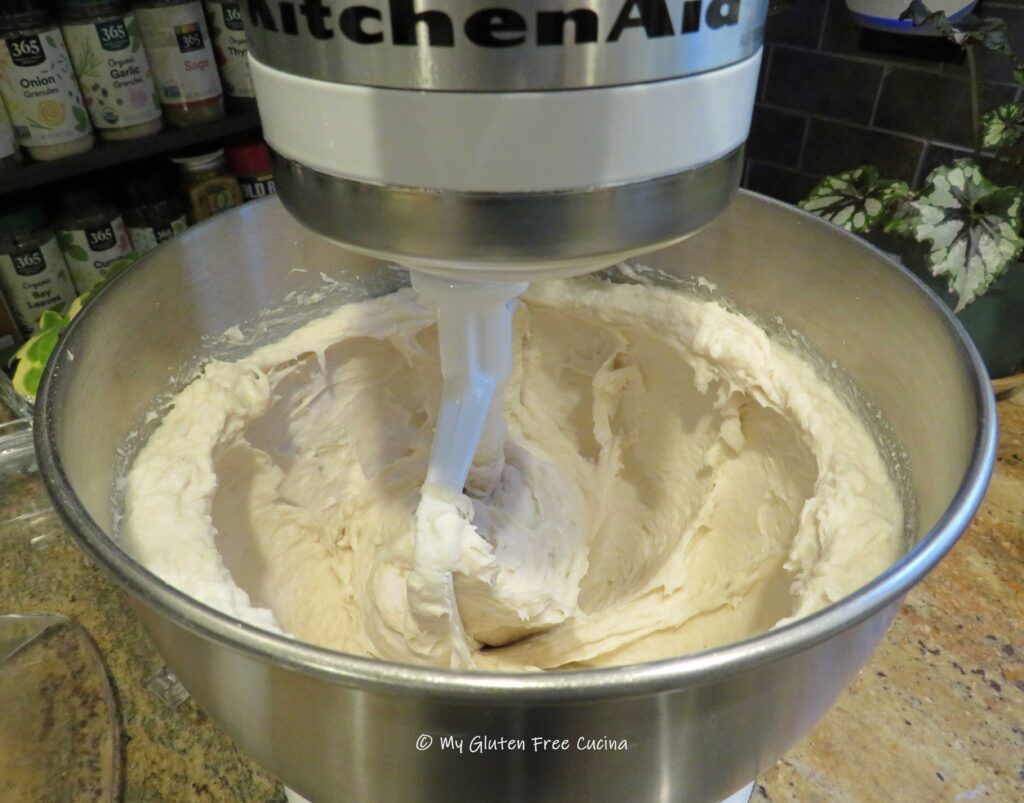
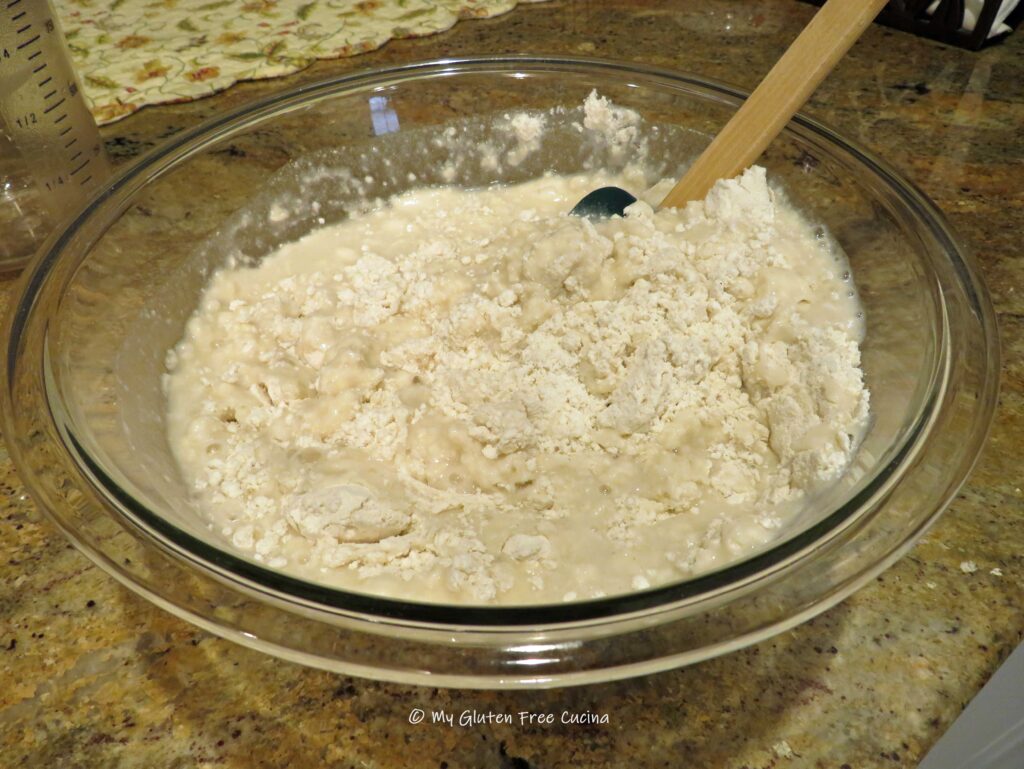
Weigh all the ingredients (yes, even the water, use a scale!).  Combine the flours, salt and yeast in the bowl of a stand mixer and whisk well.  Add the water and beat for 6 minutes on low speed with the paddle attachment.

No stand mixer?  You can combine everything in a large bowl with a dough whisk.  Be sure to turn the dough over on itself a few dozen times, while rotating the bowl to ensure the ingredients are well incorporated.

Now cover the bowl with plastic wrap and leave it on the counter (room temperature) overnight for 12-13 hours.  I like to make my dough around 8pm, then shape the rolls while I’m having coffee the next morning, around 9am.

In the morning, preheat the oven to 475º with a baking stone on the middle rack.  Turn the dough out onto an oiled cutting board.  Use a bench knife to divide it into 4 sections.

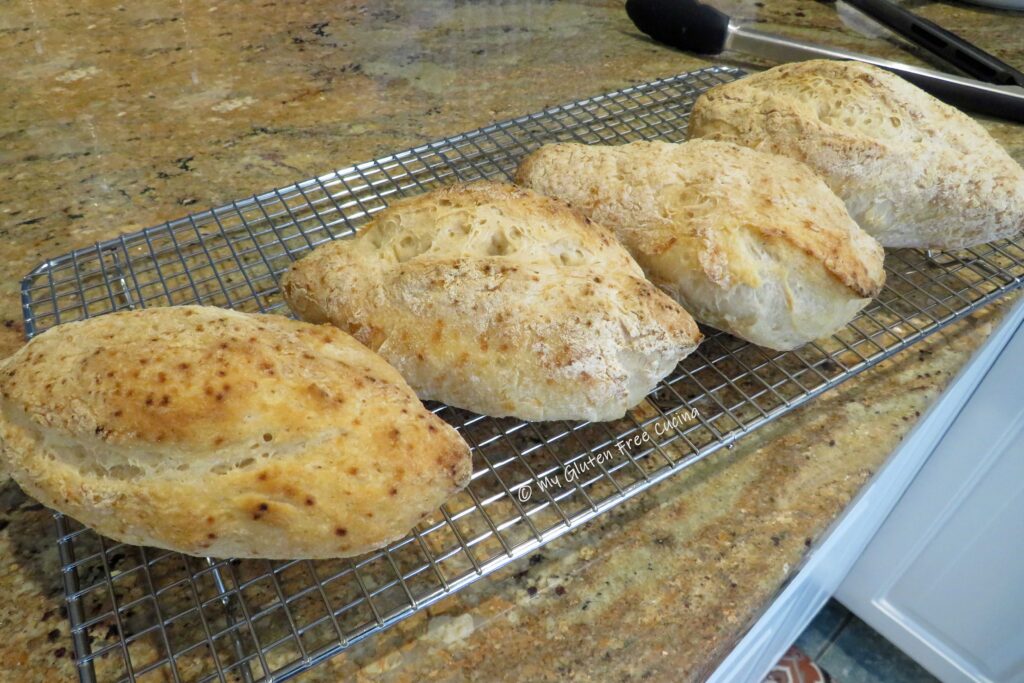
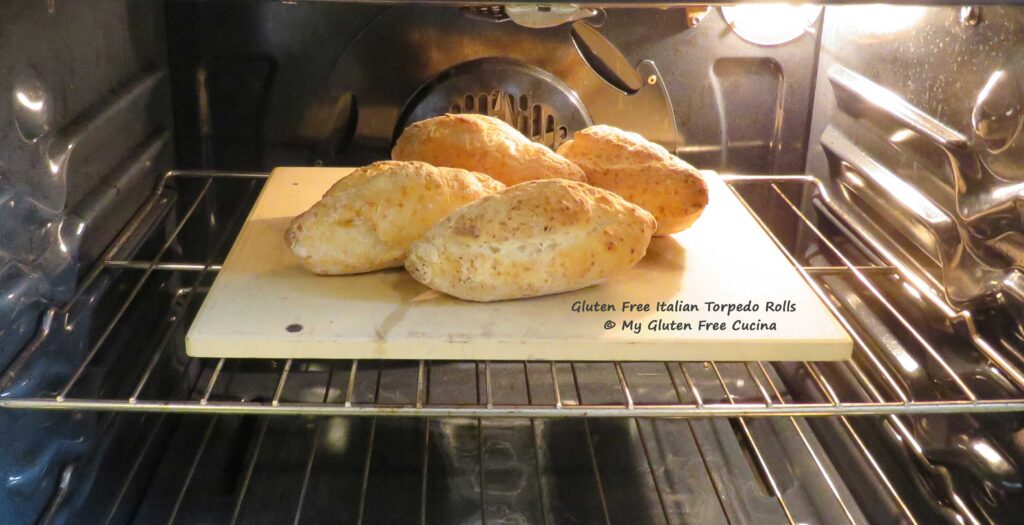
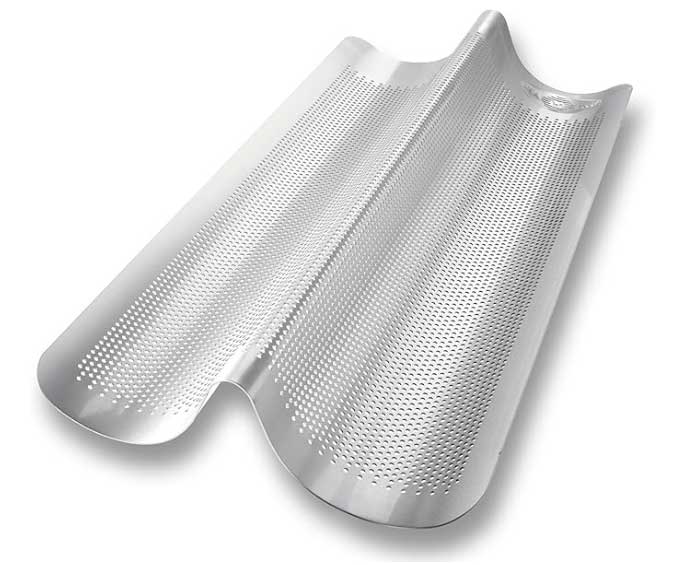
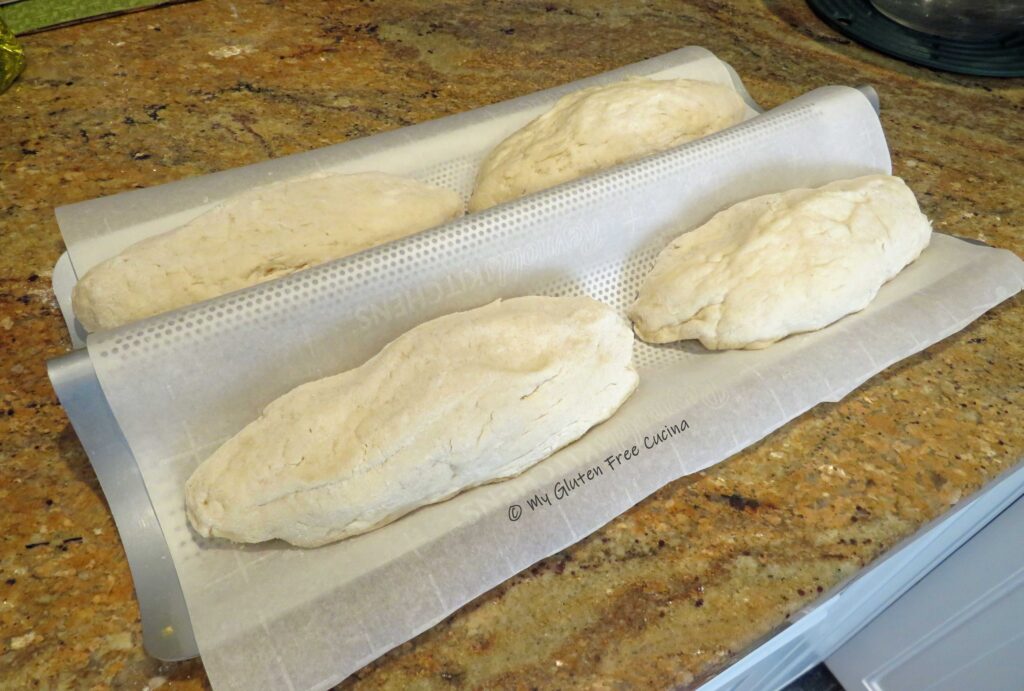
Flour your work surface and gently roll each section into a torpedo shape (oval with tapered ends).  Arrange them on a lightly floured baking sheet lined with parchment or use a perforated loaf pan.  Score the rolls with a sharp knife or a lame positioned at an angle.

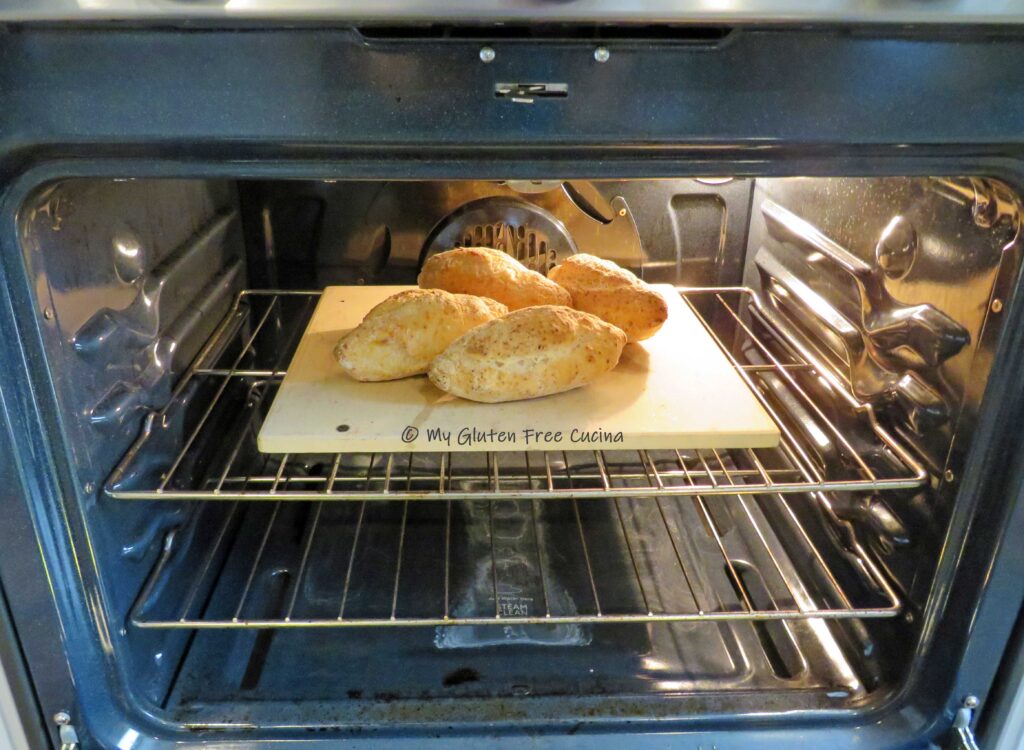
Place in the oven and spray the rolls and sides of the oven with water to create steam.  Bake for 35 minutes at 475º, then remove from the pan and bake directly on the stone during the last 10 minutes.

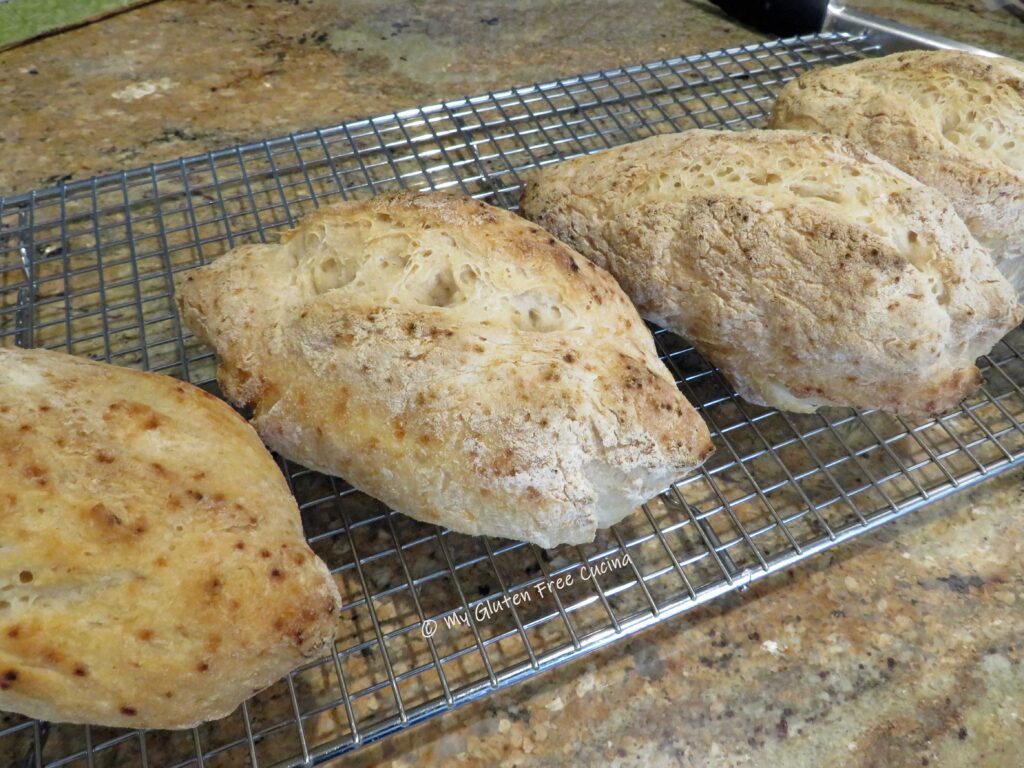
Rolls are done baking when the internal temperature reaches 210º.  The crust should be firm and dry, and you will get that hollow sound when you give the rolls a sharp tap.  Remove from the oven and place on a rack to cool.

Wait for at least 8 hours and up to one day before slicing.  Remember that bread, especially gluten free bread continues to release moisture when it comes out of the oven, so you want to give it plenty of time for the center of the loaf to fully set!

You are going to have a hard time waiting for these rolls, but I promise it will be worth your patience!

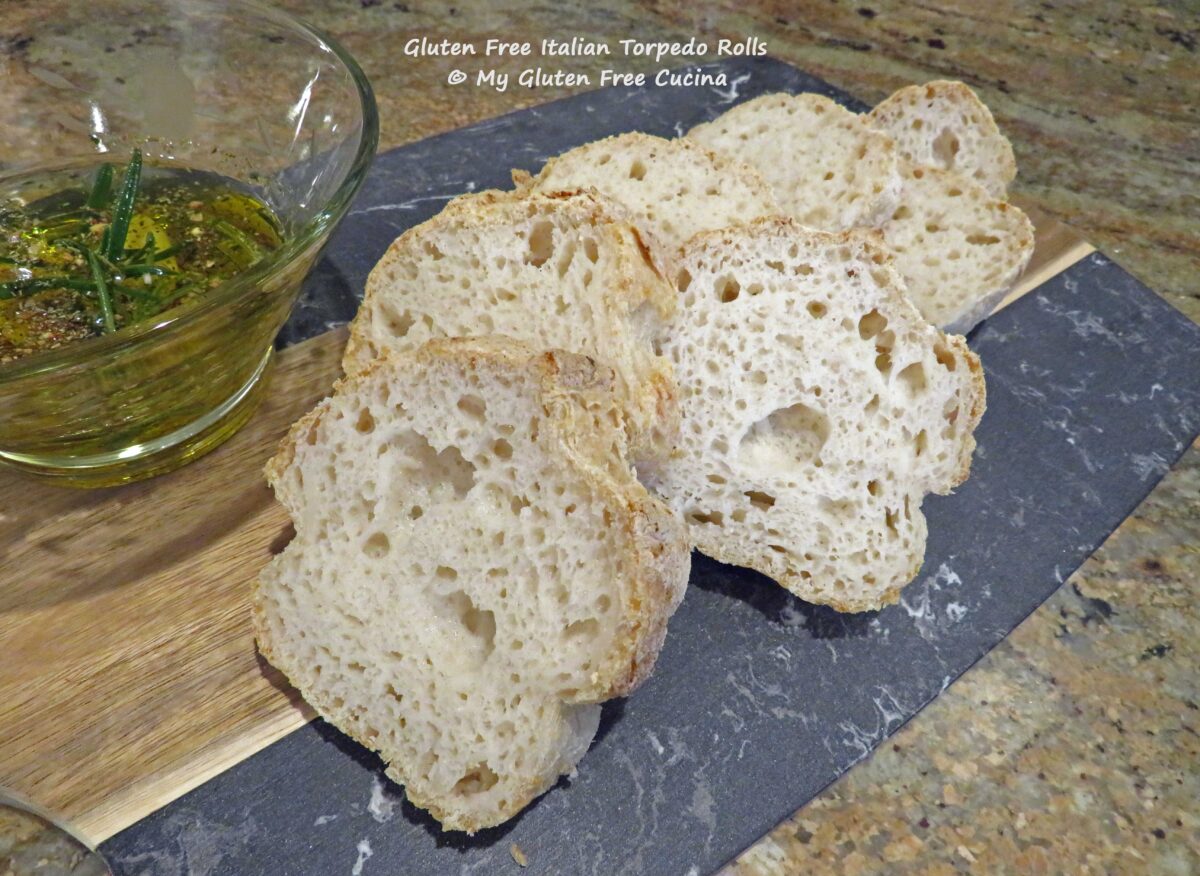
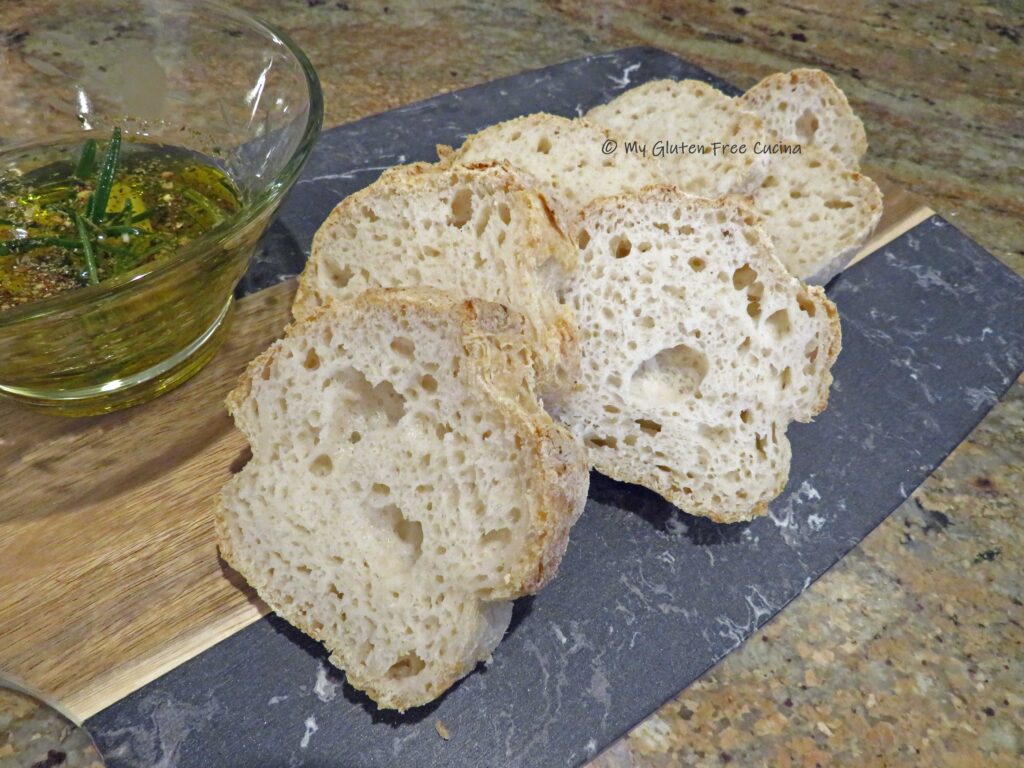
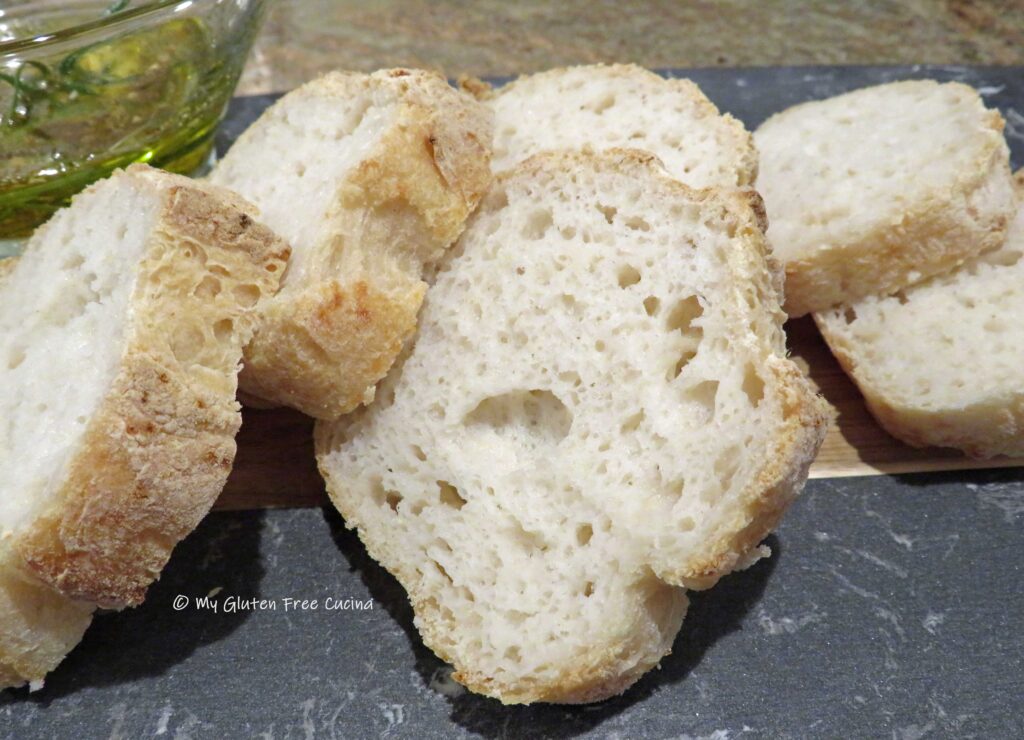
At long last, it’s time for tasting.  These rolls are generously sized.  Just like the bakery rolls of my youth.  And back then, I could devour an entire roll in minutes!  Here I’ve just sliced one up for dipping and to show you the crumb.

What would you do with a homemade, hot out of the oven Italian roll like this?  Dip it in olive oil, or slather with garlic butter and toast it?  Slice it thin for bruschetta?  Maybe load it up with veggies, cold cuts and cheese to make a panino (a/k/a sub, hoagie)!  And for big appetites, you can serve them as dinner rolls (mop up that sauce!) or sandwich rolls.

However you choose to enjoy them, these rolls are delicious!

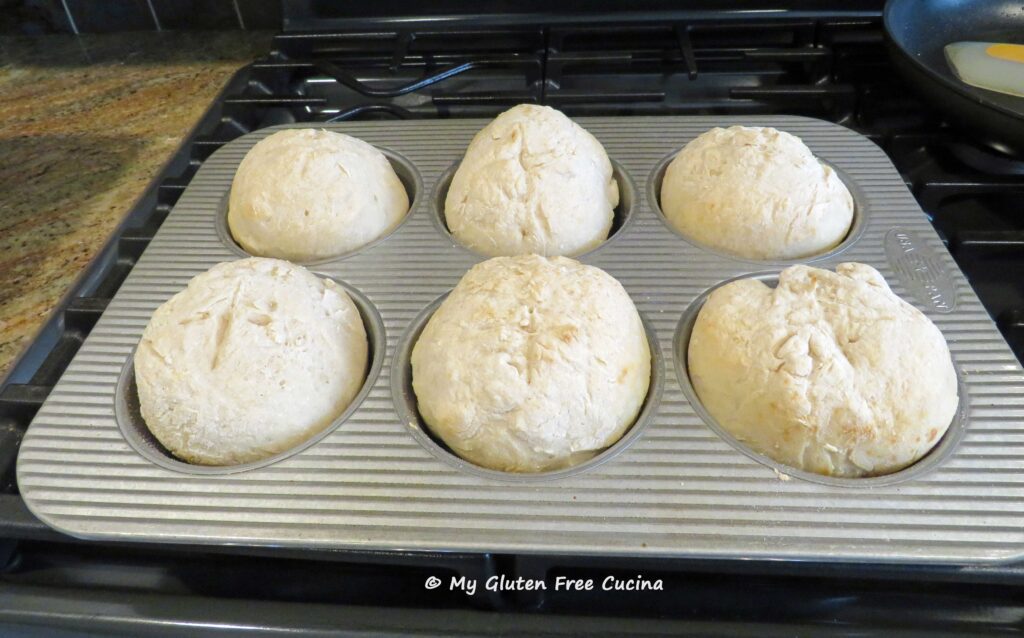
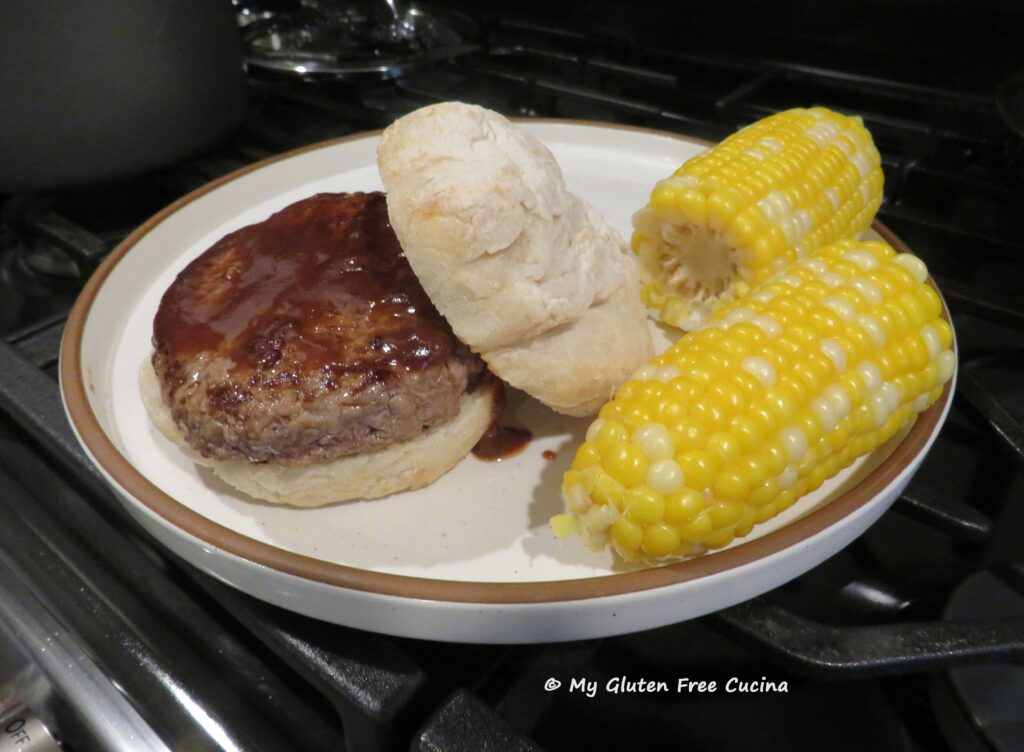
Variation: Instead of torpedo rolls, shape the dough into 6 round bulky Italian rolls.  You will be the envy of the BBQ!  Be sure to adjust the bake time to 25 minutes.

Notes ♪♫ Like most breads, these rolls are best when eaten within 1-2 days.  I recommend freezing any left over after the first day.  You can reheat them in the microwave, but they will have the best their texture when toasted.

Print
clock clock iconcutlery cutlery iconflag flag iconfolder folder iconinstagram instagram iconpinterest pinterest iconfacebook facebook iconprint print iconsquares squares iconheart heart iconheart solid heart solid icon

Gluten Free Italian Torpedo Rolls

5 Stars 4 Stars 3 Stars 2 Stars 1 Star No reviews
  • Author: © My Gluten Free Cucina
  • Category: Gluten Free Bread
  • Method: Baking
  • Cuisine: Italian
  • Diet: Gluten-Free

Description

You are going to love this recipe!  

Just 5 ingredients!  Mix up the dough, rest on the counter overnight and bake in the morning.  Use a stand mixer, or don’t!  Try it and see if anyone can guess that these rolls are gluten free.


Ingredients

Units Scale
  • · 490 g. Better Batter Bread Flour
  • · 90 g. Better Batter Artisan Flour Blend
  • · 8 g. salt
  • · 2 g. instant yeast (about 1/2 tsp.)
  • · 560 g. (about 2-1/2 cups) warm water

Instructions

  1. Weigh all the ingredients (yes, even the water, use a scale!). Combine the flours, salt and yeast in the bowl of a stand mixer and whisk well. Add the water and beat for 6 minutes on low speed with the paddle attachment.
  2. No stand mixer? You can combine everything in a large bowl with a dough whisk. Be sure to turn the dough over on itself a few dozen times, while rotating the bowl to ensure the ingredients are well incorporated.
  3. Now cover the bowl with plastic wrap and leave it on the counter (room temperature) overnight for 12-13 hours. I like to make my dough around 8pm, then shape the rolls while I’m having coffee the next morning, around 9am.
  4. In the morning, preheat the oven to 475º with a baking stone on the middle rack. Turn the dough out onto an oiled cutting board. Use a bench knife to divide it into 4 sections.
  5. Flour your work surface and gently roll each section into a torpedo shape (oval with tapered ends). Arrange them on a lightly floured baking sheet lined with parchment or use a perforated loaf pan. Score the rolls with a sharp knife or a lame positioned at an angle.
  6. Place in the oven and spray the rolls and sides of the oven with water to create steam. Bake for 35 minutes at 475º, then remove from the pan and bake directly on the stone during the last 10 minutes.
  7. Rolls are done baking when the internal temperature reaches 210º. The crust should be firm and dry, and you will get that hollow sound when you give the rolls a sharp tap. Remove from the oven and place on a rack to cool.
  8. Wait for at least 8 hours and up to one day before slicing. Remember that bread, especially gluten free bread continues to release moisture when it comes out of the oven, so you want to give it plenty of time for the center of the loaf to fully set!

Notes

Notes ♪♫ Like most breads, these rolls are best when eaten within 1-2 days.  I recommend freezing any left over after the first day.  You can reheat them in the microwave, but they will have the best their texture when toasted.

© My Gluten Free Cucina * All Rights Reserved

Unauthorized use and/or duplication of this material without express and written permission from this blog’s author and/or owner is strictly prohibited.

Better Batter Collaborator

When you shop Better Batter | Gluten Free Flour, use my Promo Code MGFC30 for 30% off your non-sale purchase!


Gluten Free Sourdough Discard Zucchini Bread

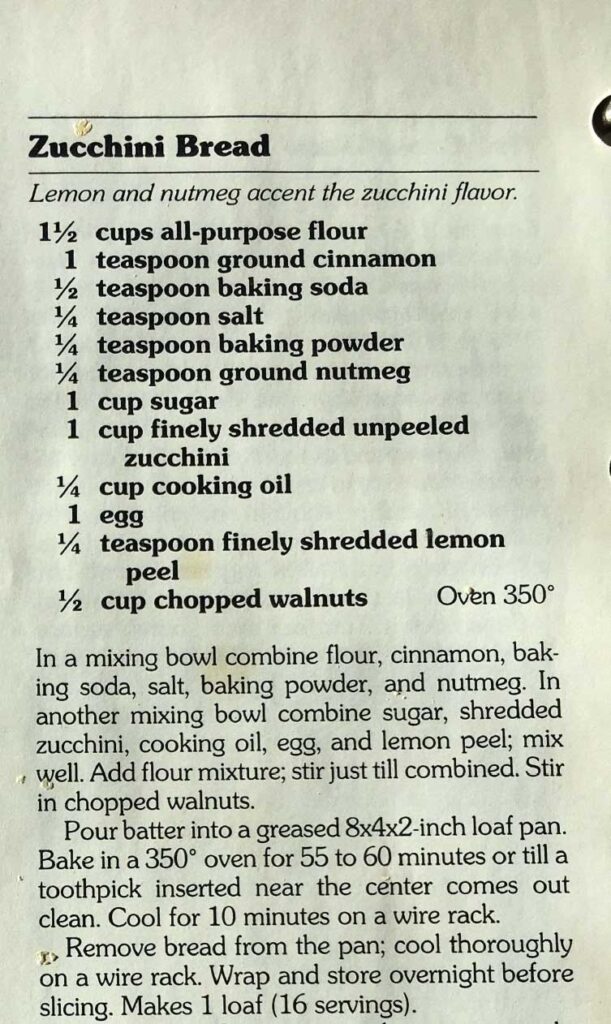
If you are of a certain age, you had that cookbook.  Maybe you still have a copy, the one with the checkerboard cover that every new bride had to have in her kitchen.  The recipes were straight forward and always tasted great.  No pictures, no stories, just ingredients and instructions.

This recipe is adapted from that same book; it’s an old favorite of mine that I used to make all the time before my Celiac diagnosis.

Why Sourdough Starter?

To adapt this quick bread to be gluten free, I knew that some additional liquid would be needed.  I considered things like yogurt, sour cream or applesauce.  But I had my starter in the fridge waiting to be fed so….

The Flour

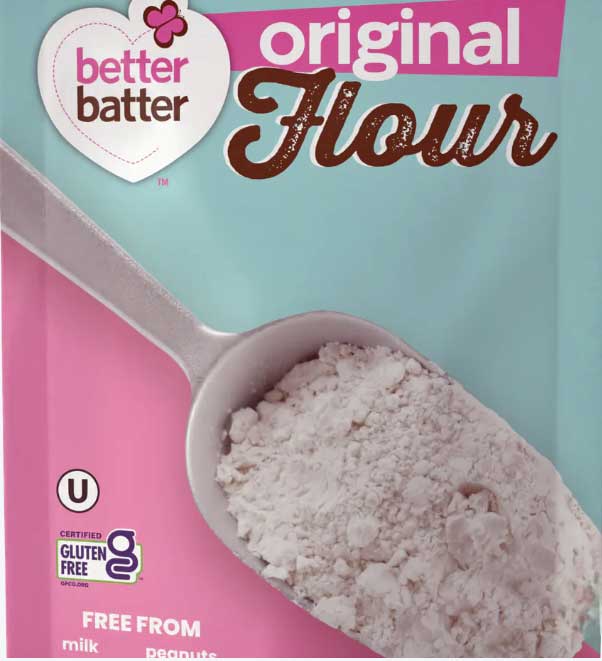
I used Better Batter original blend in my recipe, converted at 130 g. per cup.  It is my favorite flour for making muffins and quick breads!

This post contains affiliate links.

Adapted from the Better Homes and Gardens® New Cookbook (the not so new version 😂).

Ingredients:

Dry Ingredients

  • 195 g. gluten free all-purpose flour (about 1-1/2 cups)
  • 1.3 g. cinnamon (1 tsp.)
  • 3.3 g. baking soda (1/2 tsp.)
  • 1.6 g. salt (1/4 tsp.)
  • .75 g. baking powder (1/4 tsp.)
  • .6 g. nutmeg (1/4 tsp.)

Wet Ingredients

  • 105 g. granulated sugar (1/2 cup)
  • 47 g. brown sugar (1/4 cup)
  • 65 g. sourdough discard (1/4 cup)
  • 50 g. canola oil (1/4 cup)
  • 50 g. egg (1 large)
  • 1 cup shredded zucchini (about 1/2 medium)
  • zest of 1/2 lemon
  • pecan halves (optional)

Preparation:

For best results, I strongly recommend that you weigh your ingredients.  Traditional cup and spoon measurements are provided as well, but at the very least always weigh the flour.

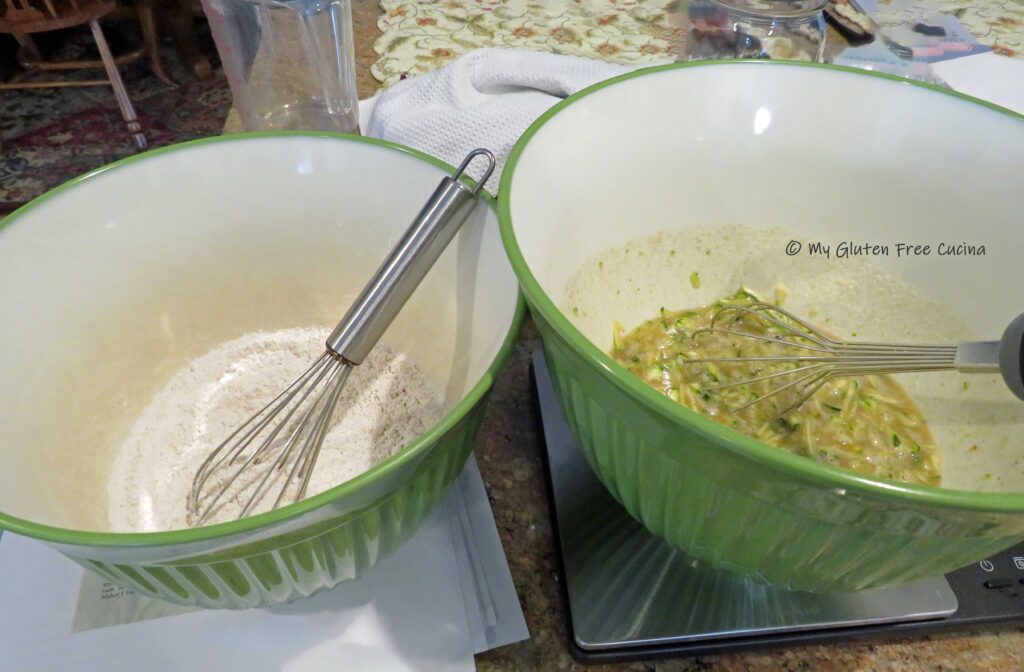
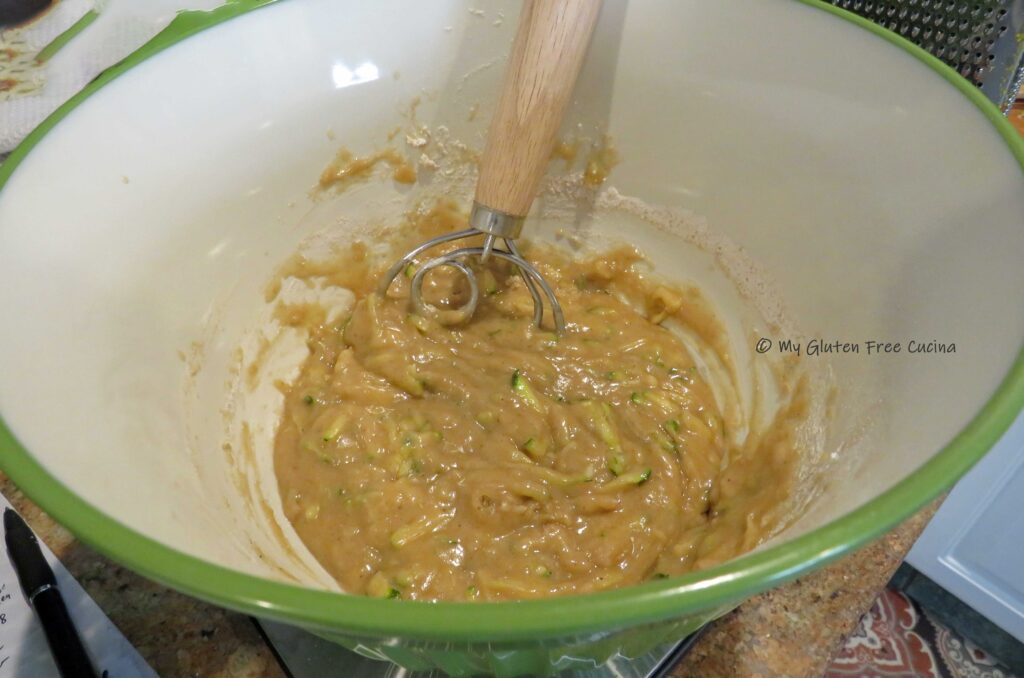
Whisk the wet ingredients together in one bowl, and the dry ingredients in another.  Use a batter whisk to stir the wet and dry ingredients together, just until moistened.

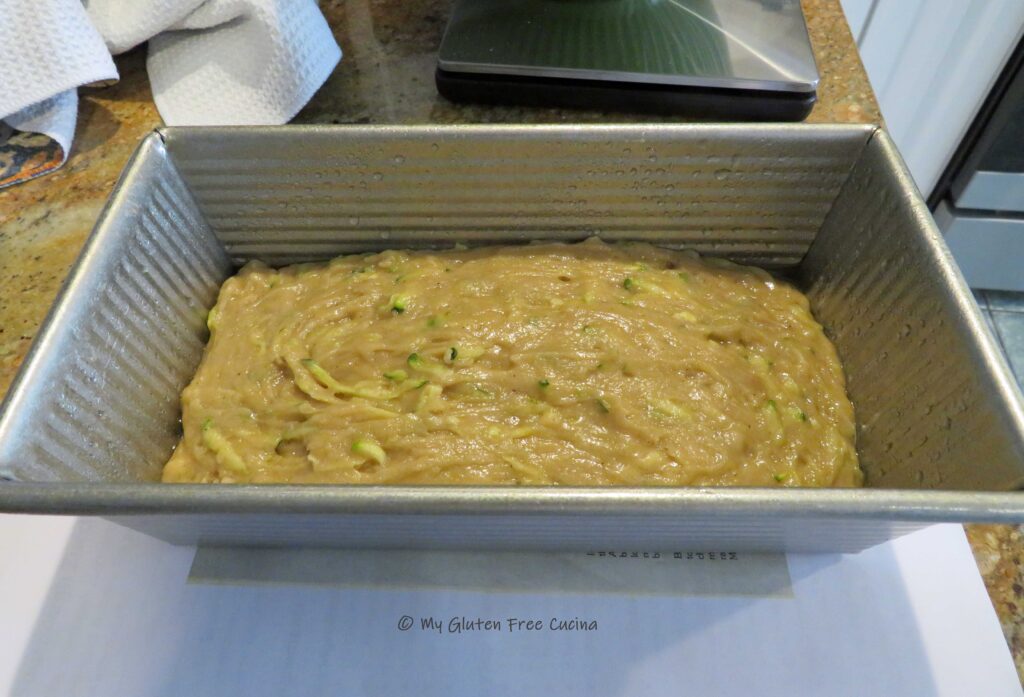
Scrape the batter into a standard 1 lb. loaf pan misted with oil.

💡 Let the batter rest while you preheat the oven to 350º.

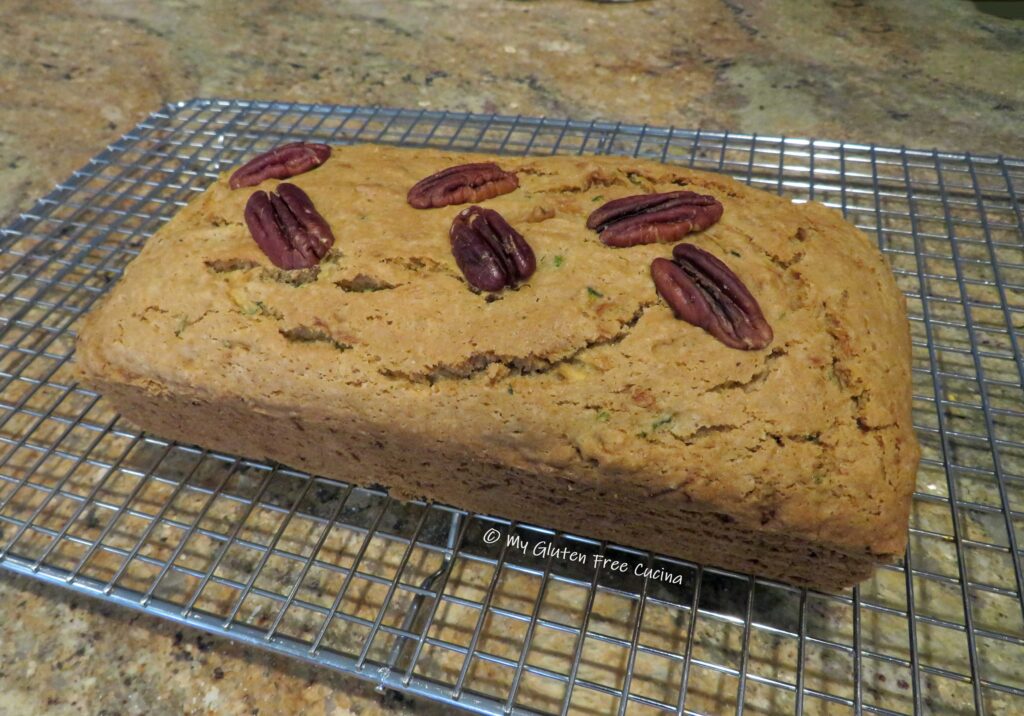
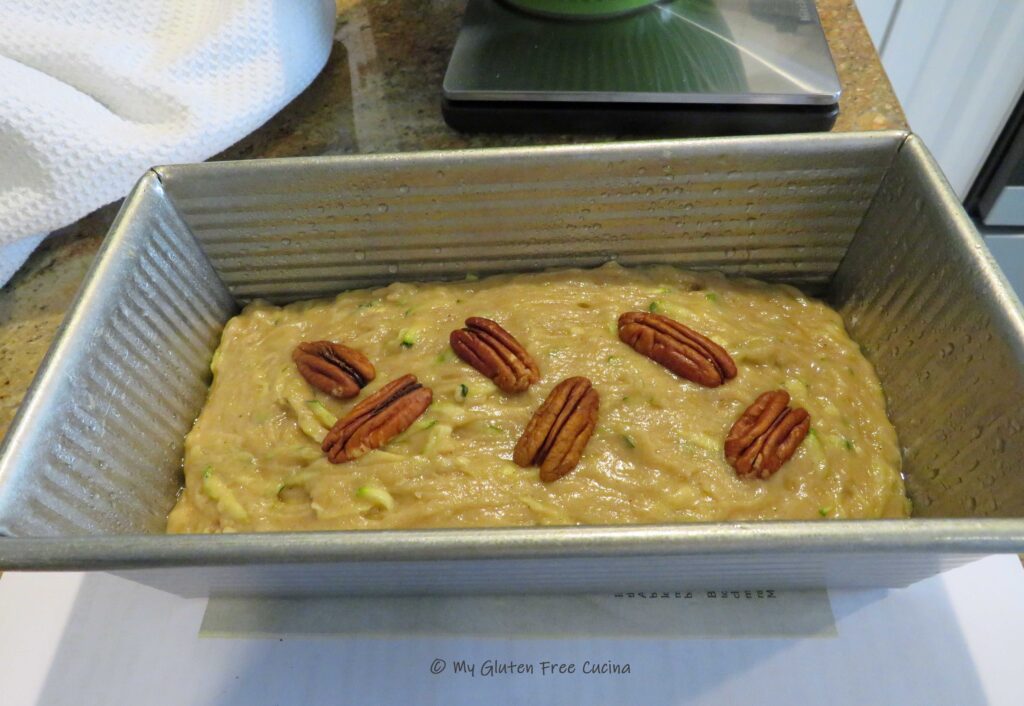
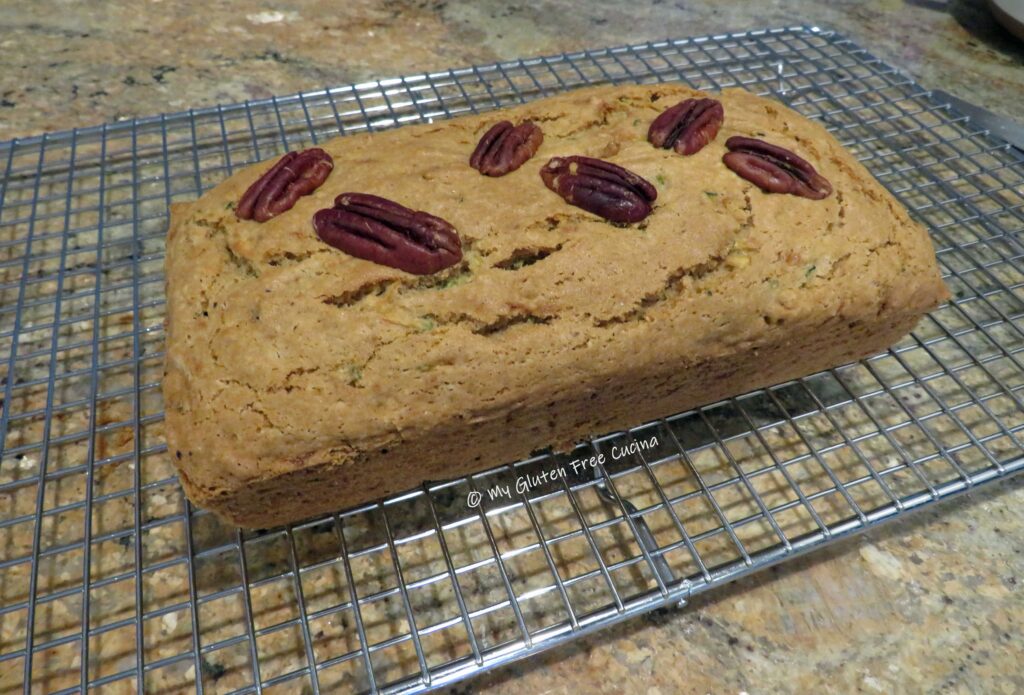
You can optionally add some pecan halves to the top like I did.

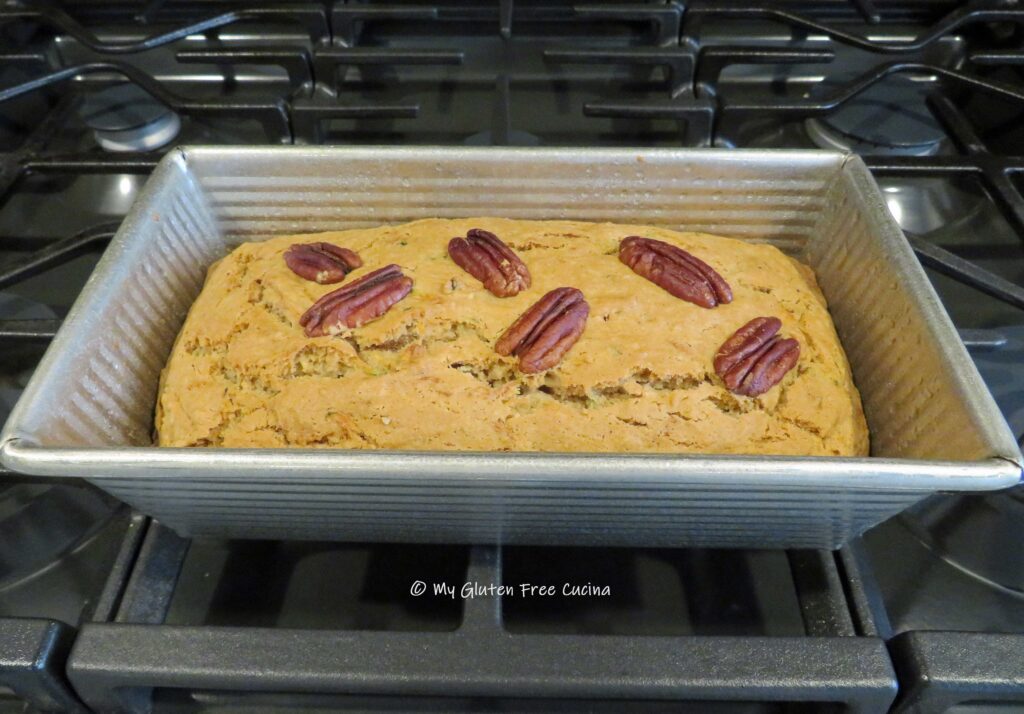
Bake for 45 minutes and test with a toothpick.  Let it cool in the pan for 10 minutes.

Remove from the pan and let it cool before slicing.

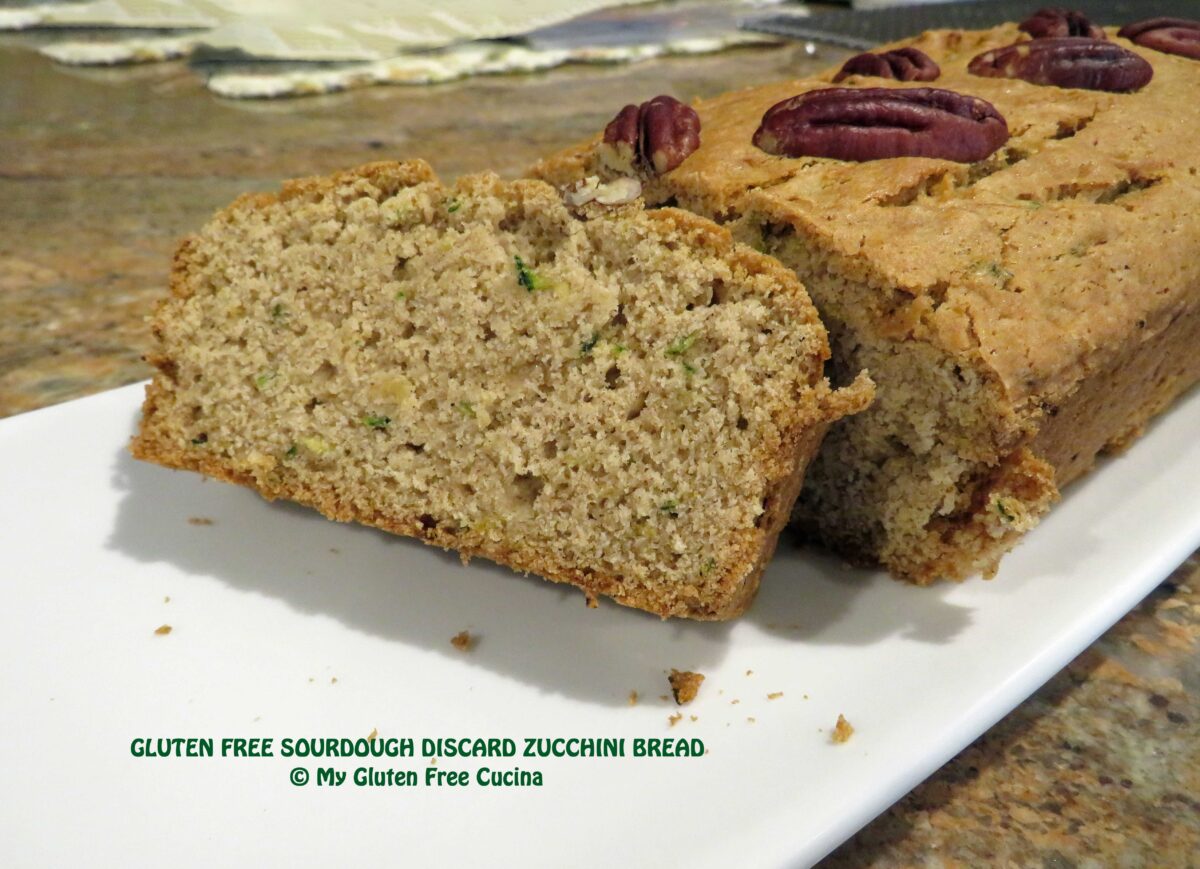
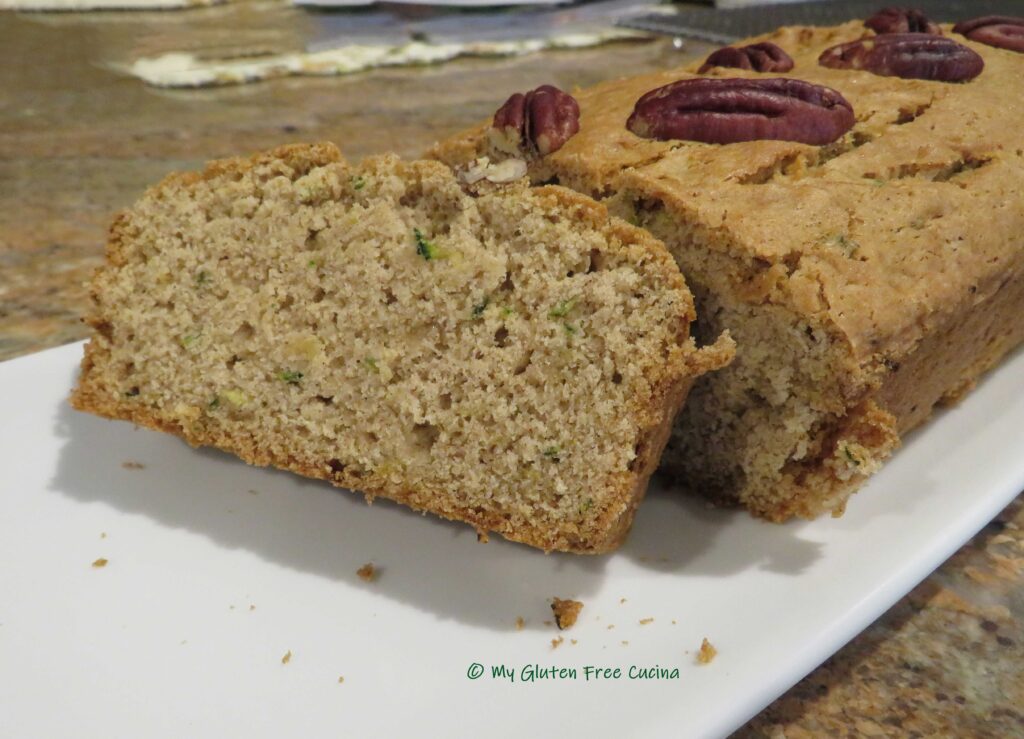
Check out the crumb, it came out so delicious and moist.  Every bit the traditional zucchini bread, and you don’t really taste the sourdough.
Leftovers can be stored at room temperature for a day.  Beyond that, I recommend you wrap slices tightly in plastic wrap and freeze (store in a freezer safe bag).
Notes ♪♫ For moist quick breads with no gritty texture, be sure to let the batter rest for 15 minutes before baking.

© Better Homes & Gardens


Print
clock clock iconcutlery cutlery iconflag flag iconfolder folder iconinstagram instagram iconpinterest pinterest iconfacebook facebook iconprint print iconsquares squares iconheart heart iconheart solid heart solid icon

Gluten Free Sourdough Discard Zucchini Bread

5 Stars 4 Stars 3 Stars 2 Stars 1 Star No reviews
  • Author: © My Gluten Free Cucina
  • Category: Dessert
  • Method: Baking
  • Diet: Gluten-Free

Description

A traditional gluten free Zucchini Bread with a dash of sourdough discard that makes it extra moist.


Ingredients

Units Scale
Dry Ingredients
  • 195 g. gluten free all-purpose flour (about 1-1/2 cups)
  • 1.3 g. cinnamon (1 tsp.)
  • 3.3 g. baking soda (1/2 tsp.)
  • 1.6 g. salt (1/4 tsp.)
  • .75 g. baking powder (1/4 tsp.)
  • .6 g. nutmeg (1/4 tsp.)
Wet Ingredients
  • 105 g. granulated sugar (1/2 cup)
  • 47 g. brown sugar (1/4 cup)
  • 65 g. sourdough discard (1/4 cup)
  • 50 g. canola oil (1/4 cup)
  • 50 g. egg (1 large)
  • 1 cup shredded zucchini (about 1/2 medium)
  • zest of 1/2 lemon
  • pecan halves (optional)

Instructions

Whisk the wet ingredients together in one bowl, and the dry ingredients in another.  Use a batter whisk to stir the wet and dry ingredients together, just until moistened.

Scrape the batter into a standard 1 lb. loaf pan misted with oil.

💡 Let the batter rest while you preheat the oven to 350º.

You can optionally add some pecan halves to the top like I did.

Bake for 45 minutes and test with a toothpick.  Let it cool in the pan for 10 minutes.

Remove from the pan and let it cool before slicing.

Leftovers can be stored at room temperature for a day.  Beyond that, I recommend you wrap slices tightly in plastic wrap and freeze (store in a freezer safe bag).


Notes

For moist quick breads with no gritty texture, be sure to let the batter rest for 15 minutes before baking.