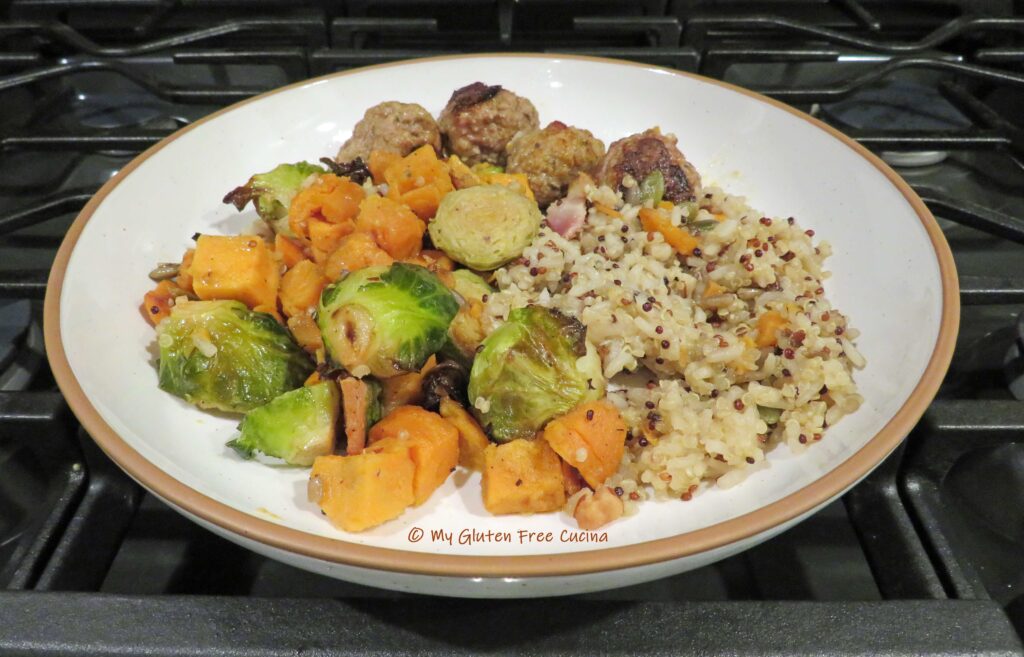
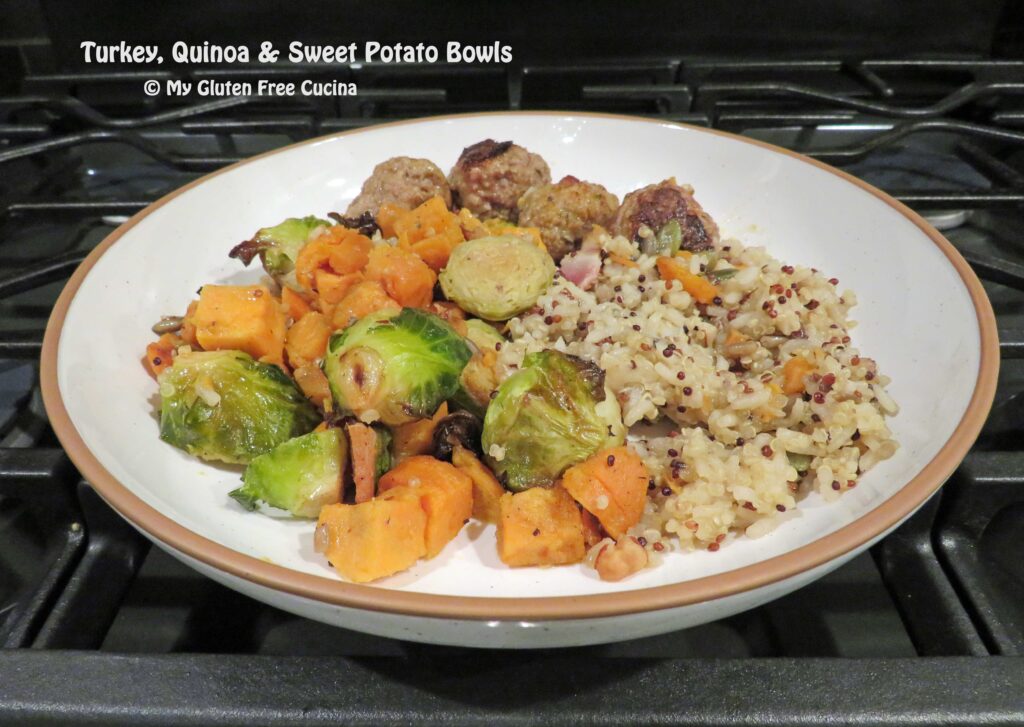
These dinner bowls have it all, they are packed with flavor, texture and fresh ingredients! Each component of this recipe was carefully chosen to create a colorful, balanced meal that will satisfy your hunger as well as your taste buds.
What’s in it?
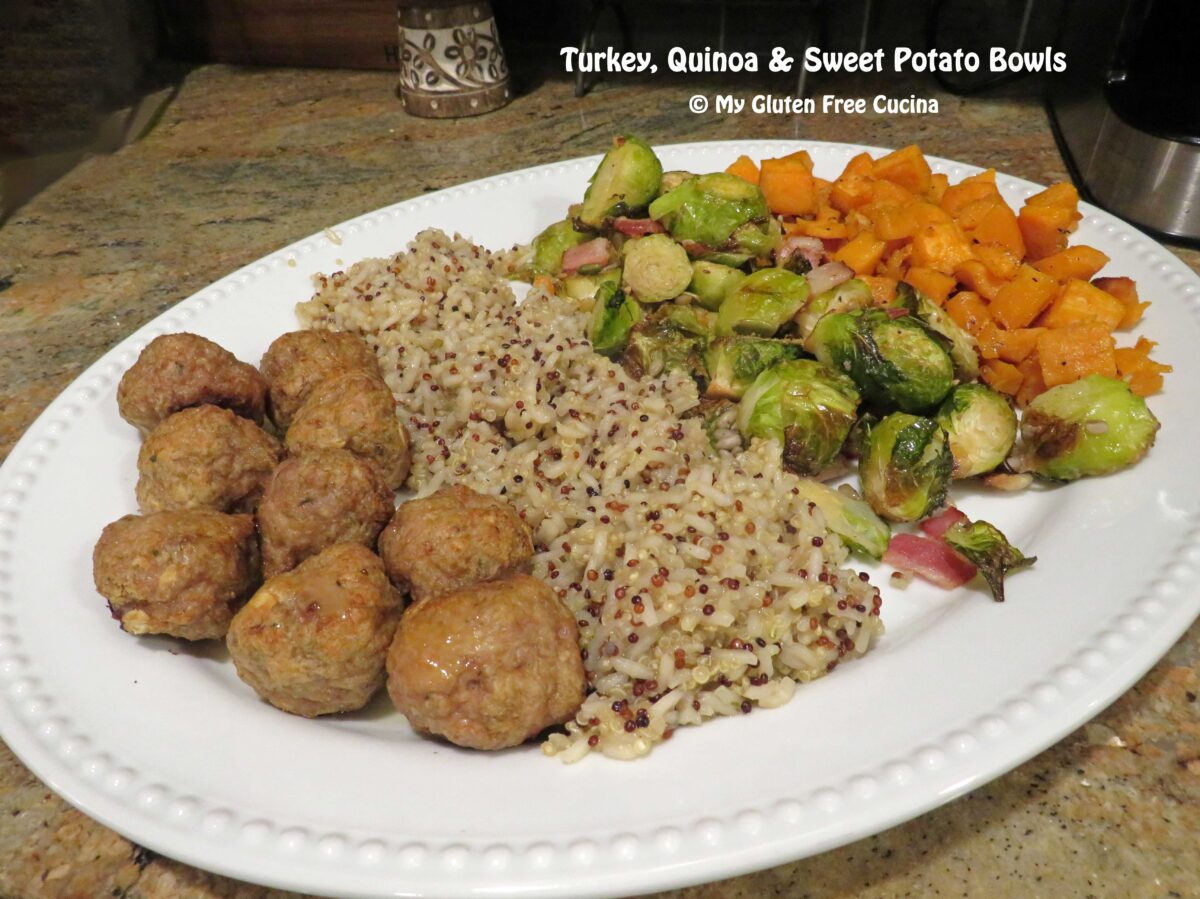
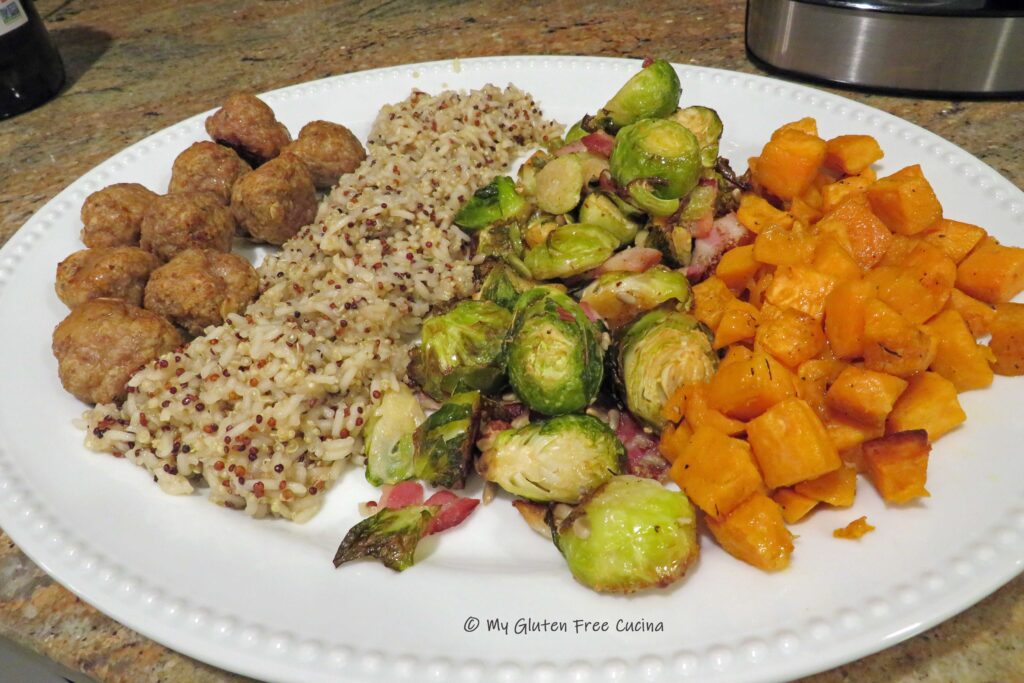
This bowl has sweet potato, Brussels sprouts, turkey meatballs, and a rice-quinoa pilaf. For texture and crunch, I added bacon, nuts and seeds. Finished with a drizzle of gravy to bring it all together. Let’s take it one step at a time.
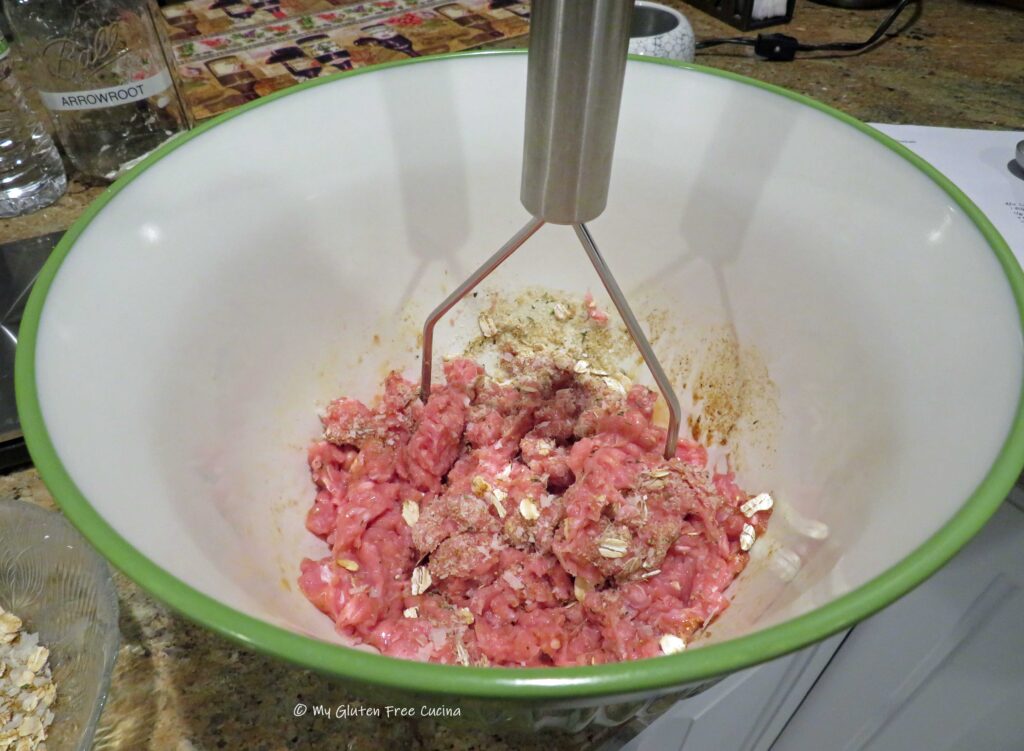
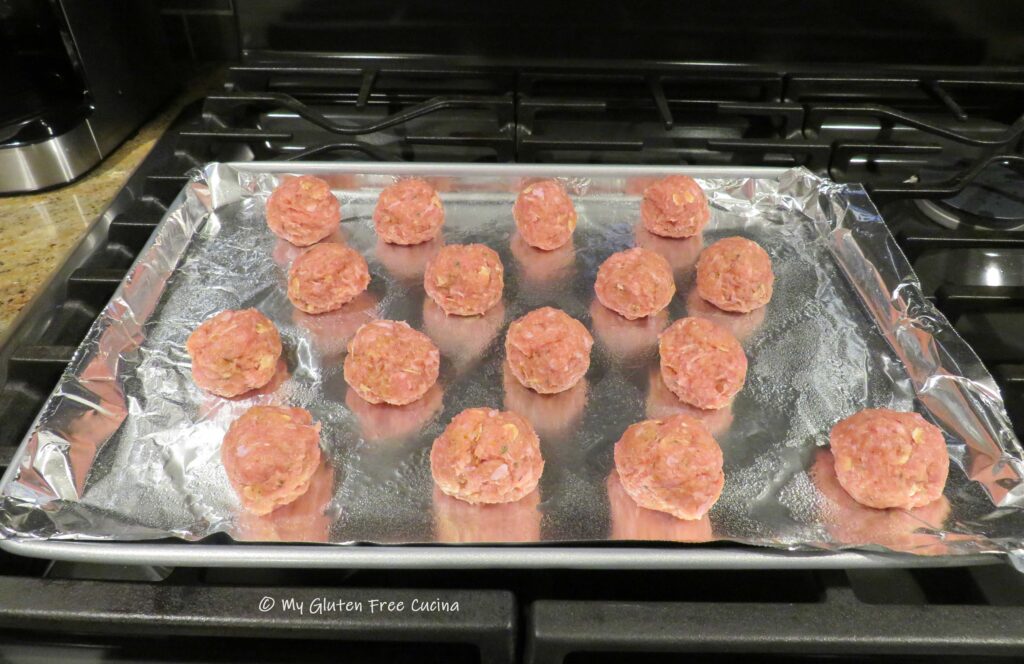
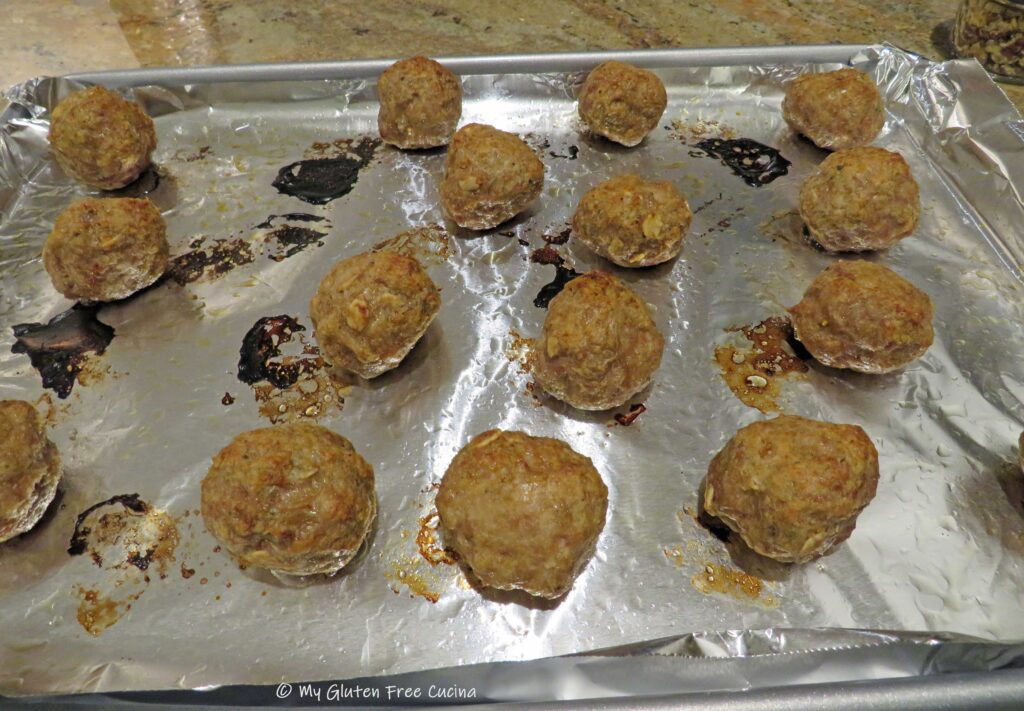
Combine all of the ingredients in a bowl and mix thoroughly with your hands or a potato masher. Line a sheet pan with foil and mist with cooking spray. Form 16 small meatballs and arrange in the pan with space in between. Broil 4-5 minutes per side.
Roast the veggies
16 oz. sweet potato, peeled and cut into chunks
12 oz. Brussels sprouts, halved
2 tbsp. light oil (light olive oil or canola)
2 strips bacon
salt and pepper, to taste
1 tbsp. chopped nuts (almonds/pecans)
1 tbsp. seeds (pumpkin/sunflower)
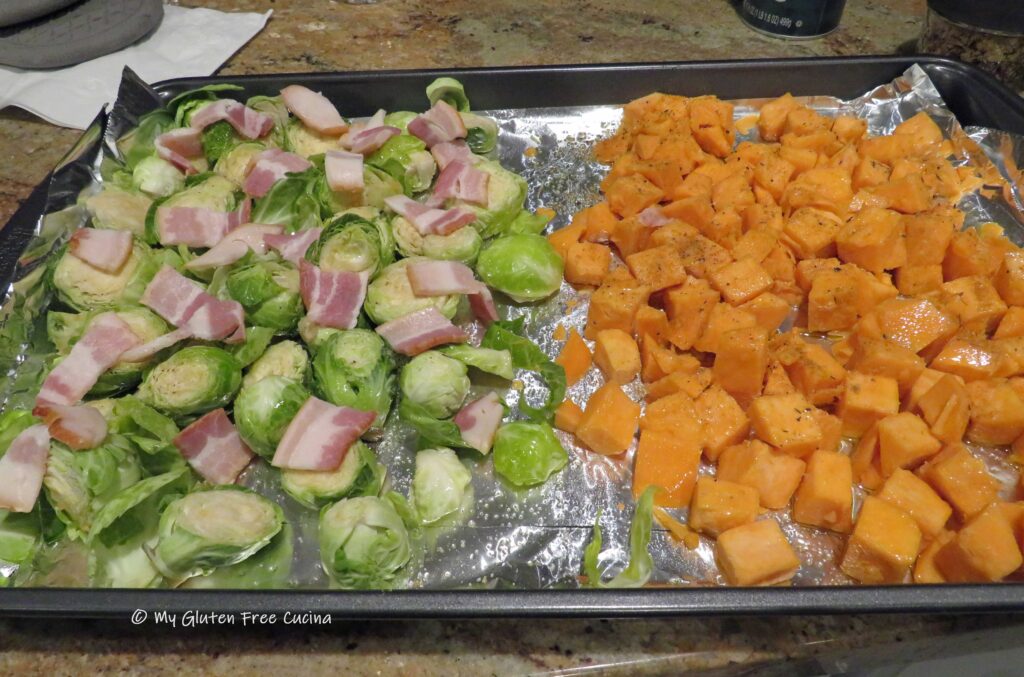
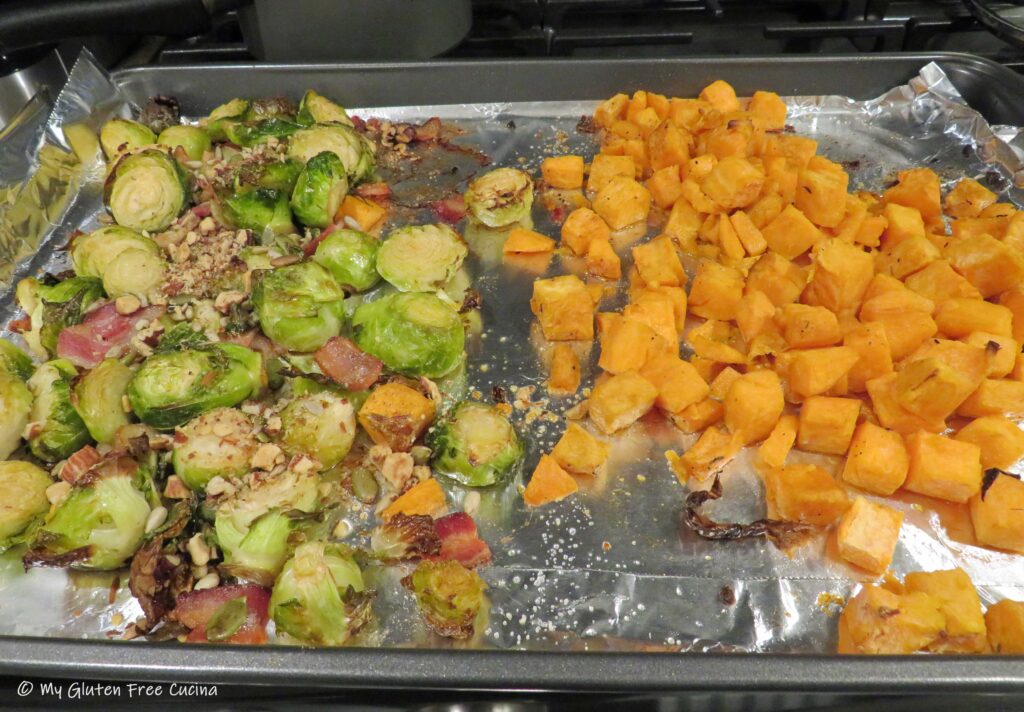
On a second sheet pan, spread the potatoes and Brussels sprouts in an even layer. Toss with oil and season with salt and pepper. Top the Brussels sprouts with bacon cut into 1″ pieces, 1 tbsp. nuts and 1 tbsp. seeds. Roast at 425º for 25 minutes.
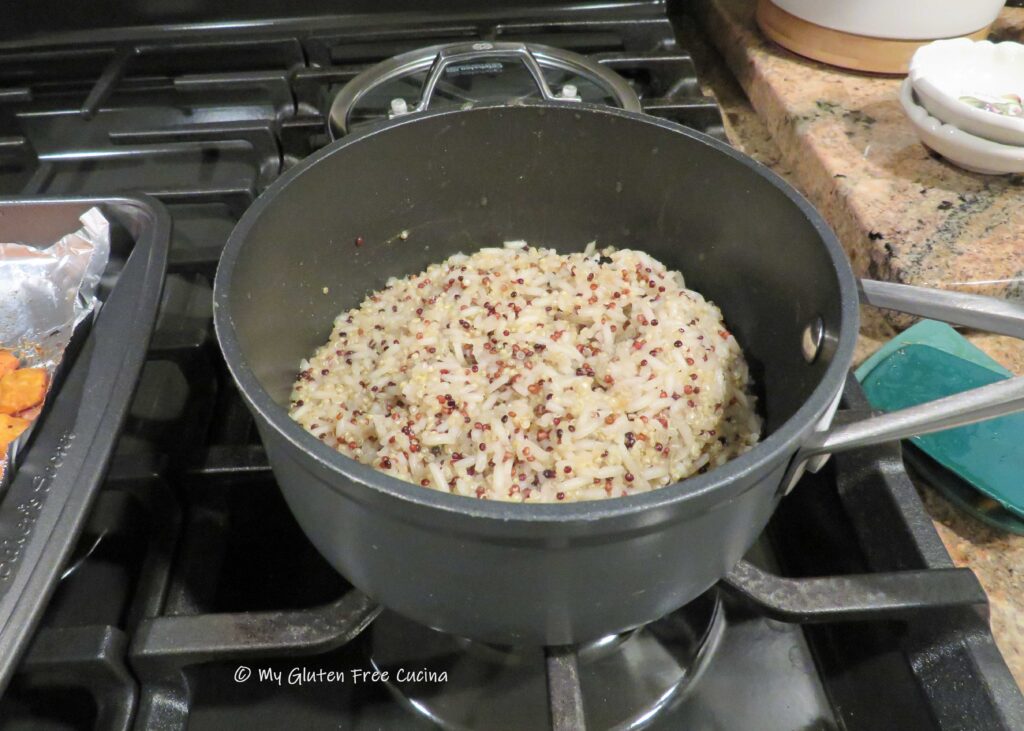
Melt butter in a small saucepan. Add the rice and quinoa, stirring to coat. Add the broth and salt, bringing to a boil. Cover and simmer on low for 20 minutes.
Stir the arrowroot and softened butter together to form a paste. In a small saucepan, combine the broth, onion powder and garlic powder. Bring to a boil then whisk in the butter mixture. Simmer 5 minutes to thicken.
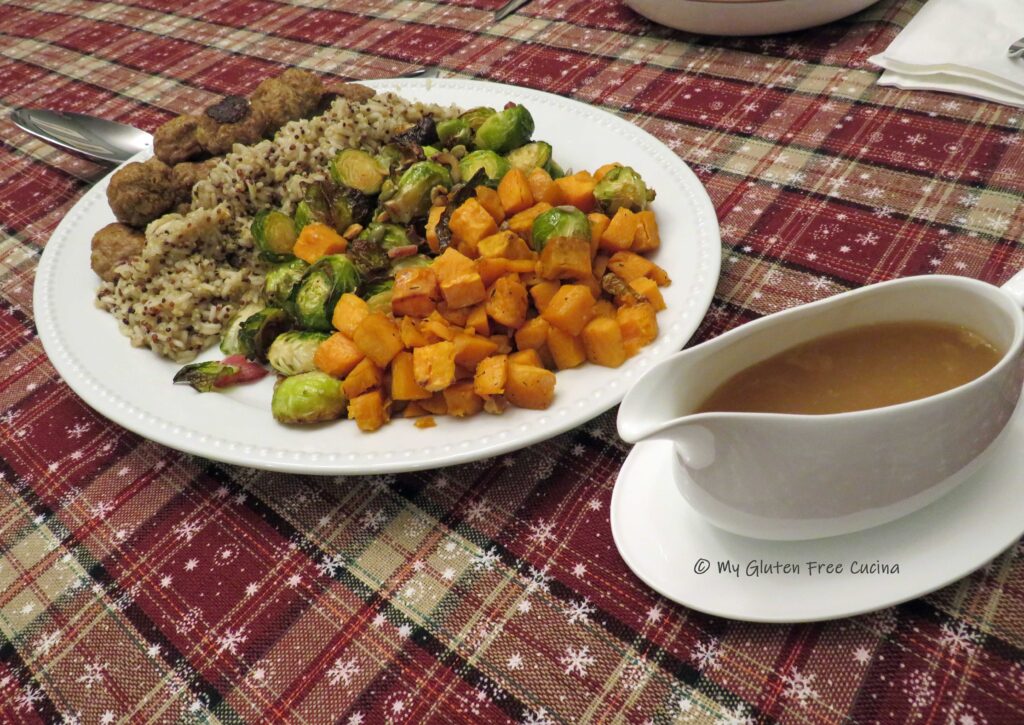
Arrange your serving platter.
I set up my platter like this, to show off the different colors and textures. The gravy was served in a small gravy boat.
This took a little time to put together but it was definitely a hit. Leftovers were just as good the next day.
Notes ♪♫Many supermarkets offer fresh veggies that have been prepped for cooking. I got sweet potato peeled and diced, and Brussels sprouts that were pre-washed and halved. Such a convenience, I just had to spread them out on a baking sheet and add my toppings!
In an homage to the great Julia Child who I still love to watch on old reruns, I decided one day to challenge myself to make her iconic dish, Coq au Vin.
I learned by watching the master herself prepare this dish on her show The French Chef. After watching this episode a few times, I felt confident enough to head to the kitchen.
I learned a few things from Julia in addition to her recipe. First, this fancy-pants sounding dish is actually a stew. More comfort food than gourmet. Second, Julia is a good teacher, and you will not need a culinary degree to recreate this French dish at home.
I even made a gluten free beurre manié! Check it out!
Is Coq au Vin gluten free?
Except for the flour used to thicken the sauce, the ingredients are naturally gluten free!
This post contains affiliate links.
Ingredients:
6 bone-in, skin on chicken thighs
3 slices of bacon, diced
1 carton (6 oz.) pearl onions, peeled and trimmed
1 carton (8 oz.) white button mushrooms, rinsed and quartered
Per the master herself, I started by poaching the bacon. According to Julia this step keeps the bacon flavor from overwhelming the entire dish. I don’t know if I would necessarily do this again other than for the sake of authenticity.
After the bacon was poached and drained, I browned it in a stainless-steel skillet and set it aside to drain on paper towels. The chicken was browned in the same pan, to take advantage of the bacon grease left behind.
For the next step, I moved the browned chicken and bacon to a nonstick sauté pan (you will need a pan with a lid), leaving the stainless-steel pan available for cooking the onions and mushrooms.
Here is where Julia adds the cognac and flambés the chicken. That’s not something I would be eager to try (imagining the smoke alarm going off!)
I added all of the wine, stock, tomato paste and seasonings. Honestly, there was a bit too much liquid and I would cut back next time. Julia did not add carrots in her recipe, but I went rogue and put a few in. Lid on, time to simmer!
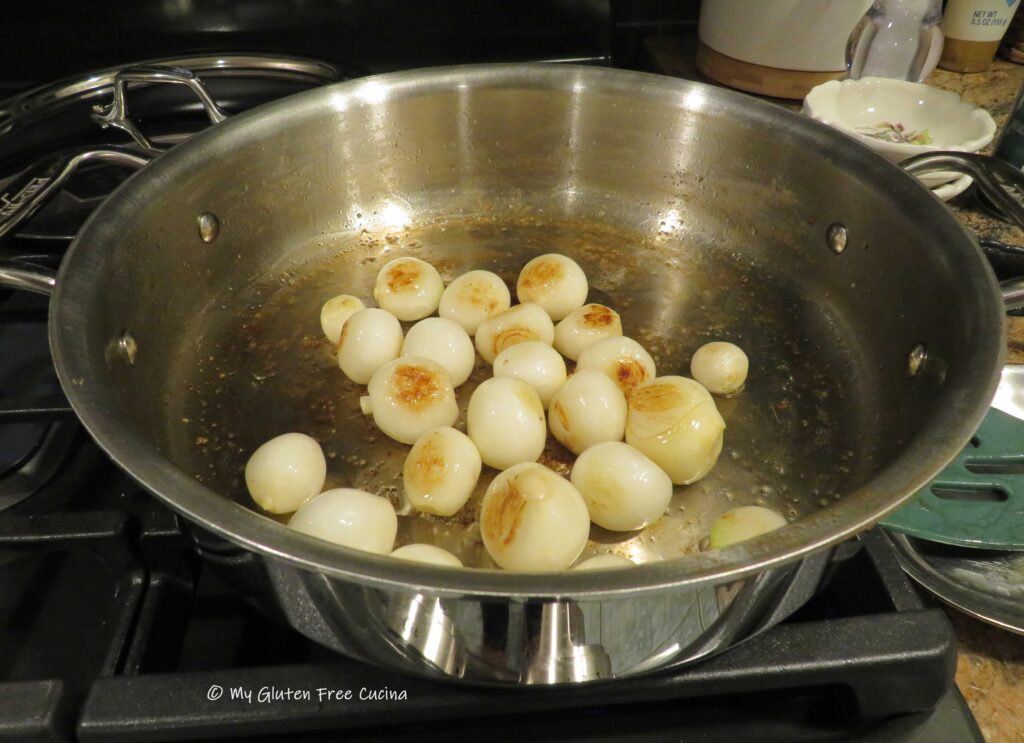
Since my pearl onions were already peeled and trimmed, I was able to begin browning them in oil without all the prep work. After this step, I added water to the pan and simmered the onions for 30 minutes, after which they were removed and set aside.
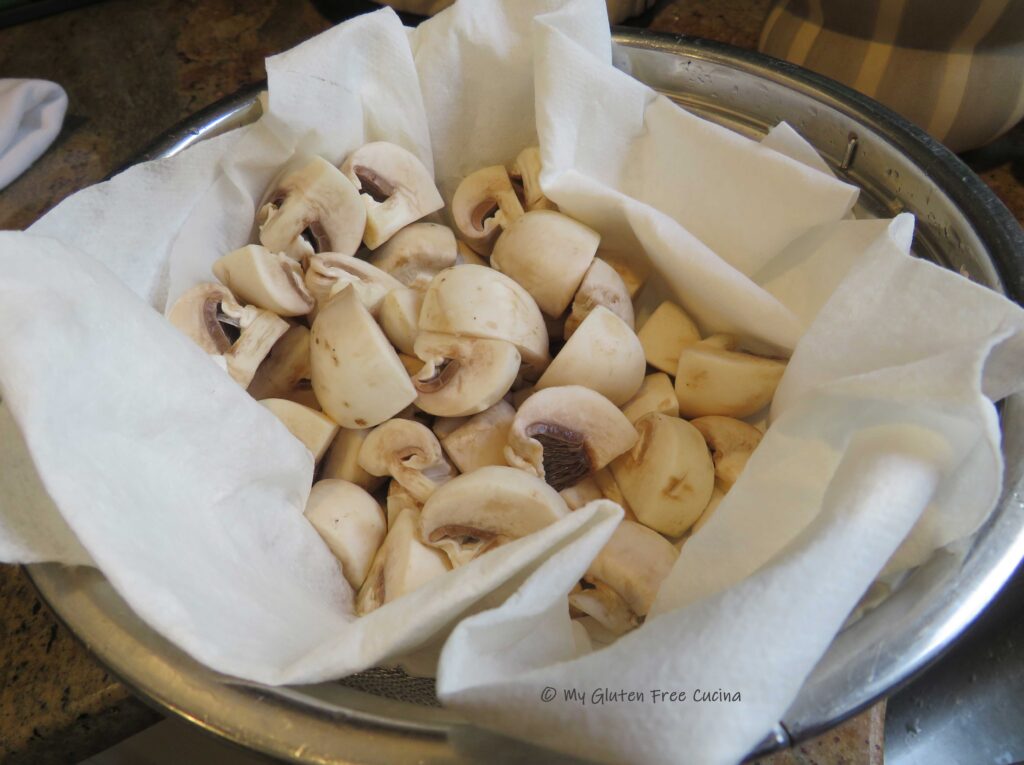
For the next addition, I rinsed and quartered one 8 oz. carton of button mushrooms, cooking them in olive oil and butter.
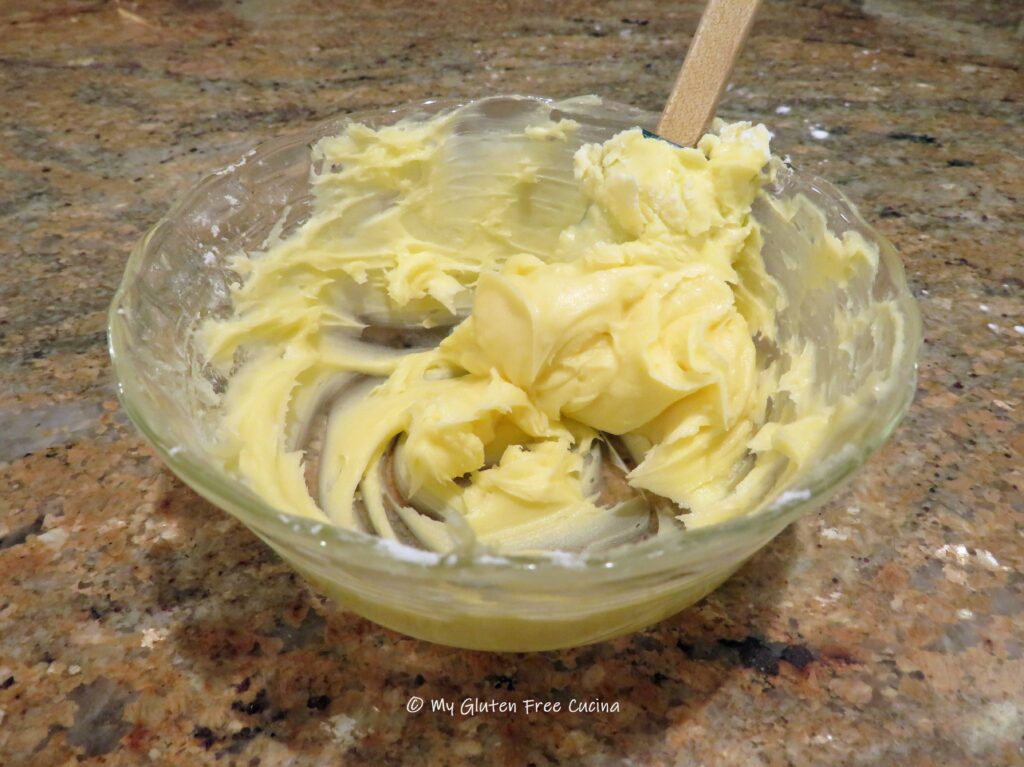
Now, for the finale. To put it all together, I made the beurre manié (a/k/a kneaded butter). This was as easy as stirring together soft, room temperature butter with arrowroot flour until well incorporated.
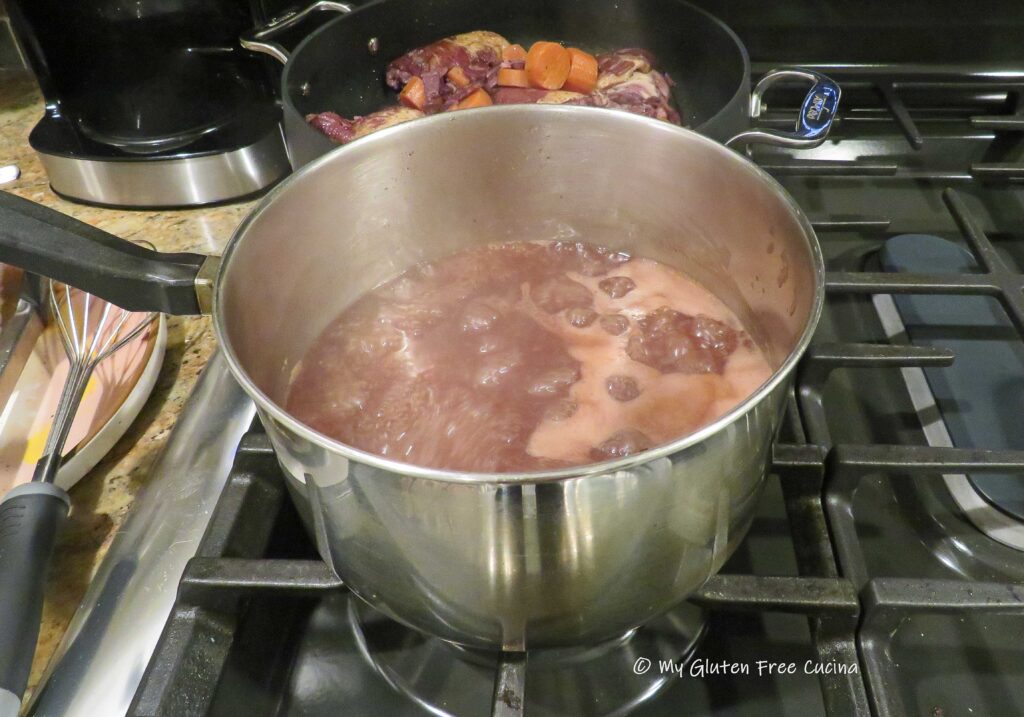
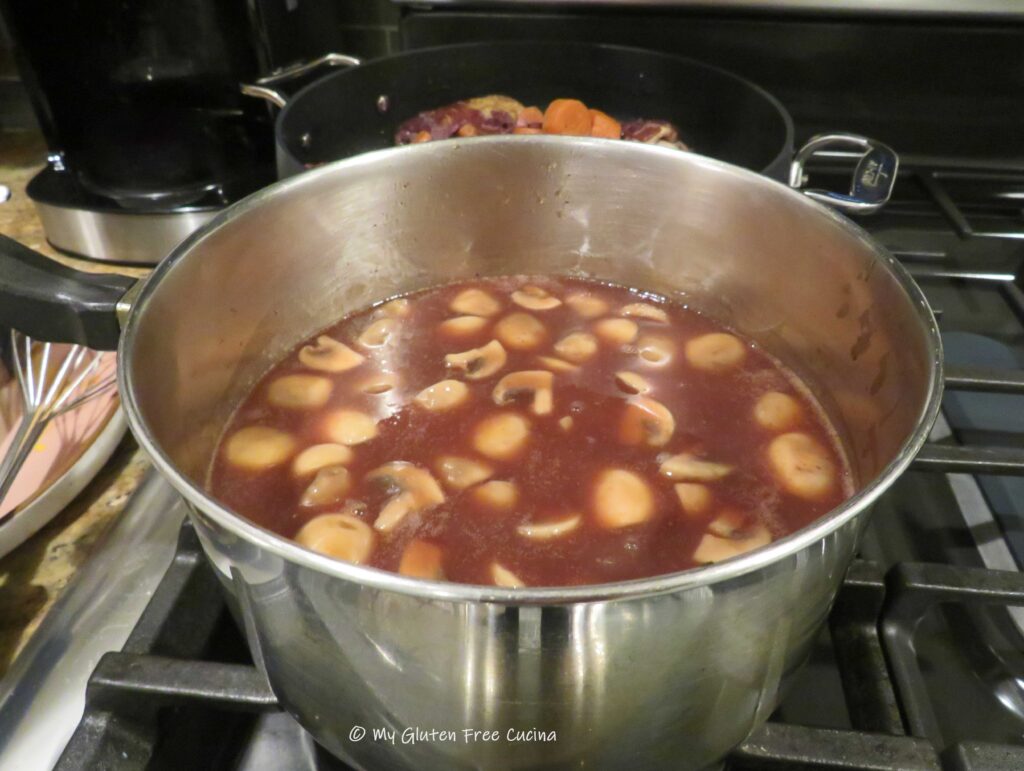
I transferred all of the liquid from the sauté pan into a stock pot and whisked in the beurre manié until it was smooth and silky.
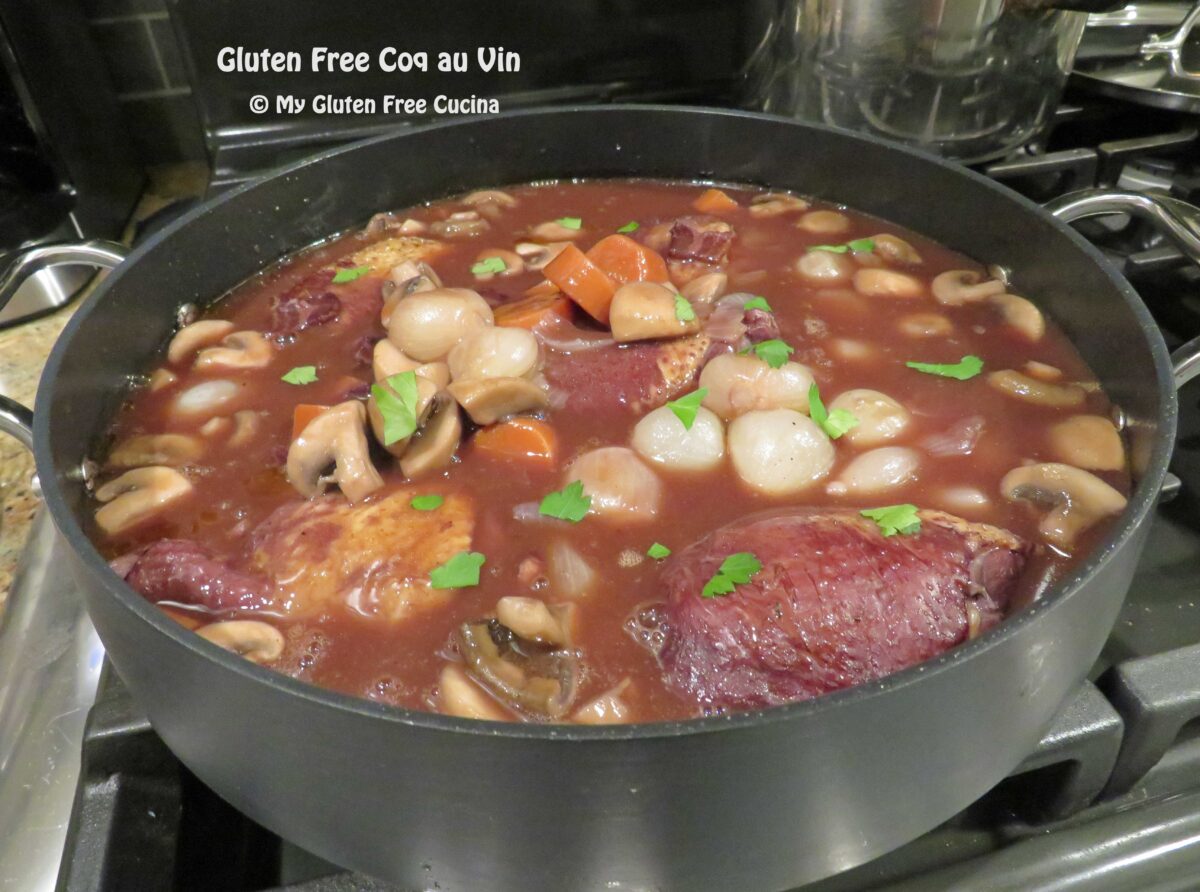
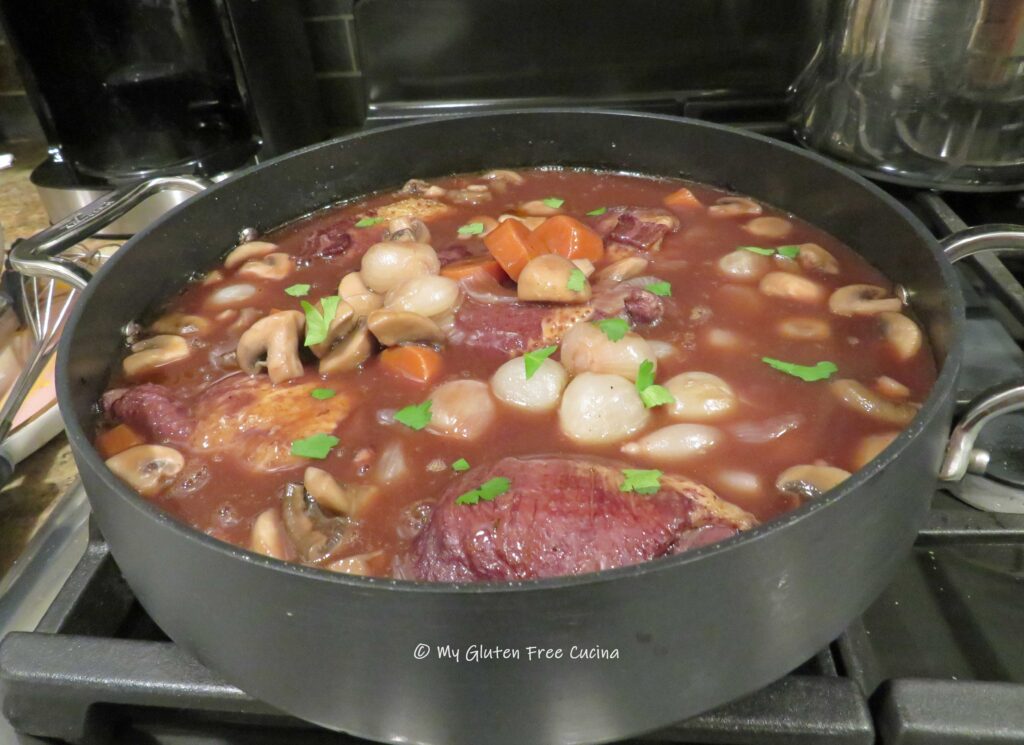
I added the onions and mushrooms to the sauce, then poured it over the chicken, bringing to a simmer one last time before serving.
There it is. So many little steps to develop the flavor profile of this famous dish. Yes, it was delicious. Yes, I will take a few shortcuts next time, but I do intend to make this again.
Notes ♪♫ I took a few (but not many) liberties with Julia’s recipe. I omitted the cognac, so no flambéing! 🔥While Julia used a whole fryer chicken and took great pains to explain how to cut it up, I opted for bone-in, skin-on chicken thighs. My grocer had pearl onions, already peeled and ready to cook (thank you!) so that was another tedious step that I was able to skip. Finally, I substituted arrowroot for the flour to make the beurre manié. With that, the recipe is gluten free!
Tartine Bread is a type of sourdough originating from The Tartine Bakery in San Francisco. It is a “no-knead” bread, made with a very small amount of sourdough starter (only 1 tbsp.) and no commercial yeast at all! The dough is developed by stretching and folding it at intervals, instead of machine mixing.
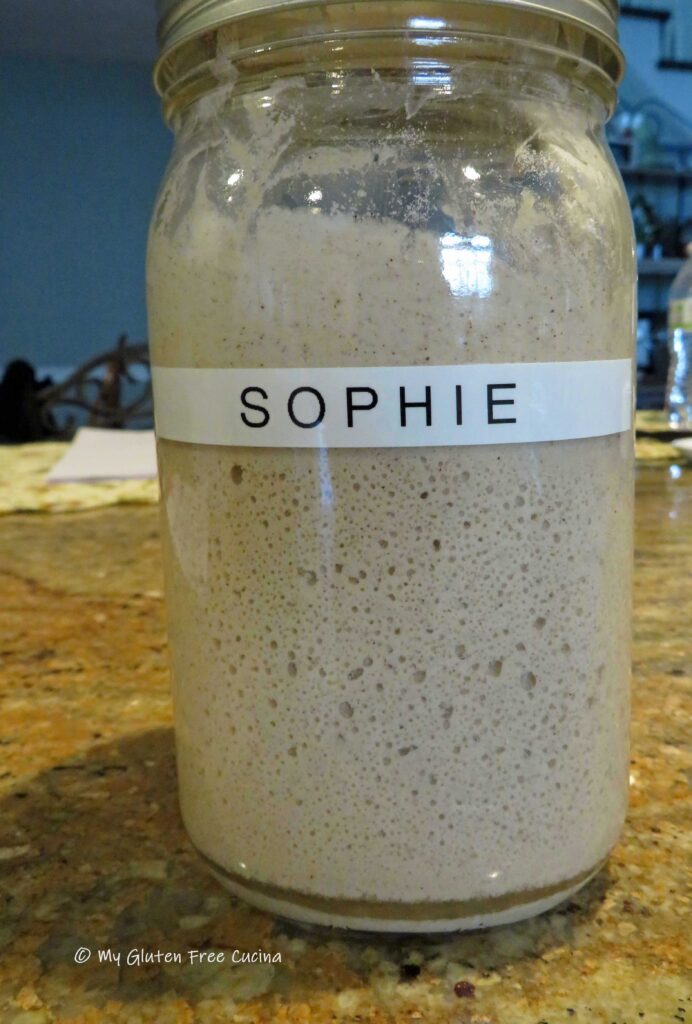
You will need a fully active and very robust sourdough starter to make this bread. Honestly, I wondered if Sophie (my sourdough starter) was up to the task and was pleasantly surprised. Way to go, Sophie!
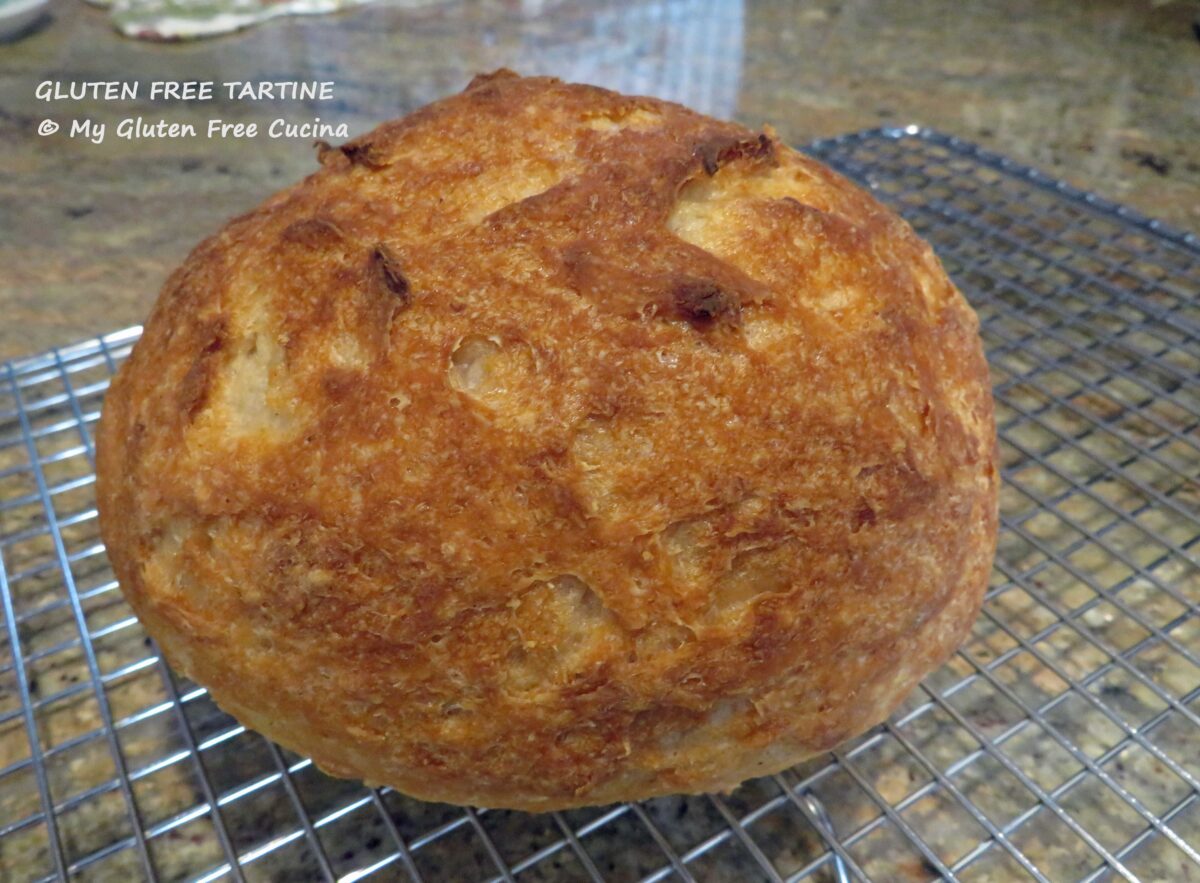
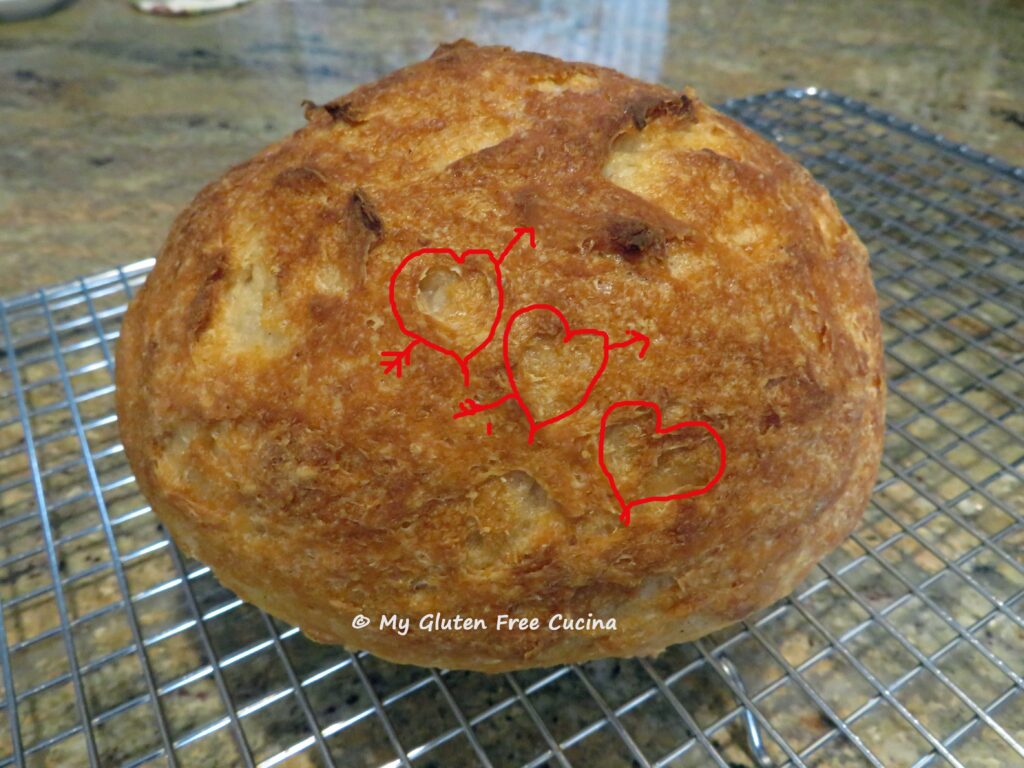
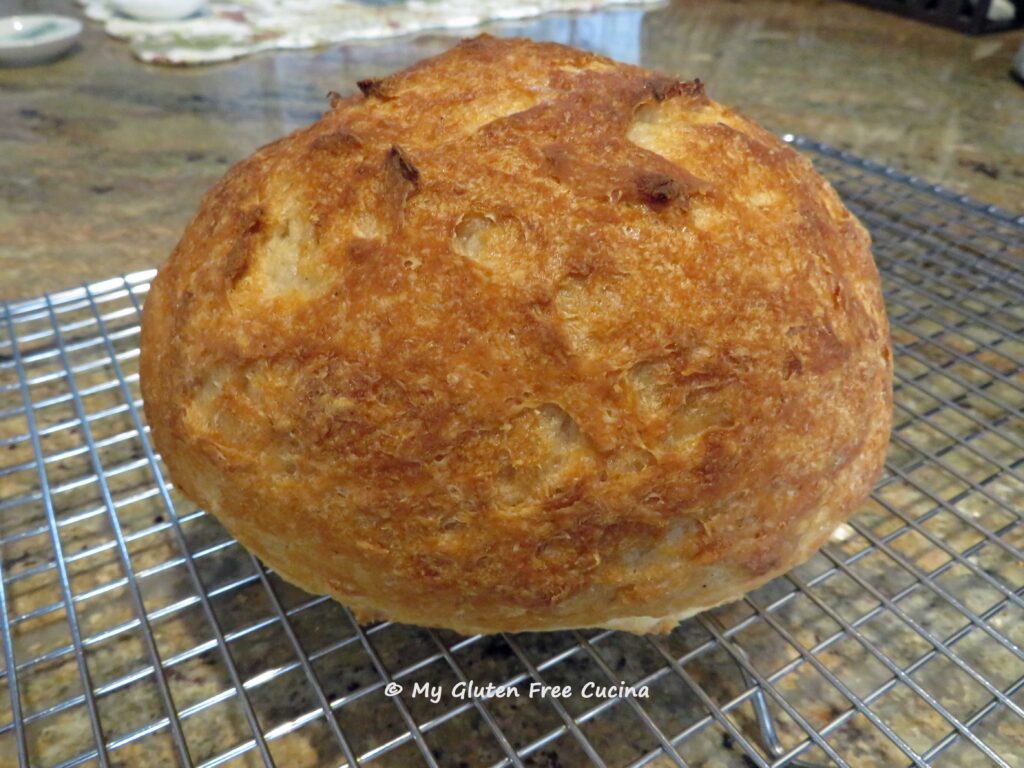
There was so much I wanted to get right with this bread. The blistered, caramelized exterior and soft crumb. After much trial and error, I was making some very nice loaves. Do you see little hearts in the crust? 💕🥰
Do you see little hearts in the crust?
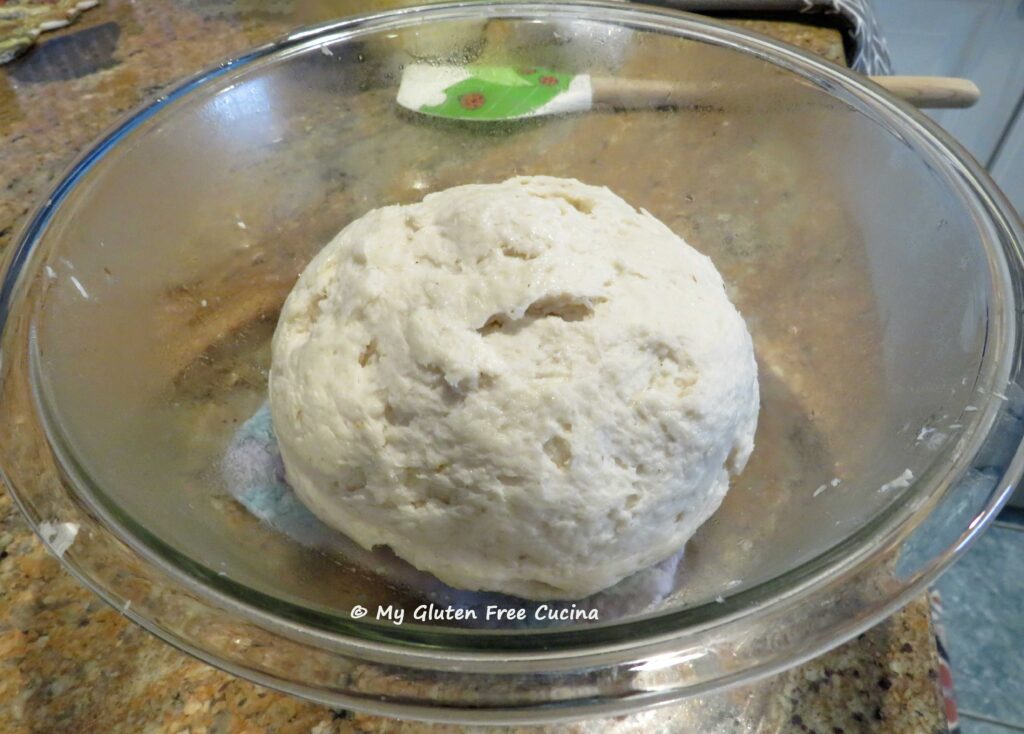
Developing the dough is a process, beginning with a well-fed starter, a preferment, and final dough. After an overnight rest in the fridge, the loaf is baked in the morning. This long fermentation is what takes you from a mere tablespoon of starter to the beautiful risen loaf you see in the photos.
Oh, and as if you hadn’t waited long enough, the baked loaf will need to rest a full day before slicing! Most gluten free breads need extra time to release their moisture but for this one I don’t slice for a full 24 hours. It is worth the wait.
This post contains affiliate links.
Like many sourdough loaves, Tartine is traditionally baked in a cast iron Dutch oven. If you don’t have one, or if like me you find that cast iron pots are getting too heavy to lift, then a lighter weight enamel roasting pan or ceramic pan with a lid will get the job done.
If you work full time, you may be thinking “I don’t have time for all this”. Rest assured though, you can fit this into your workday. Just follow the steps!
Day 1 –
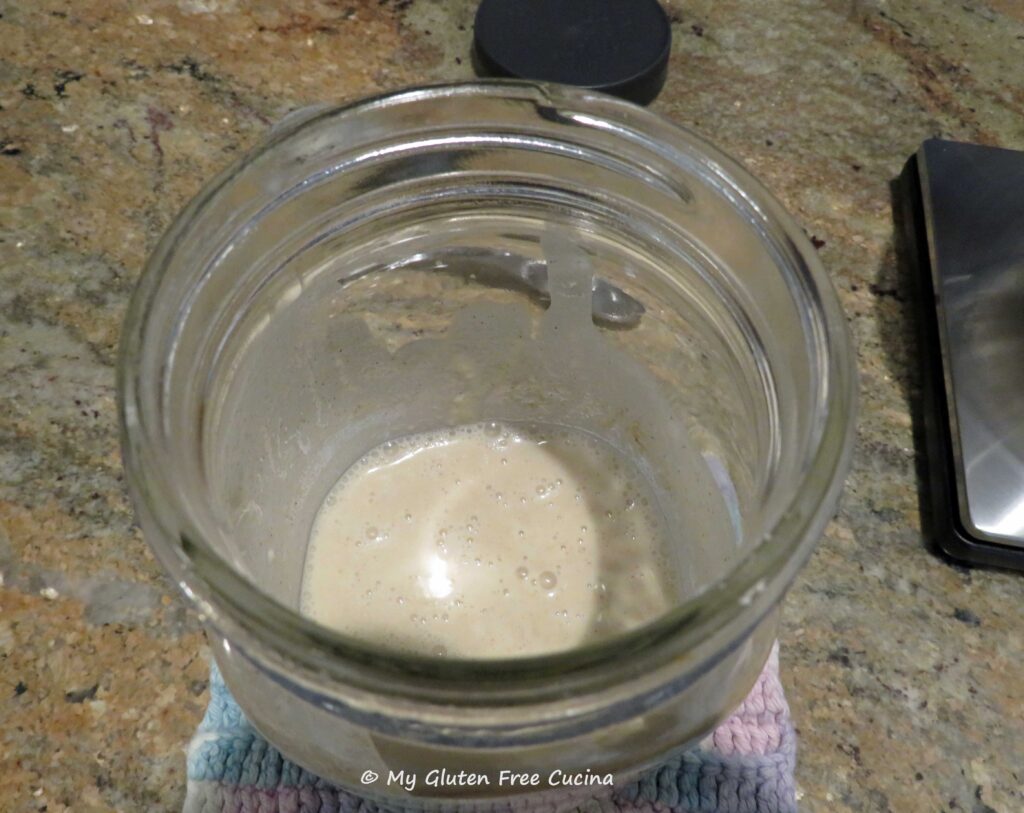
Evening – Take your starter out of the refrigerator, feed it and leave it out on the counter overnight.
Day 2 –
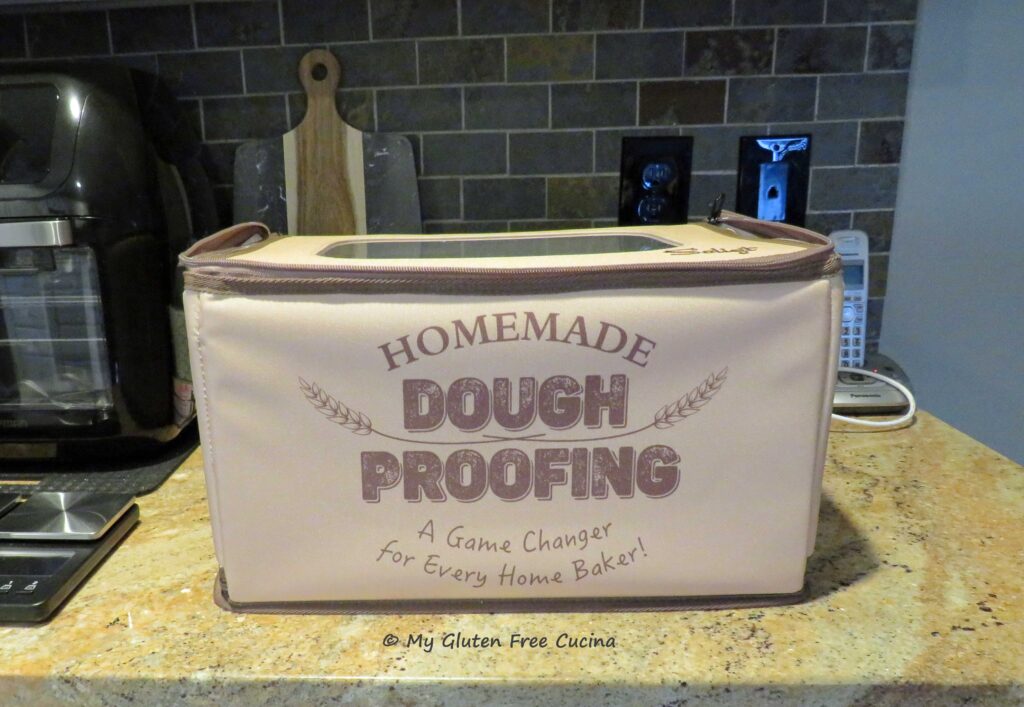
Morning – Stir together the preferment ingredients, cover with plastic wrap and let sit in a warm place for at least 7 hours (I used my proofing box). As the day goes on, it will become increasingly puffy and smooth.
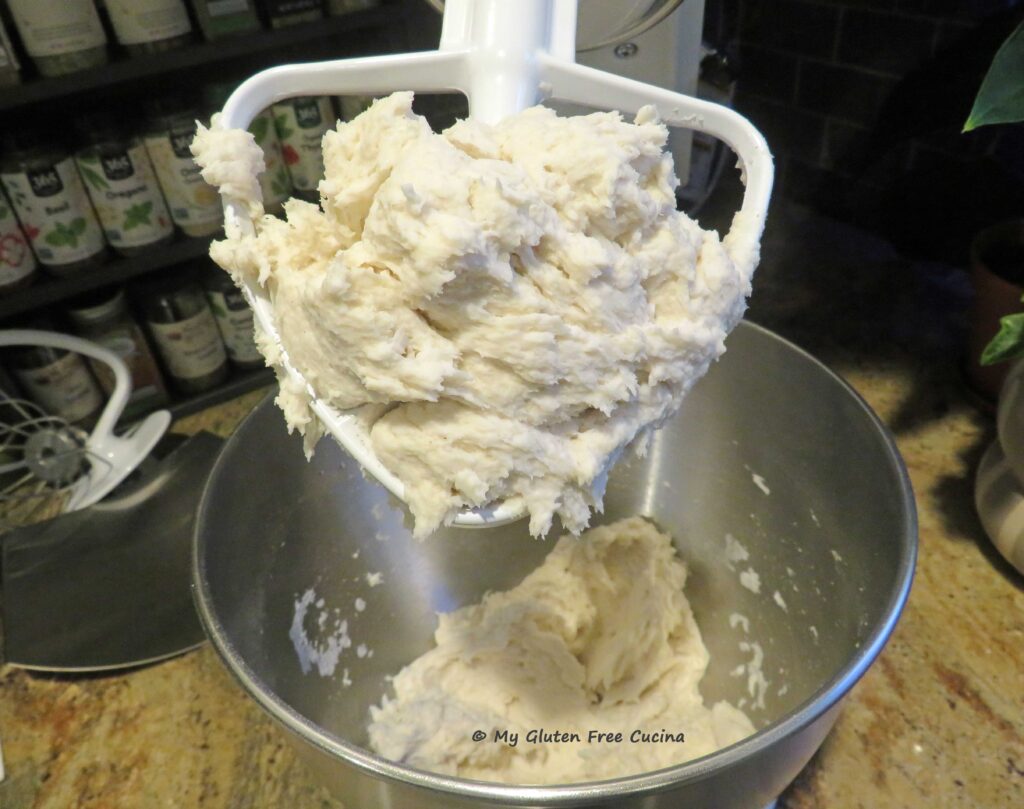
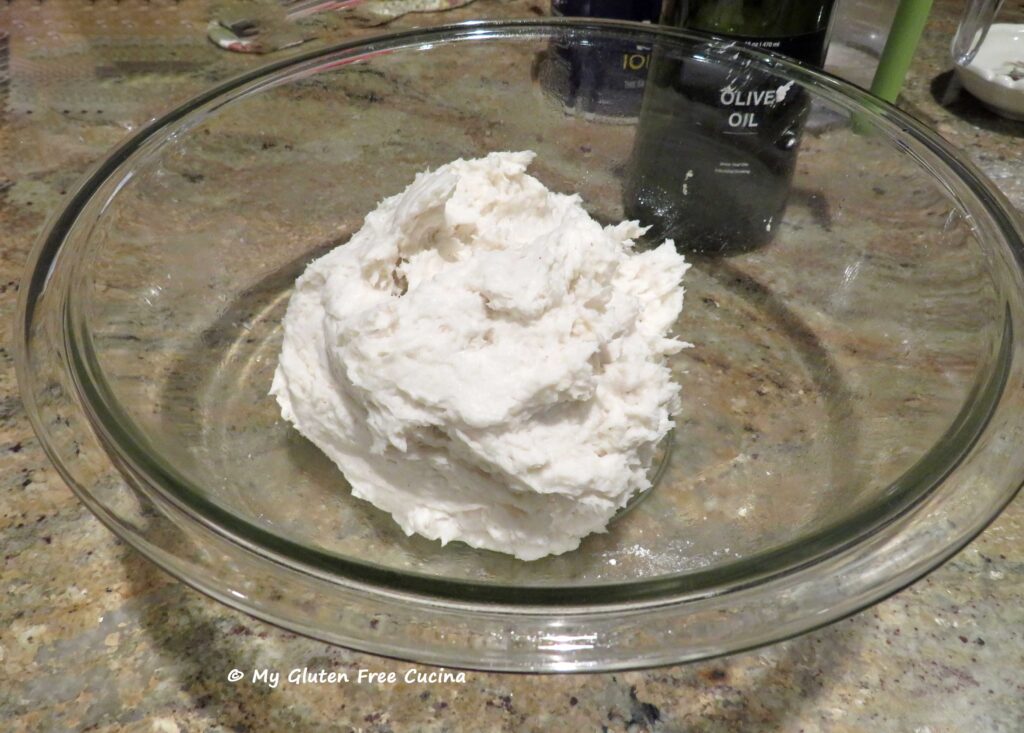
Late Afternoon – Combine the final dough ingredients with the preferment in the bowl of a stand mixer with the paddle attachment. Mix just until combined to form a wet shaggy dough. You can also mix the dough together by hand with a stiff spatula or dough whisk.
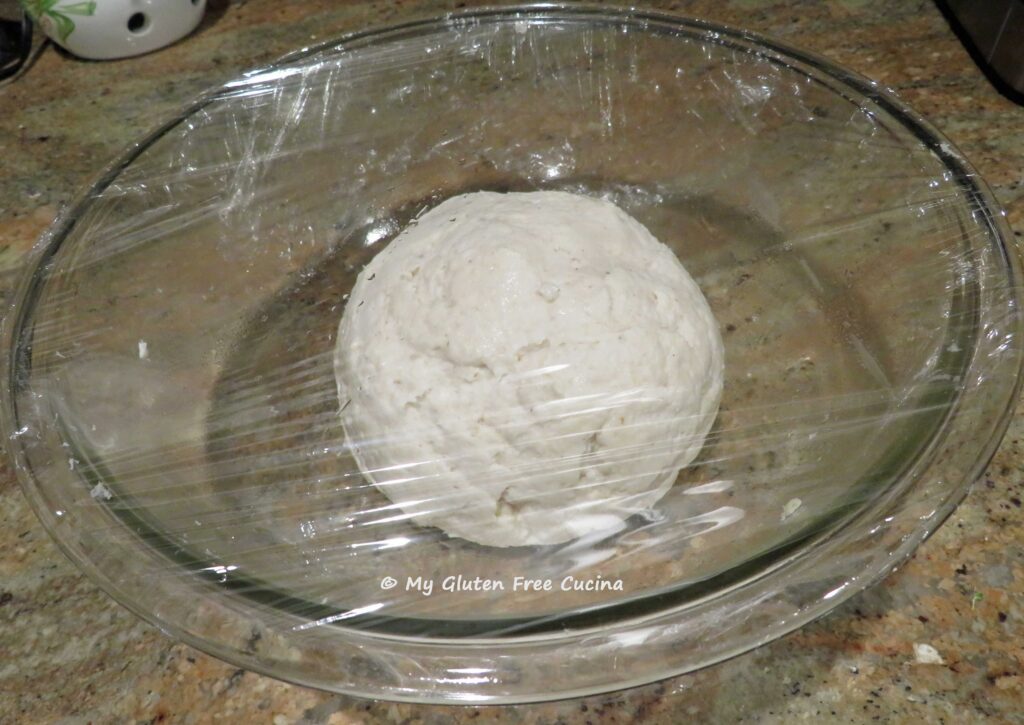
Transfer the dough to a lightly oiled bowl, cover with plastic wrap and let it rest 45 minutes while you have dinner.
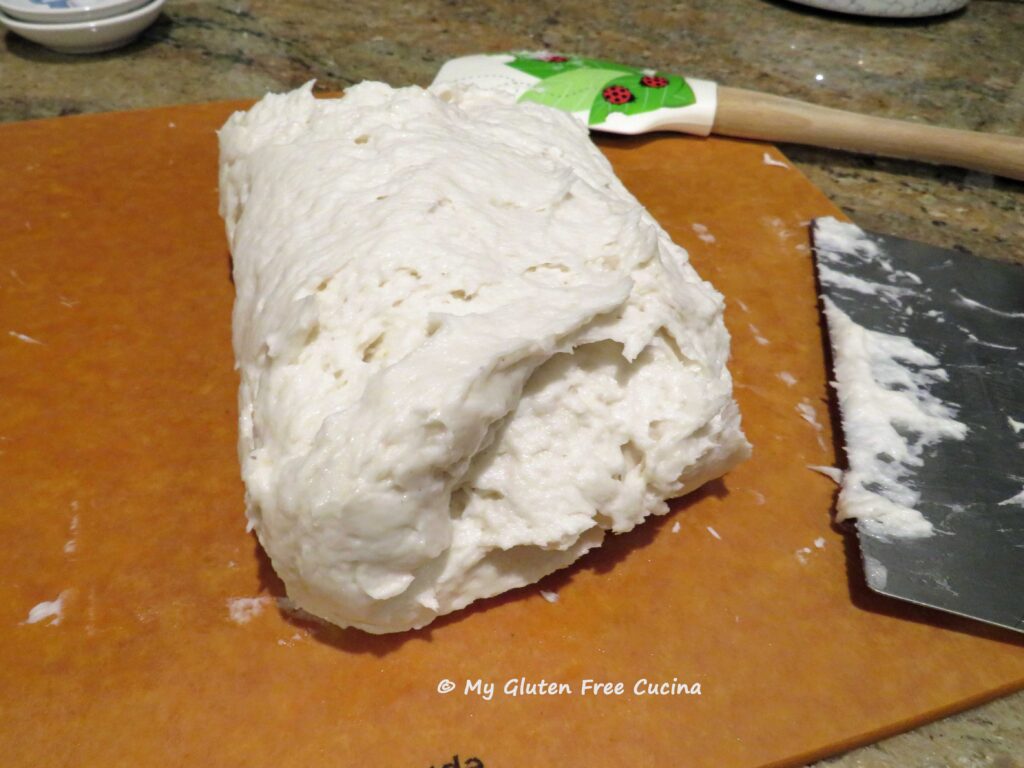
Evening – Rub a large cutting board with olive oil and turn the dough out. Use a bench knife to spread the dough and fold it over on itself, rotating the cutting board as you fold.
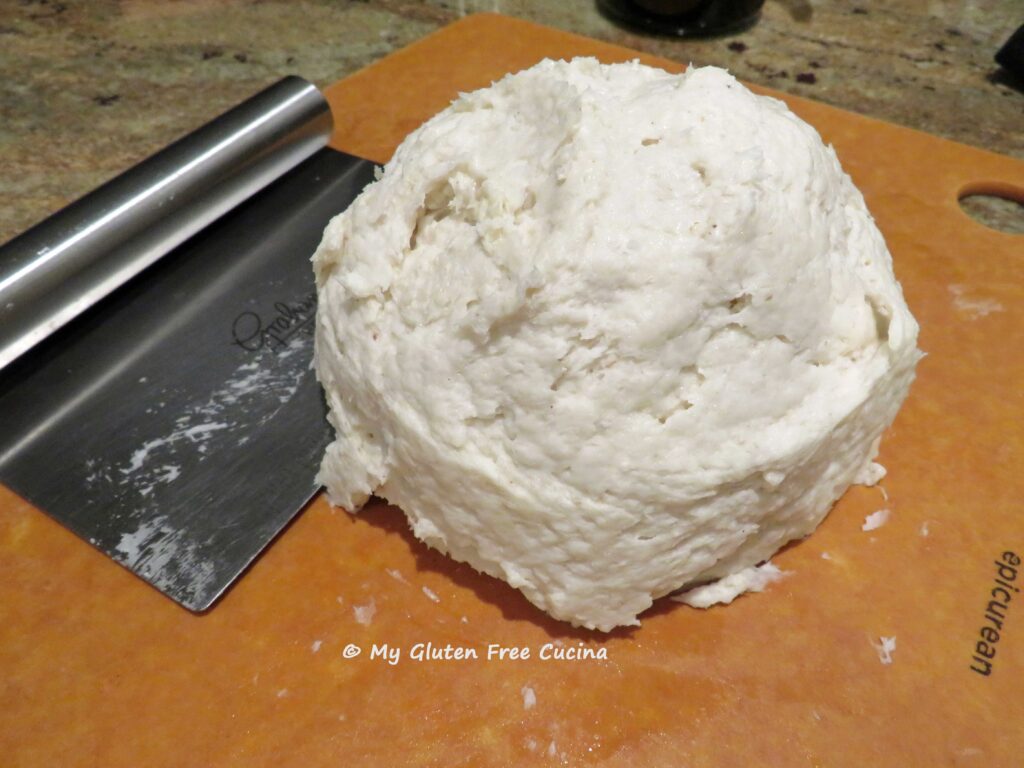
The dough will be sticky, and you won’t be able to handle it like you would a wheat dough (i.e. “stretch and fold”). But- after a few dozen folds you should have a nice smooth ball.
Return it to the bowl and cover with plastic wrap. Leave it out on the counter until you go to bed.
Night – Refrigerate the dough overnight to be baked in the morning.
Day 3 –
Morning – Take the dough out of the refrigerator and let it stand at room temperature while you preheat the oven to 475º. Place a Dutch oven on the middle shelf while the oven is heating for 1/2 hour prior to baking (note- if you are not using cast iron be careful, read the instructions for your pot to make certain it can withstand being heated while empty).
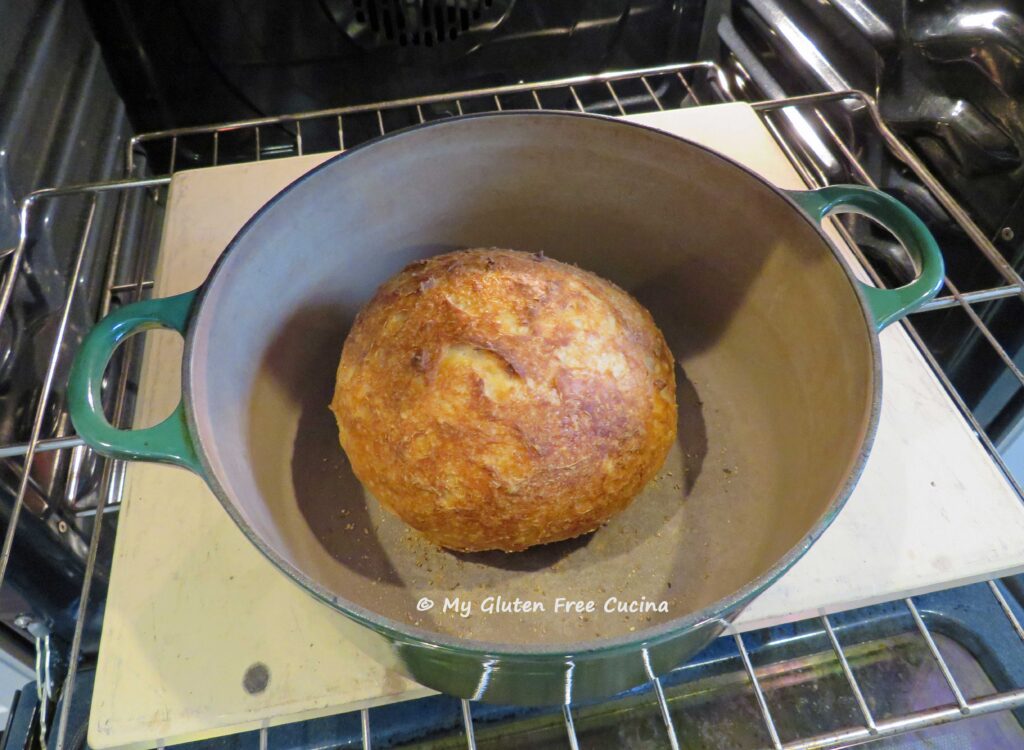
Remove the preheated Dutch oven to the stovetop, sprinkle the bottom with cornmeal and use a stiff spatula to carefully nudge the dough from the bowl without deflating it. Cover and return the pot to the oven.
Reduce the oven temperature to 450º and bake for 30 minutes. Then remove the cover and continue baking another 20 minutes. Loaf is done when the internal temperature reaches 210º (check with a thermometer).
Carefully remove the loaf from the pan and place on a rack to cool. Once it reaches room temperature you can put it in a bread bag or use plastic wrap.
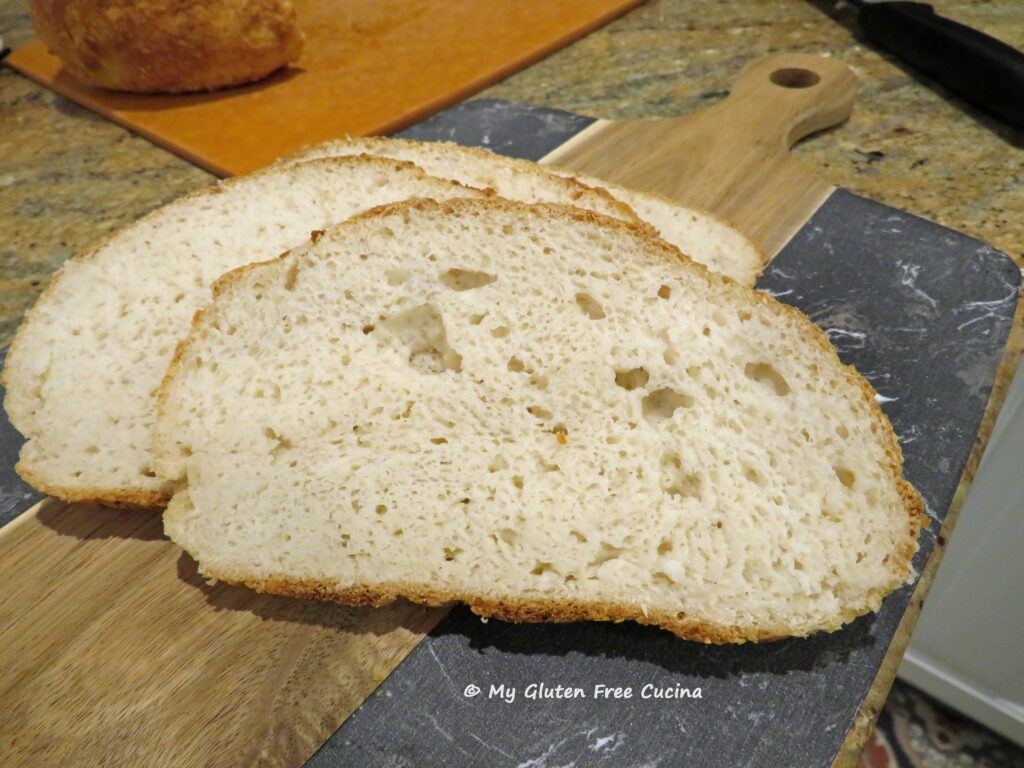
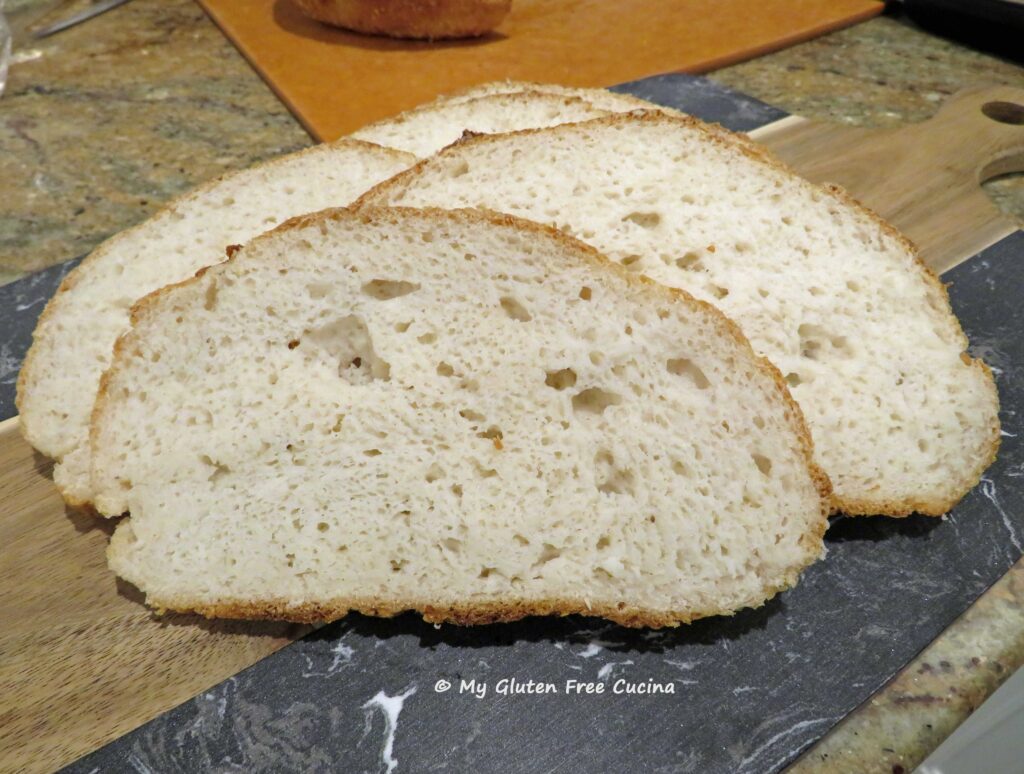
After all that, you will probably want to tear right into your loaf of bread. But- please be patient! This beautiful, artisanal loaf needs a full 24 hours to release its moisture. Rushing it can mean a wet sticky loaf instead of a gorgeous crumb like this!
Day 4-
Finally, the long-awaited moment! Slice and serve with dipping oil. What do you think? Was it worth the wait?
Notes:
♪ You do not need a stand mixer to make the preferment, but as mentioned above, I did use mine for the final dough. You can also stir the final dough together with a dough whisk or stiff spatula, just enough to form a wet shaggy dough, kneading is not required.
♪♪ I used Better Batter Gluten Free Flour in this recipe. When you shop Better Batter, remember to use my Promo Code MGFC30 for 30% off your full price purchase.
♪♪♪ Notice how small my loaf is? This loaf size is perfect for solo households, or a dinner for two. You can double the recipe if you wish, to make 2 small loaves or 1 large loaf. I kept it small for testing, and it is just right for me, a great size for gifting too!
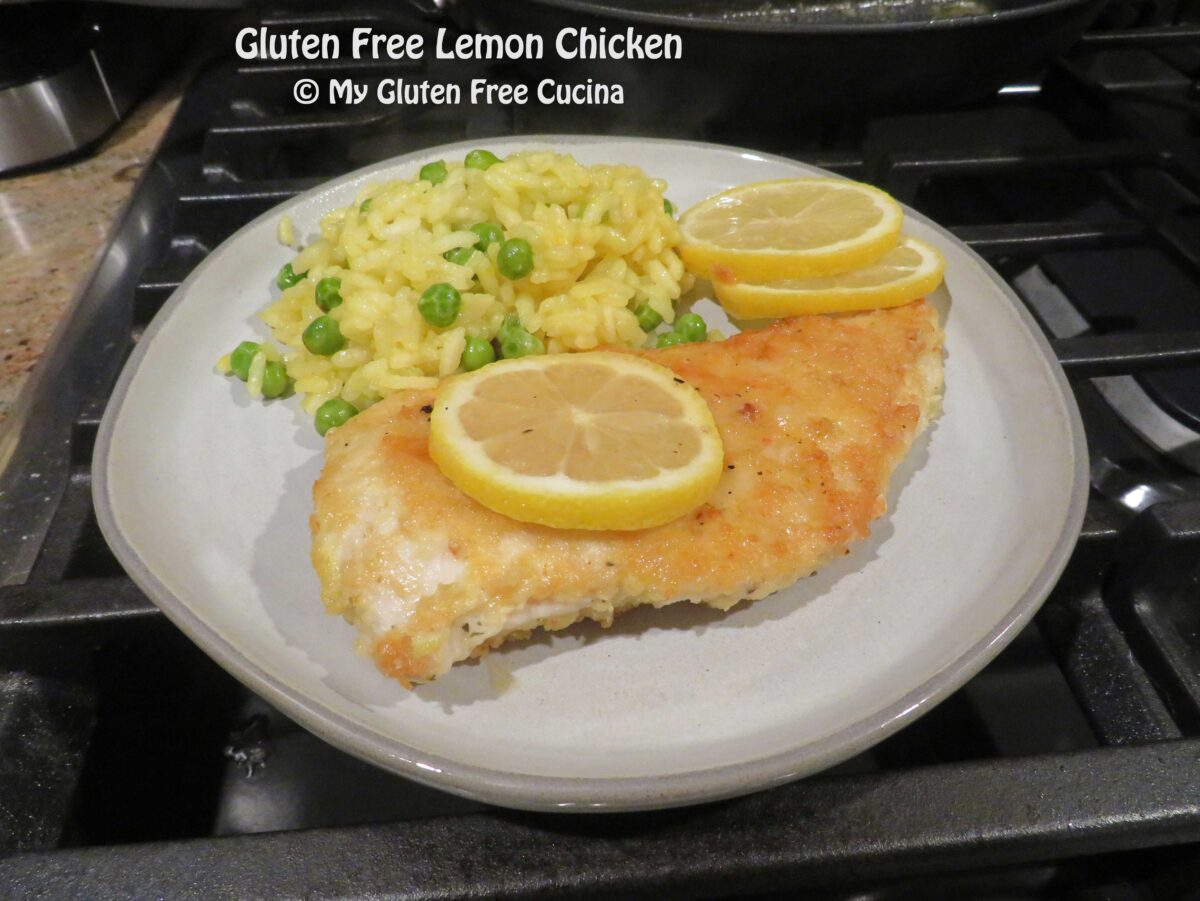
Lemon Chicken, the iconic dish from the sitcom Everybody Loves Raymond is famous for a reason. It’s easy and delicious! The boneless chicken breast comes out so juicy and tender, and the bright lemon flavor will make you an instant fan. Perfect for family dinner, company or date night. Make it for your special someone!
Butterfly the chicken breast then cut it in half lengthwise.
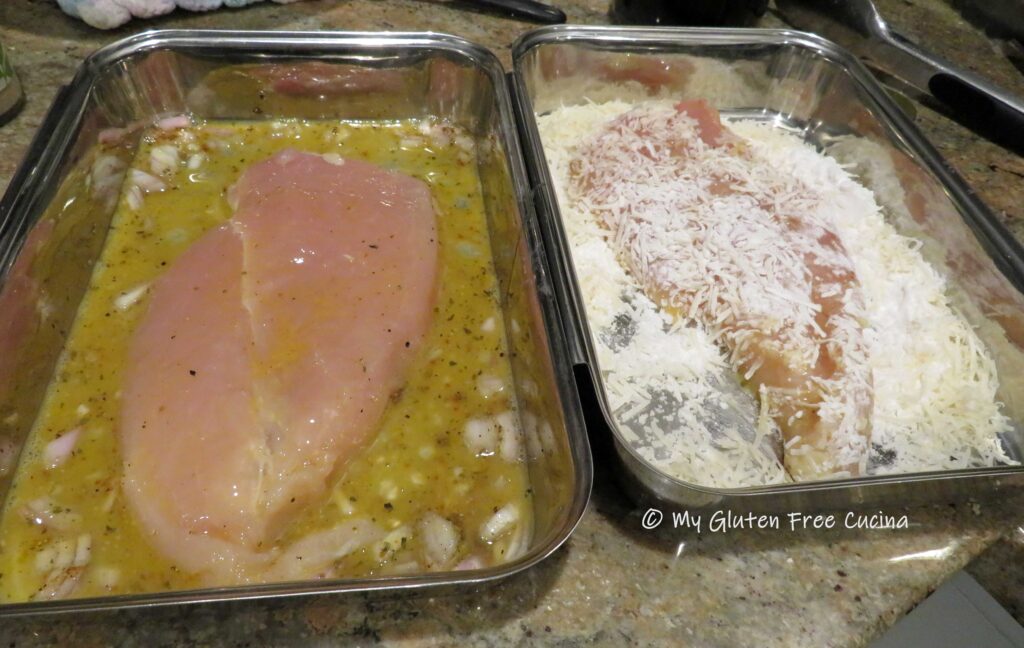
Set up 2 breading trays. In the first tray, beat the egg with 1 tbsp. water. Whisk in 1 tbsp. minced shallot, salt and pepper to taste. In the second tray, add the rice flour and grated cheese.
Heat a nonstick skillet over medium low. Coat the bottom with olive oil. Working with one piece at a time, dip the chicken in the egg mixture, then shake off the excess and dredge in the flour and cheese.
When the pan is hot, add the chicken and cook for 6-7 minutes per side, turning once.
I cooked it all in this divided pan from Anolon, how cool is that?
To make the sauce, melt the butter and squeeze in the juice from one of the lemons, then stir in the chicken broth. Slice the other lemon for garnish.
I grilled the chicken on one side and made the sauce on the other!
To serve, transfer the chicken to a plate, garnish with lemon slices and drizzle with the sauce.
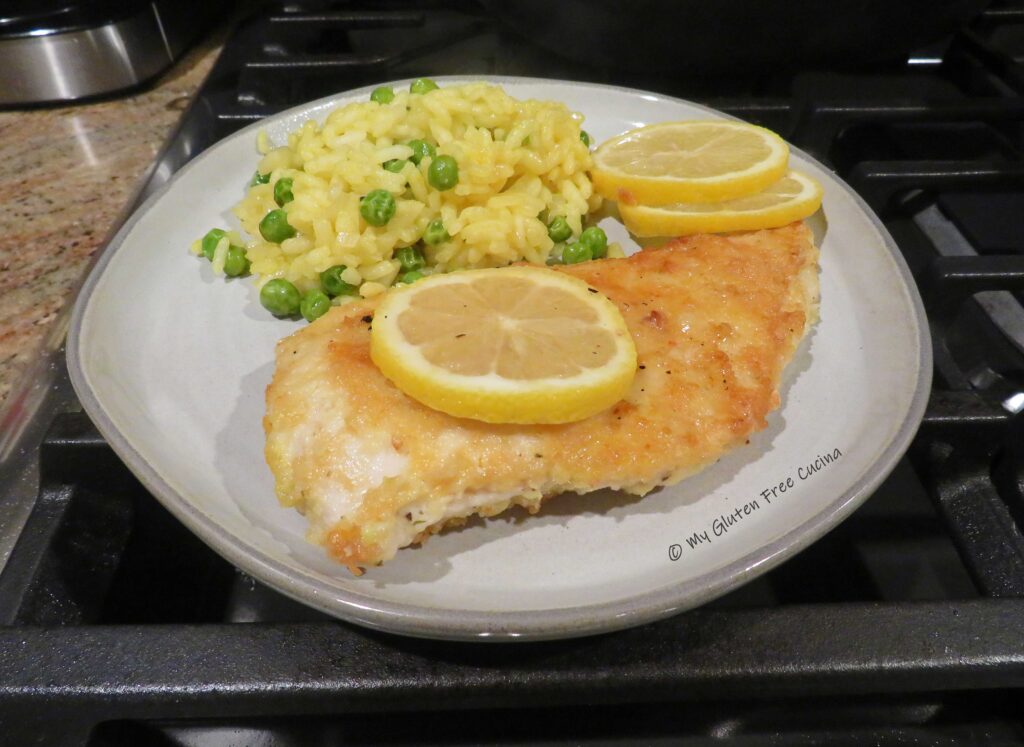
I served it with risotto and peas. You could definitely do a side of pasta or potato and veg as well.
Notes ♪♫ Don’t reach for the plastic lemon, freshly squeezed lemon juice is a must for this dish! 🍋🍋🍋 The same goes for the cheese, grate your own Parmigiano Reggiano cheese and taste the difference!
This pork roast was SO good, that I will be making it on repeat over the winter. It’s perfect for families, dinner guests or any time. The simple honey glaze perfectly complements the pork without overpowering it.
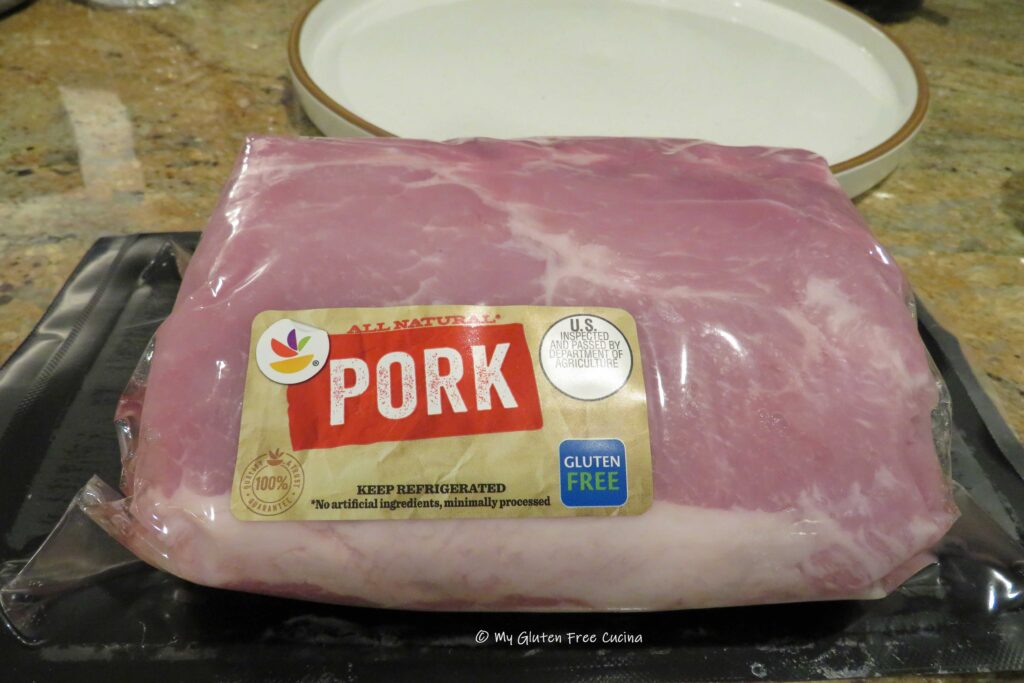
For this recipe, I used a pork loin roast. Not to be confused with tenderloin, the pork loin is a rectangular shaped roast with a layer of fat, or fat cap, which helps keep it juicy as it bakes.
Preheat the oven to 450º. Heat a stainless-steel skillet with olive oil.
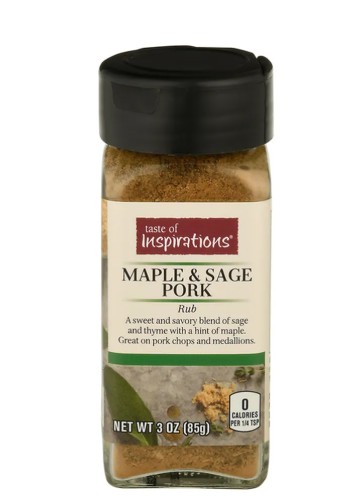
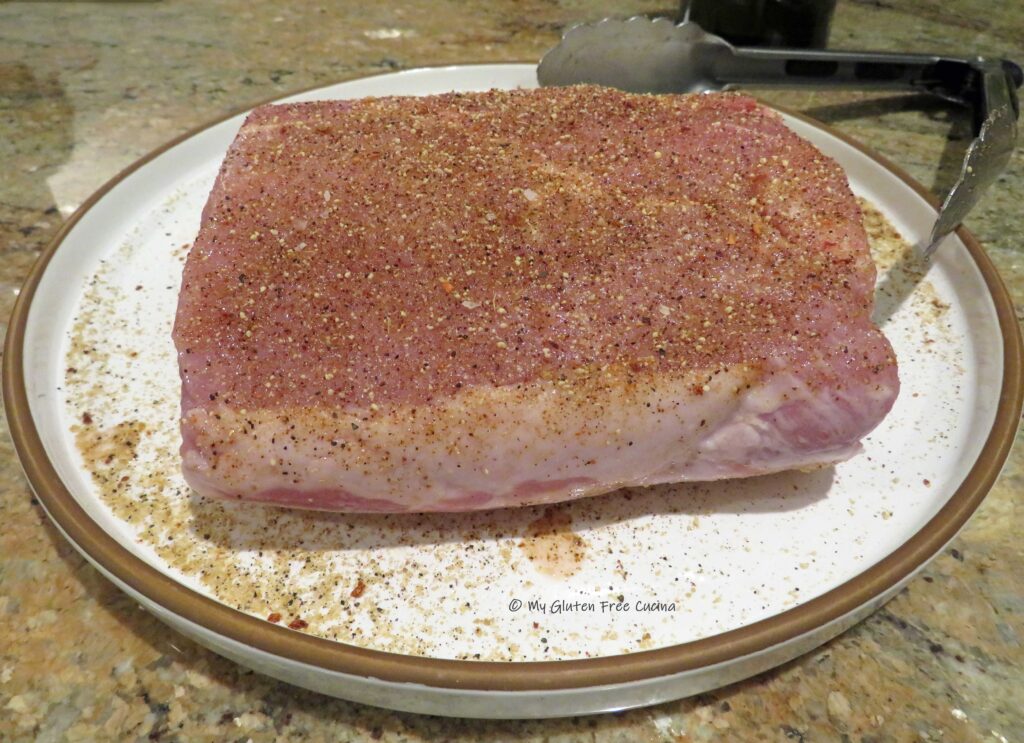
Season the roast all over with your dry rub of choice.
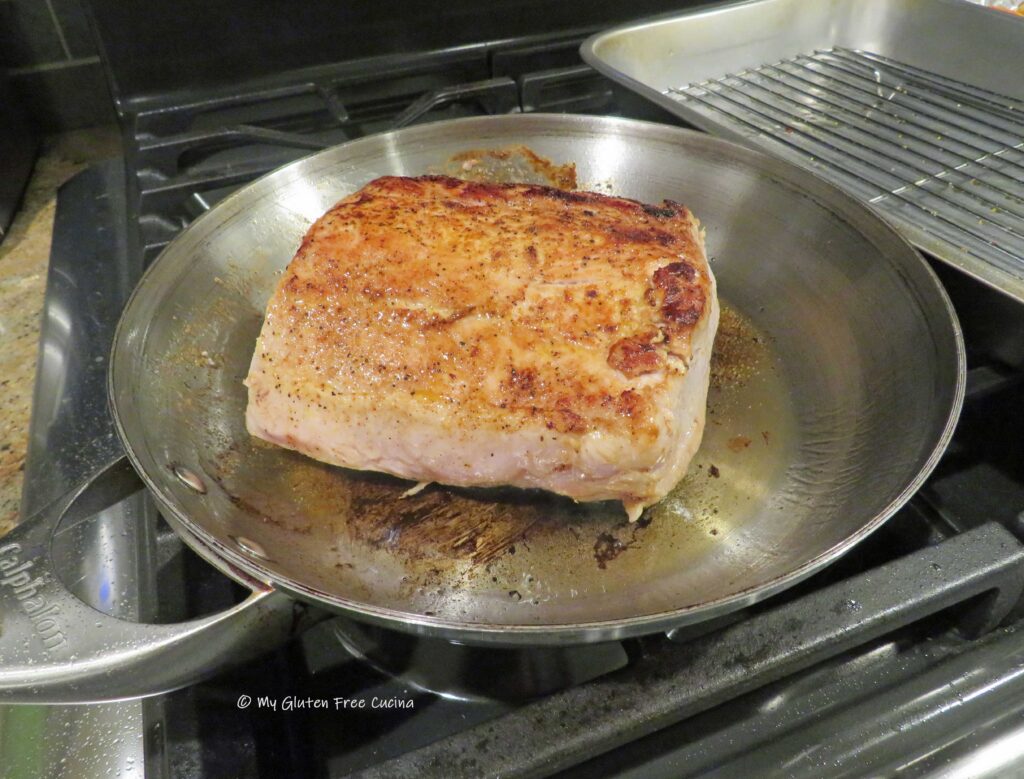
Sear the roast in olive oil, browning all sides.
Next set up a small roasting pan with a rack, and mist with cooking spray. Add the roast and brush with half of the honey mixture.
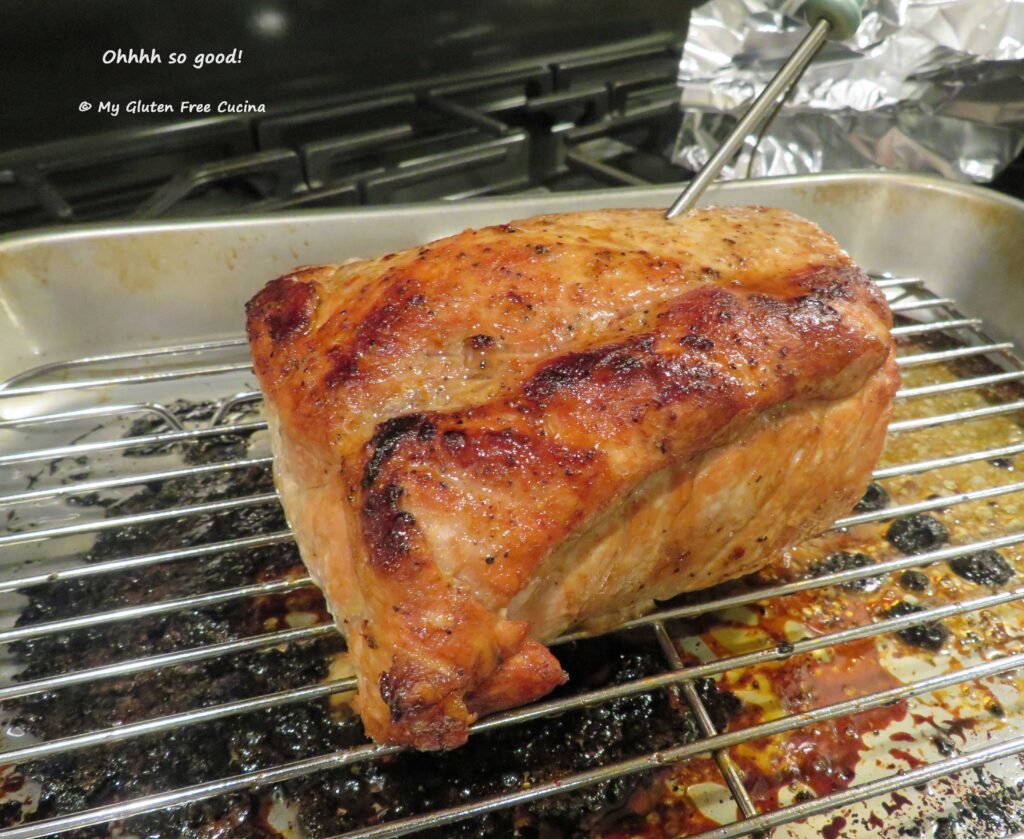
Place the roast in the oven on the middle rack and lower the heat to 375º. Insert a thermometer and bake for 25 minutes.
After 25 minutes, carefully brush with the remaining glaze, tent with foil and continue roasting until the internal temperature reaches 140º, about 35 minutes longer.
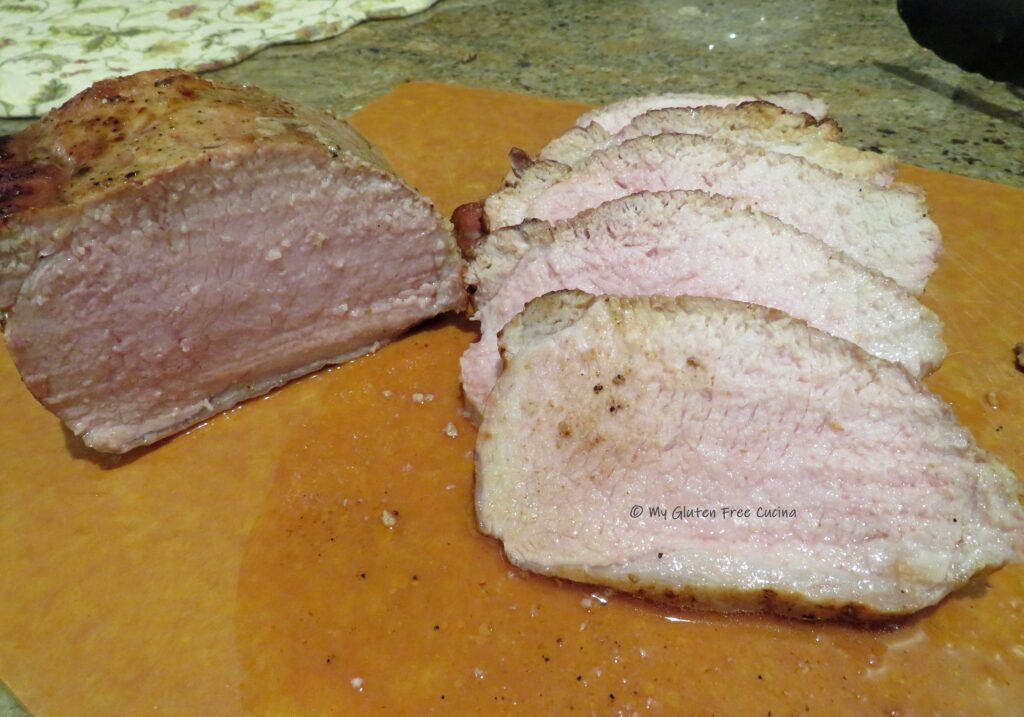
Remove from the oven and let it rest 10 minutes before slicing. As it rests, the internal temperature should continue to rise to 145º, which is perfect for me. If you like your meat well done, you can leave it in the oven a little longer.
Doesn’t that look great? SO juicy! I served it with potatoes and carrots, but this versatile roast would go equally well with rice or noodles.
Notes ♪♫ This is not an ad, just a recommendation to try the Ginger Chile Espresso Maple Rub from The Spice House, which is what I used in this recipe. It is currently one of my favorite seasoning blends and goes especially well with pork dishes!
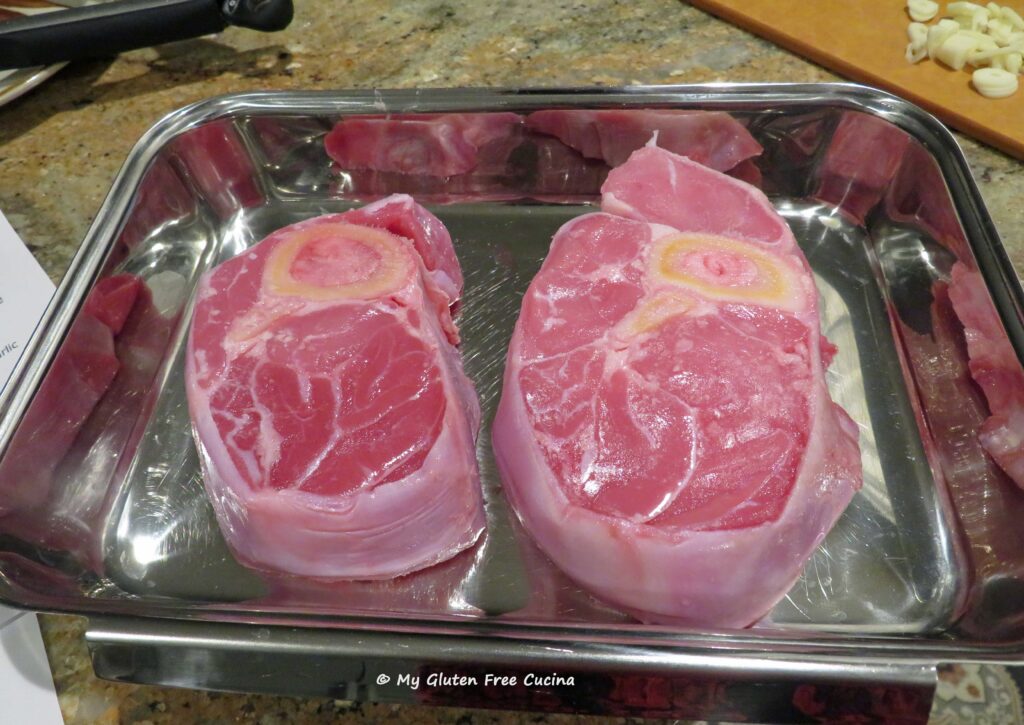
Osso Buco is a classic Italian dish of Milanese origin. Traditionally made with veal shanks, slowly braised in an aromatic wine sauce, it is the perfect dish for a Sunday afternoon. Serve it over risotto, polenta or pasta for a 5-star meal. This would be an amazing dinner for 2, that will really impress your special someone! Or, you can double or triple the recipe for a dinner party.
Dinner for 2
Ingredients:
2 veal shanks
1/4 cup gluten free flour
1/4 cup olive oil
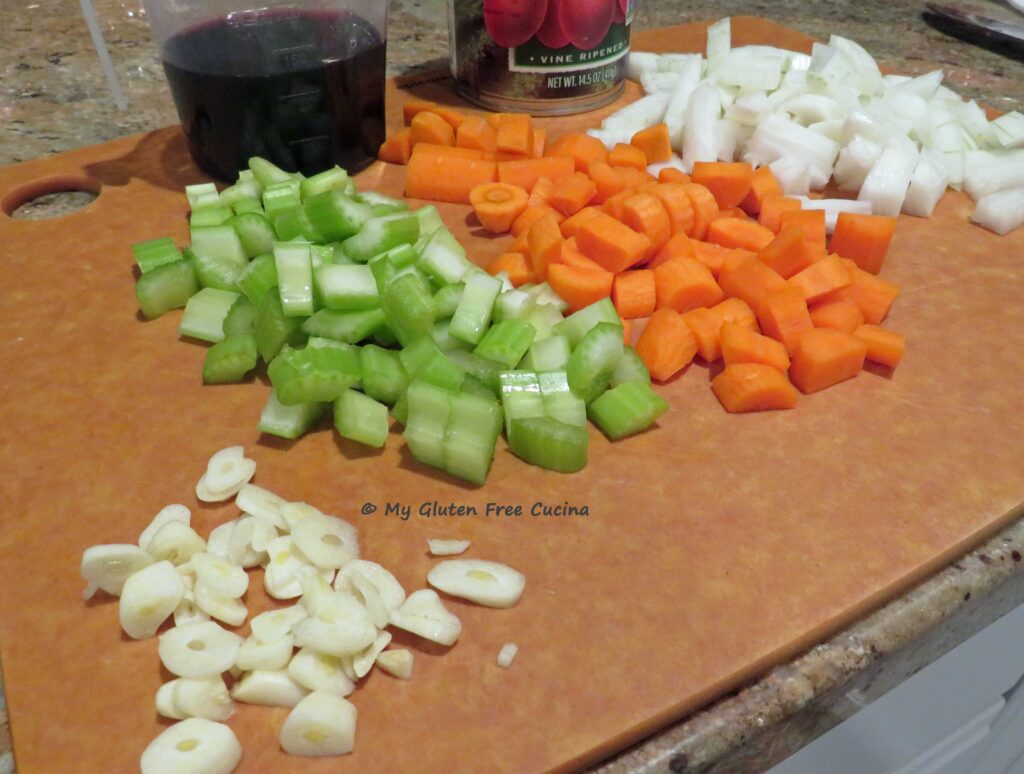
1/2 sweet onion, diced
2 celery stalks, diced
2 small carrots, diced
3 garlic cloves, minced
1/2 cup red wine
1-1/2 cups beef stock
1 can (14.5 oz.) diced tomatoes
fresh rosemary, thyme and bay leaf
salt and pepper, to taste
Italian parsley for garnish
This post contains affiliate links.
Preparation:
Preheat the oven to 325º.
Pat the veal shanks dry with paper towels. Tie them with twine, then sprinkle both sides with salt and pepper.
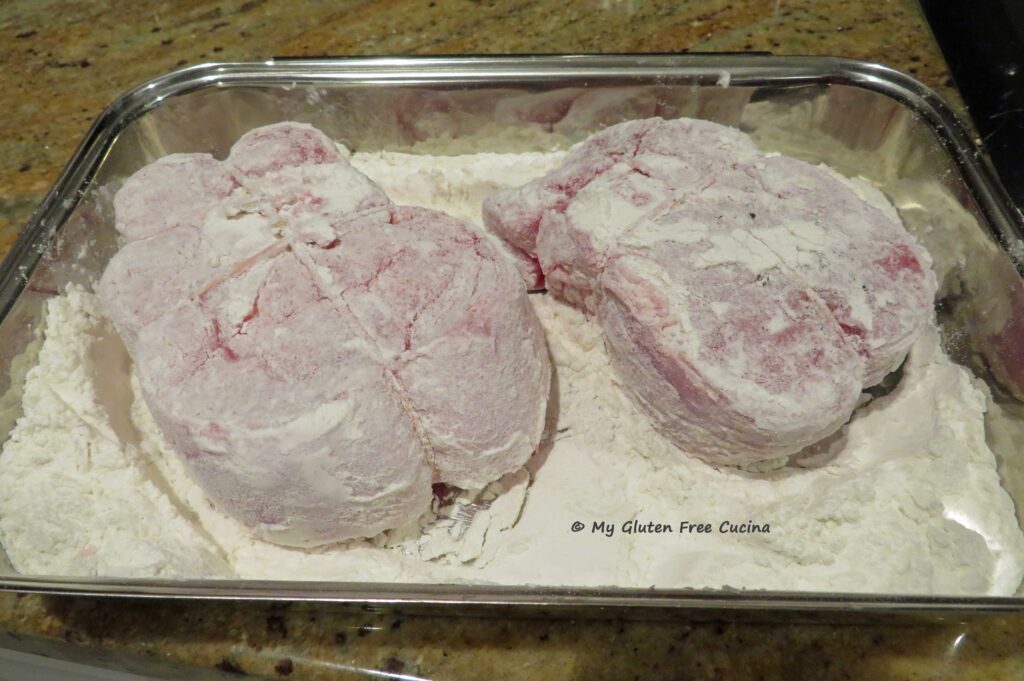
Add the flour to a bowl or breading tray. Dredge the veal shanks to coat both sides with the flour.
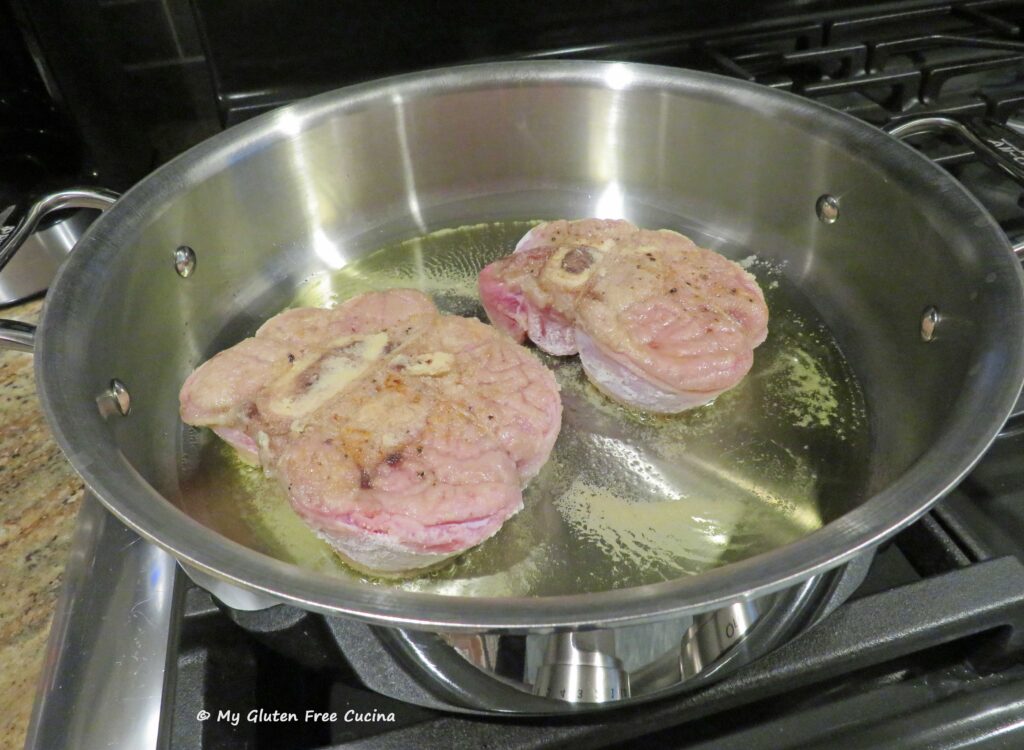
Heat olive oil in an ovenproof deep skillet with cover. I used a stainless-steel everyday pan. Brown the veal shanks on both sides then remove to a plate.
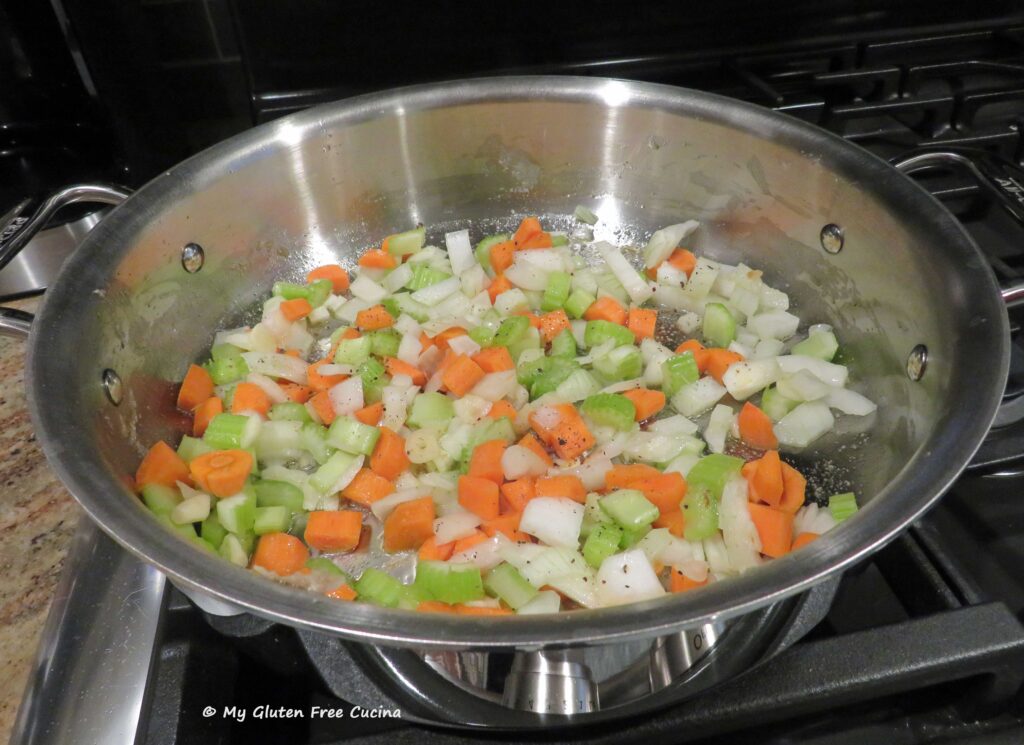
Next add the carrots, celery, onion and garlic to the skillet with salt and pepper to taste. Stir frequently for 2-3 minutes.
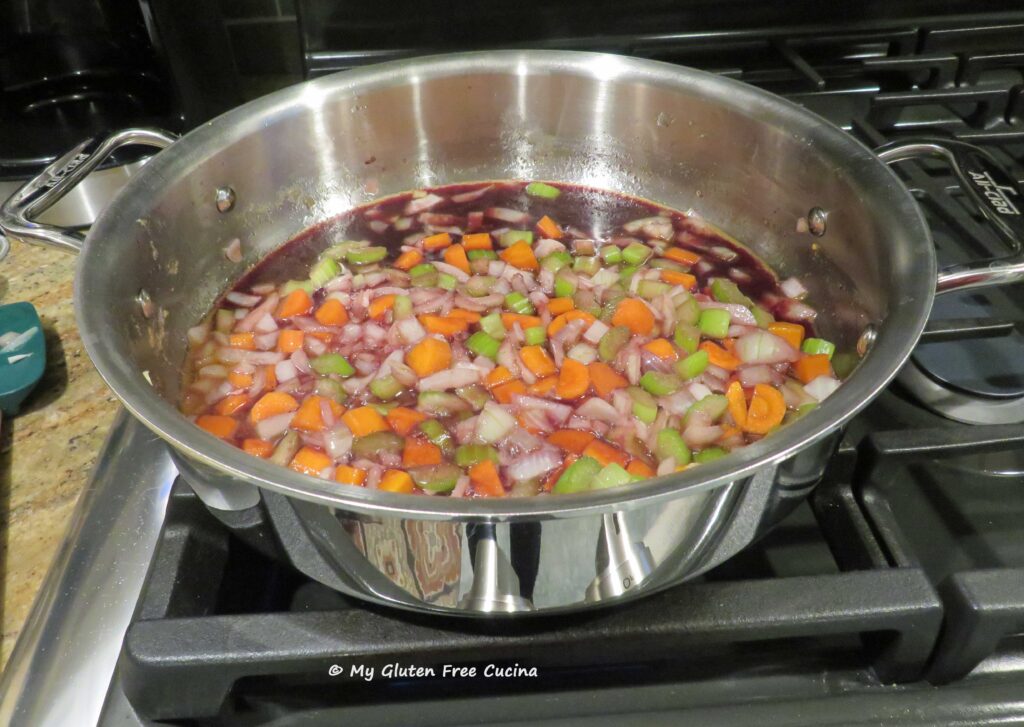
Add the wine, stir well and simmer a few minutes, to let some of the alcohol evaporate.
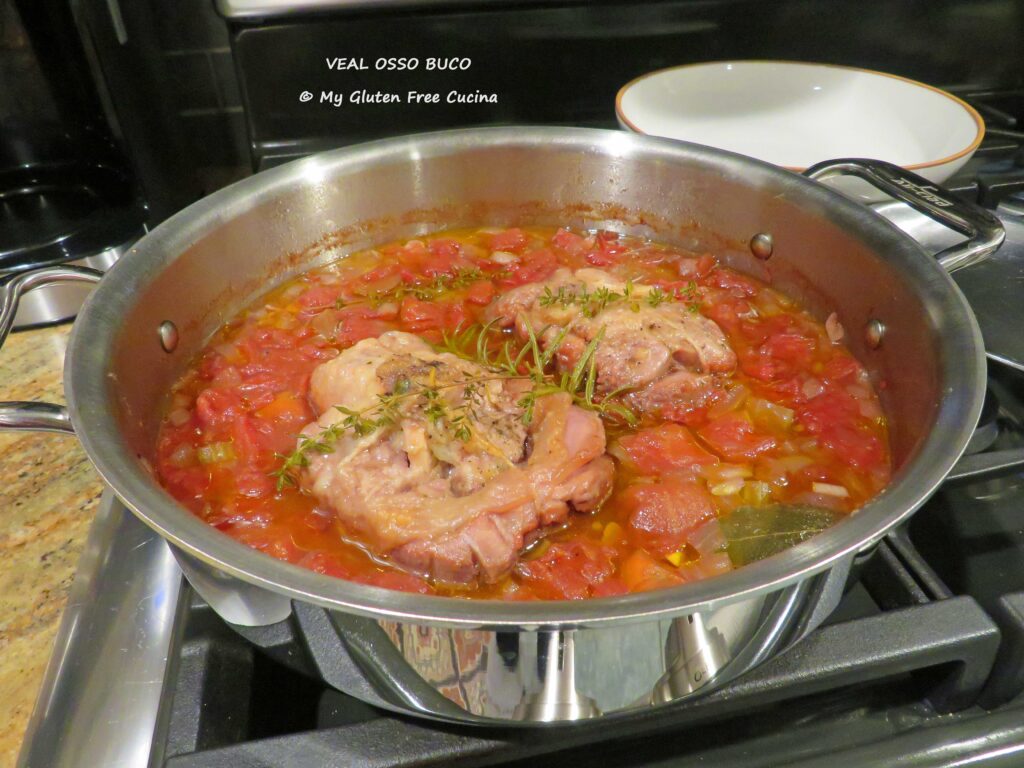
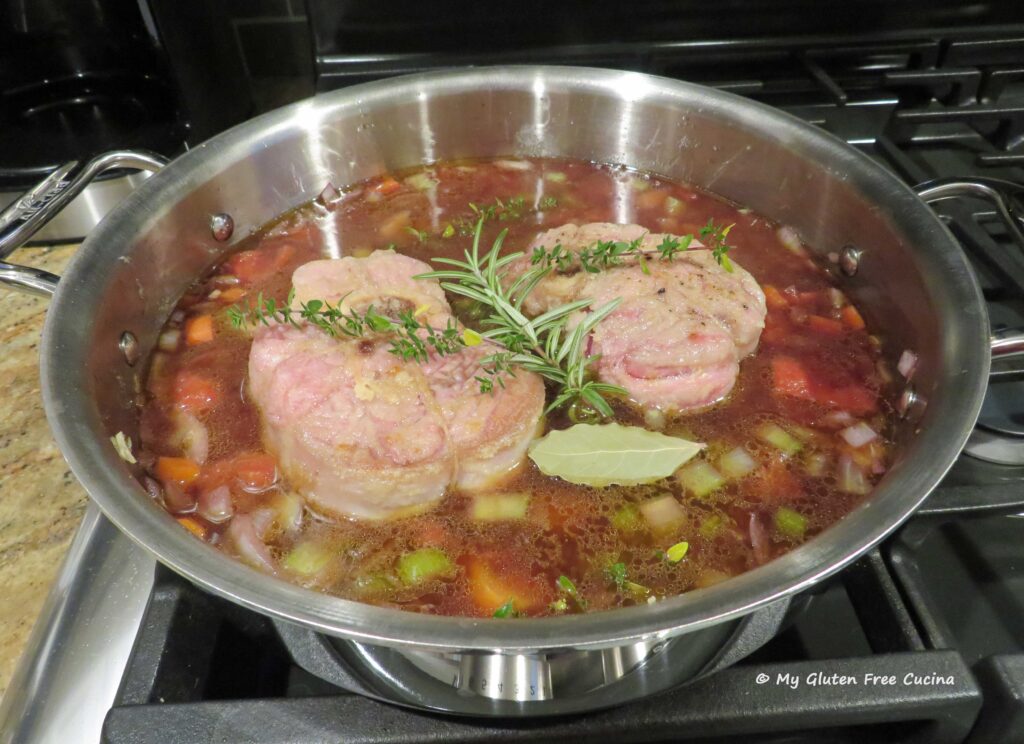
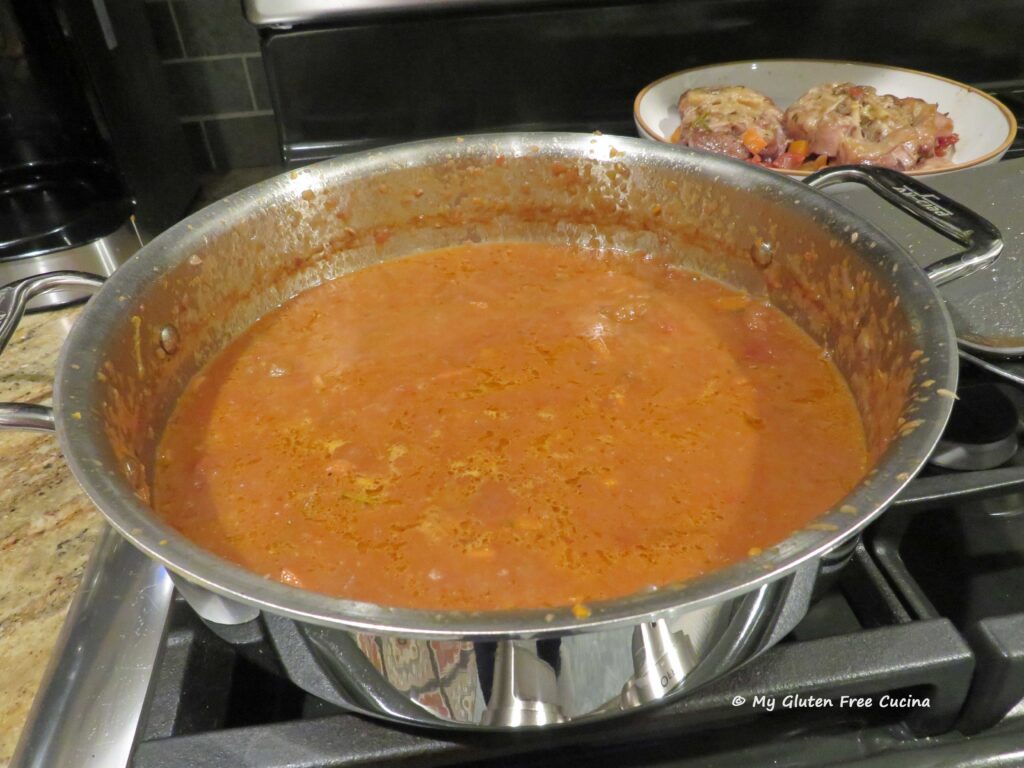
Finally, add the beef stock and tomatoes to the skillet and nestle the veal shanks in the center. Top with the fresh herbs.
Cover and place in the oven for 2 ½ hours.
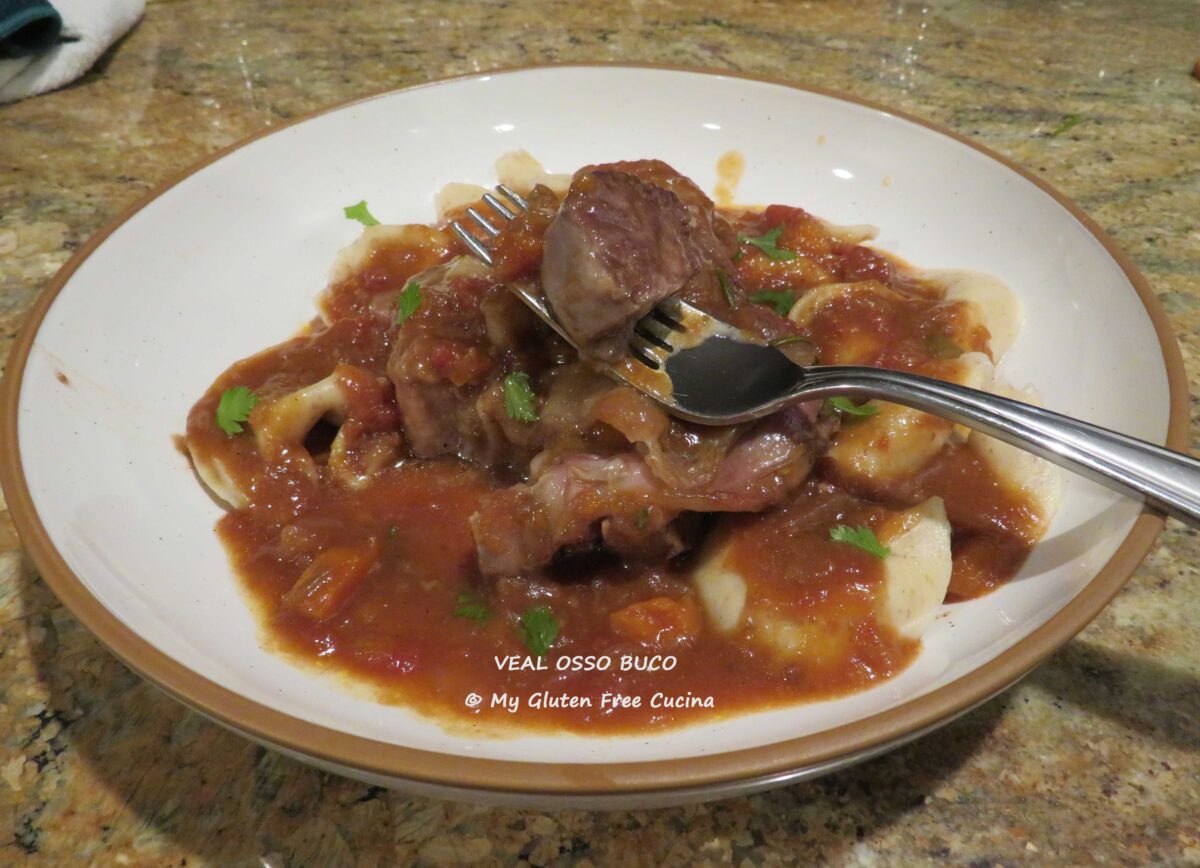
To serve, transfer the veal shanks to dinner size bowls, one shank per person and keep warm. Remove the herbs from the skillet and puree the veggies into a sauce. Simmer with the cover off to thicken.
Spoon sauce over the veal shanks and garnish with Italian parsley.
I served mine with Taste Republic Gluten Free Tortellini and this dinner was amazing! You can serve the veal with regular pasta or risotto and don’t forget to bring grated cheese to the table.
Notes ♪♫ This is another great Italian recipe that is easily converted to gluten free. The only ingredient that I had to change was the flour. Use any gluten free all-purpose flour, or a single grain flour like a fine grain rice flour. Check labels on prepared ingredients, like beef stock. I used Swansons, my favorite brand as far as flavor and their beef stock is gluten free.
Looking back at my recipe notes, I was surprised to find that I have not made Pumpkin Bread since 2013. Why I don’t know, because I had a really good recipe that everyone enjoyed.
So, this week I decided to dust off that old favorite and give it a gluten free makeover. Would you believe, the only ingredient that had to be changed was the flour? I find that’s the case with so many recipes.
This easy pumpkin bread is super moist! Serve it with ice cream for dessert and have the leftovers for breakfast! It would be a fine addition to your Thanksgiving breadbasket.
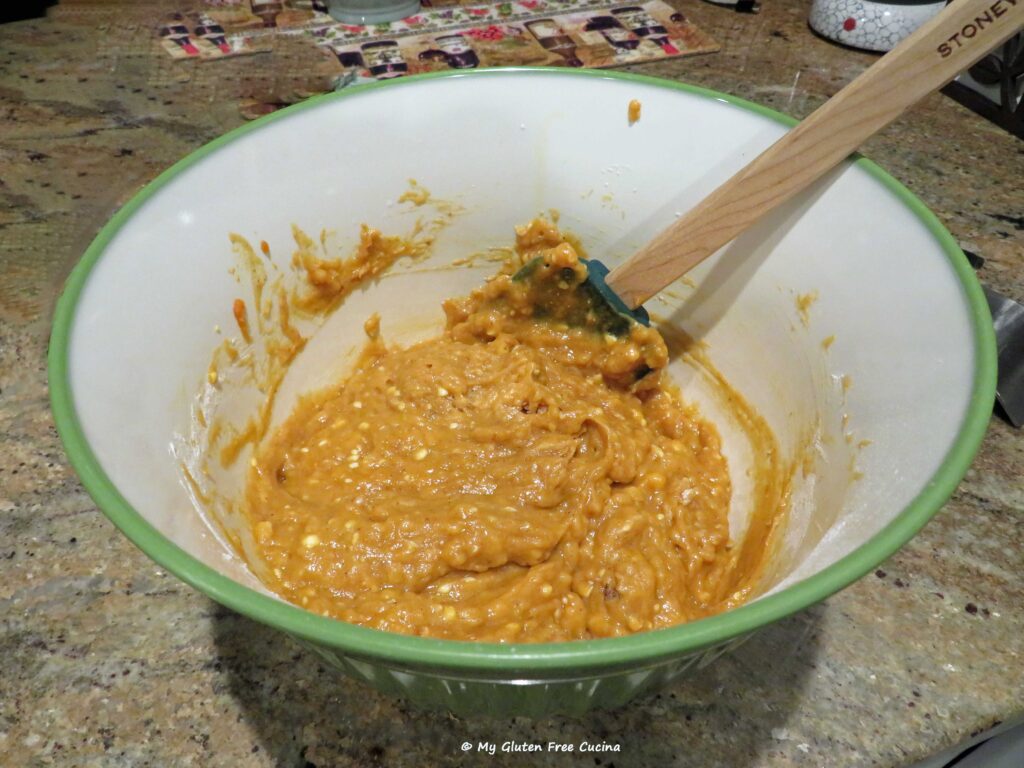
Whisk together all of the dry ingredients. Combine the wet ingredients in a separate bowl and whisk until smooth and the butter breaks down into little bits.
Add the dry ingredients to the wet, and fold with a spatula just until moistened. Let the batter rest while you preheat the oven to 350º.
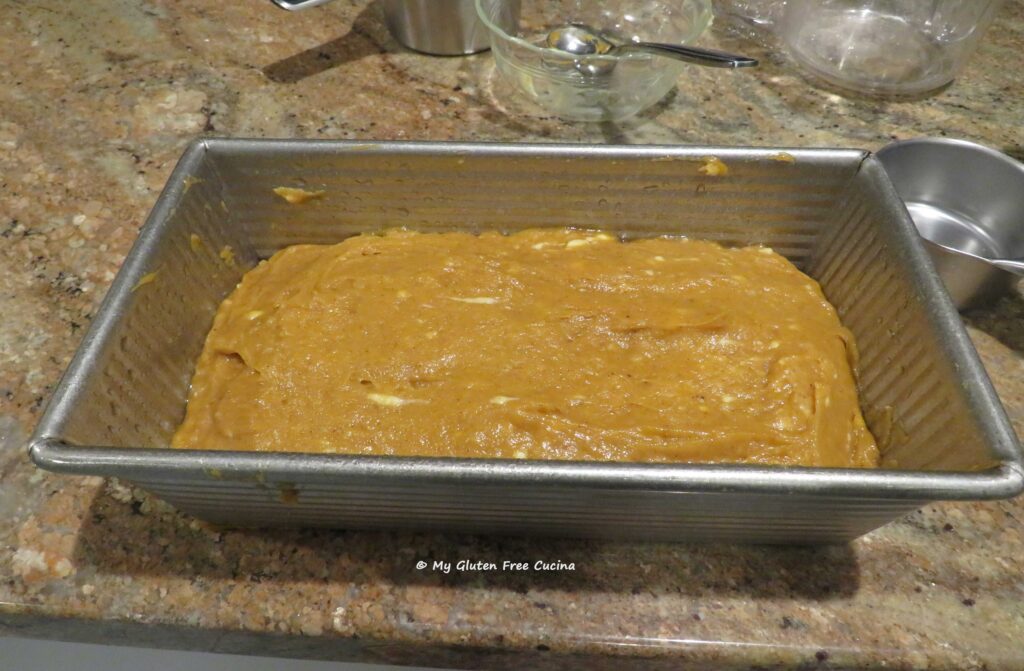
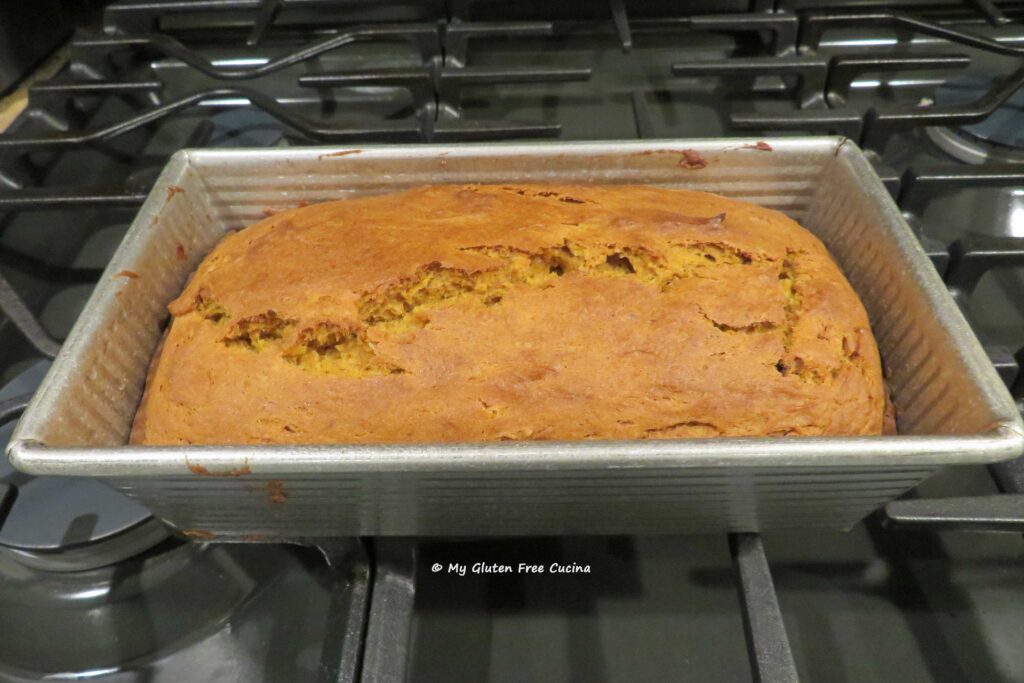
Scrape the batter into a greased 1 lb. loaf pan (8″ x 4″) and smooth it out evenly. Bake for 60-65 minutes.
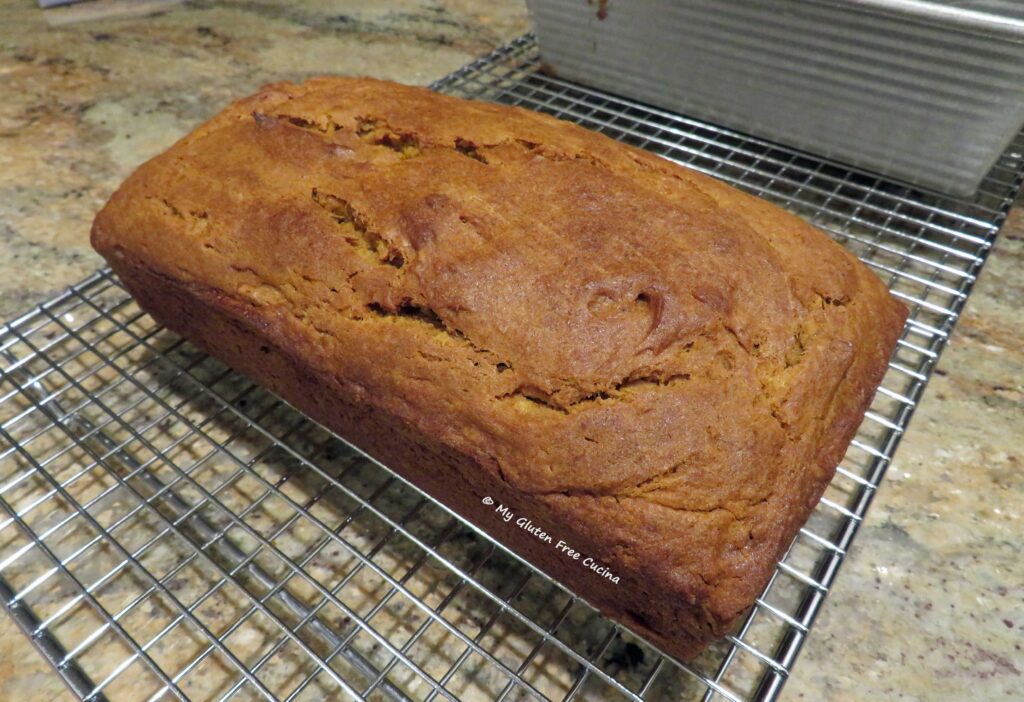
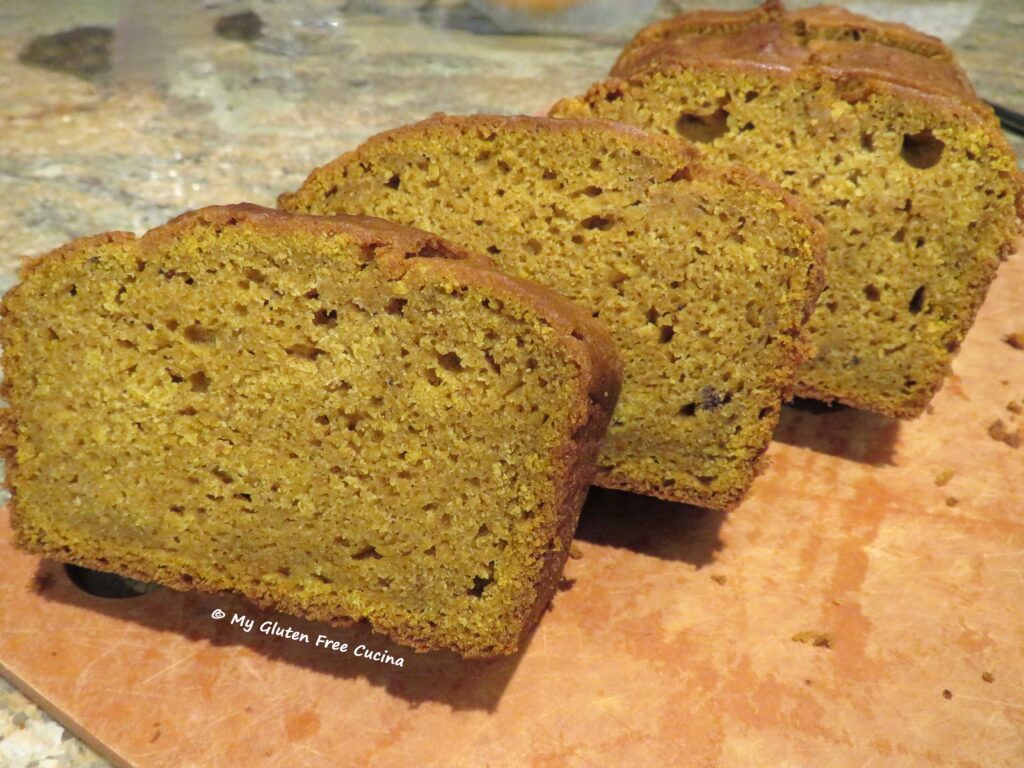
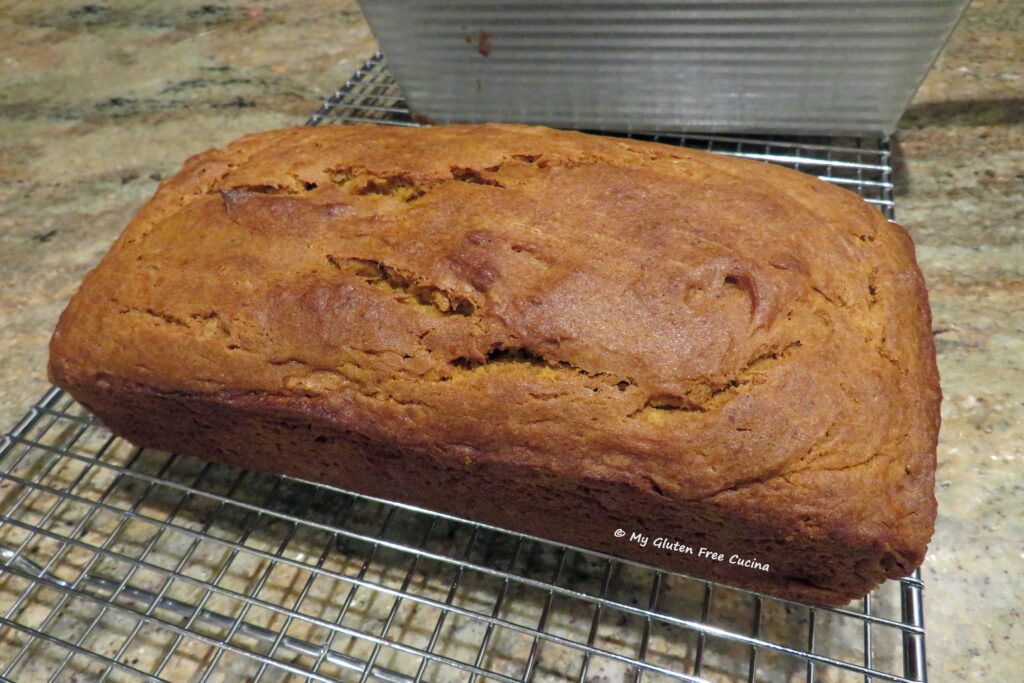
Test with a toothpick, it should come out clean, and the loaf will be starting to pull away from the sides of the pan. Cool in the pan for 10 minutes then slide a thin spatula around the edges. The loaf should remove easily. Allow it to cool for at least 2 hours. Bet you’ll have hard time waiting!
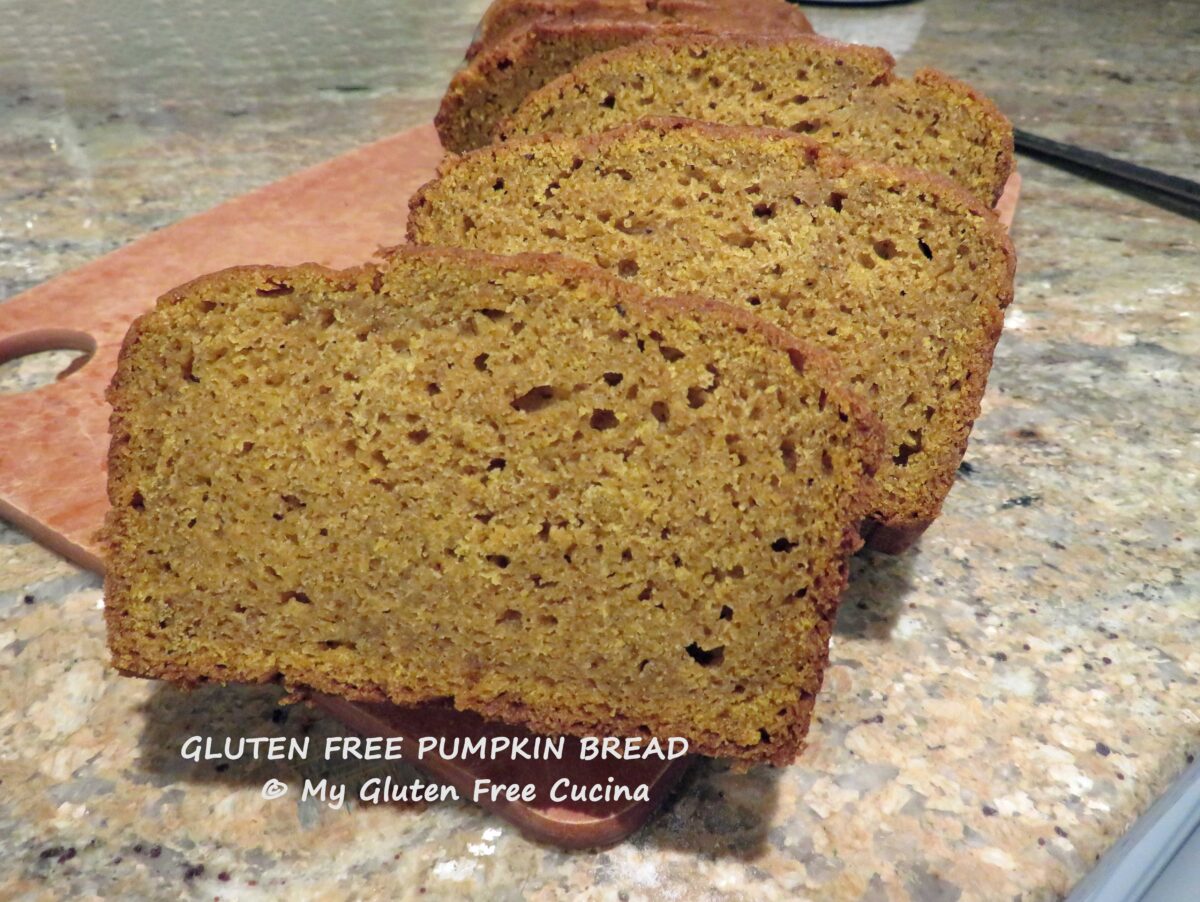
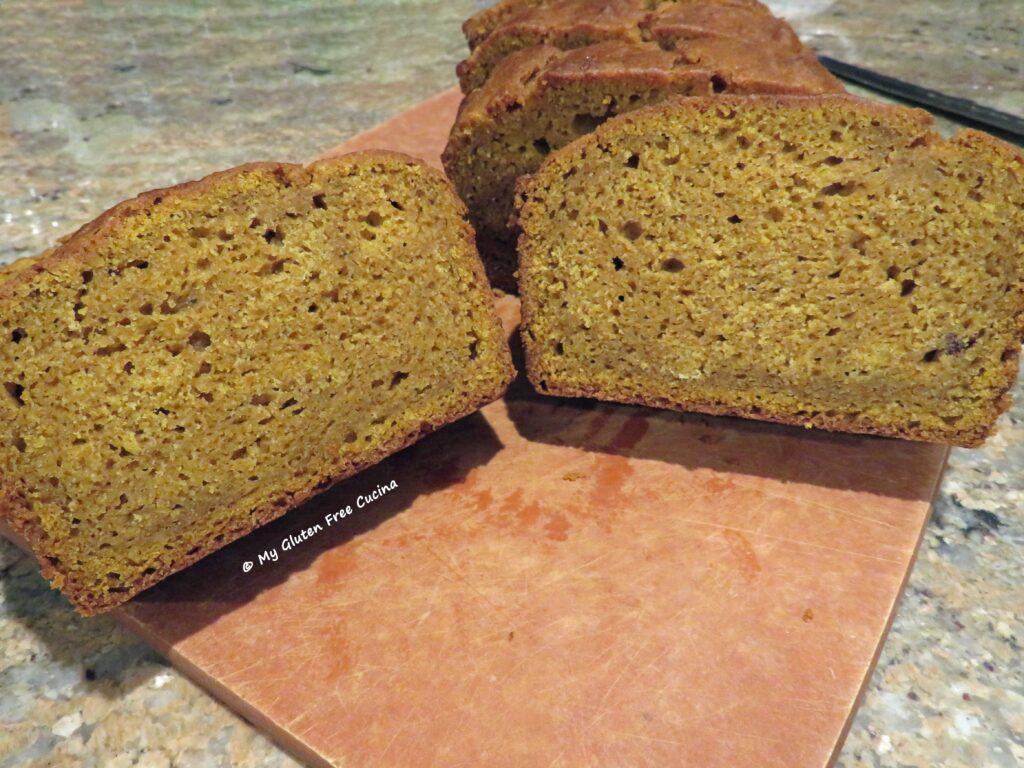
I let mine cool to room temperature, then stored it in a plastic bag on the counter overnight. Look at that beautiful color! 🎃
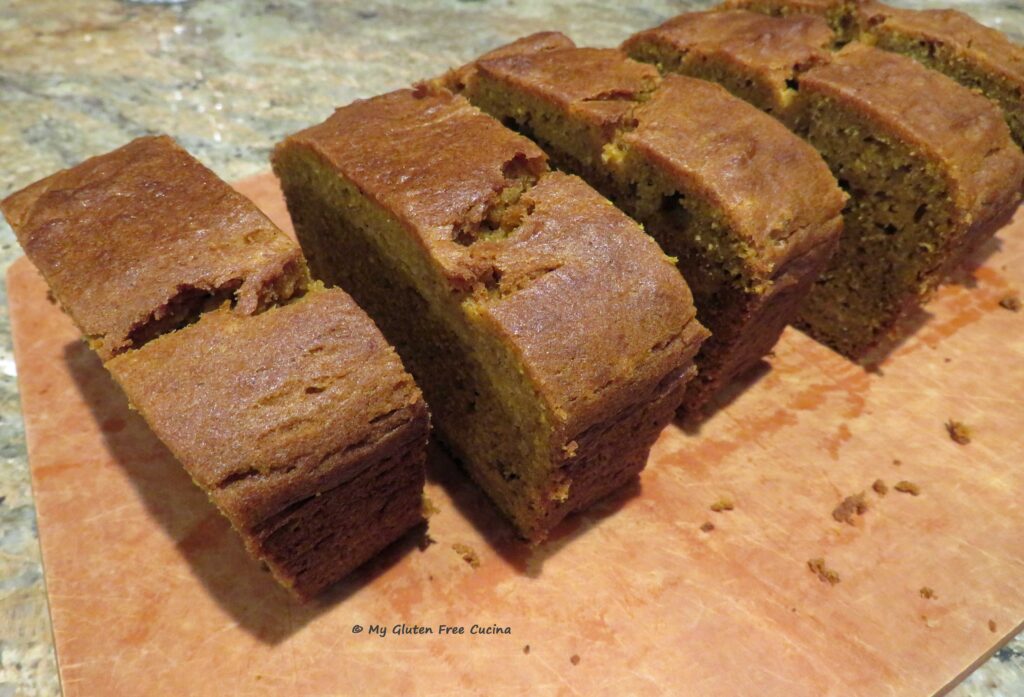
I sliced my Pumpkin Bread into nice thick pieces and wrapped a few individually for the freezer.
I ate the 2 end slices on the spot (had to taste test!), then had another big slice for breakfast! SOOOO good!
Notes ♪♫ Pan size is important. Be sure to use a 1 lb. metal loaf pan. I like this one, from USA Pan. Larger loaf pans, like a 1.25 lb. pan will change the height and width of the loaf, as well as the cook time.
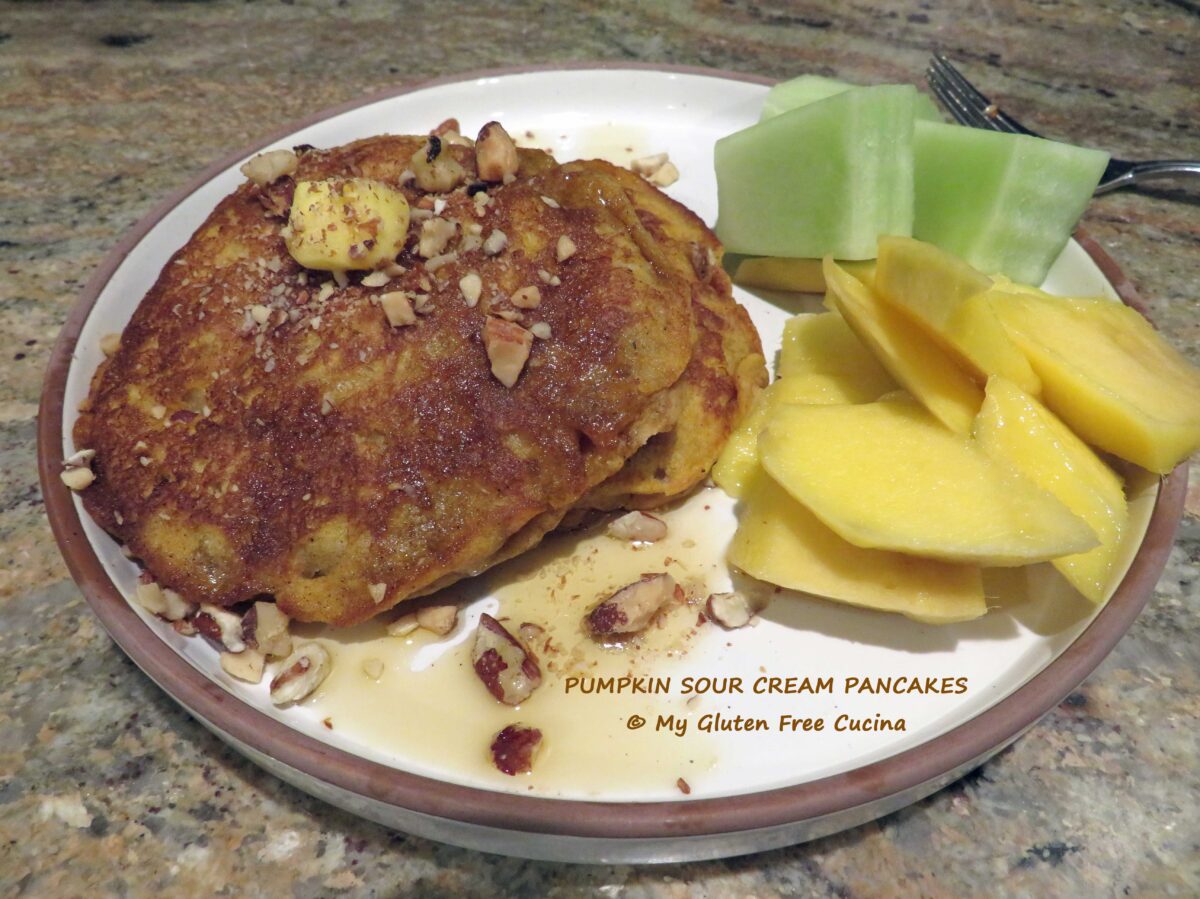
This post started as one of those “use it up” recipes. I had just a little bit of sour cream, and a little pumpkin puree left over. You know I hate to throw anything away. 😉 So who wants pancakes?
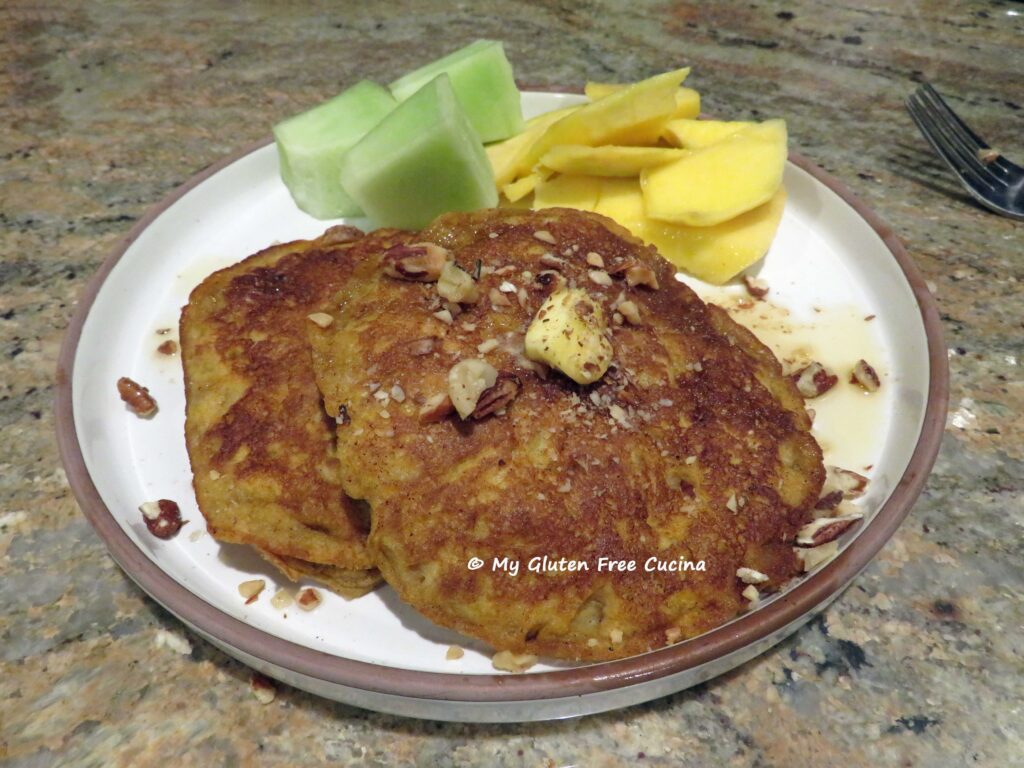
The recipe makes a small batch, breakfast for two. I ended up with 5 full size pancakes and one mini pancake. You can double or triple the recipe for a large family, or if you want extra to freeze for later.
Preheat your griddle. Be sure that it is nice and hot before you begin cooking. (Hint💡 Ever wonder why that first pancake is always “a little funny”? The reason may be that your griddle wasn’t hot enough!)
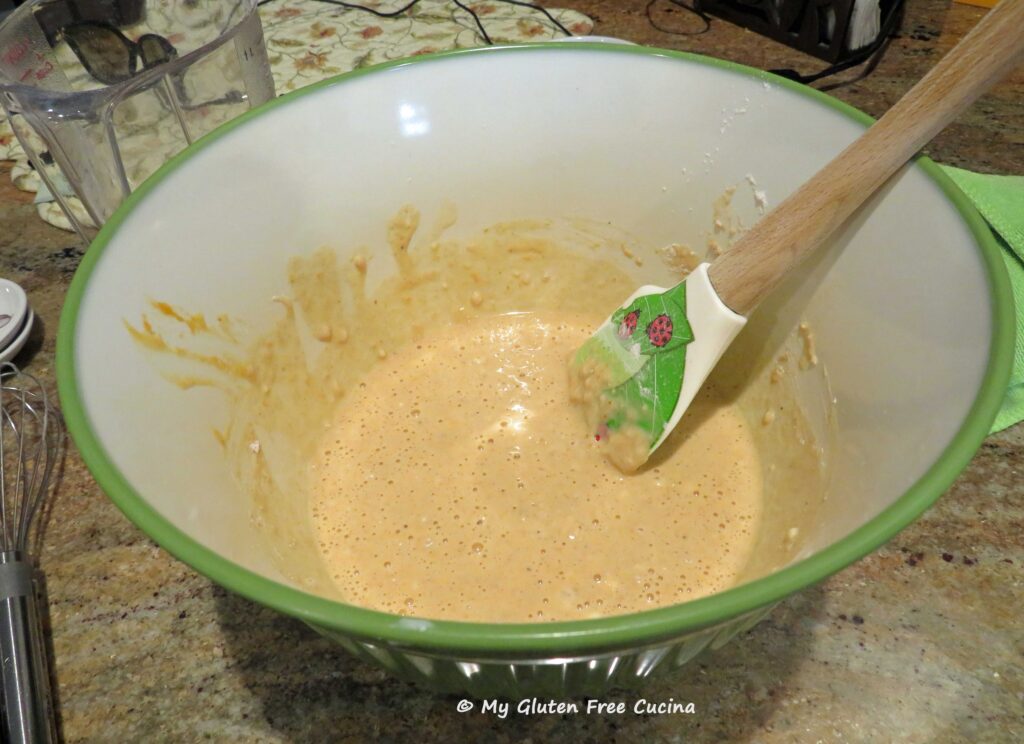
Set up 2 bowls, whisk together the dry ingredients in one bowl (I strongly recommend that you weigh the flour), and the wet ingredients in the other. Stir the wet and dry ingredients together, just until moistened.
Melt butter 1 tbsp. at a time on the griddle. Scoop batter by 1/3 cups and add to the griddle, leaving space in between.
Cook for 5 minutes then flip. Cook 3-5 more minutes. Keep in mind that gluten free pancakes take longer to cook than regular pancakes. Check if they are done by inserting a toothpick in the center. If it comes out dry, they are ready.
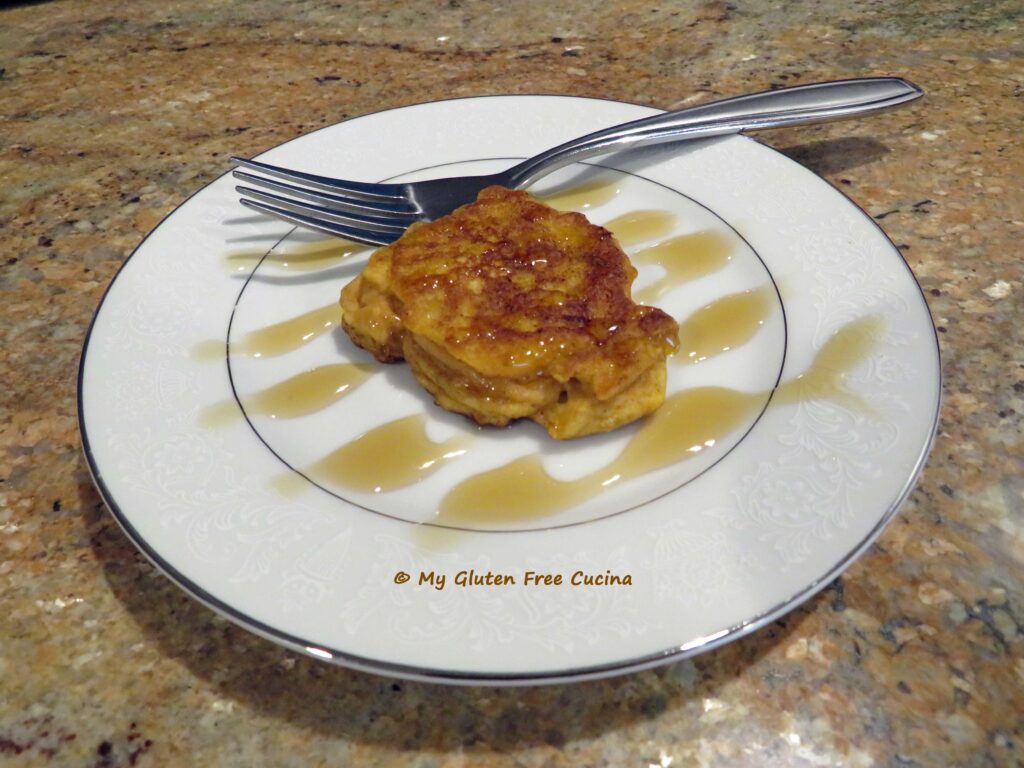
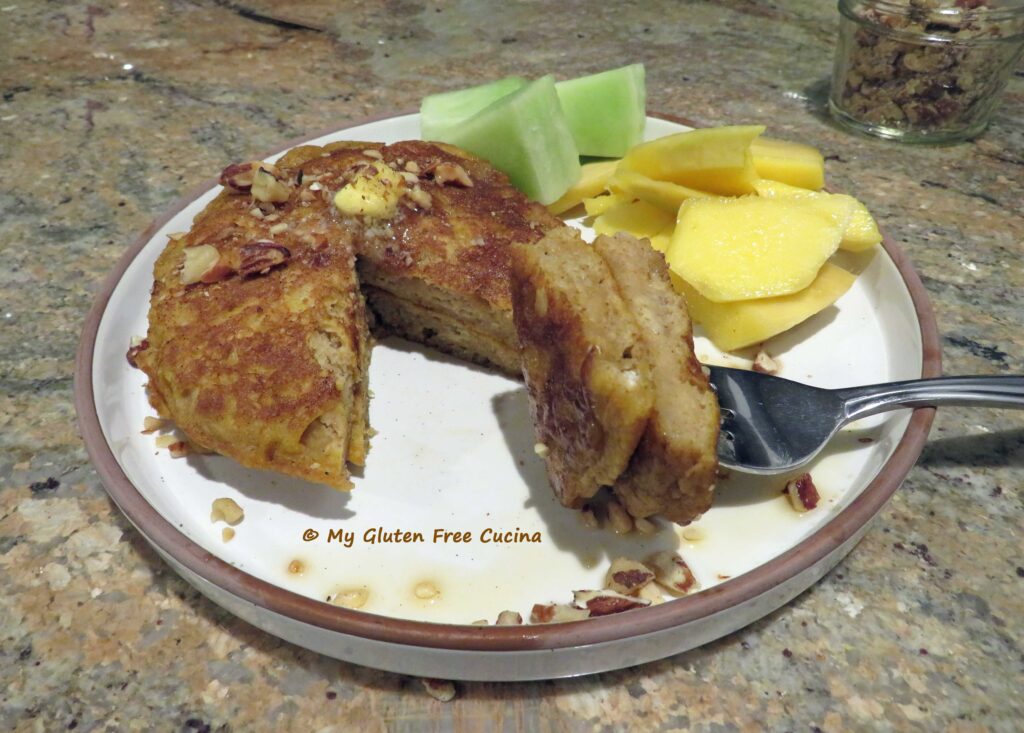
If you have a little batter left over at the end, you can make a test pancake, here’s mine. Just one bite!
You can serve the pancakes immediately or freeze for later. I let mine cool completely on a rack, then wrapped them separately and stored in freezer safe bags.
They reheat beautifully, about 75 seconds in the microwave. So, who’s ready for breakfast?
Notes ♪♫I confess, I like a nice pumpkin on the front porch, but in the kitchen, I prefer out of the can. It’s just easier and I think it tastes better. 🤷🏻♀️Look for canned pumpkin puree (not pumpkin pie filling). Pumpkin should be the only ingredient. I used Libby’s.
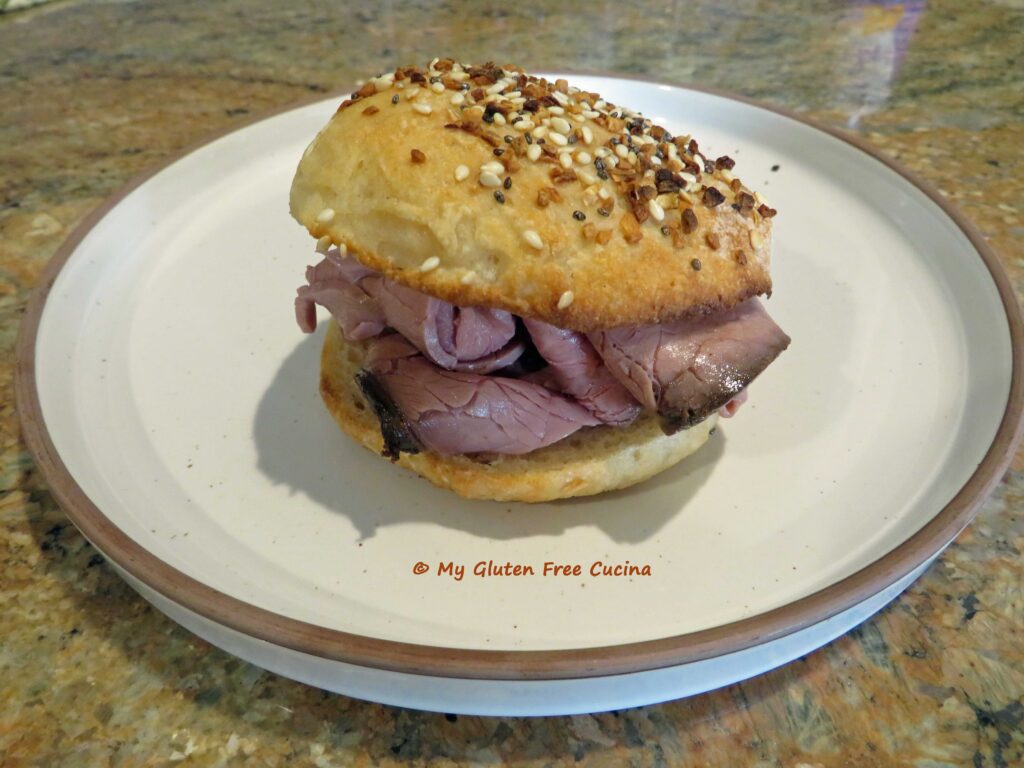
If you follow me on Facebook, you will have seen these rolls before. This is my go-to recipe for lunch sandwiches, and I make a batch every couple of weeks.
They are the perfect texture, soft but not gummy inside. You can toast them or not, they are delicious either way.
This post contains affiliate links.
This recipe was adapted from the Better Batter website, with permission from my favorite Chef, Patrick Auger. Bet you’re not surprised to hear that!
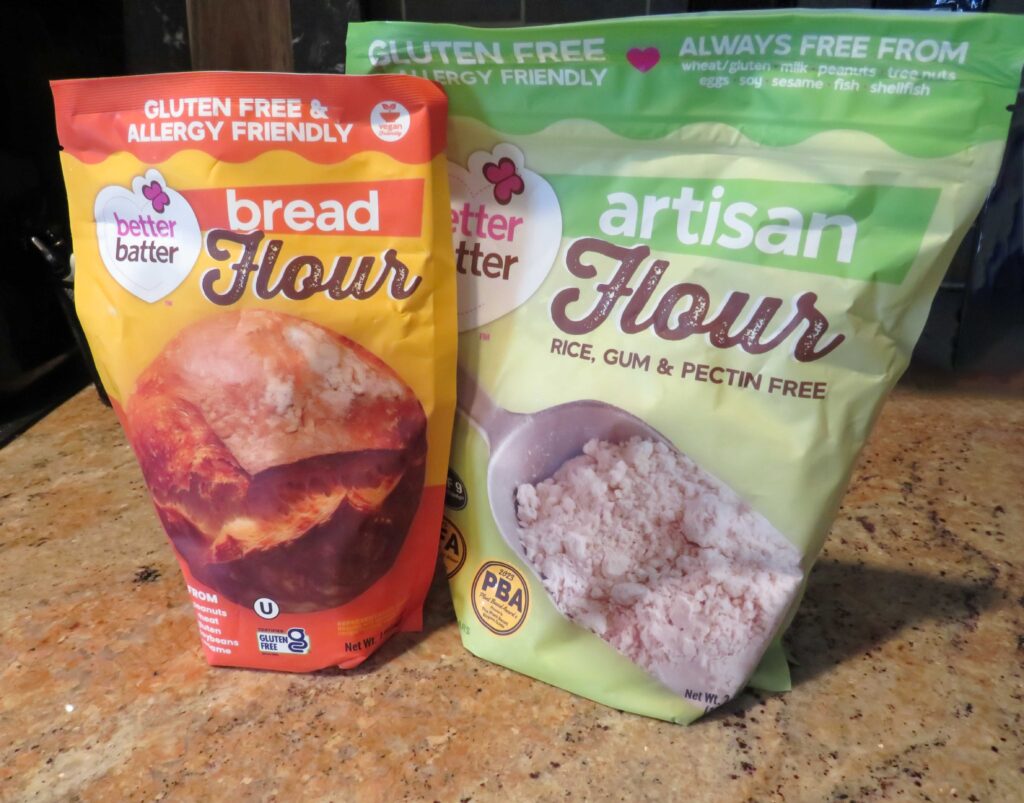
Chef Patrick, who I consider to be “The Oracle” of gluten free baking created this recipe, and he knows my little secret. When I first started making these rolls, I couldn’t decide which flour to use! 🤔
I am a huge fan of Better Batter Artisan Blend. But I love their new Bread Flour too. So, to put my own spin on this recipe, I mixed the 2 flours together.
Shop Better Batter with my Promo Code MGFC30 for 30% off your full price purchase!
I used half artisan blend and half bread flour. And the flavor and texture of these rolls is SO good. The best of both worlds really.
seeds (optional; I use sesame, poppy, everything bagel)
Preparation:
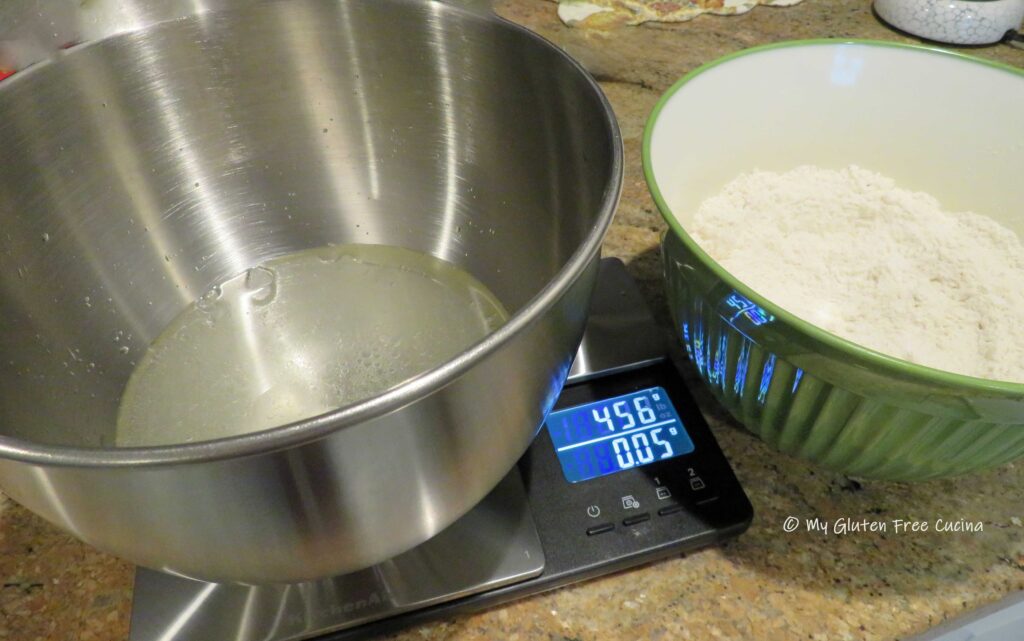
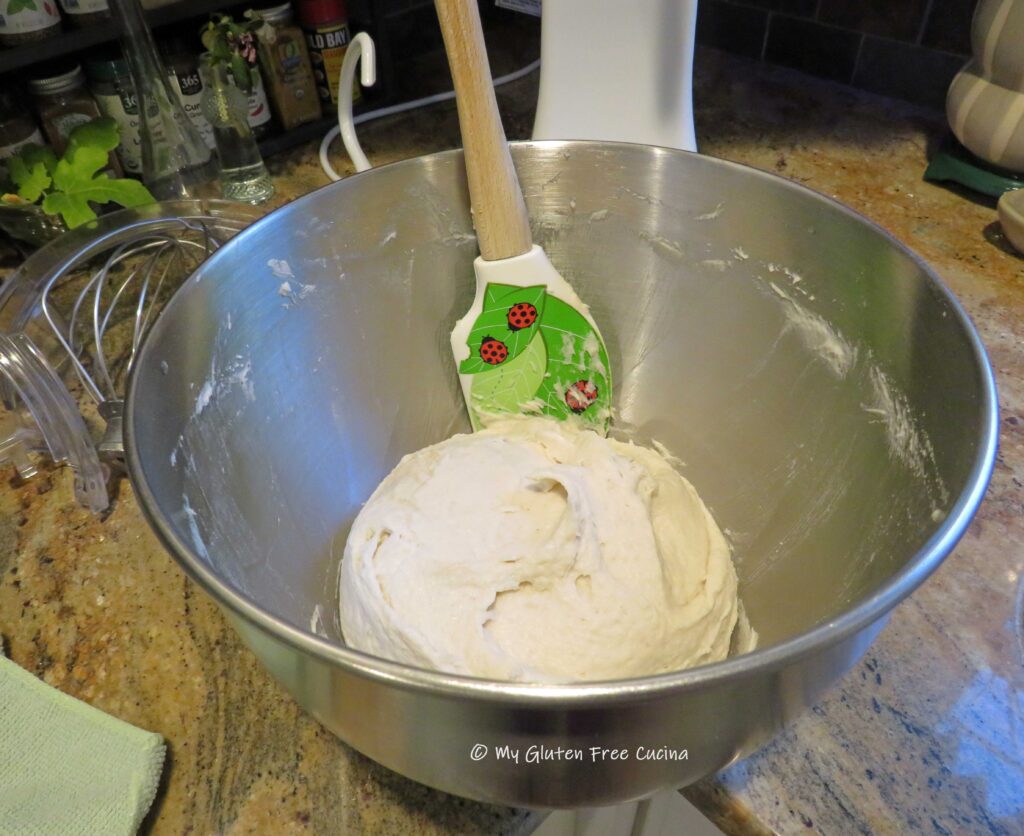
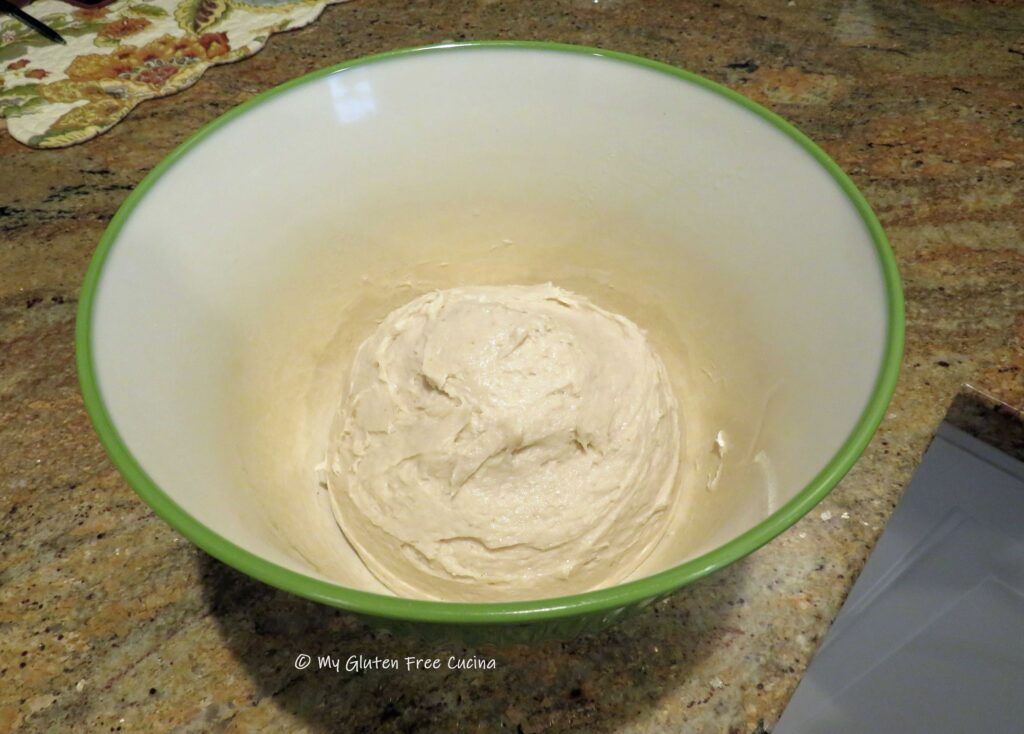
Weigh the ingredients (yes, even the liquid). Combine the water and oil in the bowl of a stand mixer. Whisk together the flours, sugar, salt and yeast in another bowl. Add the dry ingredients to the wet and mix with the paddle attachment. Then beat for 7 minutes on speed #2.
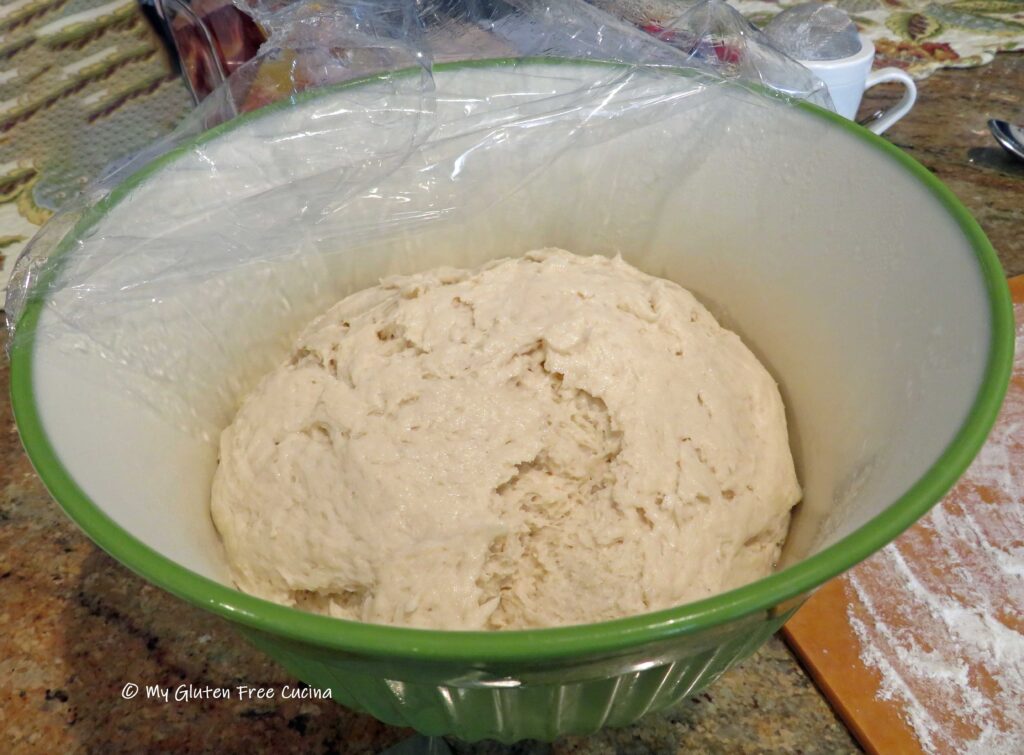
Scrape the dough down and transfer it to an oiled bowl. Cover and refrigerate overnight.
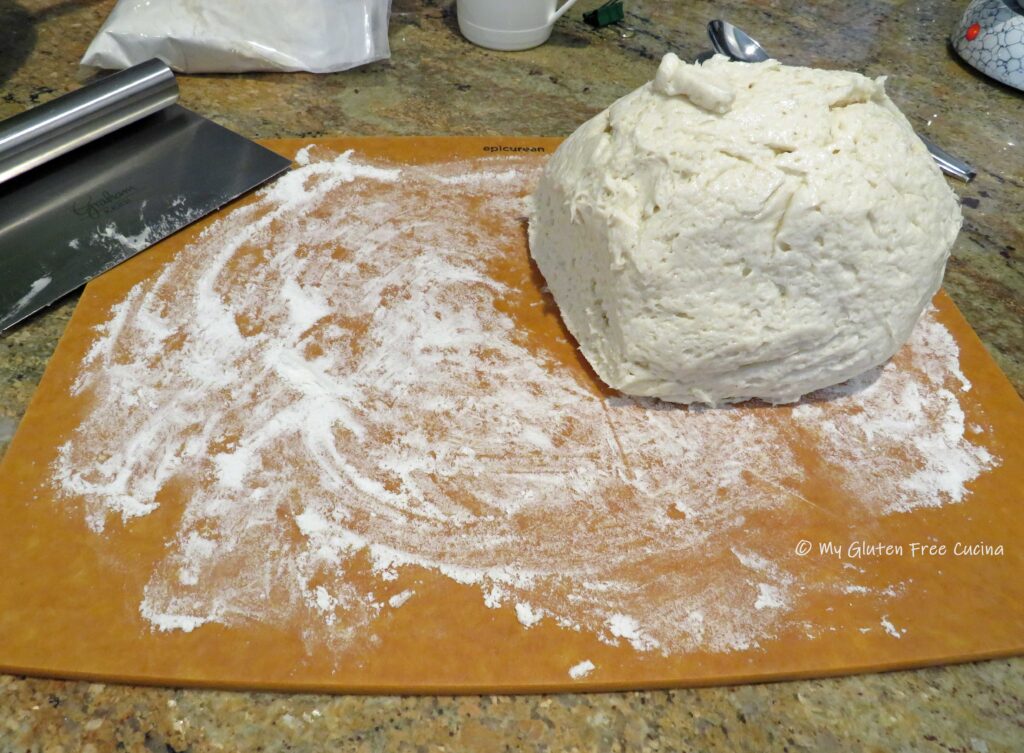
In the morning, the dough should be nice and puffy. Turn it out onto a floured cutting board.
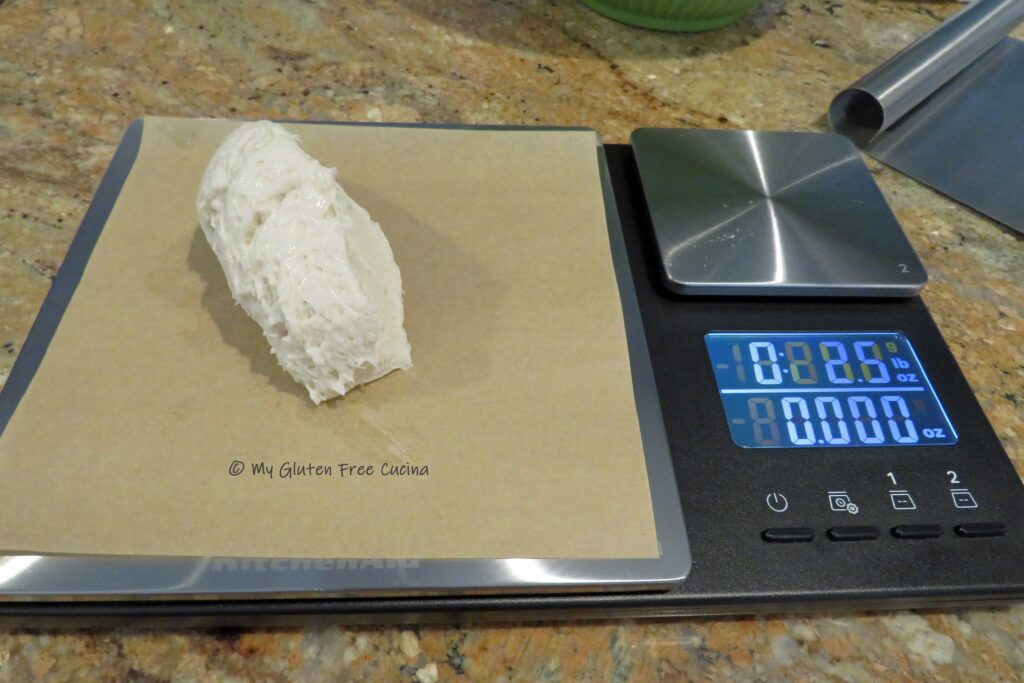
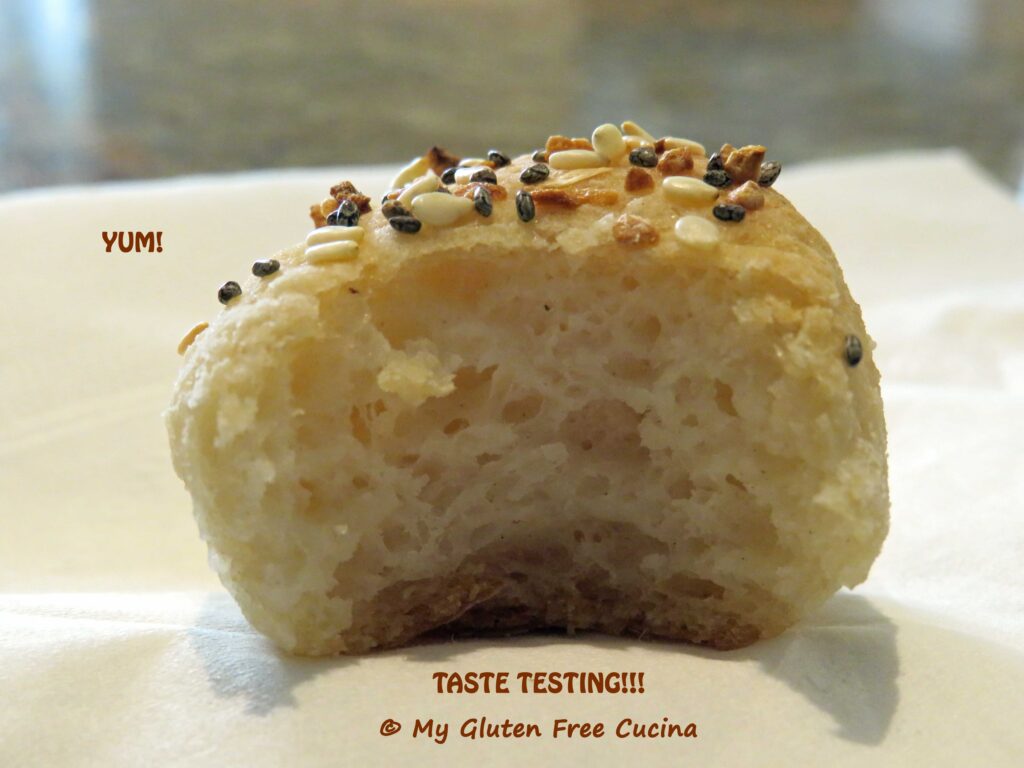
Use a scale to portion the dough into 2.5 oz. pieces. If you measured accurately, you should have enough for 13 rolls plus a little bit extra for a bite size piece. Don’t throw it away, bake it up and use it for tasting!
Note♪ You can make the rolls larger if you like. I find that 2.5 oz. is just the right size for me, something between a regular hamburger bun and a sandwich thin. Try it, especially if you don’t want to overdo it on the carbs.
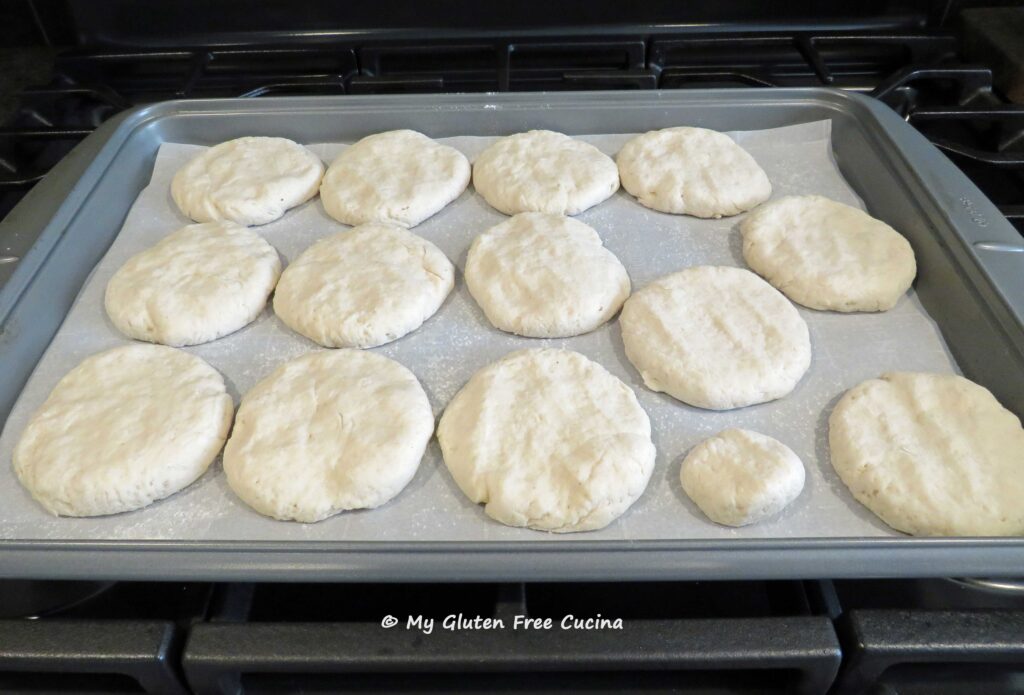
Roll each section in flour to form a smooth ball, then flatten slightly with your palm.
Line a large sheet pan with parchment paper and sprinkle lightly with flour. As you form each roll, place it on the sheet pan leaving a little space in between.
When all the rolls have been formed, cover the pan with plastic wrap and let the rolls rise for 45 minutes. They will puff up but not double in size.
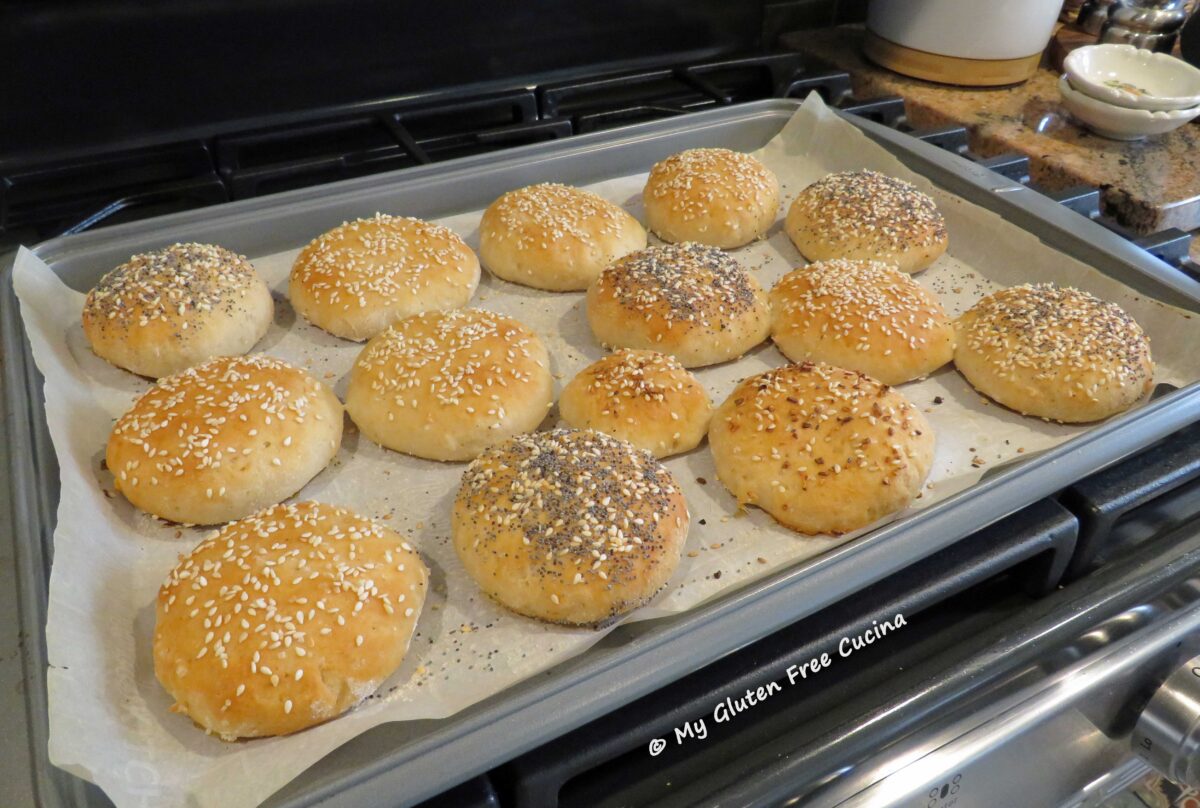
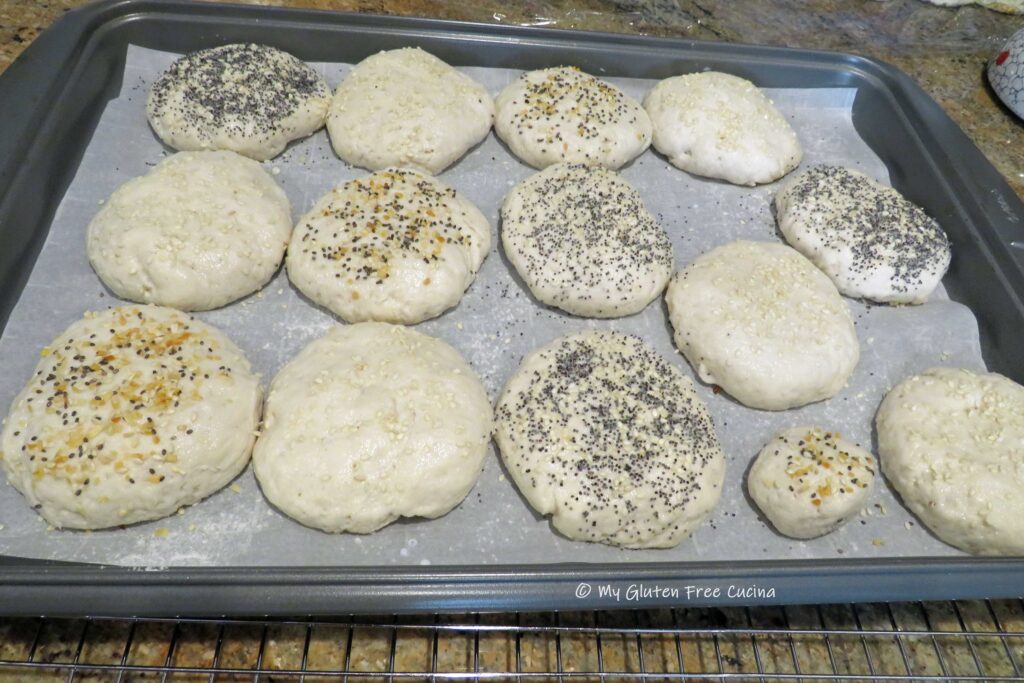
Preheat the oven to 475º. Brush the rolls with milk, and sprinkle with seeds (optional). I made a few each with sesame, poppy and everything bagel. Use your favorites!
Place the rolls in the oven and spray the sides of the oven with water to create steam.
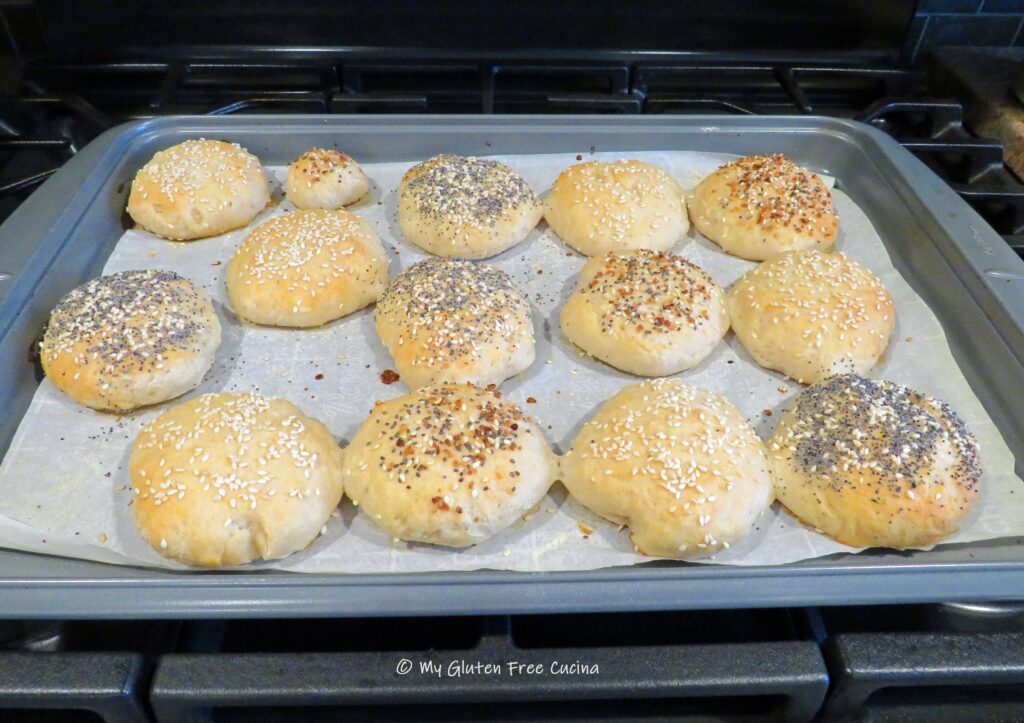
Bake for 10 minutes, then lower the heat to 375º and bake for another 15 minutes.
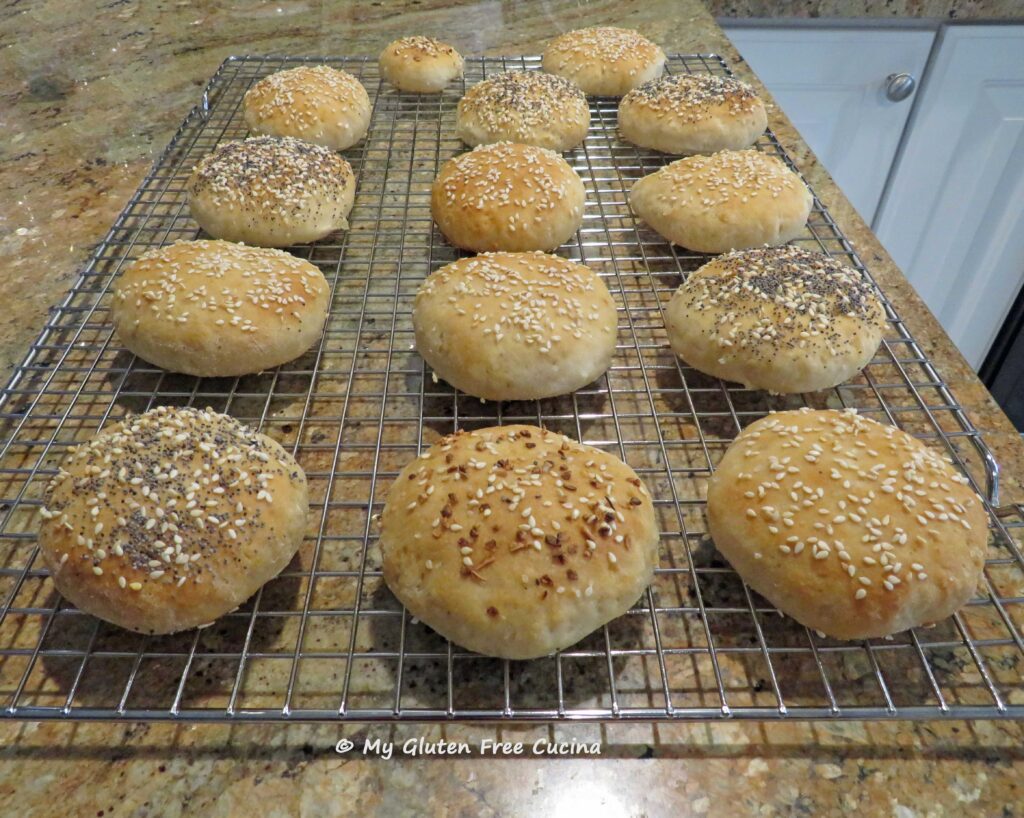
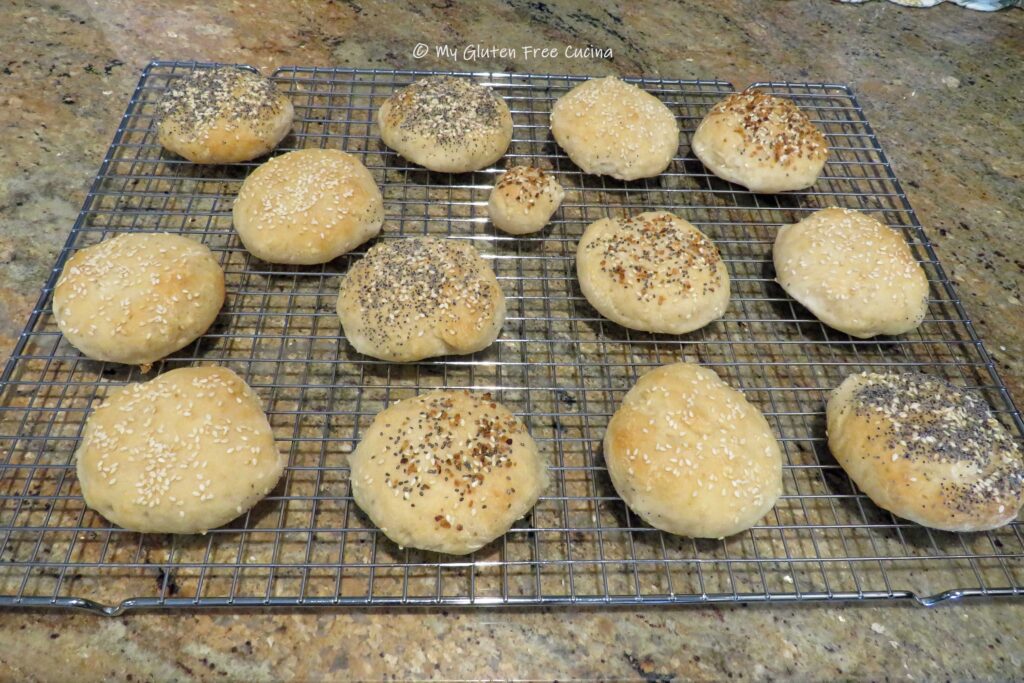
Remove from the oven and transfer rolls to a cooling rack. Allow them to cool for at least 6 hours before slicing.
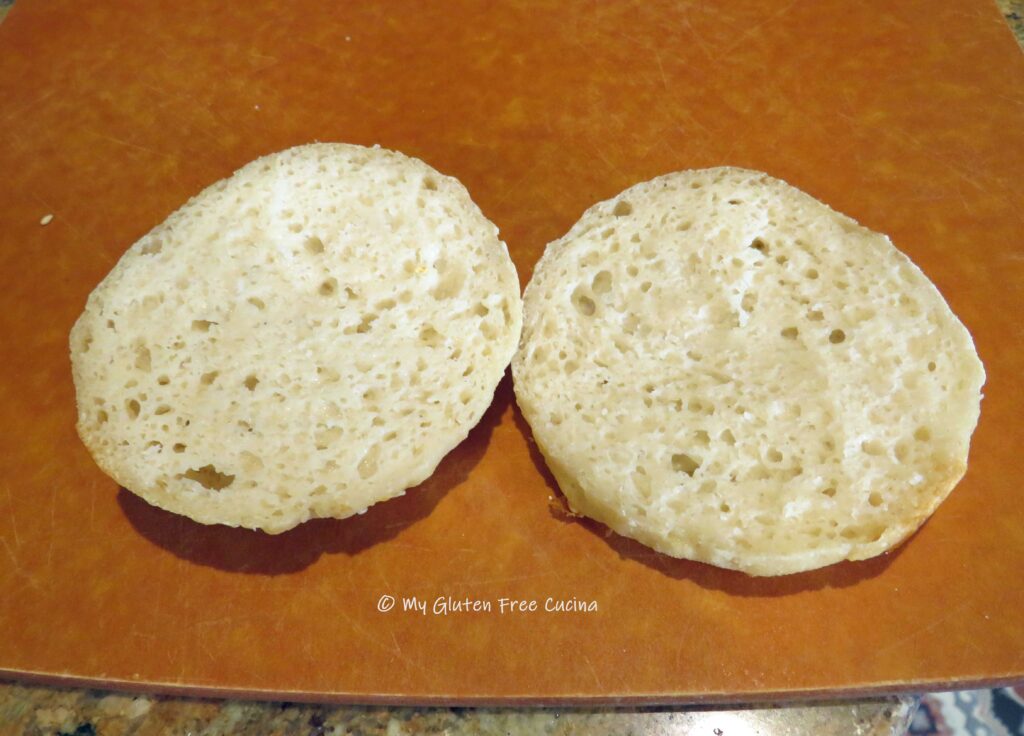
Remember that little baby roll? Time for a taste test!
How nice that these rolls do not have to be toasted.
But you can toast them if you like!
Notes ♪♫ The original recipe by Chef Patrick Auger can be found here. Of course, you do not have to combine the 2 flours together. I’m just showing you how I do it and I’m not kidding- the flavor is extraordinary. You will think you’re eating regular bread. And yes, gluten free flour can cost a few $$$, so be sure to use my Promo Code MGFC30 when you shop Better Batter, for 30% off your full price purchase!
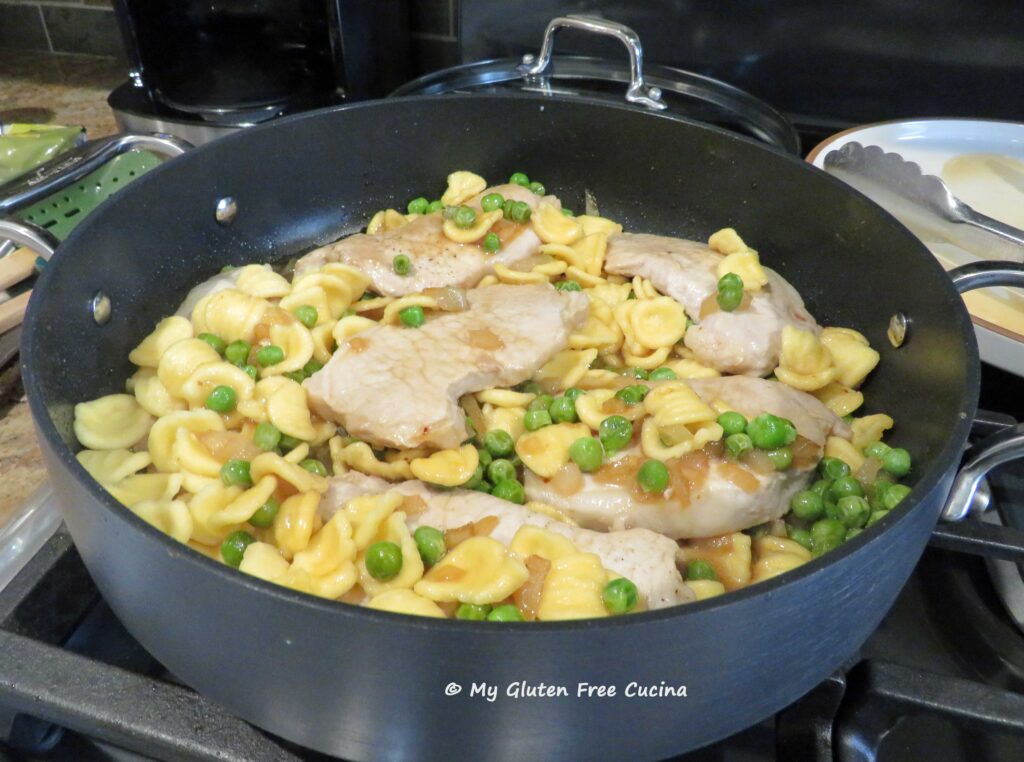
This easy and delicious meal is an old favorite of mine. I’m not quite sure where the original recipe came from, but I have been making it for 25+ years and converted it to gluten free just by changing the pasta and soy sauce. It comes to the table in a casual but impressive presentation that will bring on the compliments!
This post contains affiliate links.
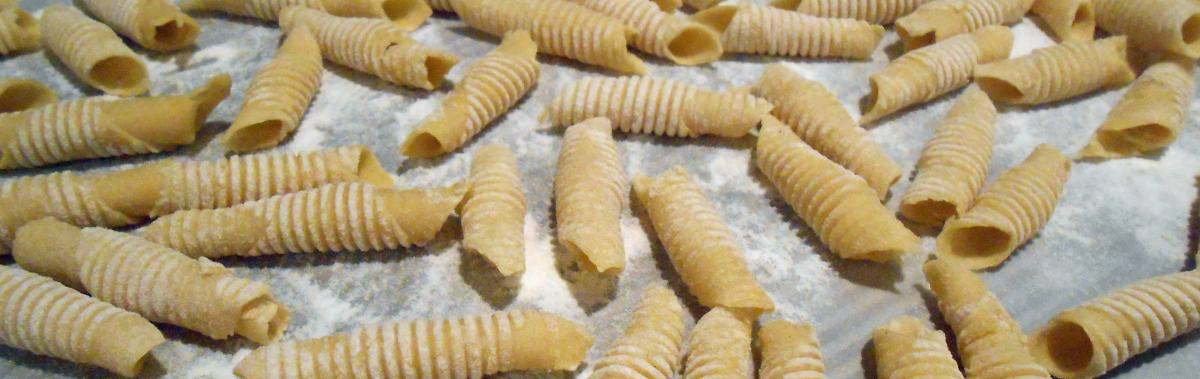
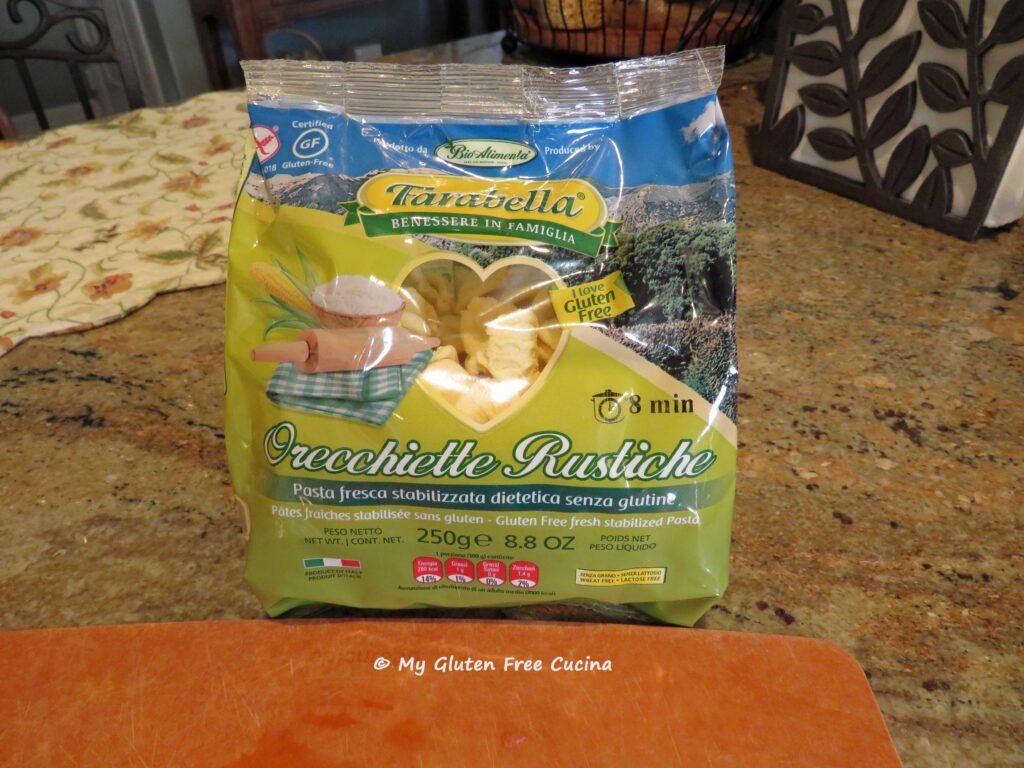
Way back when, I always used orecchiette pasta when making this dish. I have struggled for years to find a gluten free substitute- until I had the good fortune to find Gluten Free Orecchiette from Farabella. They were just what I wanted, but feel free to use your favorite gluten free pasta.
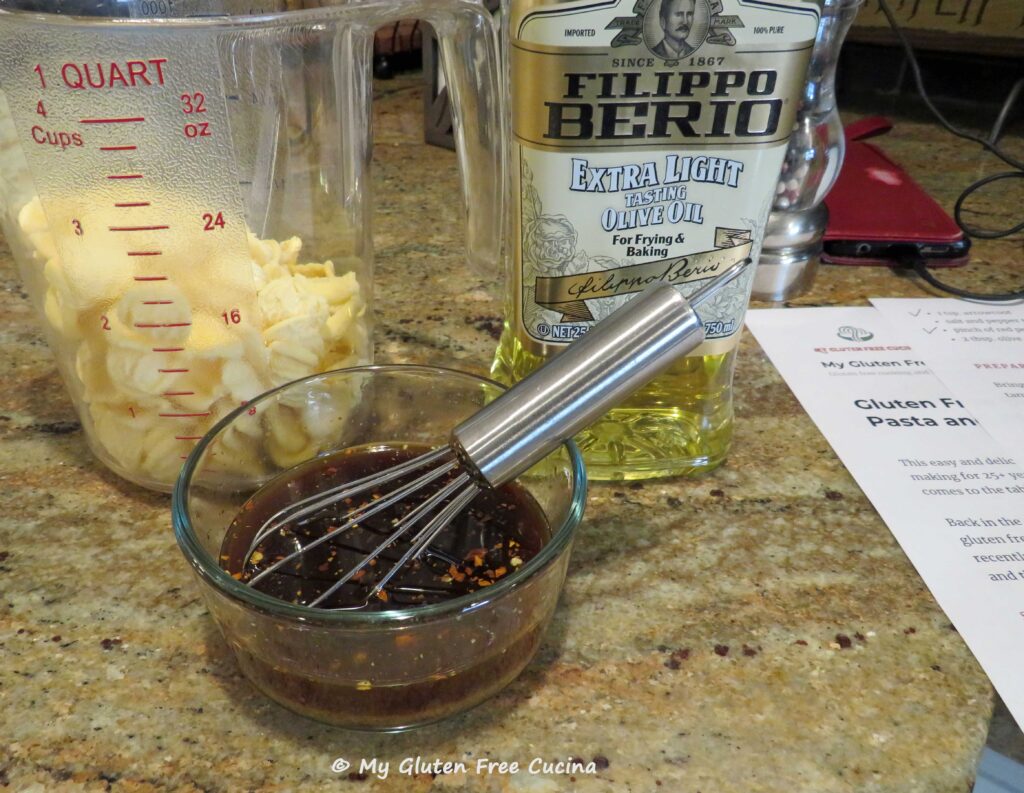
Bring salted water to a boil for the pasta. Whisk together the honey, gluten free soy sauce, balsamic vinegar, arrowroot and red pepper flakes.
Add the pasta to the boiling water and cook for 2 minutes less than the package directions.
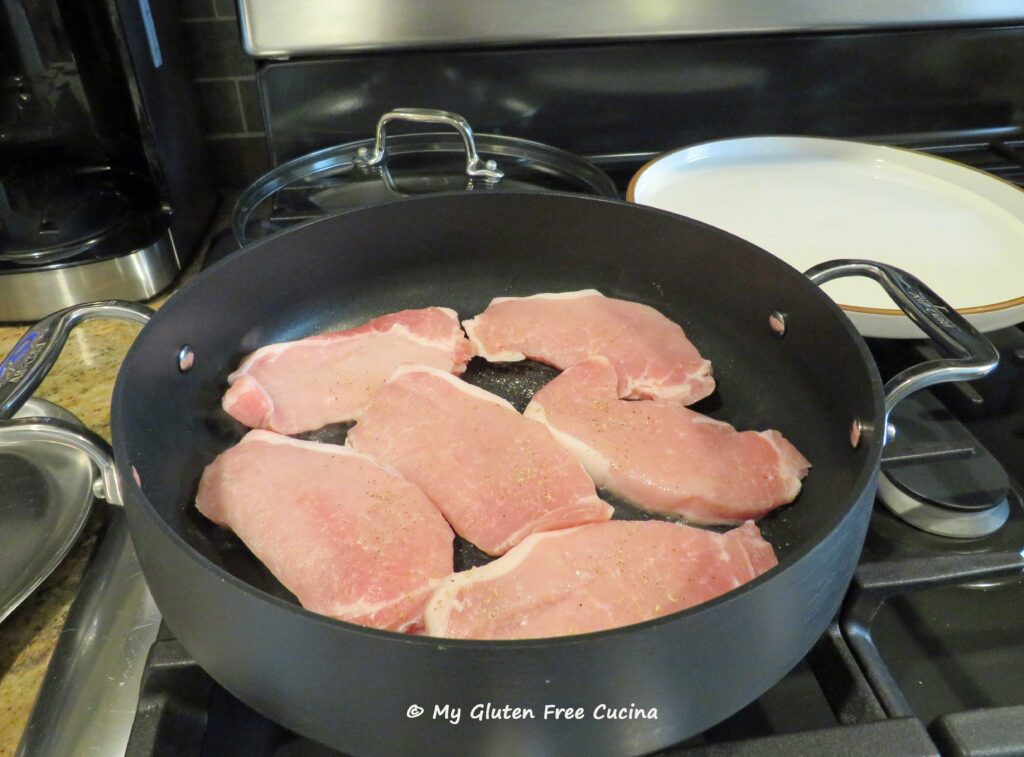
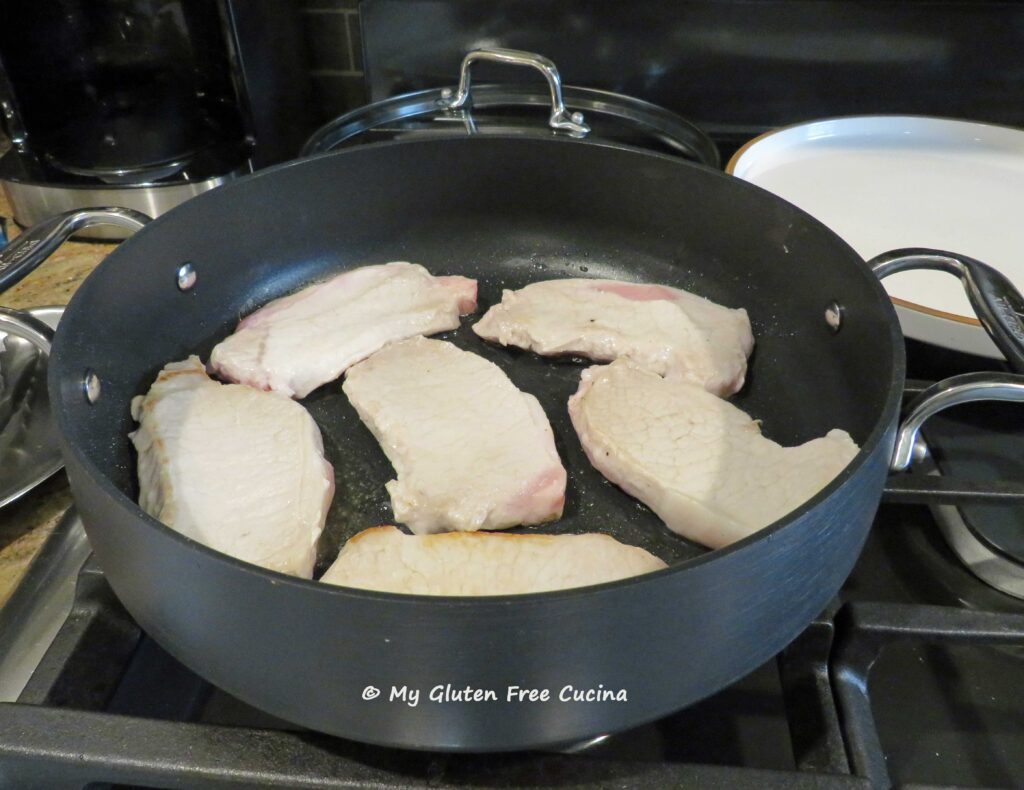
Heat a deep skillet or Sauteuse Pan with 2 tbsp. olive oil. Season the pork with salt and pepper and brown 2 minutes per side on medium heat (they will not be cooked through at this point). Drizzle with 1 tbsp. of the balsamic mixture, remove to a plate and keep warm.
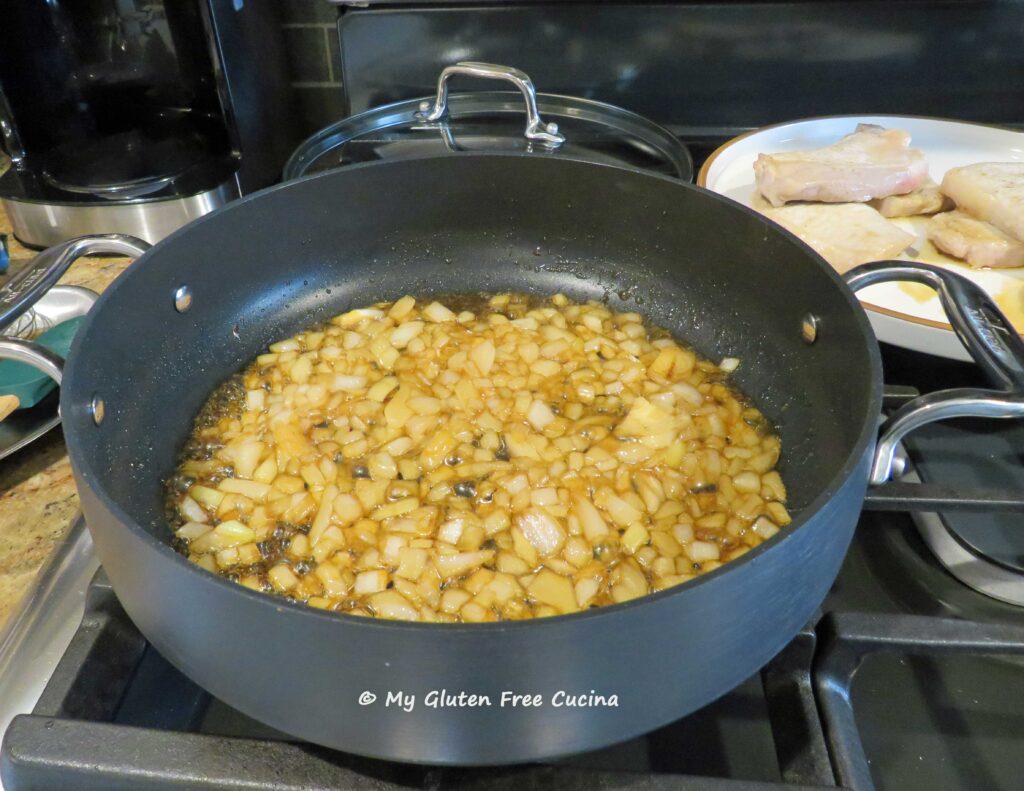
Add the onions to the skillet with an additional tbsp. olive oil. When the onions are translucent, add 2 tbsp. of the balsamic mixture. Cook, stirring frequently until most of the liquid has evaporated.
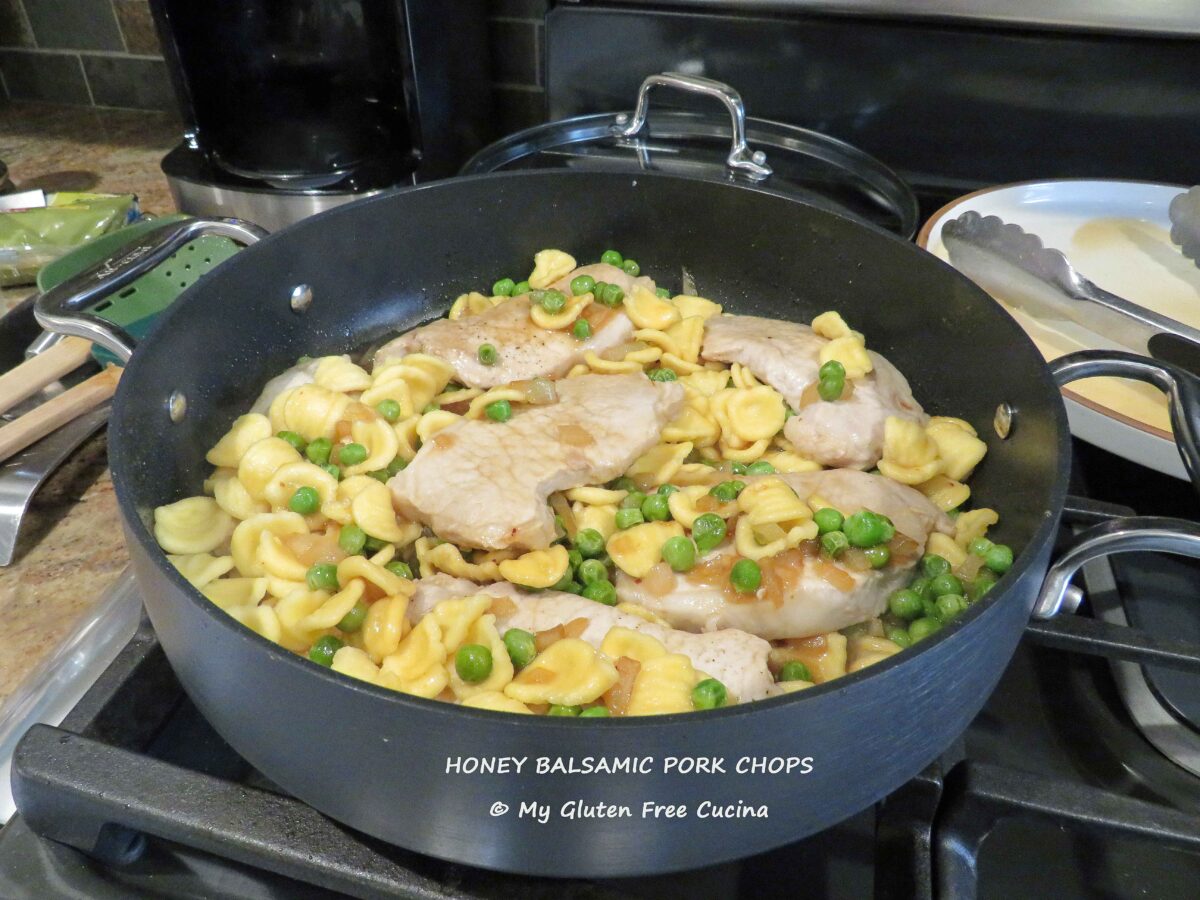
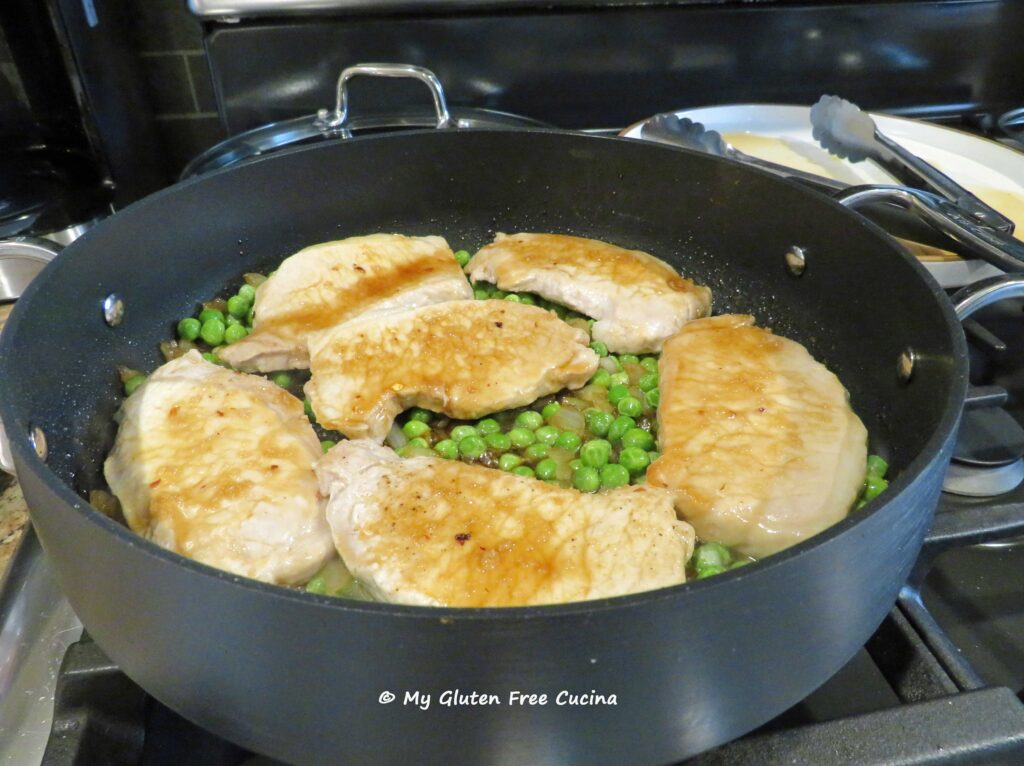
Return the pork chops to the skillet with the peas and drizzle with the remaining balsamic mixture. Continue to cook for several more minutes, until the pork chops are heated through.
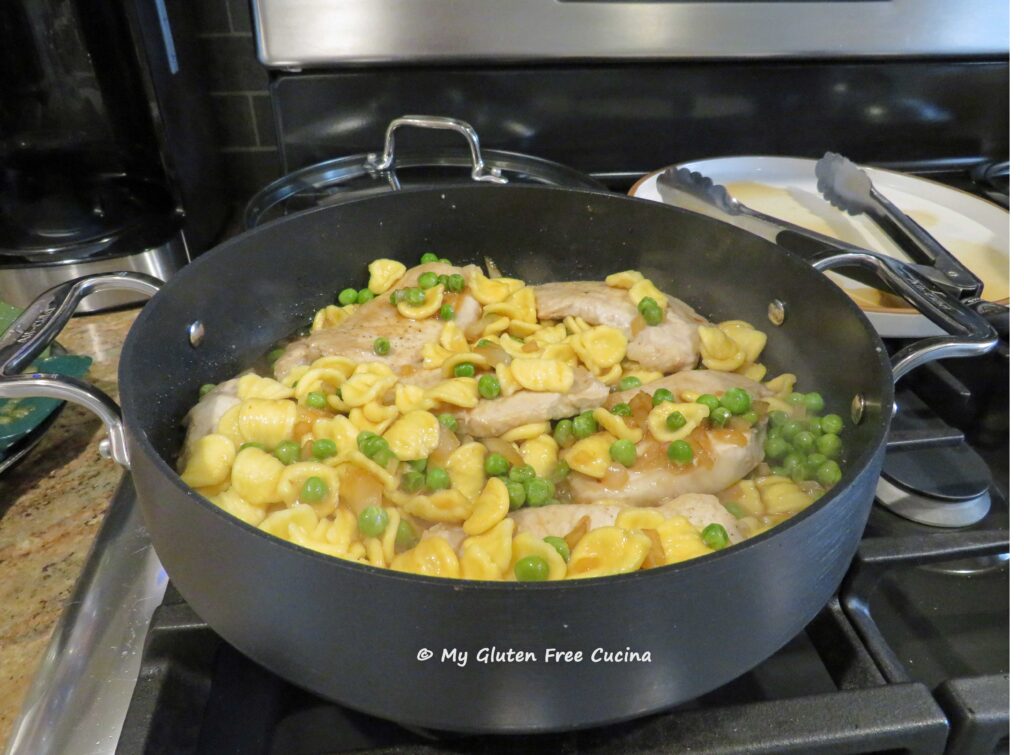
Drain the pasta, add to the skillet and toss to coat. Remove from heat and serve right in the pan for a casual dinner.
Notes ♪♫ I loved the Gluten Free Orecchiette pasta from Farabella that you see in this dish. But did you know that this is a fun pasta shape to make from scratch? Check out my homemade Gluten Free Orecchiette in this post for complete instructions!



 Ingredients: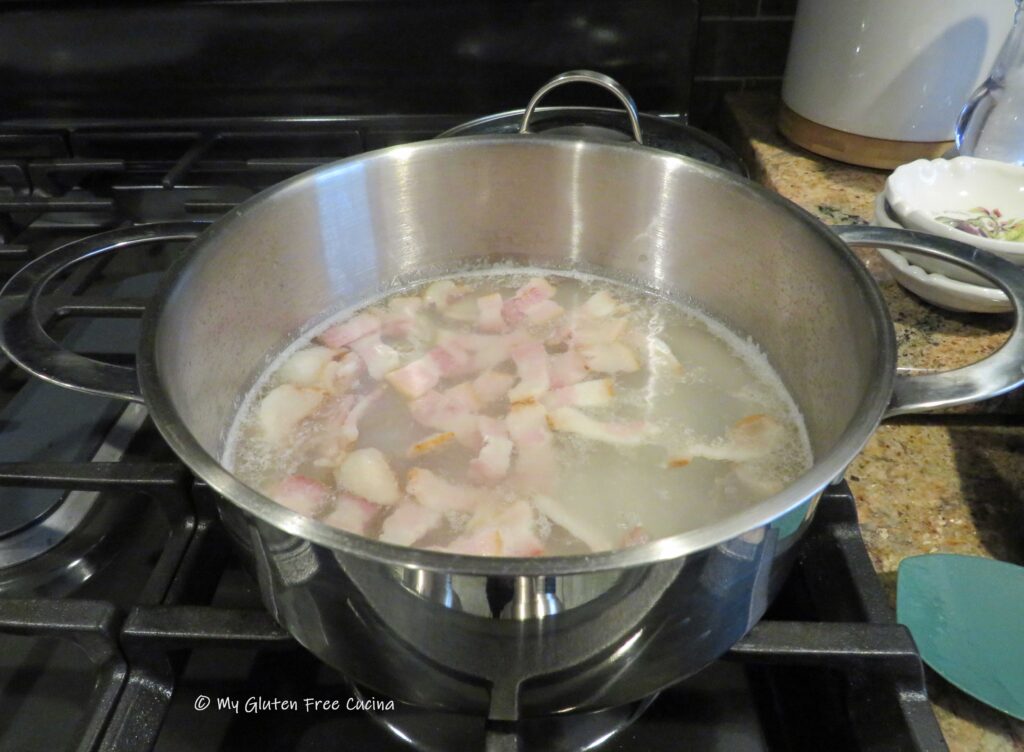
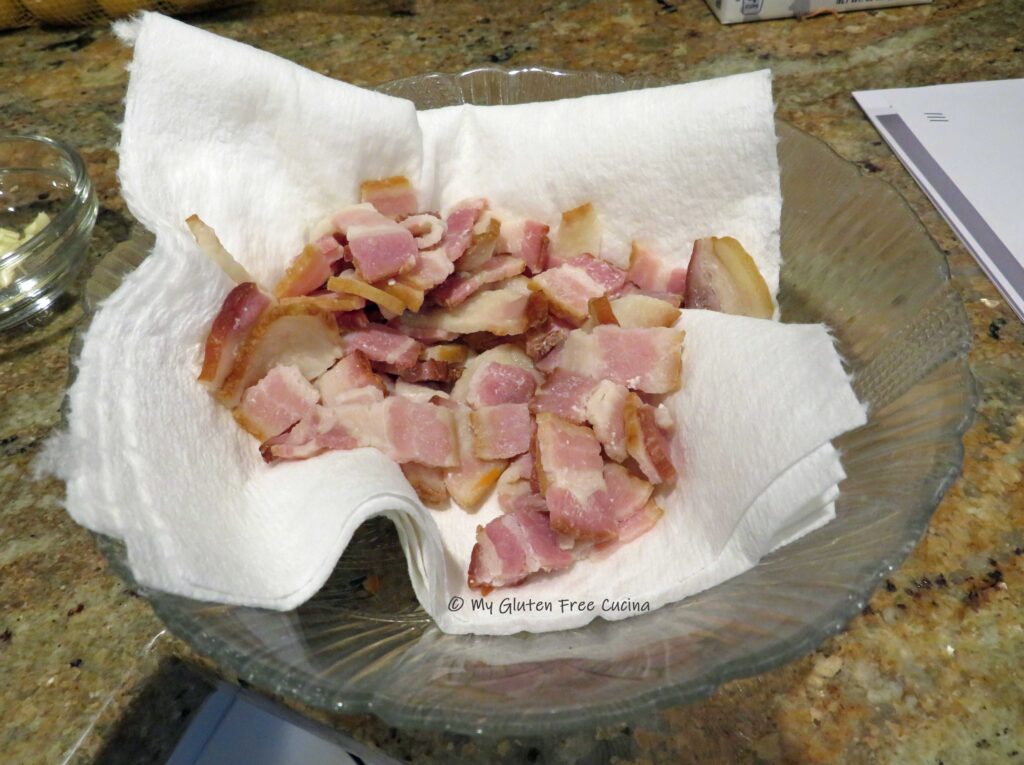 After the bacon was poached and drained, I browned it in a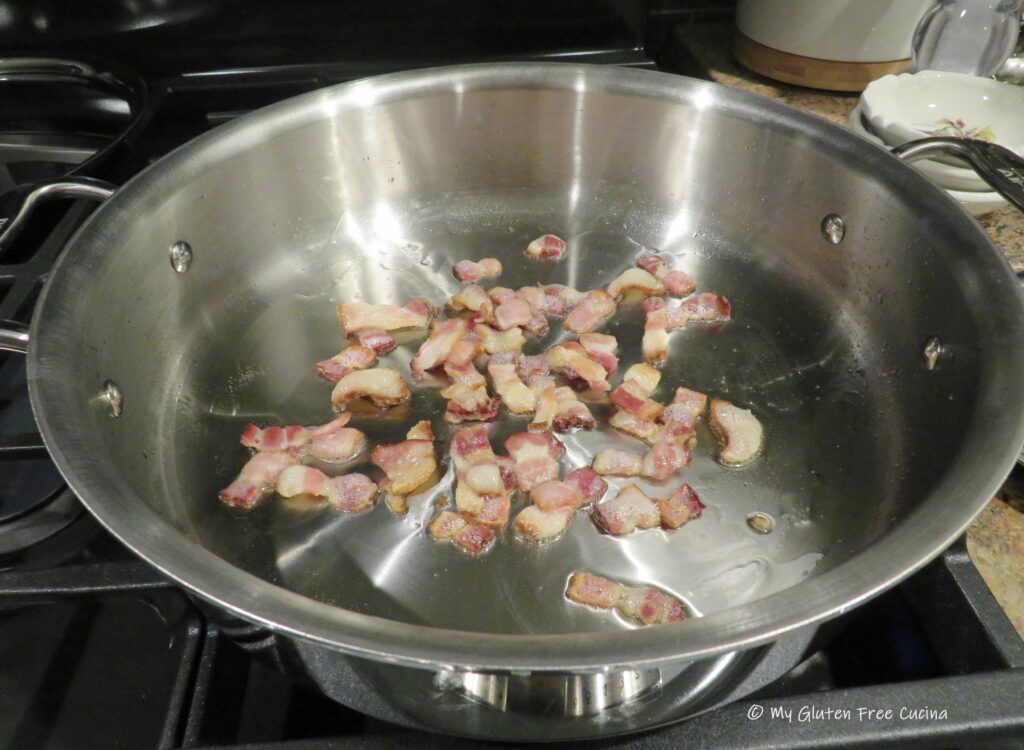
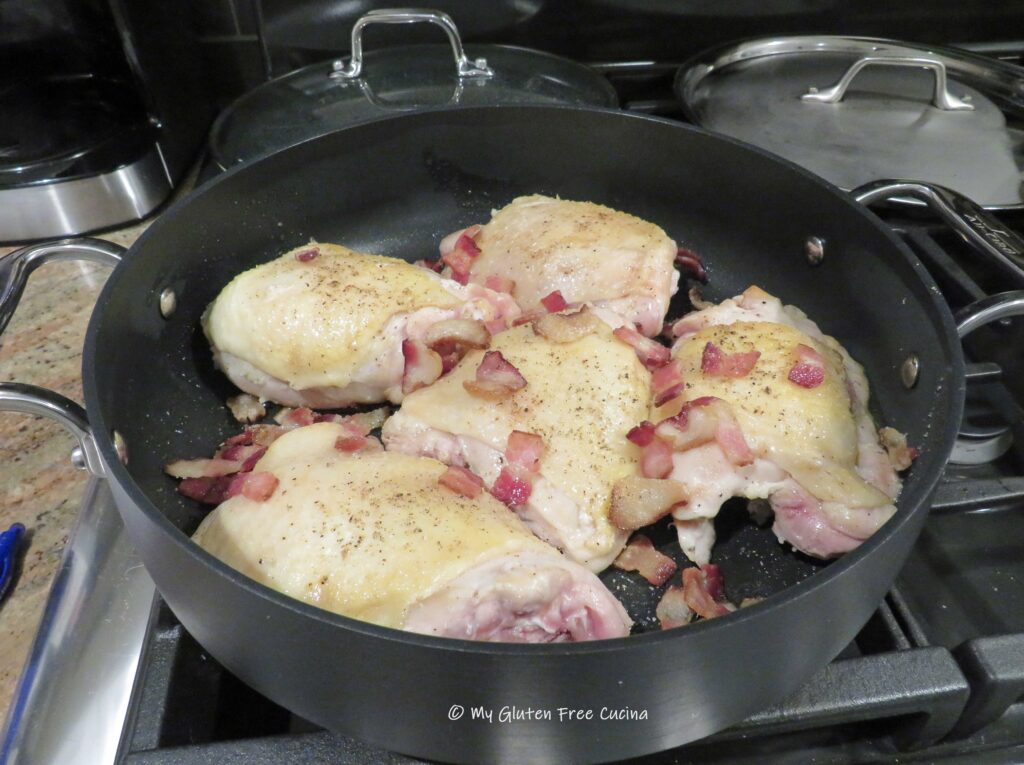 I added all of the wine, stock, tomato paste and seasonings. Honestly, there was a bit too much liquid and I would cut back next time. Julia did not add carrots in her recipe, but I went rogue and put a few in. Lid on, time to simmer!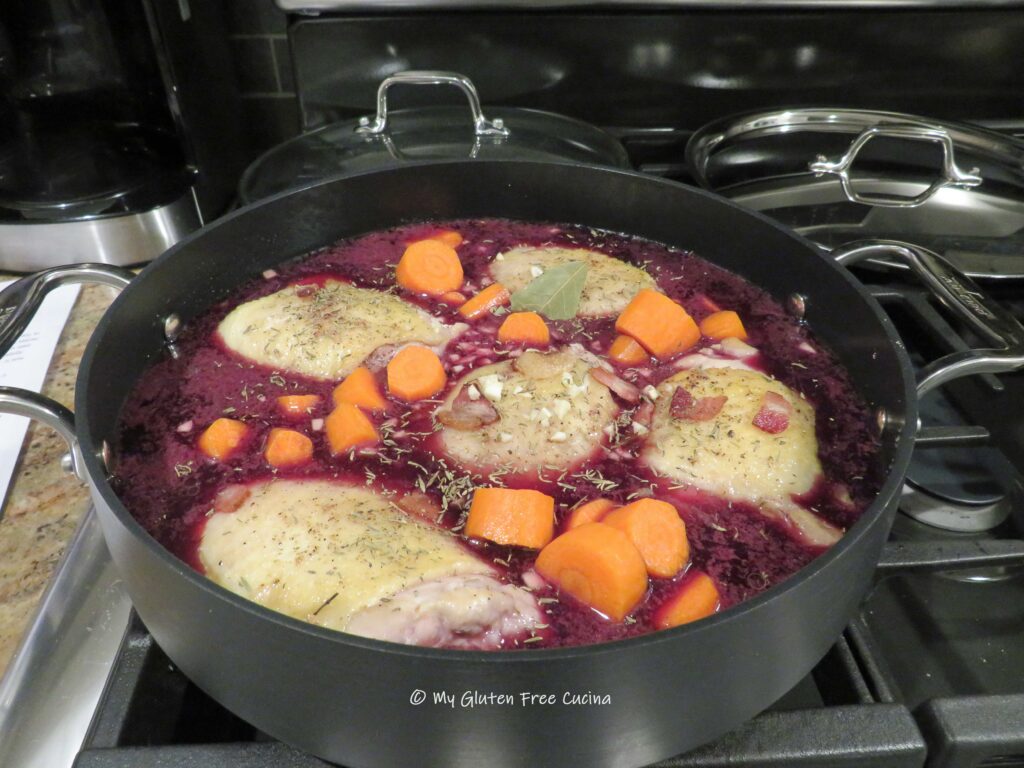
 I transferred all of the liquid from the sauté pan into a stock pot and whisked in the beurre manié until it was smooth and silky.
 I added the onions and mushrooms to the sauce, then poured it over the chicken, bringing to a simmer one last time before serving.
 There it is. So many little steps to develop the flavor profile of this famous dish. Yes, it was delicious. Yes, I will take a few shortcuts next time, but I do intend to make this again.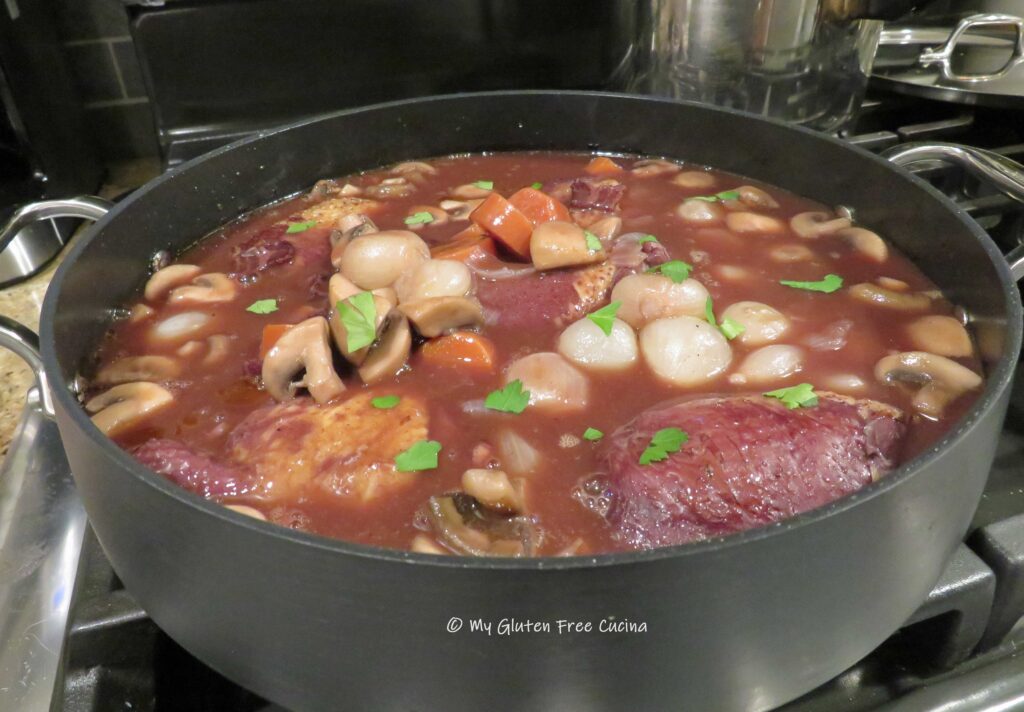
 Oh, and as if you hadn’t waited long enough, the baked loaf will need to rest a full day before slicing! Most gluten free breads need extra time to release their moisture but for this one I don’t slice for a full 24 hours. It is worth the wait.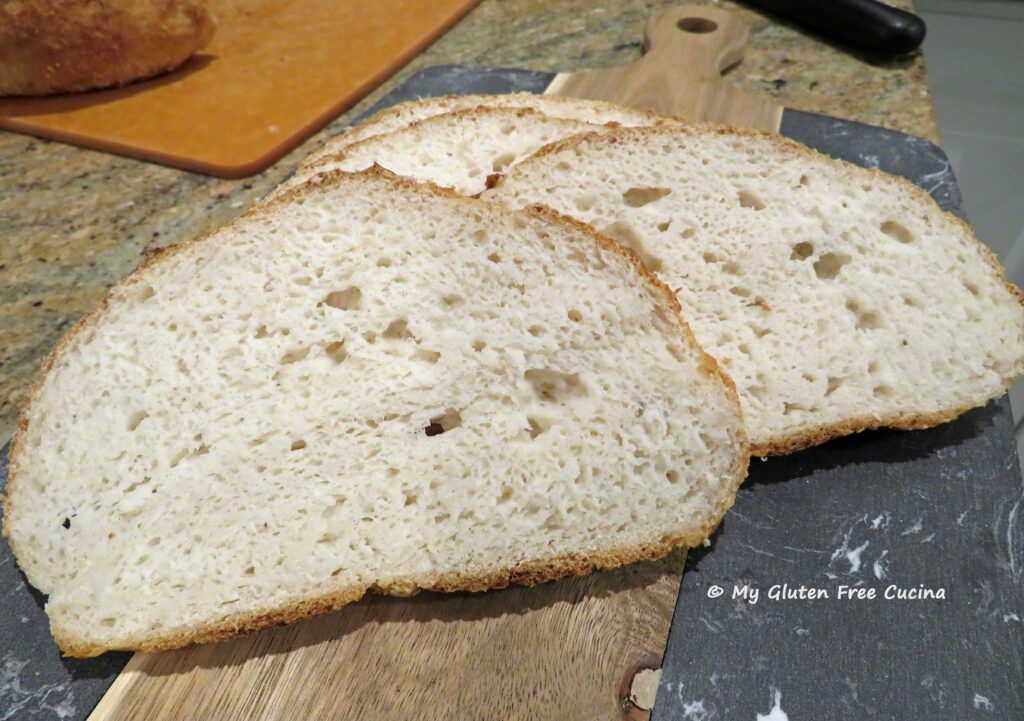
 Day 2 –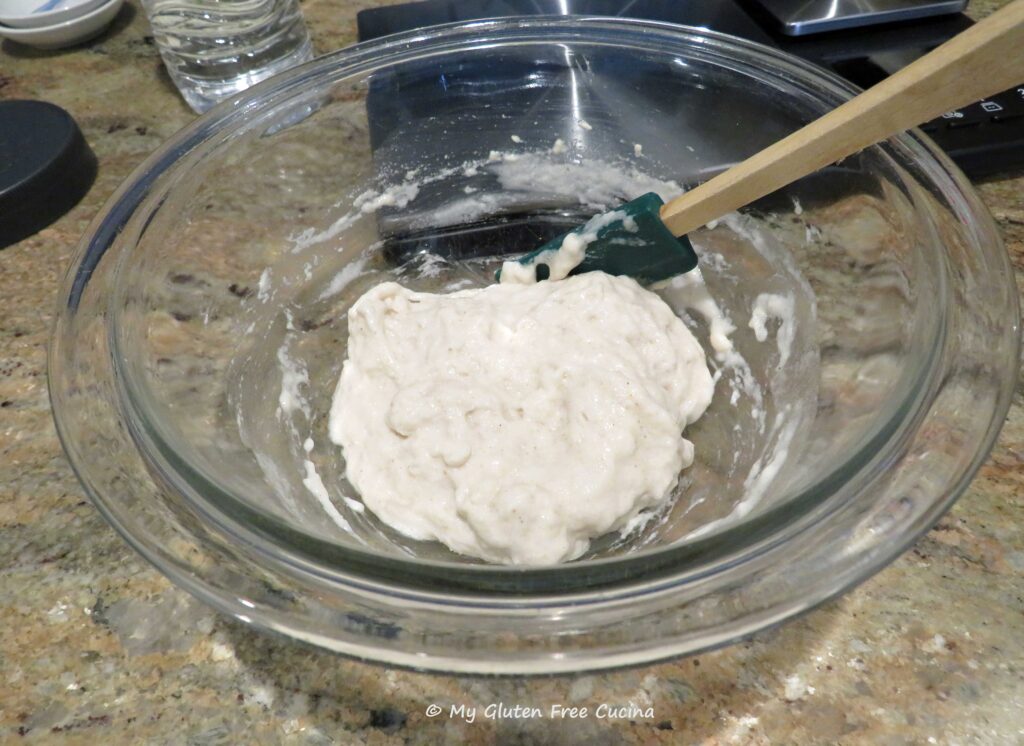
 Transfer the dough to a lightly oiled bowl, cover with plastic wrap and let it rest 45 minutes while you have dinner.
 Evening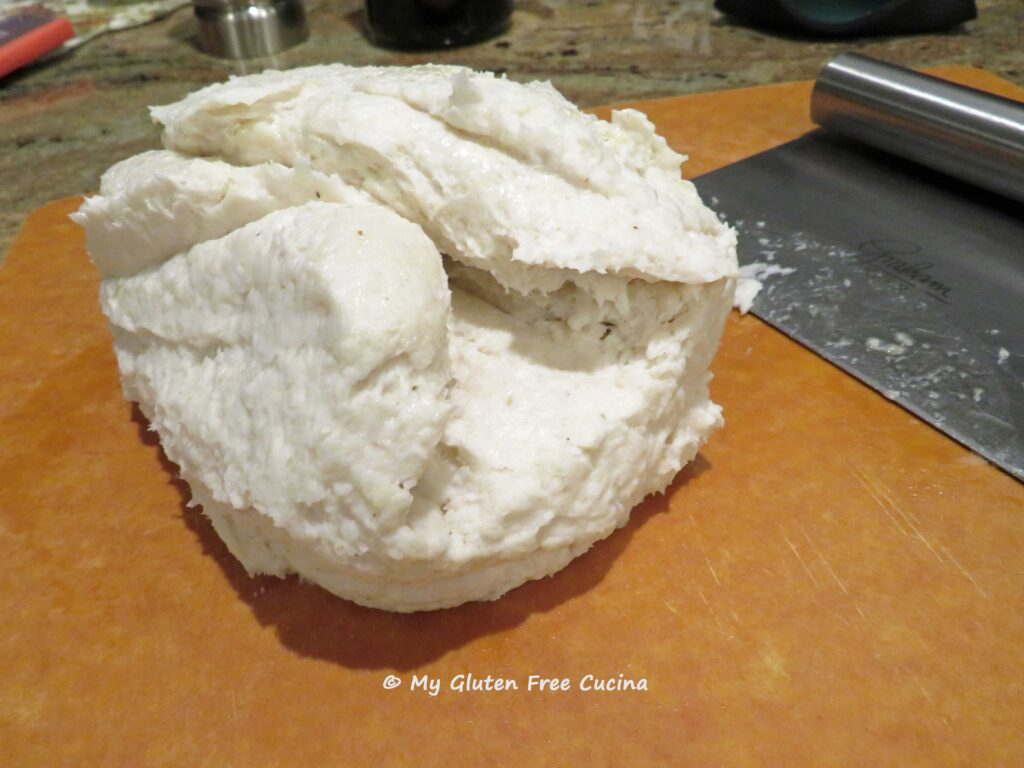
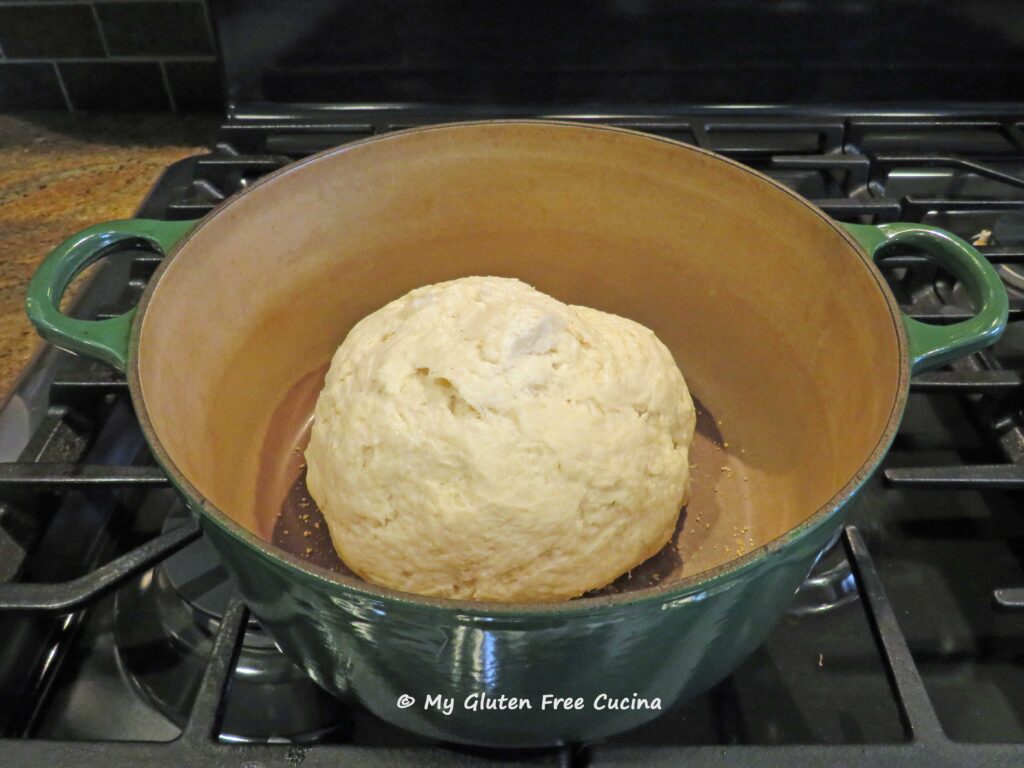 Reduce the oven temperature to 450º and bake for 30 minutes. Then remove the cover and continue baking another 20 minutes. Loaf is done when the internal temperature reaches 210º (check with a
  After all that, you will probably want to tear right into your loaf of bread. But- please be patient! This beautiful, artisanal loaf needs a full 24 hours to release its moisture. Rushing it can mean a wet sticky loaf instead of a gorgeous crumb like this!
 Day 4-
 Notes: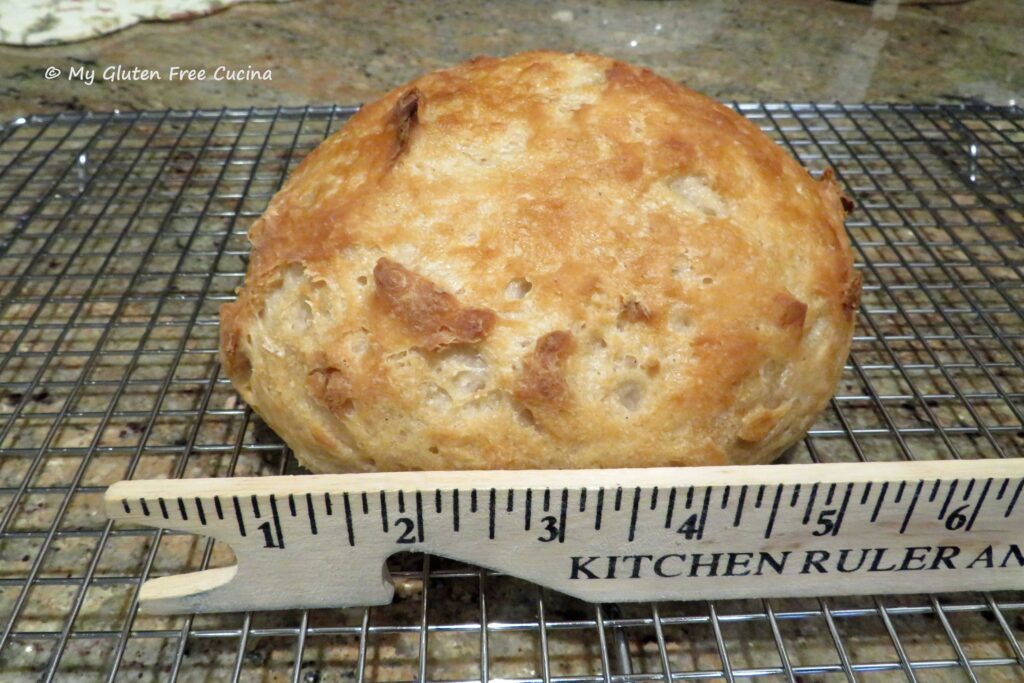
 When the pan is hot, add the chicken and cook for 6-7 minutes per side, turning once.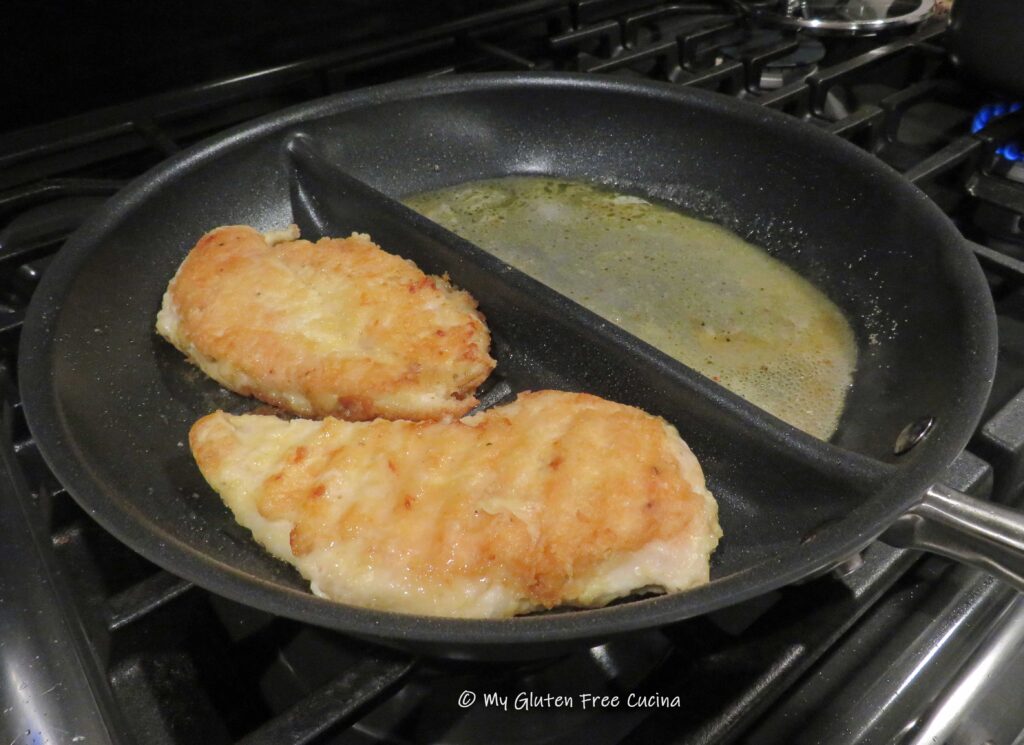
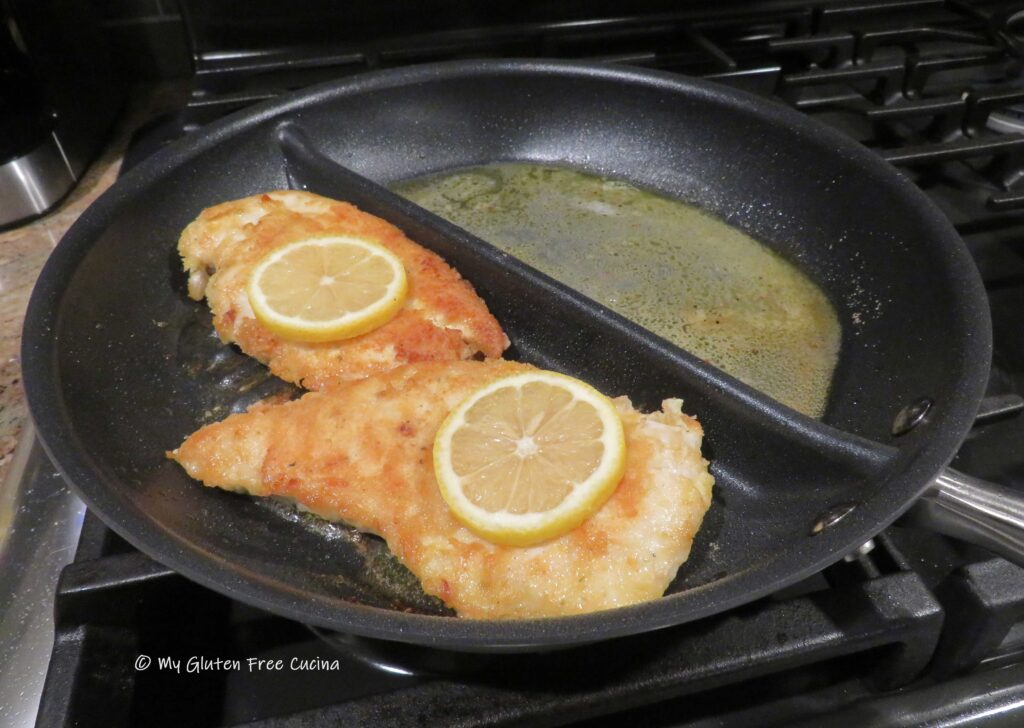
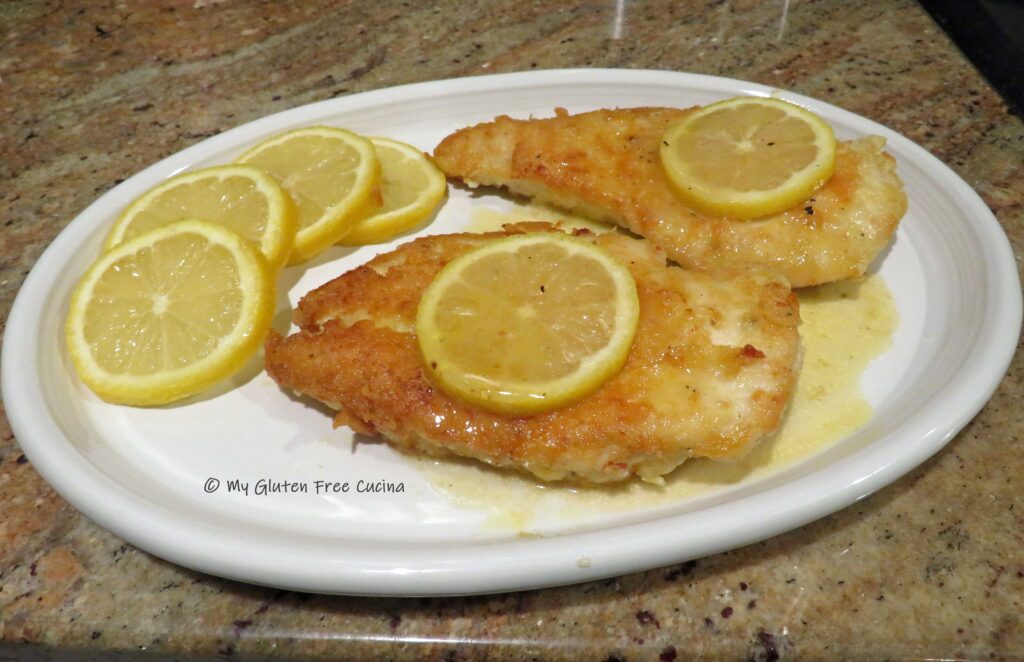 I served it with
  Notes ♪♫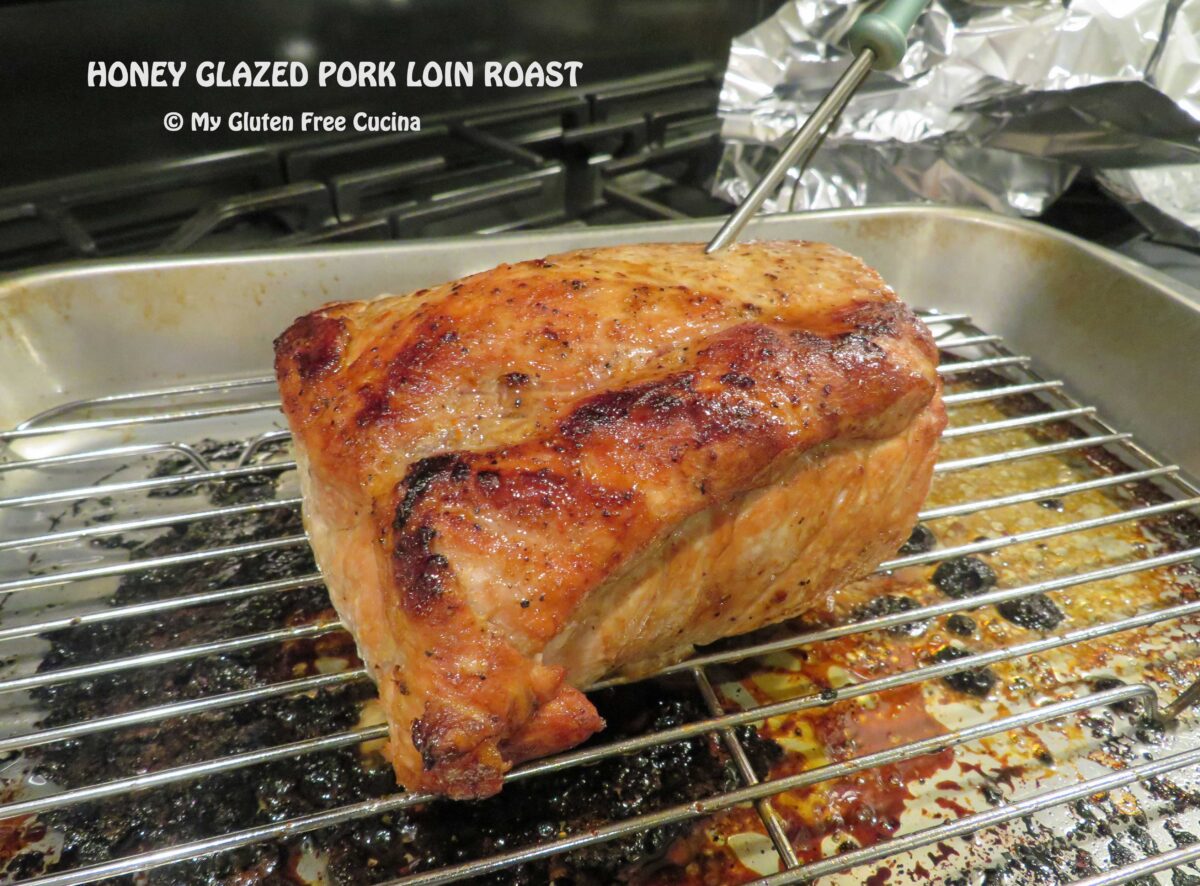


 This post contains affiliate links.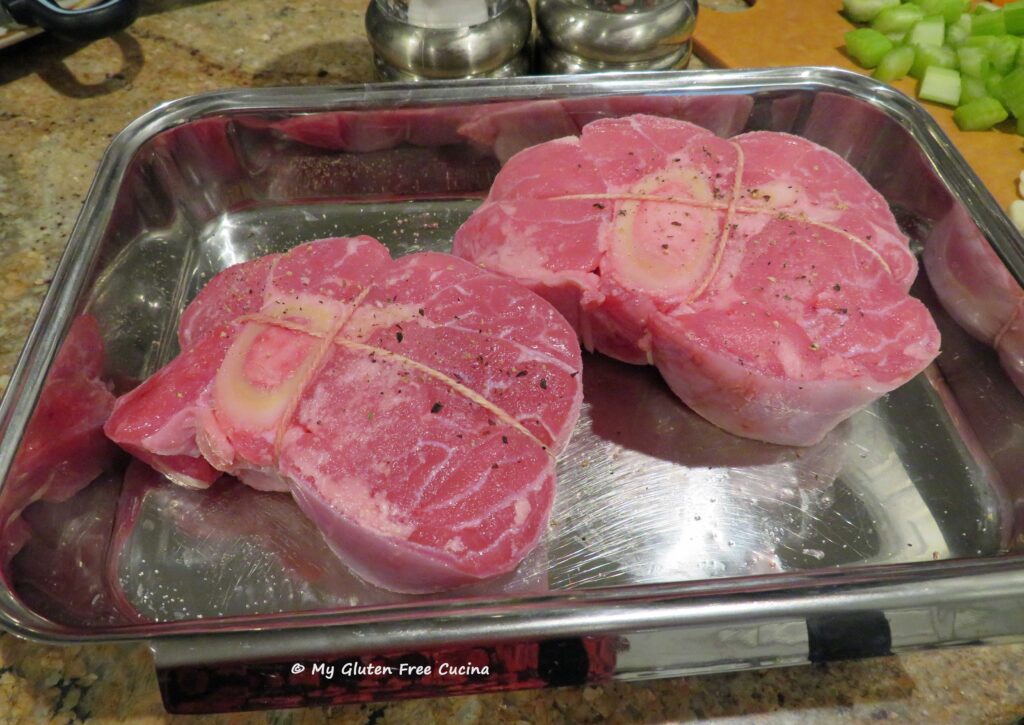
 Spoon sauce over the veal shanks and garnish with Italian parsley.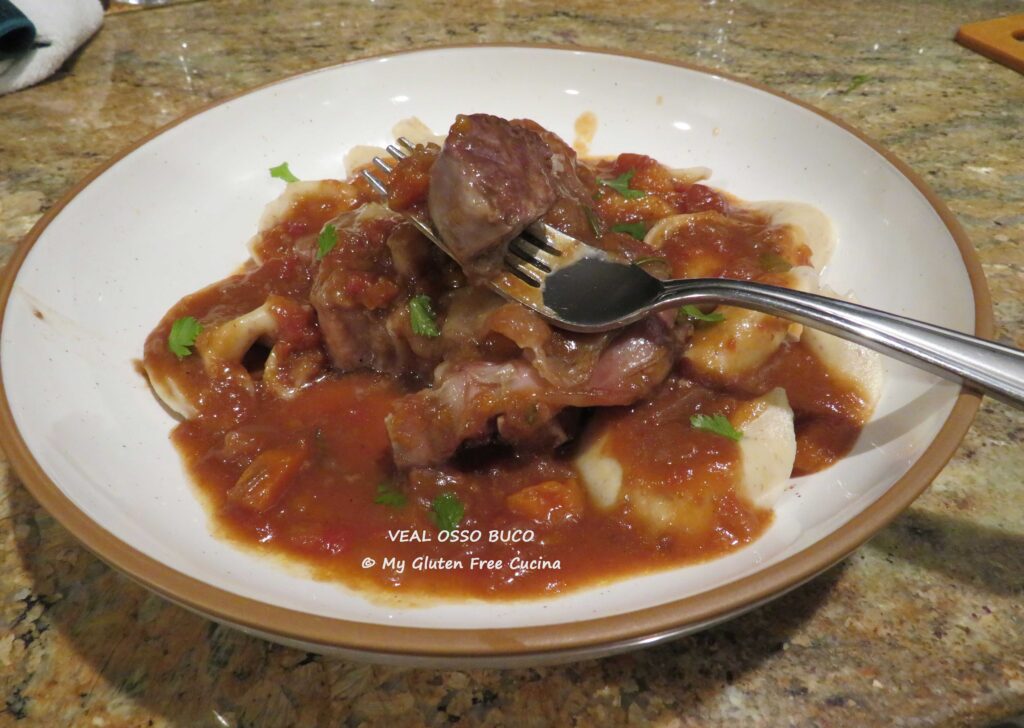
 The recipe makes a small batch, breakfast for two. I ended up with 5 full size pancakes and one mini pancake. You can double or triple the recipe for a large family, or if you want extra to freeze for later.
 Preparation:
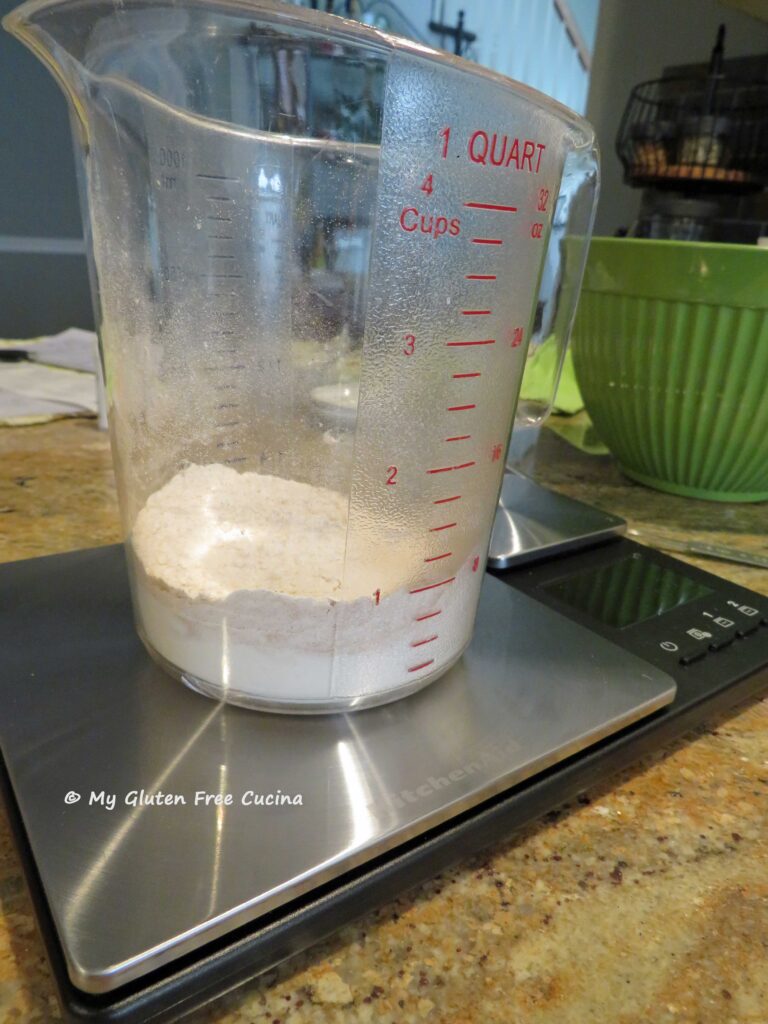 Set up 2 bowls, whisk together the dry ingredients in one bowl (I strongly recommend that you weigh the flour), and the wet ingredients in the other. Stir the wet and dry ingredients together, just until moistened.
 Melt butter 1 tbsp. at a time on the griddle. Scoop batter by 1/3 cups and add to the griddle, leaving space in between.
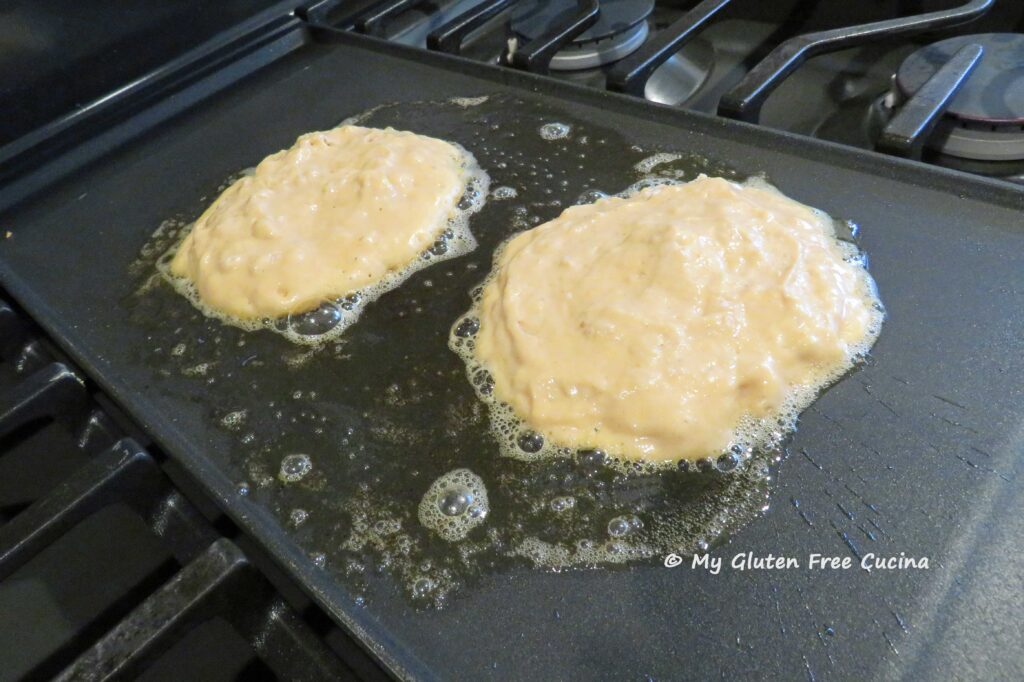 Cook for 5 minutes then flip. Cook 3-5 more minutes. Keep in mind that gluten free pancakes take longer to cook than regular pancakes. Check if they are done by inserting a toothpick in the center. If it comes out dry, they are ready.
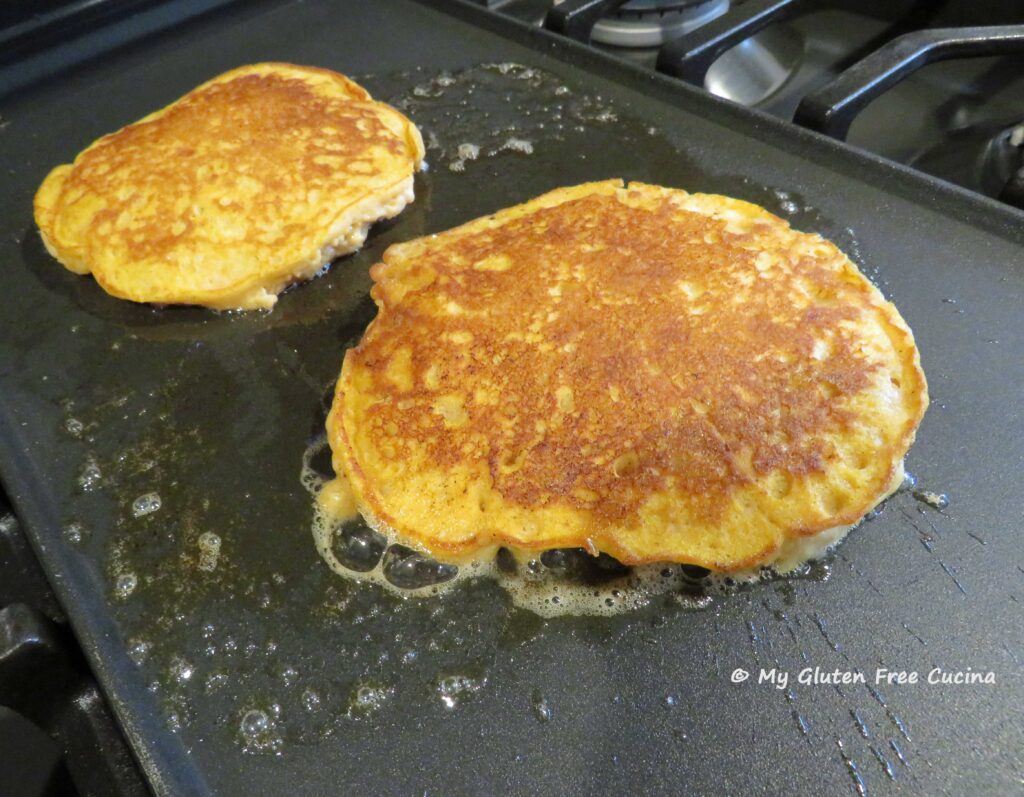 If you have a little batter left over at the end, you can make a test pancake, here’s mine. Just one bite!
 You can serve the pancakes immediately or freeze for later. I let mine cool completely on a rack, then wrapped them separately and stored in freezer safe bags.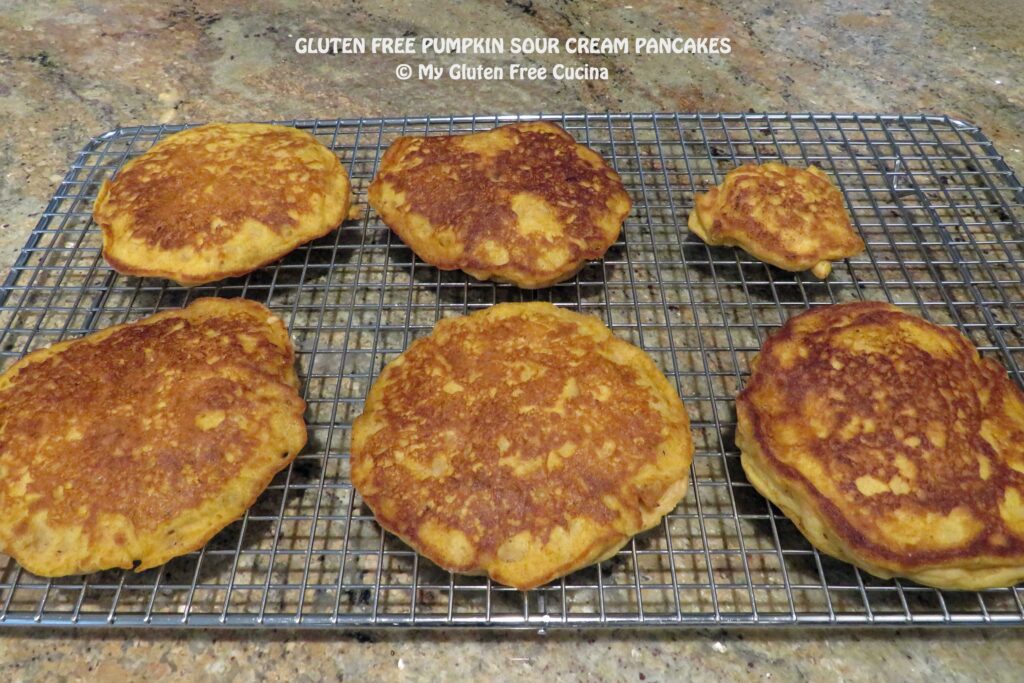
 How nice that these rolls do not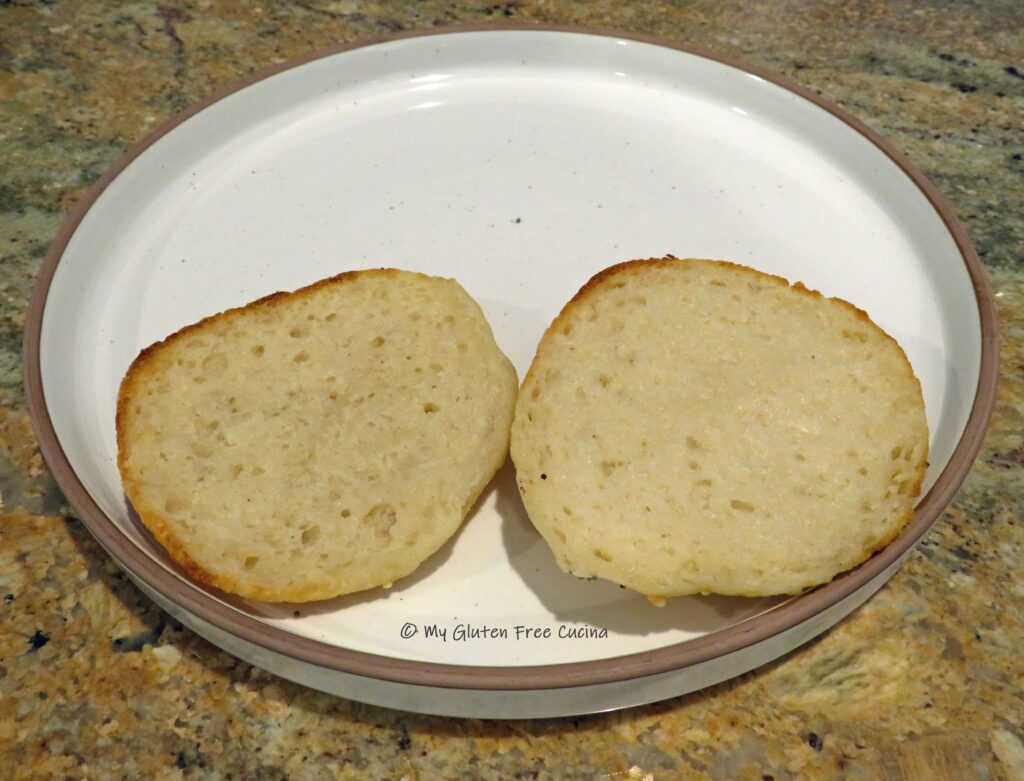
 Ingredients: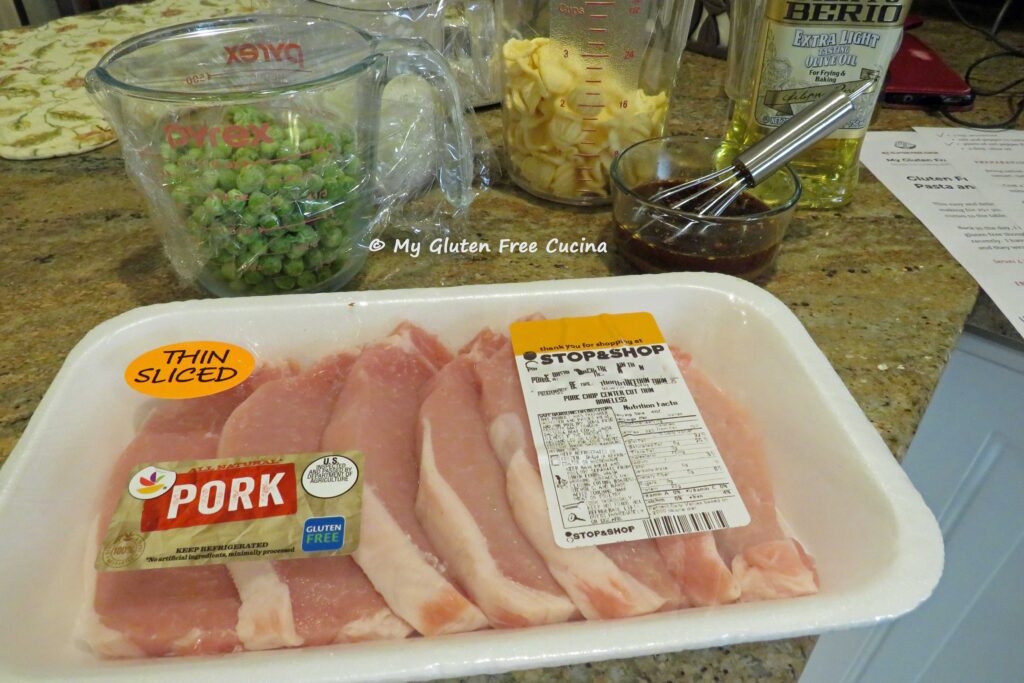
 Add the onions to the skillet with an additional tbsp. olive oil. When the onions are translucent, add 2 tbsp. of the balsamic mixture. Cook, stirring frequently until most of the liquid has evaporated.
 Return the pork chops to the skillet with the peas and drizzle with the remaining balsamic mixture. Continue to cook for several more minutes, until the pork chops are heated through.
 Drain the pasta, add to the skillet and toss to coat. Remove from heat and serve right in the pan for a casual dinner.
 Notes ♪♫