Gluten Free Tartine Country Loaf

GLUTEN FREE TARTINE COUNTRY LOAF BREAD
What is Tartine?

Tartine Bread is a type of sourdough originating from The Tartine Bakery in San Francisco.  It is a “no-knead” bread, made with a very small amount of sourdough starter (only 1 tbsp.) and no commercial yeast at all!  The dough is developed by stretching and folding it at intervals, instead of machine mixing.  

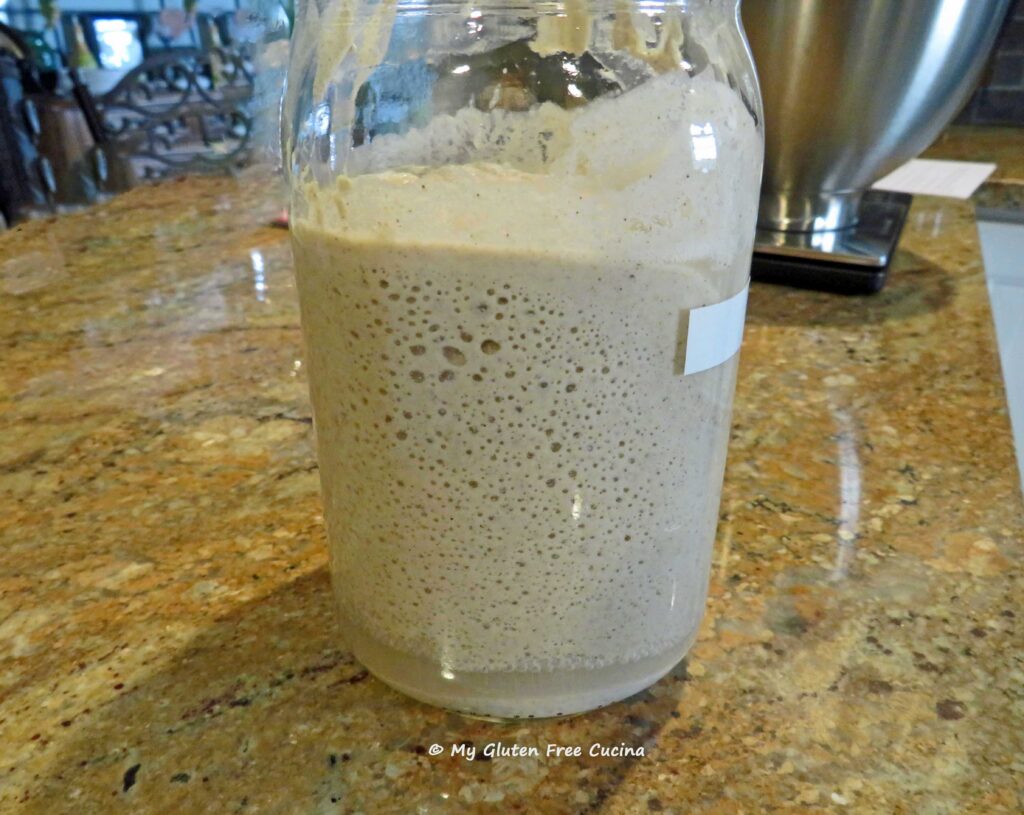
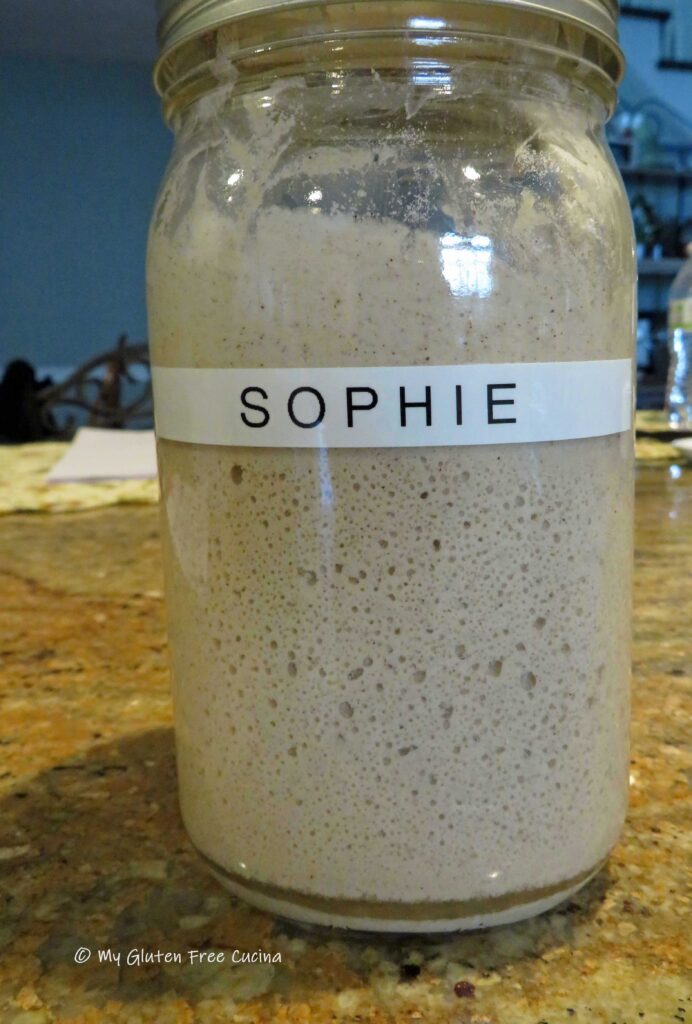
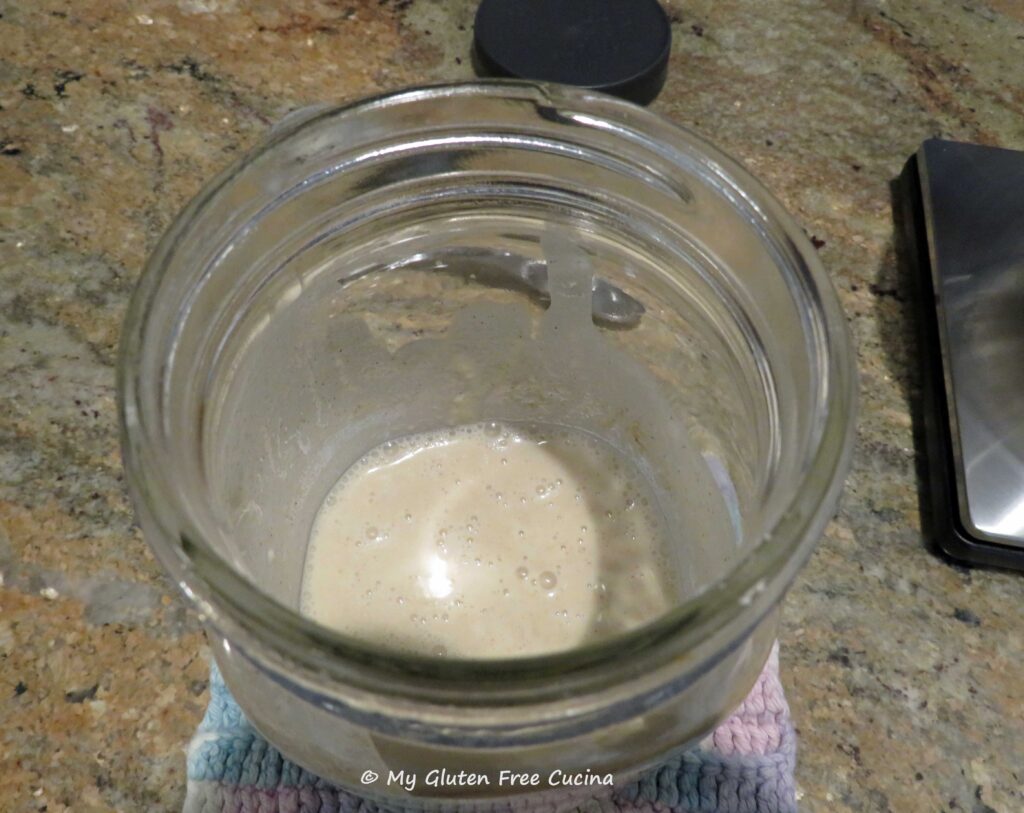
You will need a fully active and very robust sourdough starter to make this bread.  Honestly, I wondered if Sophie (my sourdough starter) was up to the task and was pleasantly surprised.  Way to go, Sophie!
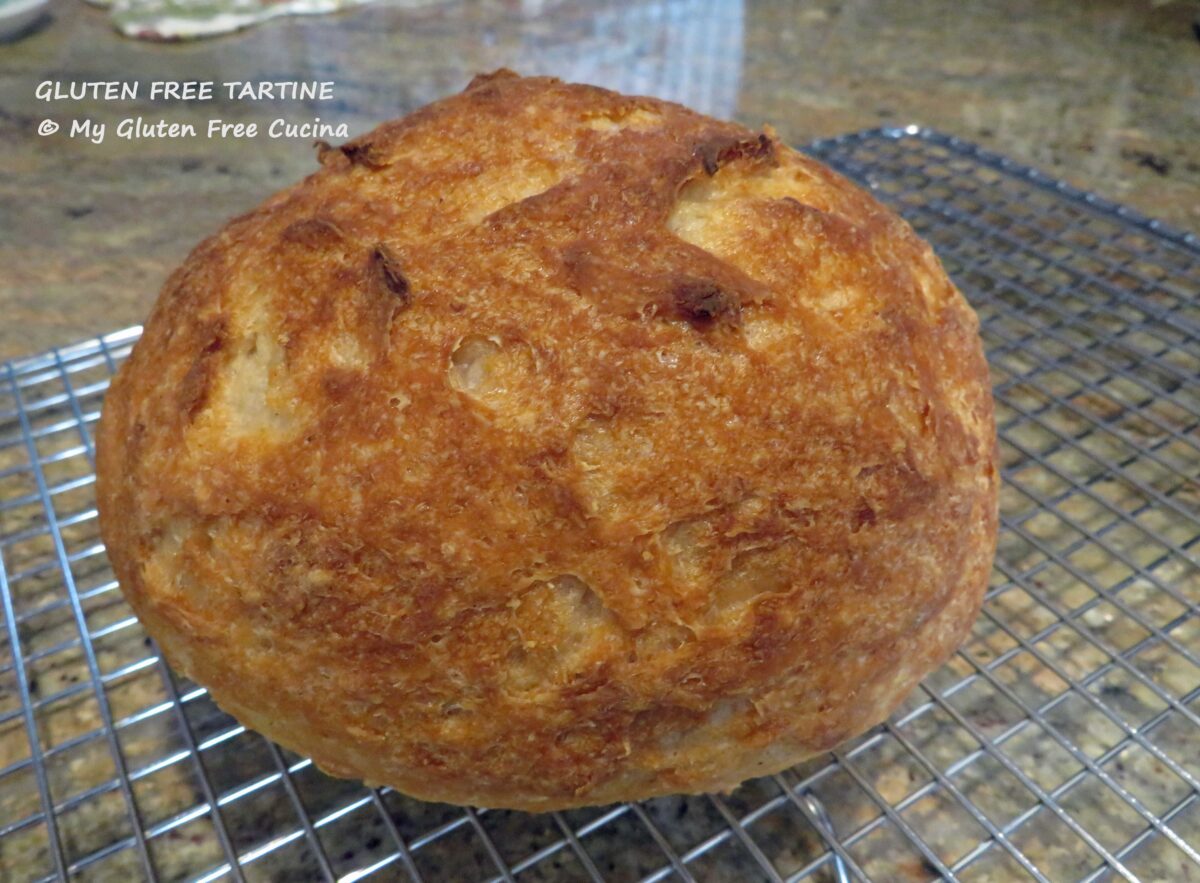
There was so much I wanted to get right with this bread.  The blistered, caramelized exterior and soft crumb.  After much trial and error, I was making some very nice loaves.  Do you see little hearts in the crust? 💕🥰
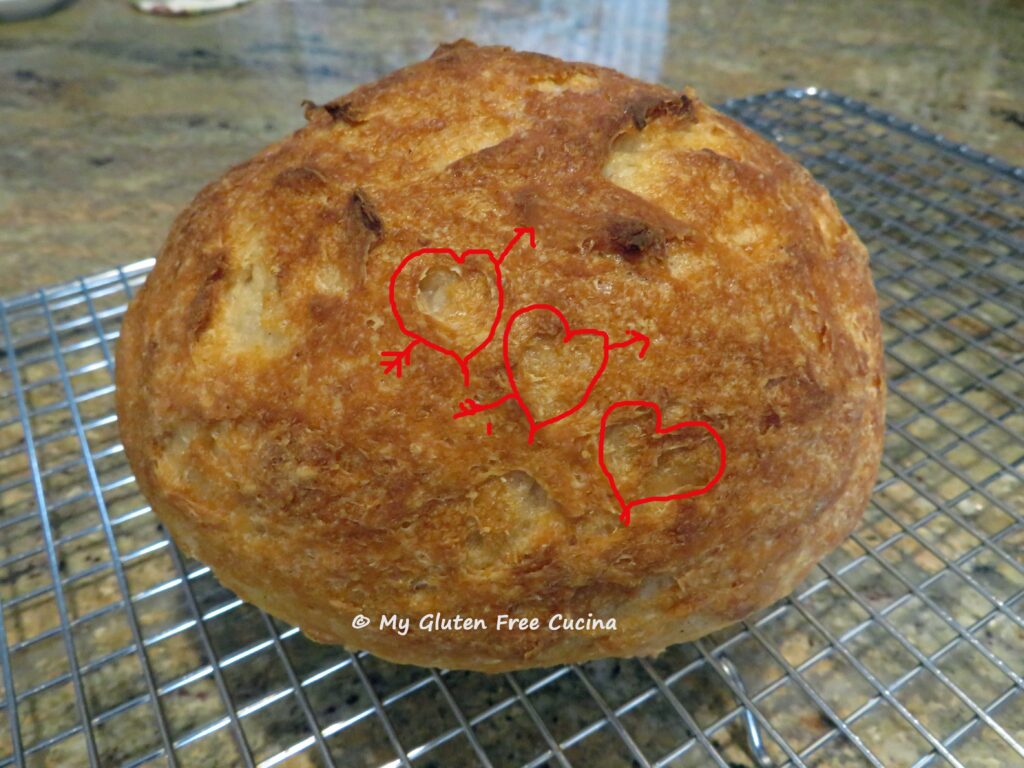
Do you see little hearts in the crust?

Developing the dough is a process, beginning with a well-fed starter, a preferment, and final dough.  After an overnight rest in the fridge, the loaf is baked in the morning.  This long fermentation is what takes you from a mere tablespoon of starter to the beautiful risen loaf you see in the photos.
Oh, and as if you hadn’t waited long enough, the baked loaf will need to rest a full day before slicing!  Most gluten free breads need extra time to release their moisture but for this one I don’t slice for a full 24 hours.  It is worth the wait.
This post contains affiliate links.

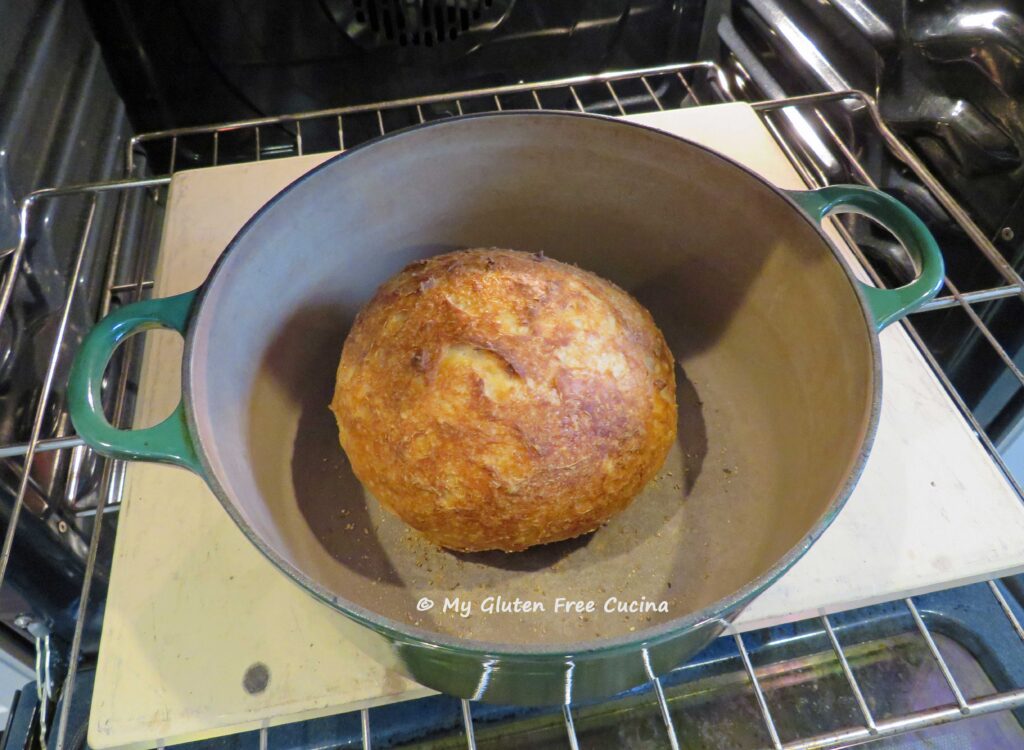
Like many sourdough loaves, Tartine is traditionally baked in a cast iron Dutch oven.  If you don’t have one, or if like me you find that cast iron pots are getting too heavy to lift, then a lighter weight enamel roasting pan or ceramic pan with a lid will get the job done.
Enough talk- let’s bake!

Ingredients:

Preferment:

  • 1 tbsp. fully active sourdough starter
  • 75 g. warm water
  • 50 g. gluten free all-purpose flour

Final dough:

  • all of the Preferment
  • 280 g. warm water
  • 250 g. gluten free all-purpose flour
  • 10 g. whole psyllium husk
  • 7 g. salt

Preparation:

If you work full time, you may be thinking “I don’t have time for all this”.  Rest assured though, you can fit this into your workday.  Just follow the steps!

Day 1 –

Evening – Take your starter out of the refrigerator, feed it and leave it out on the counter overnight.
Day 2 –

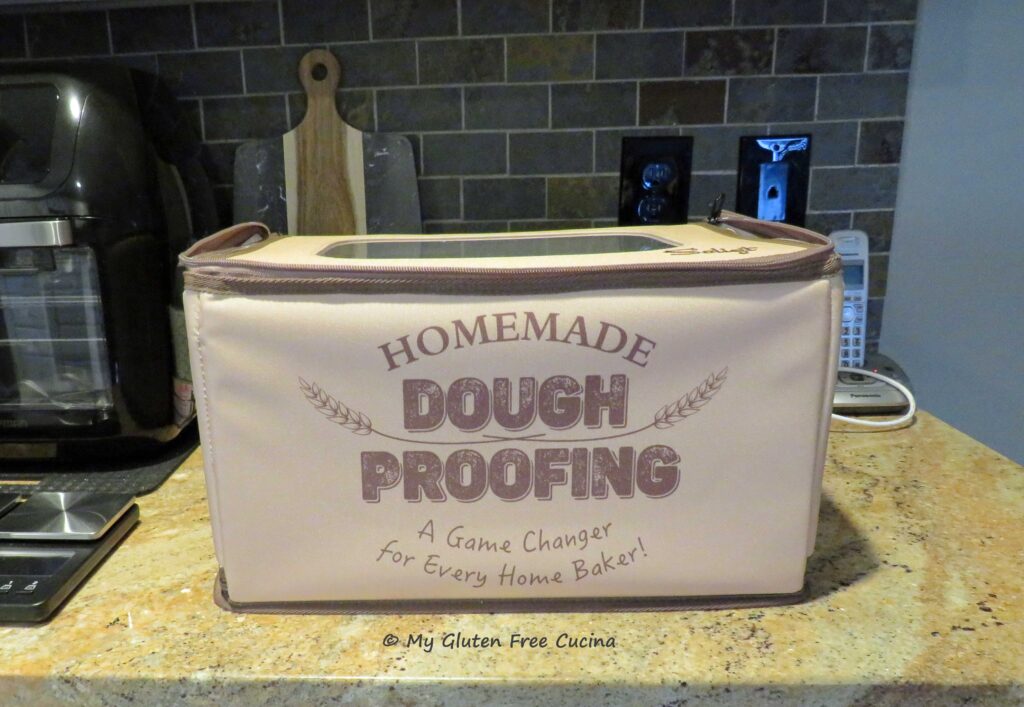
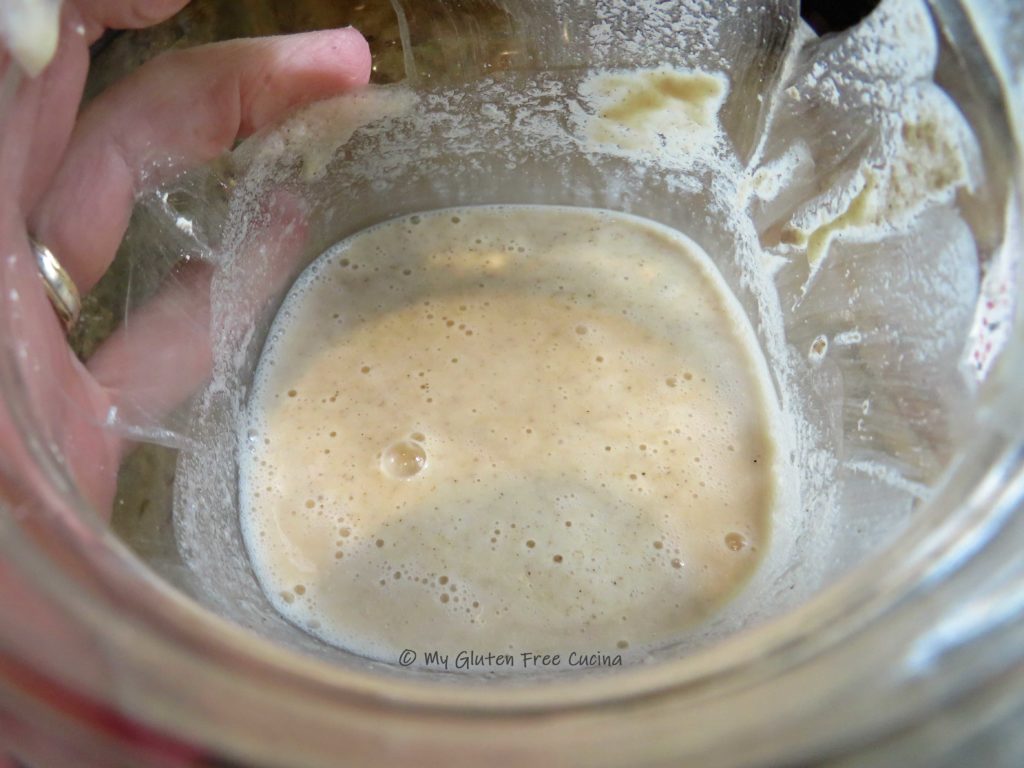
Morning – Stir together the preferment ingredients, cover with plastic wrap and let sit in a warm place for at least 7 hours (I used my proofing box).  As the day goes on, it will become increasingly puffy and smooth.
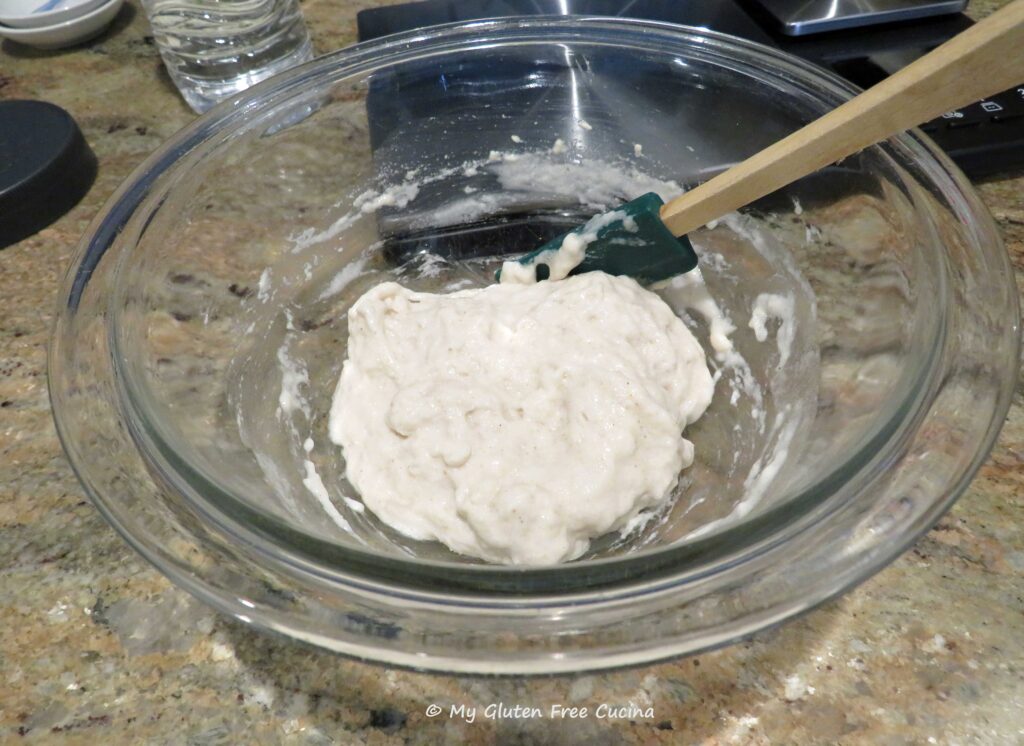
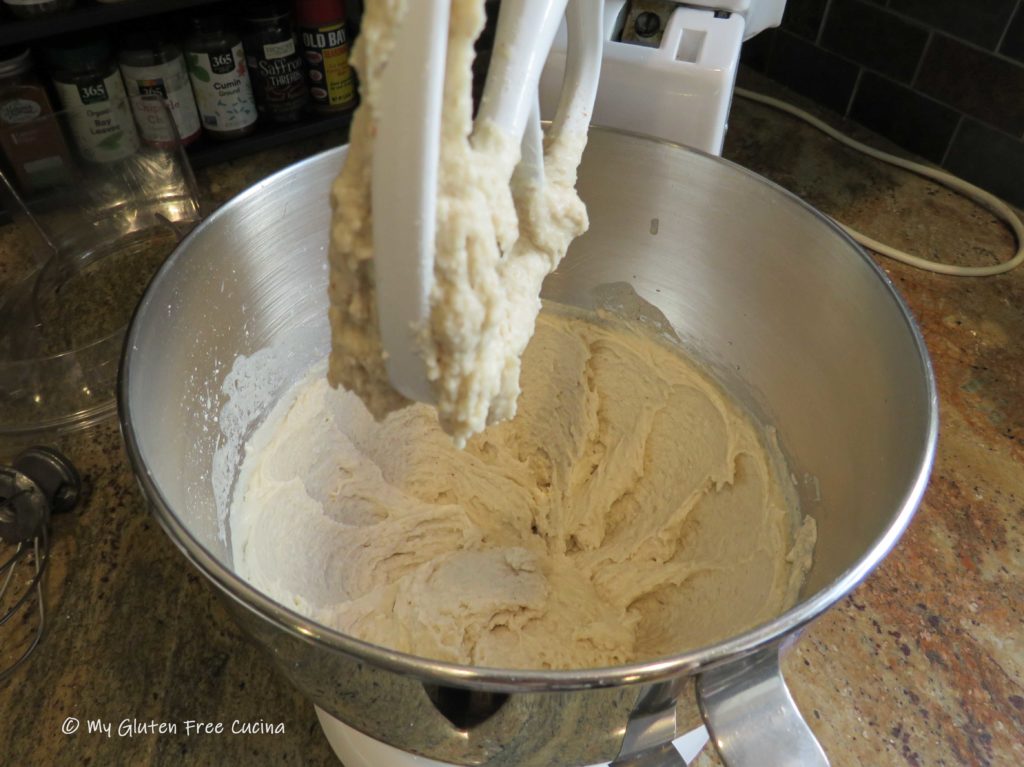
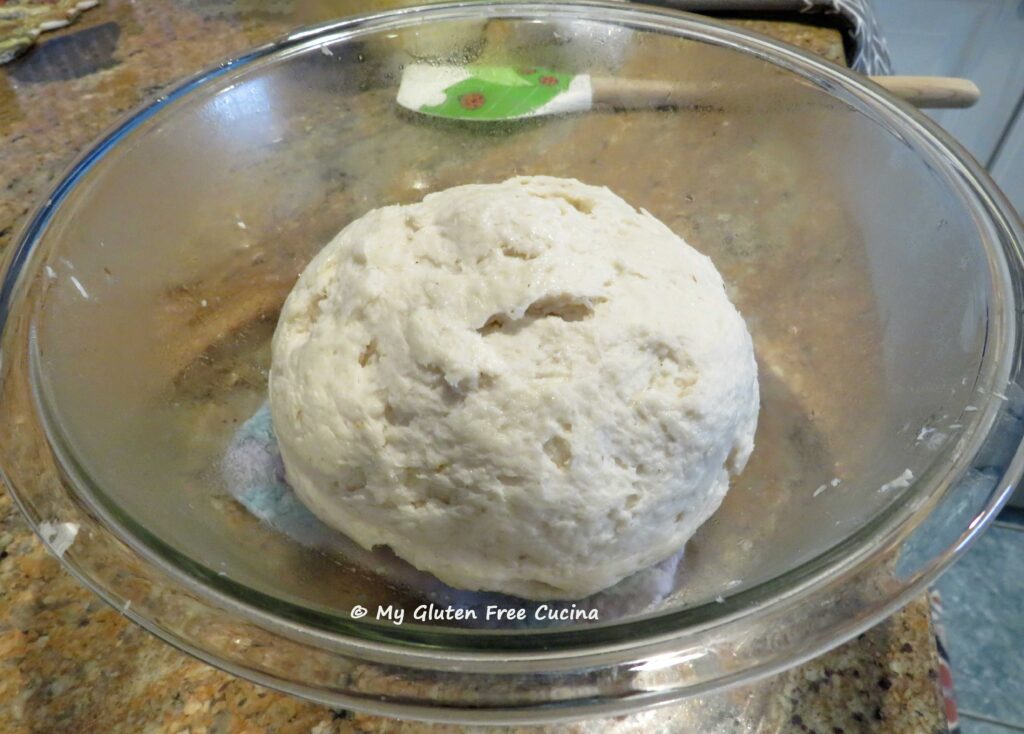
Late Afternoon – Combine the final dough ingredients with the preferment in the bowl of a stand mixer with the paddle attachment.  Mix just until combined to form a wet shaggy dough.  You can also mix the dough together by hand with a stiff spatula or dough whisk.
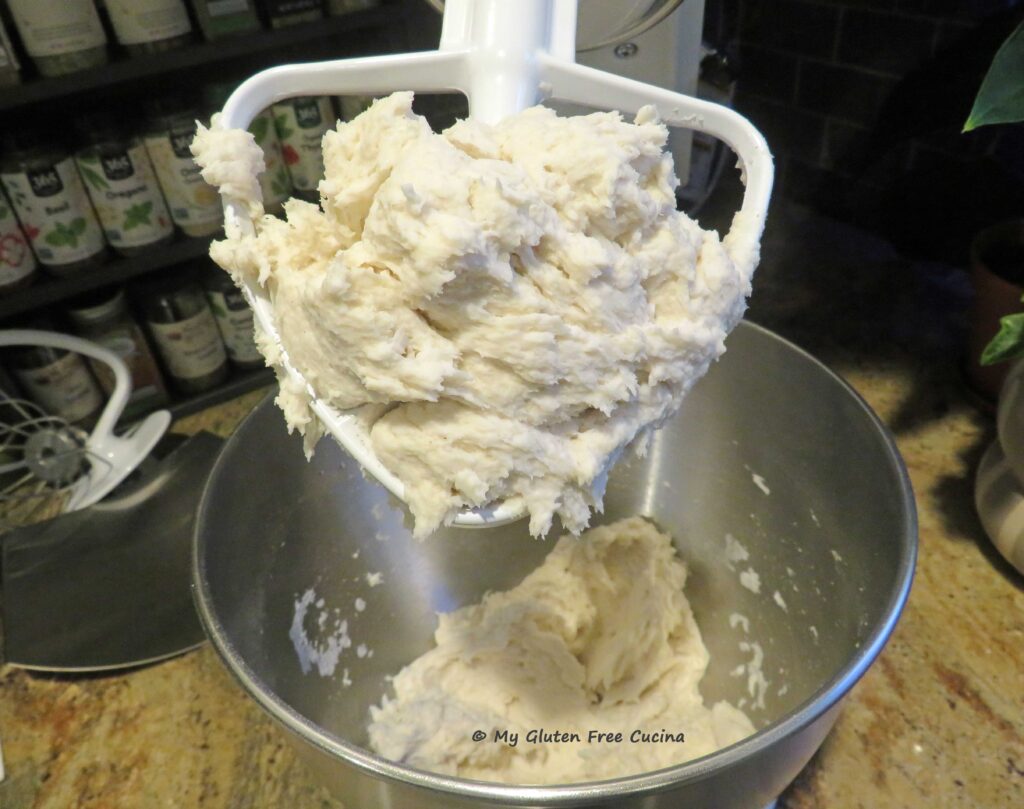
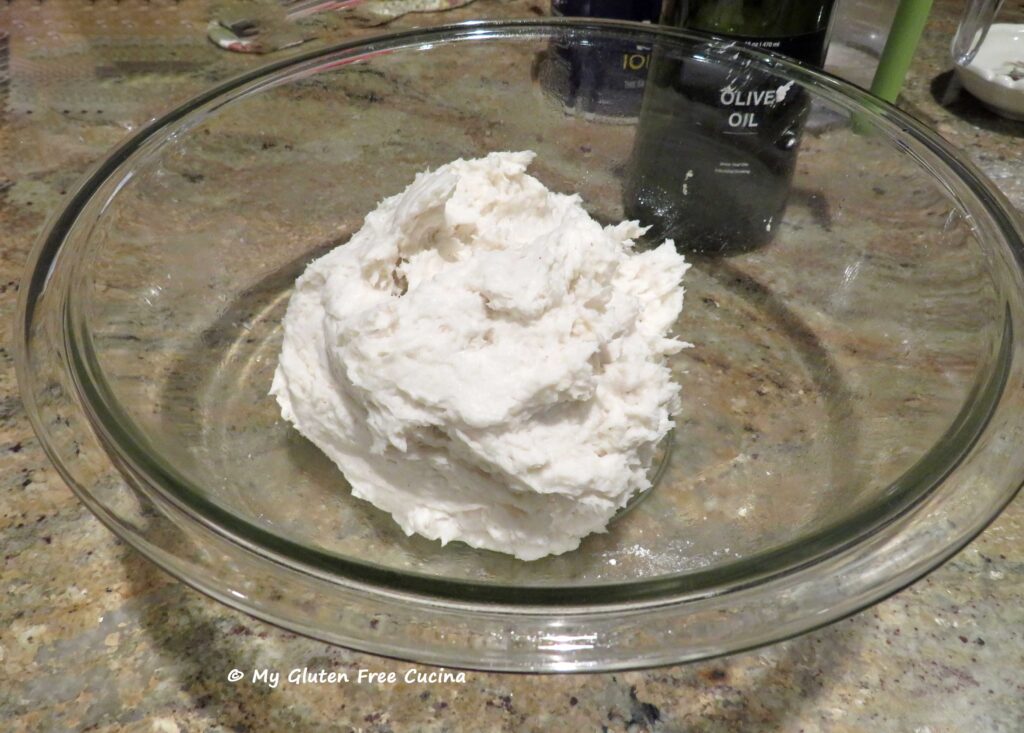
Transfer the dough to a lightly oiled bowl, cover with plastic wrap and let it rest 45 minutes while you have dinner.
Evening – Rub a large cutting board with olive oil and turn the dough out.  Use a bench knife to spread the dough and fold it over on itself, rotating the cutting board as you fold.
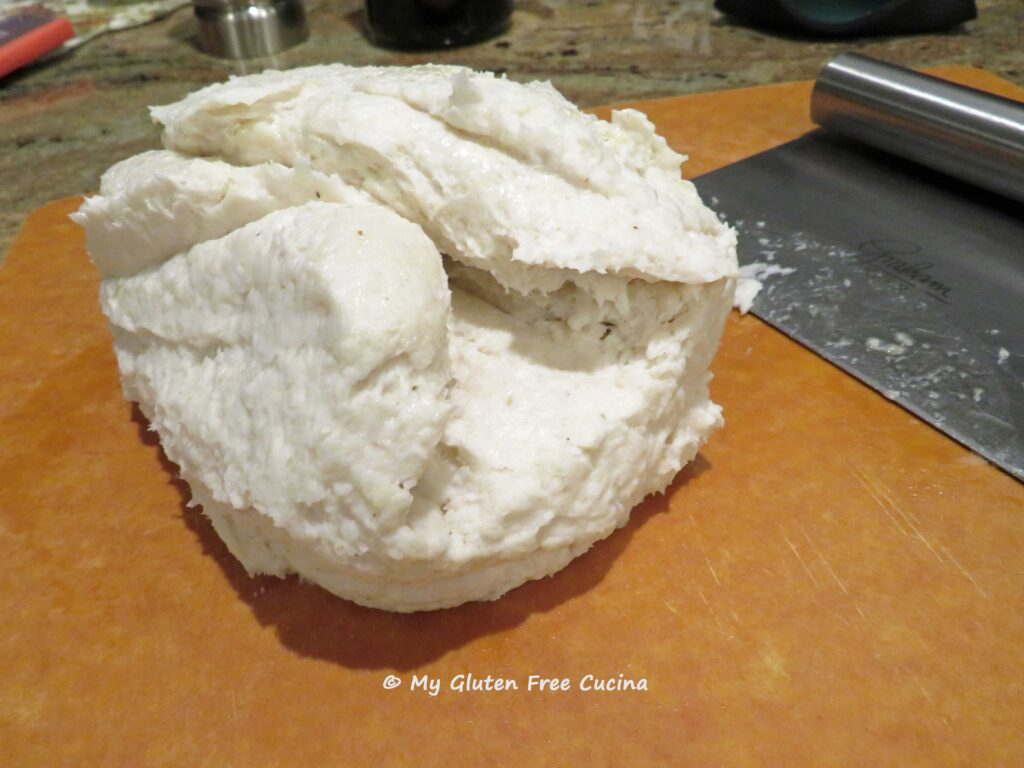
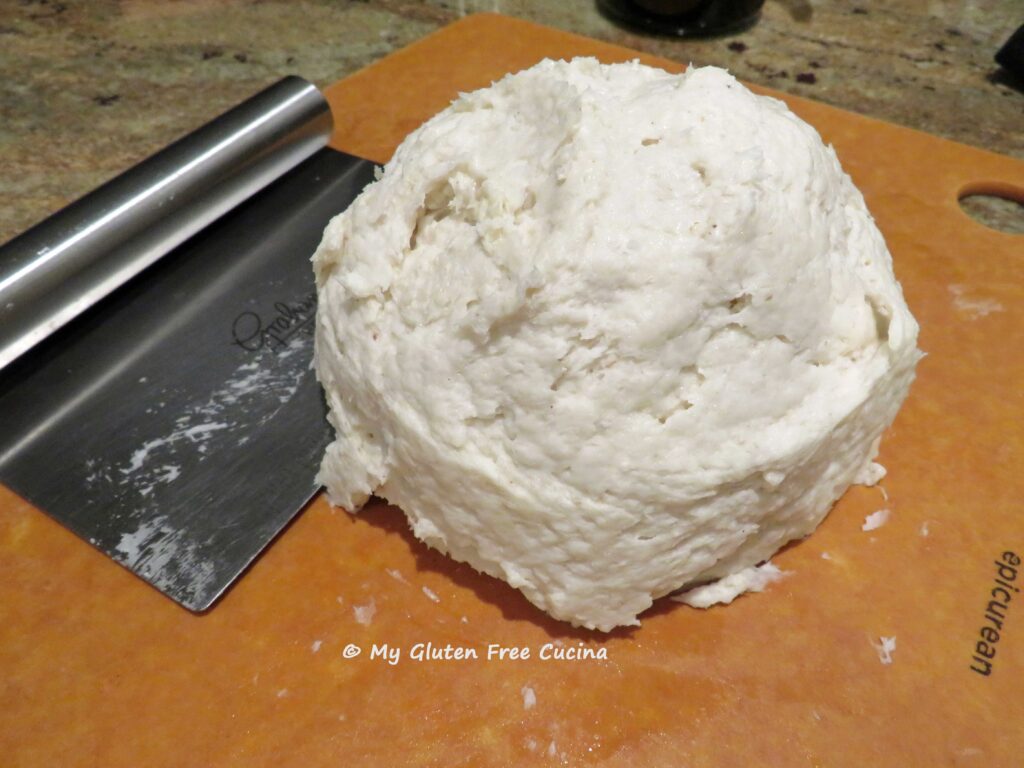
The dough will be sticky, and you won’t be able to handle it like you would a wheat dough (i.e. “stretch and fold”).  But- after a few dozen folds you should have a nice smooth ball.
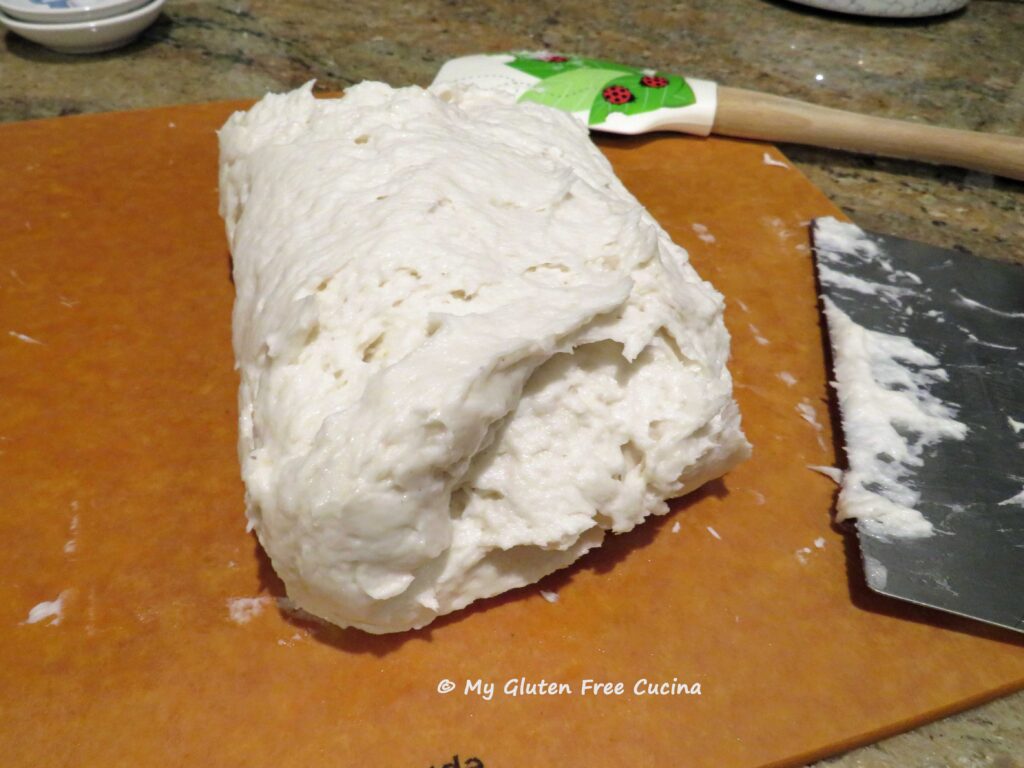
Return it to the bowl and cover with plastic wrap.  Leave it out on the counter until you go to bed.
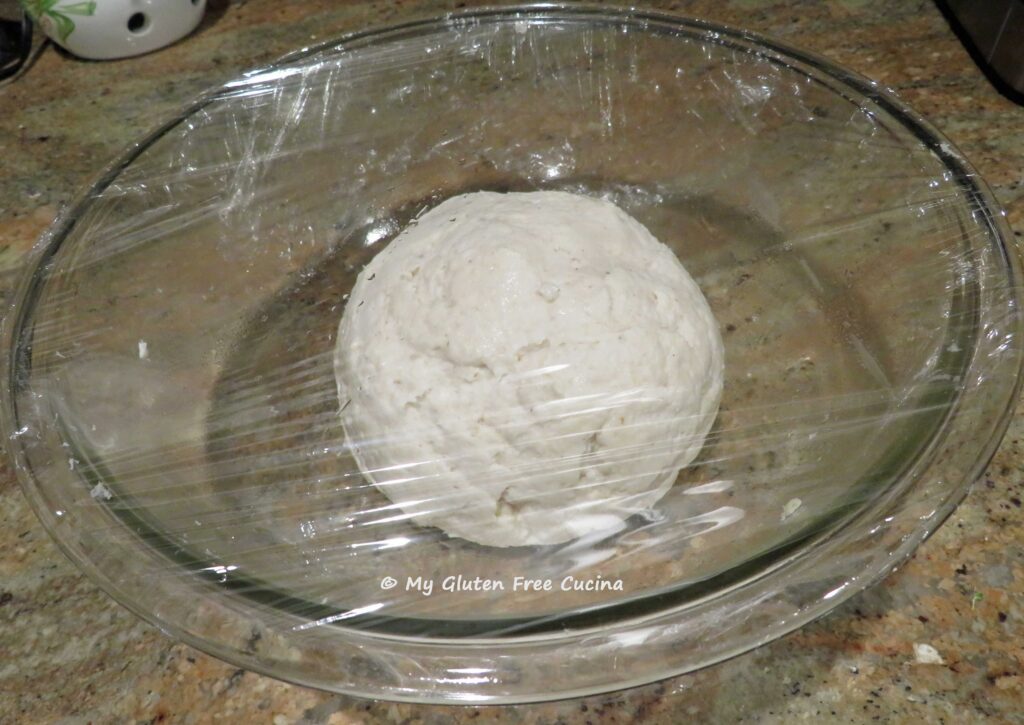
Night – Refrigerate the dough overnight to be baked in the morning.

Day 3 –

Morning – Take the dough out of the refrigerator and let it stand at room temperature while you preheat the oven to 475º.  Place a Dutch oven on the middle shelf while the oven is heating for 1/2 hour prior to baking (note- if you are not using cast iron be careful, read the instructions for your pot to make certain it can withstand being heated while empty).

Remove the preheated Dutch oven to the stovetop, sprinkle the bottom with cornmeal and use a stiff spatula to carefully nudge the dough from the bowl without deflating it.  Cover and return the pot to the oven.
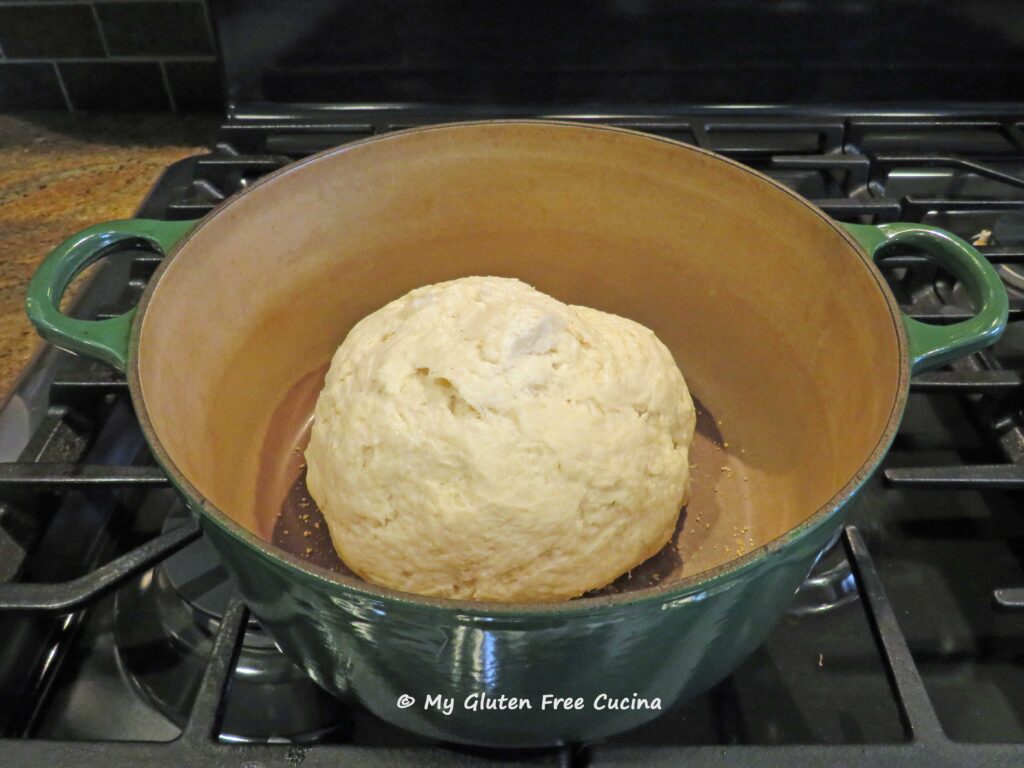
Reduce the oven temperature to 450º and bake for 30 minutes.  Then remove the cover and continue baking another 20 minutes.  Loaf is done when the internal temperature reaches 210º (check with a thermometer).

Carefully remove the loaf from the pan and place on a rack to cool.  Once it reaches room temperature you can put it in a bread bag or use plastic wrap.
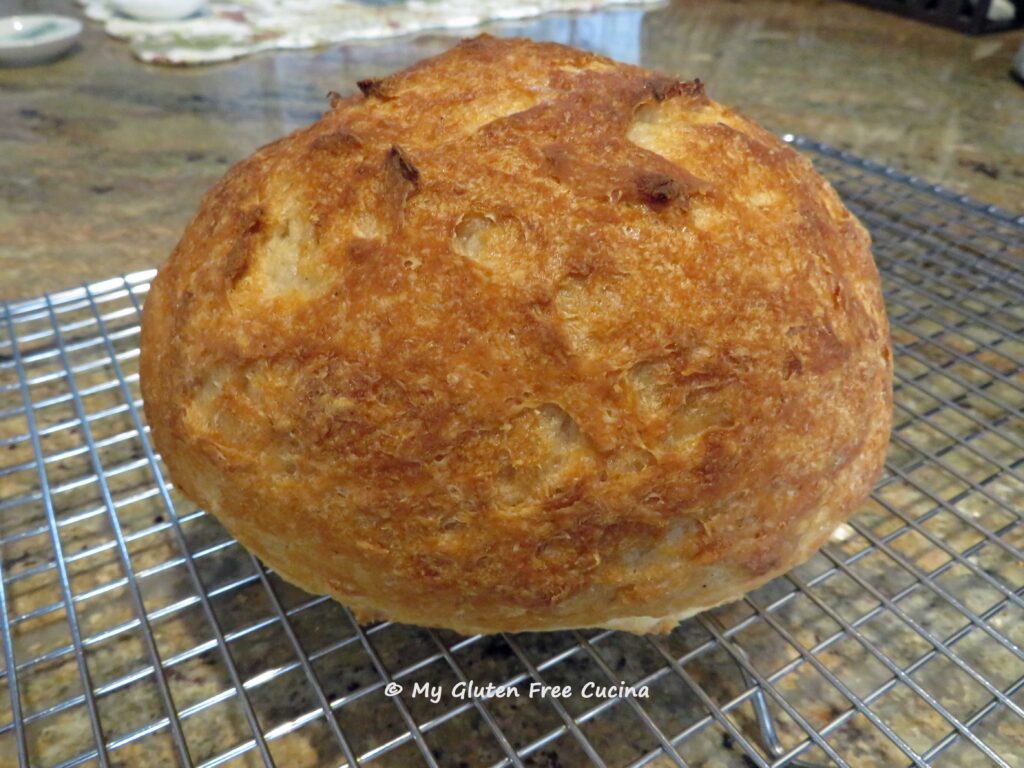
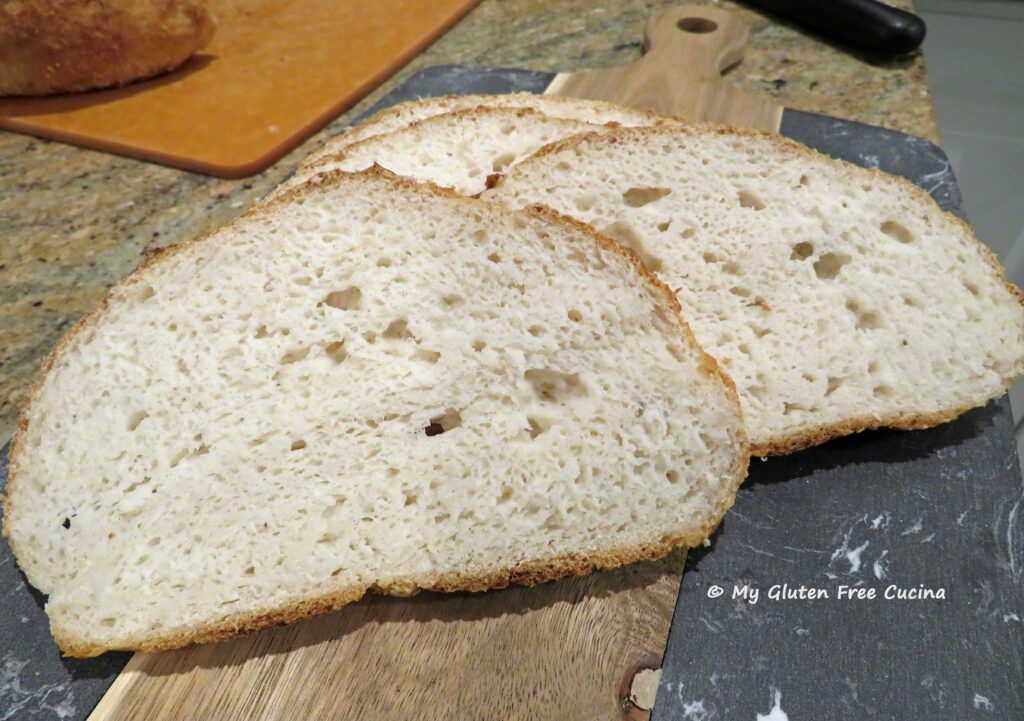
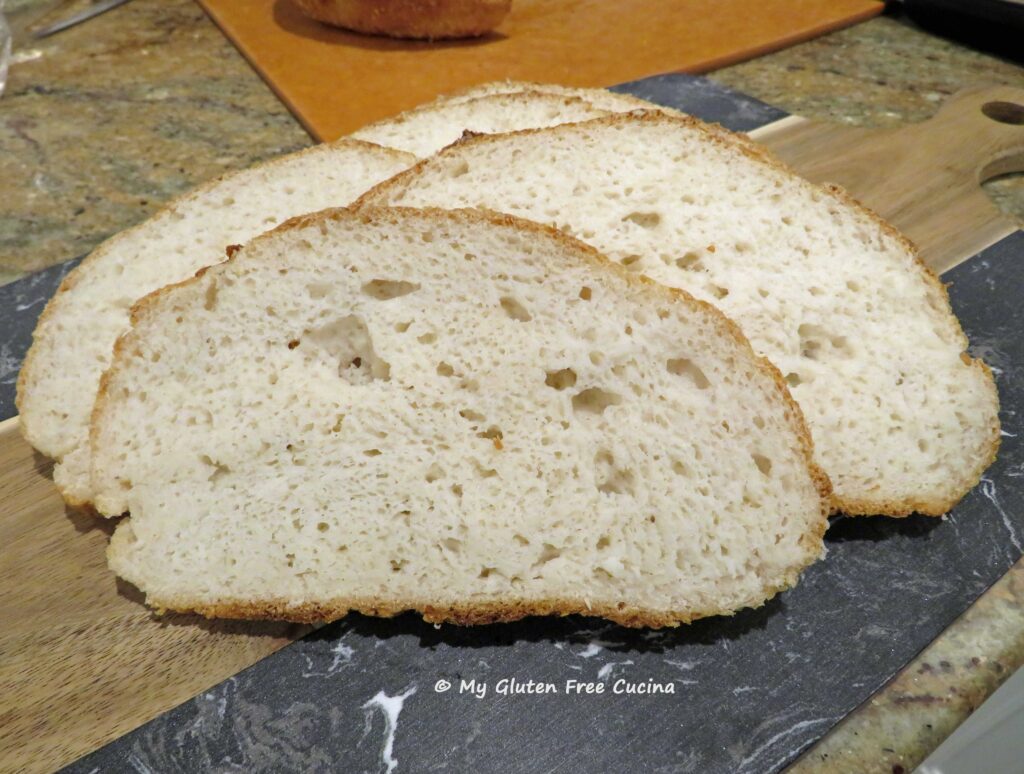
After all that, you will probably want to tear right into your loaf of bread.  But- please be patient!  This beautiful, artisanal loaf needs a full 24 hours to release its moisture.  Rushing it can mean a wet sticky loaf instead of a gorgeous crumb like this!
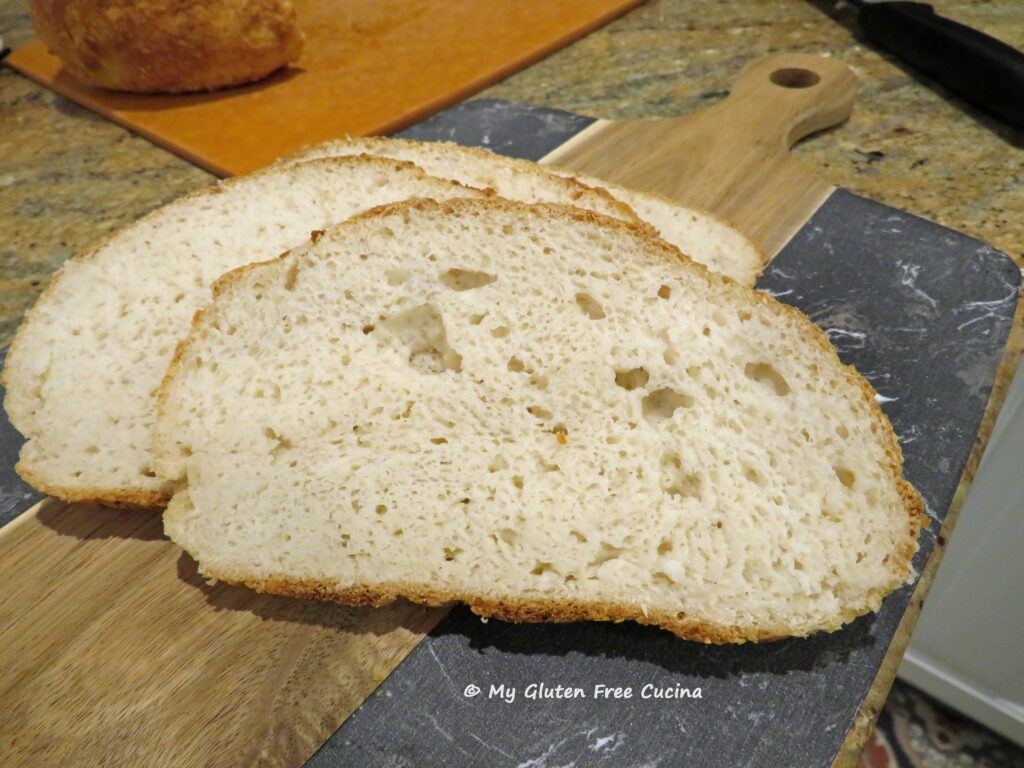
Day 4-

Finally, the long-awaited moment!  Slice and serve with dipping oil.  What do you think?  Was it worth the wait?
Notes:

You do not need a stand mixer to make the preferment, but as mentioned above, I did use mine for the final dough.  You can also stir the final dough together with a dough whisk or stiff spatula, just enough to form a wet shaggy dough, kneading is not required.

♪♪ I used Better Batter Gluten Free Flour in this recipe.  When you shop Better Batter, remember to use my Promo Code MGFC30 for 30% off your full price purchase.

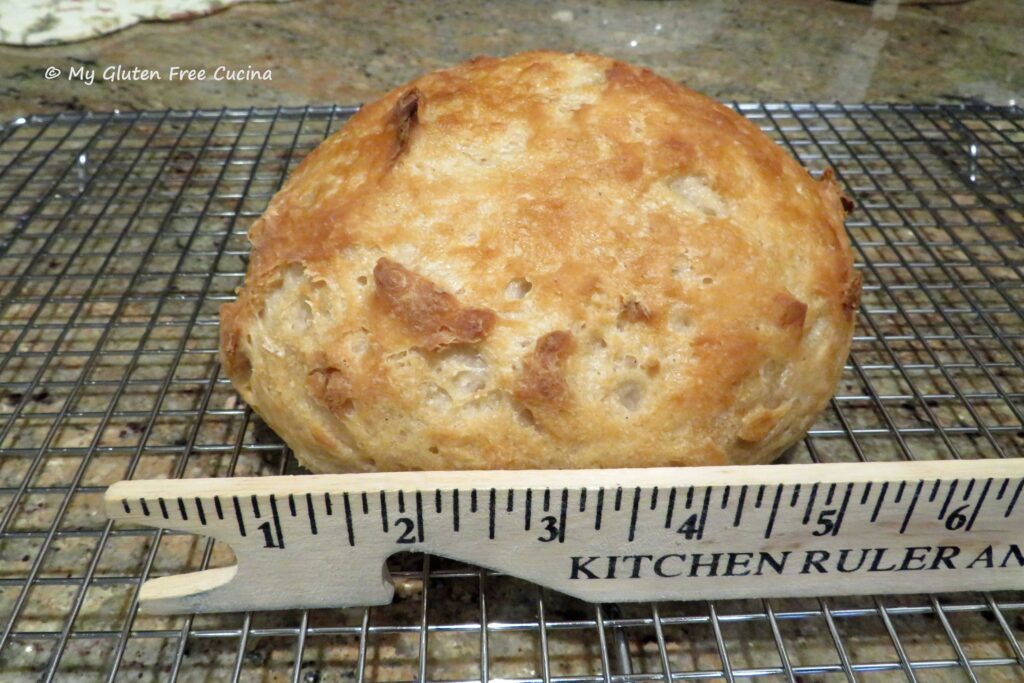
♪♪♪ Notice how small my loaf is?  This loaf size is perfect for solo households, or a dinner for two.  You can double the recipe if you wish, to make 2 small loaves or 1 large loaf.  I kept it small for testing, and it is just right for me, a great size for gifting too!
Print This Post Print This Post


Gluten Free Sourdough Pain d’Epi (Wheatstalk Bread)

When I began baking with gluten free sourdough a couple of years ago, I couldn’t imagine all the things that I would make with my starter “Sophie“.  I started out with the usual rolls and loaves, made pancakes with discard, and even a quick bread.

Then one day, I decided to step out of my comfort zone with this beautiful Gluten Free Pain d’Epi, also known as Wheat Stalk Bread (I know, ironic).

Of all the bucket list recipes I had to try once I got my gluten free sourdough starter established (read about it here), this one was at the top of the list.

This was my first time making a gluten free version of Pain d’Epi and it was SO good.  The most important thing you need to know about this recipe is that your starter needs to be fully active, discard will not work.  That means there is some forethought involved, you will need to plan ahead depending on how long it takes for your starter to get up to full speed.   Also take into account the overnight proof, and you will likely need at least 2 days of (mostly hands off) time for preparation.

This post contains affiliate links.

The Flour

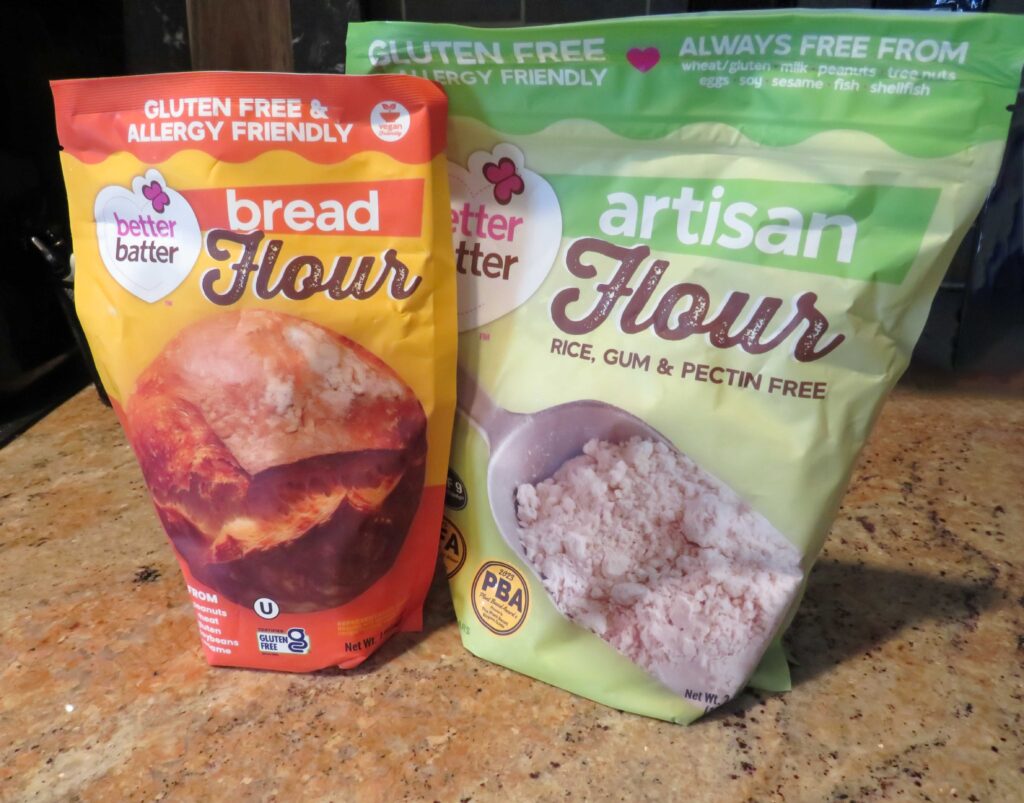
For the flour, I used the Artisan Flour Blend from Better Batter and as usual it did not disappoint.  The flavor was fantastic, and the bread was perfect for dipping.  You can absolutely use their Gluten Free Bread Flour, if you prefer a white bread.  Or use 100g of each, I love doing that!

Ingredients:

Preparation:

Combine the flour and salt and whisk well.  Add the starter, honey and olive oil to the bowl of a stand mixer with the paddle attachment. Gradually add the flour mixture with the warm water.  Increase the speed and knead for 5 minutes to form a soft, supple dough.

Transfer the dough to an oiled bowl, cover with plastic wrap and proof in a warm place for 4 hours.  I used my proofing box.

Here is the risen dough.  Place it in the refrigerator overnight to really develop the flavor.

The next morning, bring to room temperature.  You can see how nicely the dough has puffed up, and there are lots of happy air bubbles!

It smells so good already!

Preheat the oven to 425º while you shape the dough.

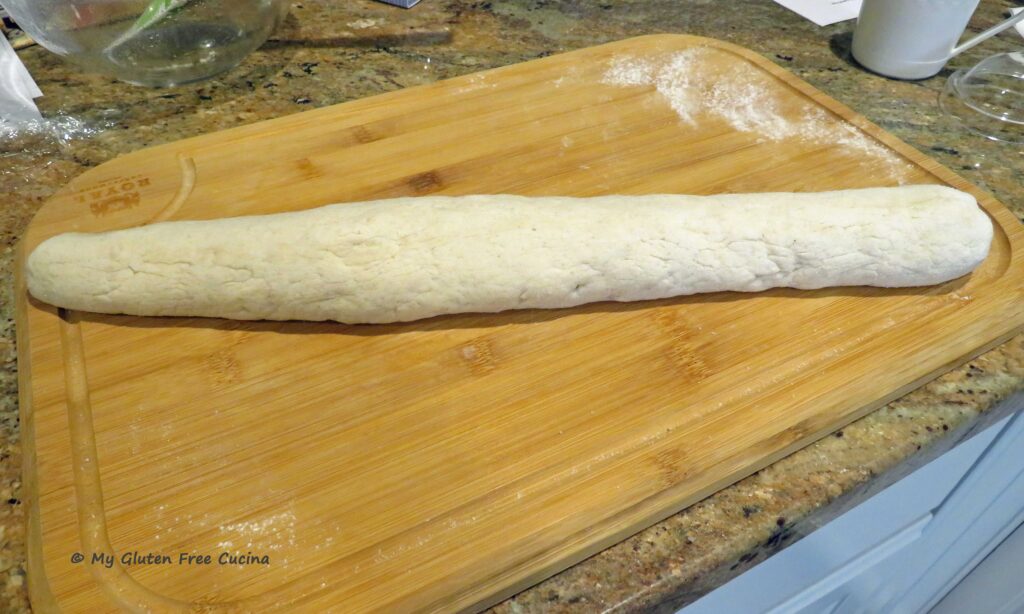
First, transfer the dough to a floured cutting board and gently roll and shape it into a long thin baguette, about 15″ x 2″.  Don’t apply pressure, you want to deflate as few of the air bubbles as possible.

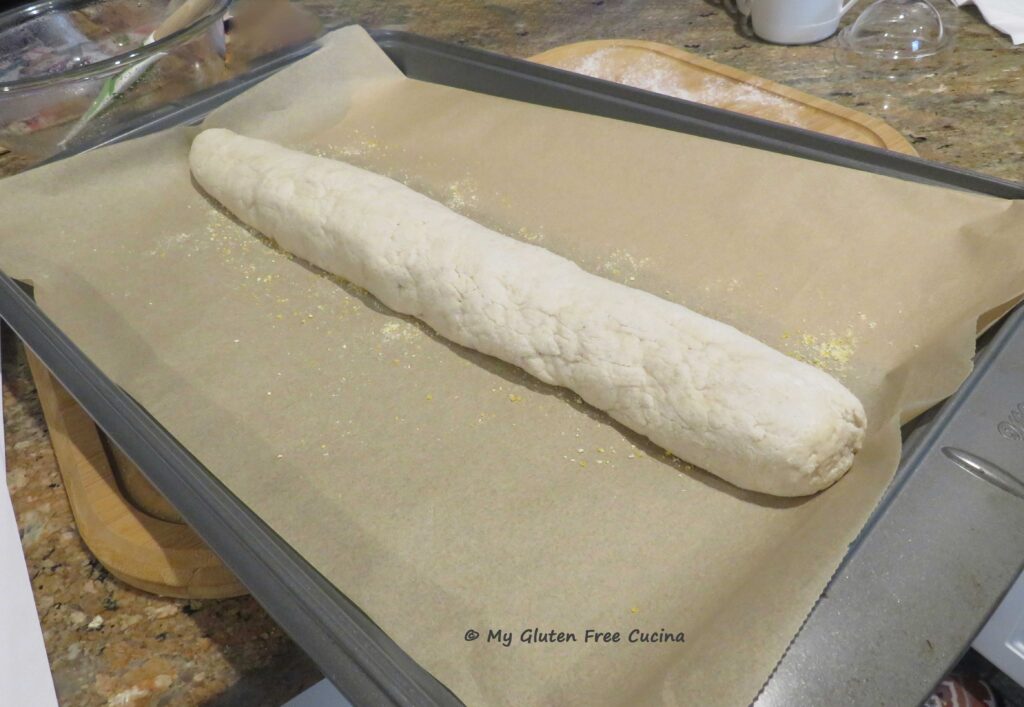
Line a baking sheet with parchment paper and sprinkle cornmeal down the center where you will lay out the loaf.

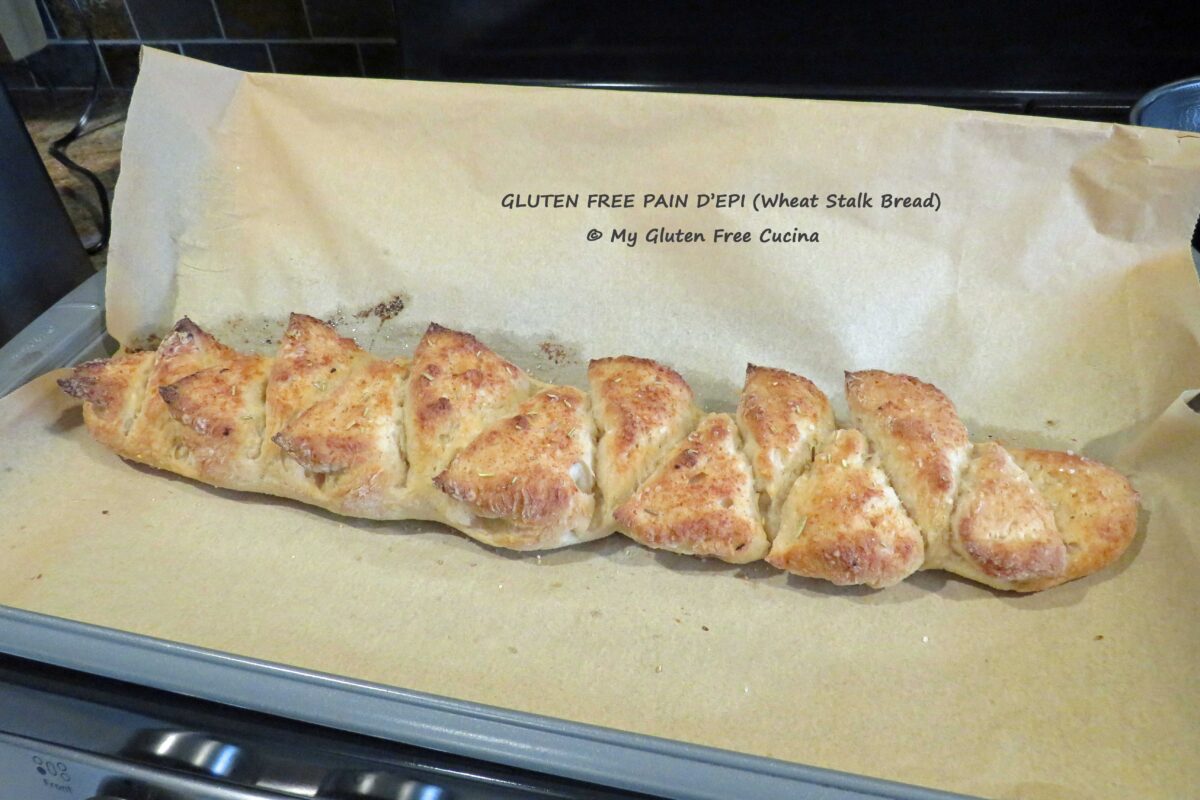
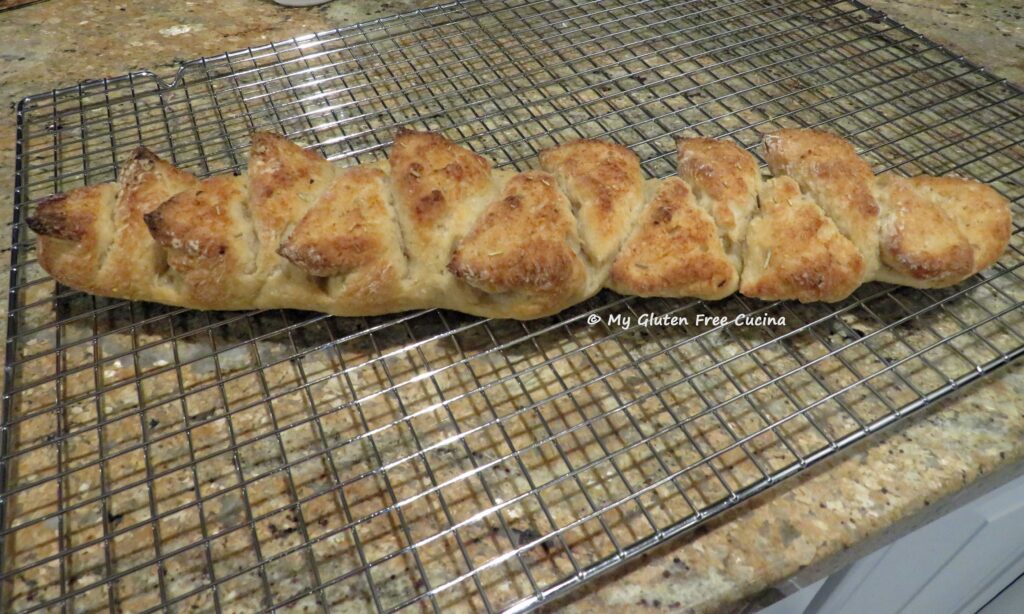
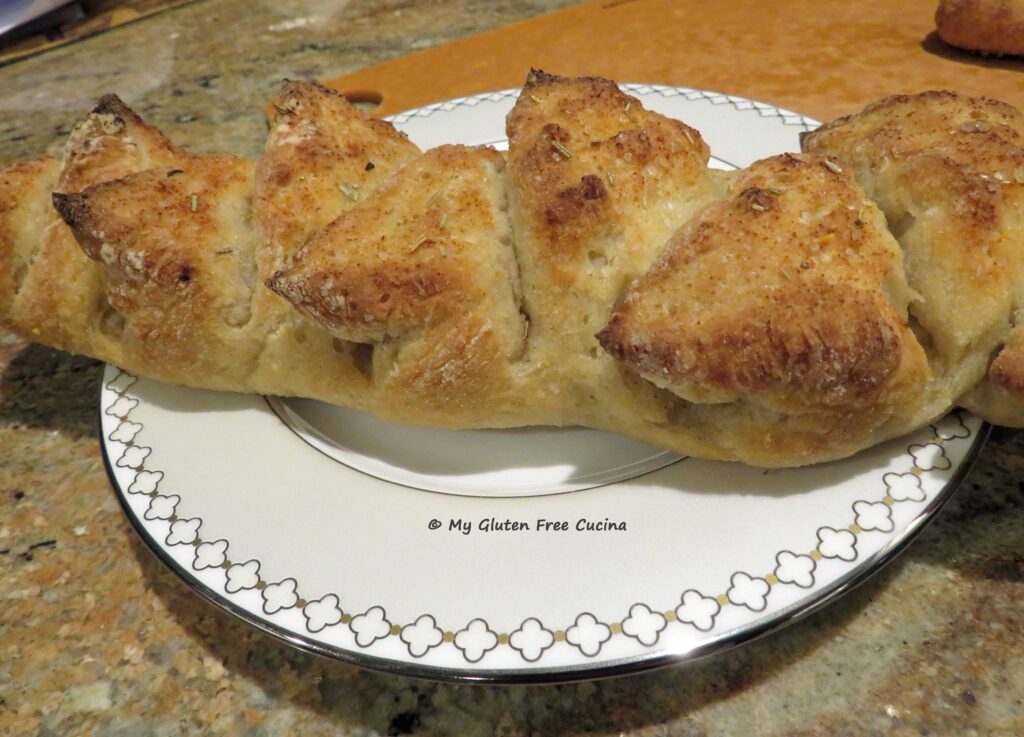
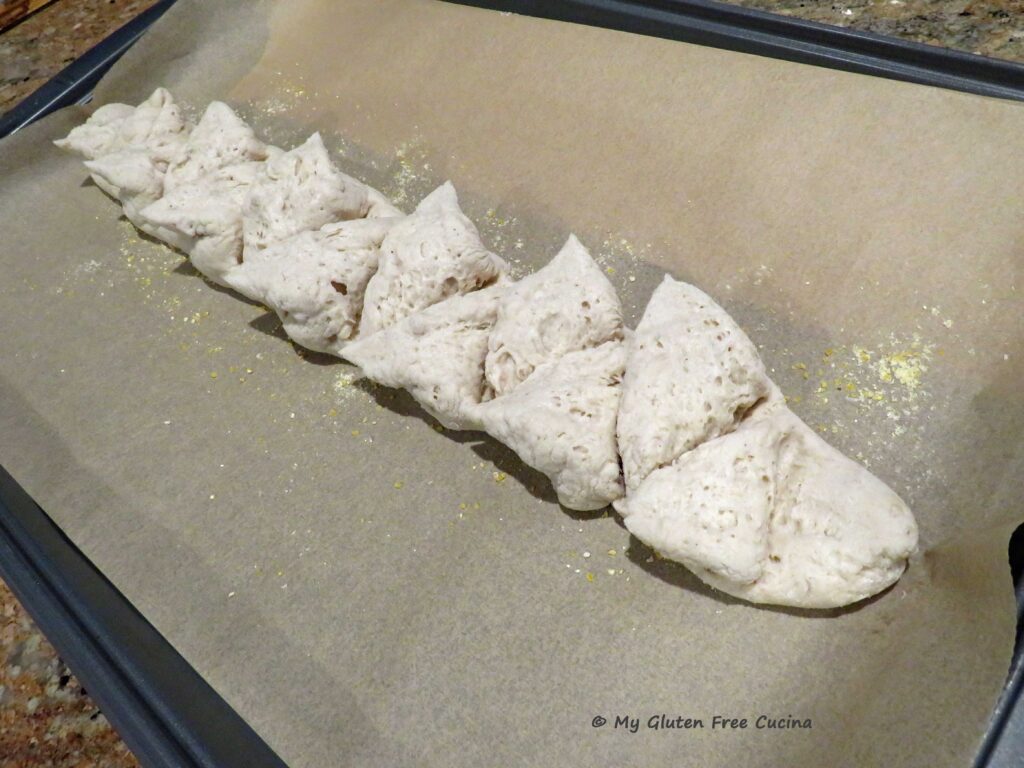
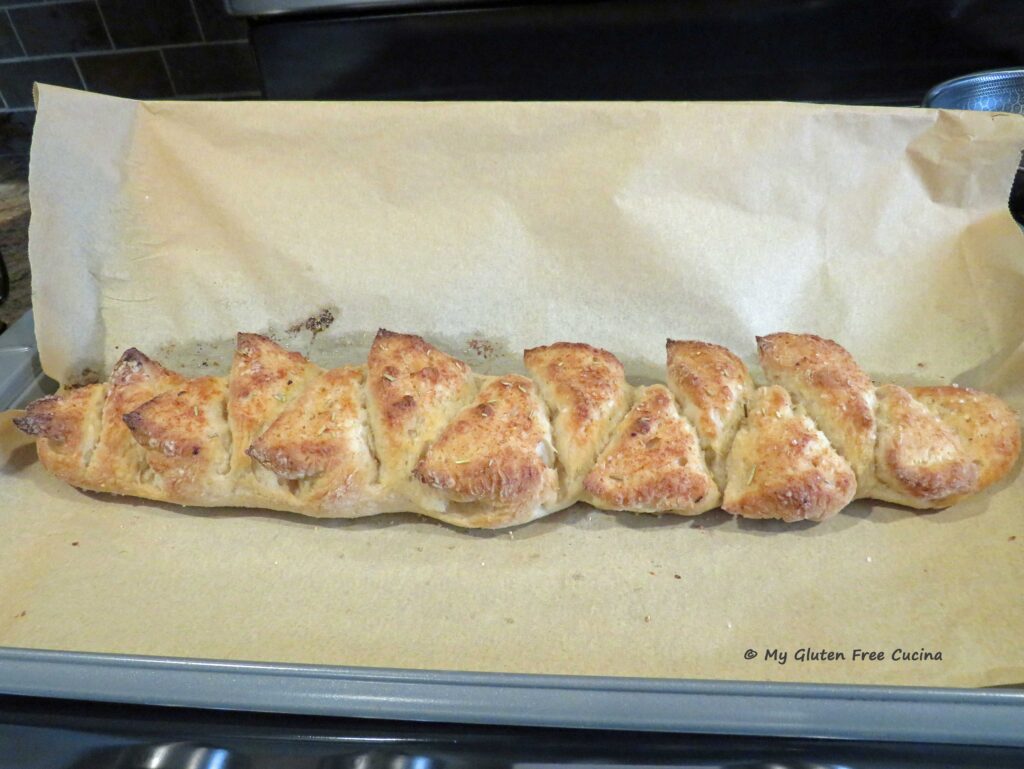
To create the wheat stalk pattern, use scissors to snip the loaf every few inches (cutting about ¾ of the way through), and as you snip each section, pull it over to one side, alternating left and right.

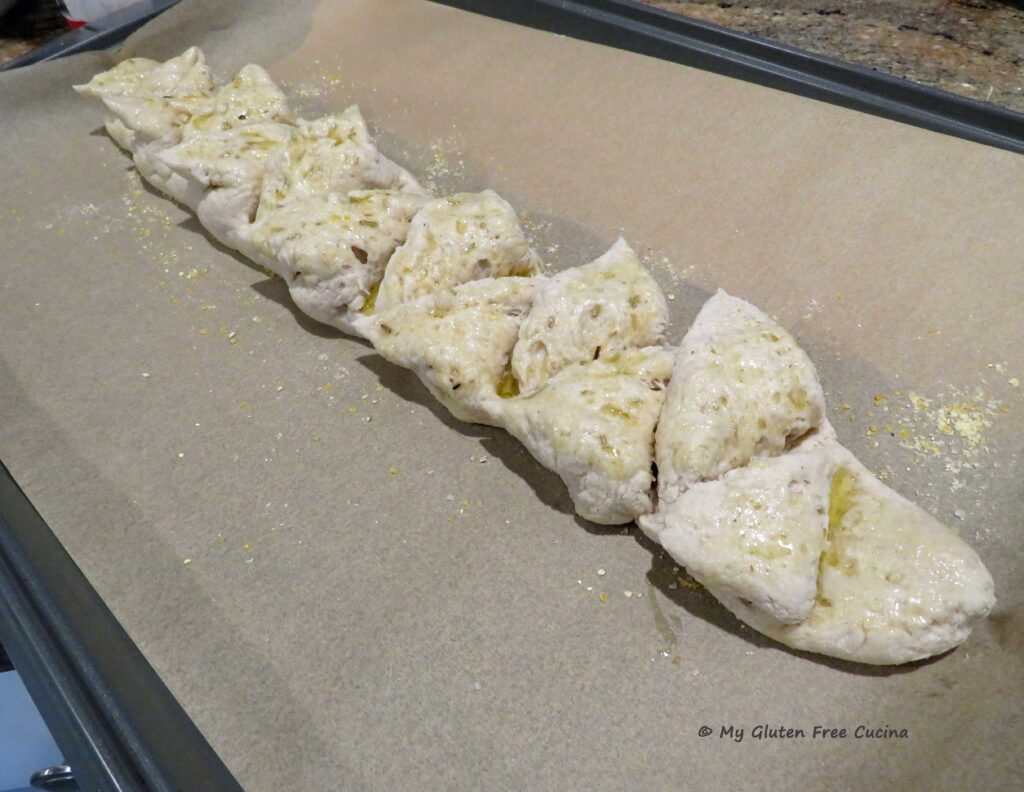
Now brush the loaf with olive oil and sprinkle with coarse salt.  I infused my olive oil with garlic and rosemary, and the aroma as it baked was wonderful.

Bake for 30 minutes on the middle rack.  The internal temperature should read 210º.  Cool in the pan for 10 minutes.

I love the smell of freshly baked bread filling my kitchen and was so pleased with how this loaf came out.

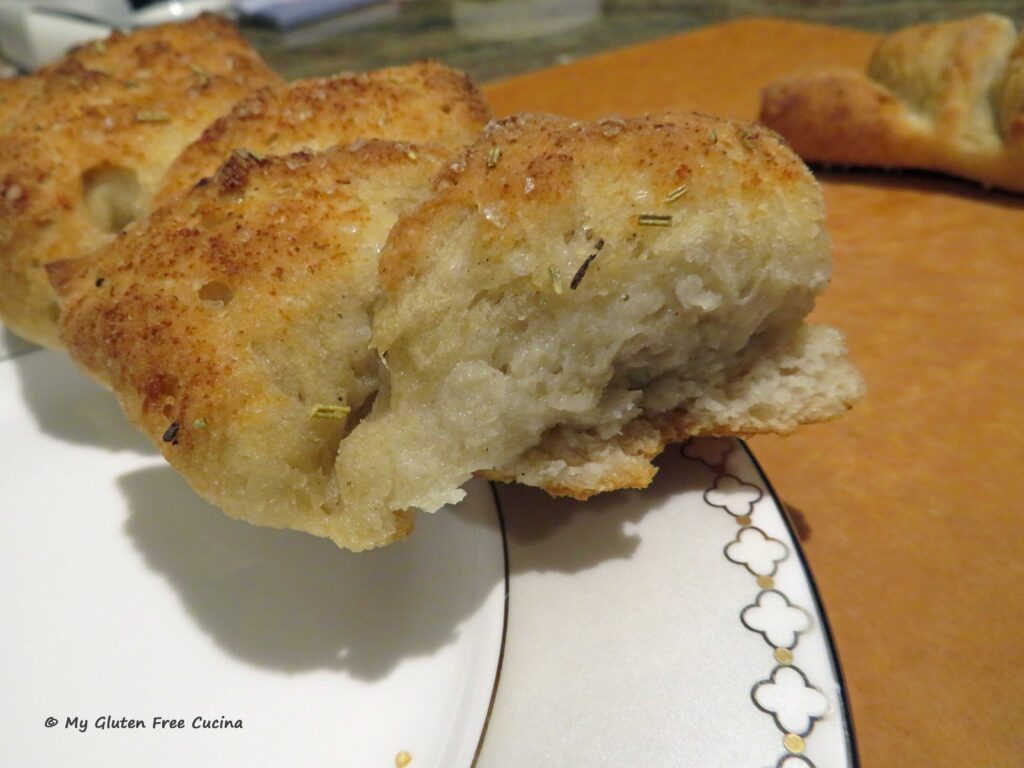
I recommend you allow the bread to cool for at least 4 hours before slicing, so the center won’t be gummy.  Trust me, you will have a hard time waiting!

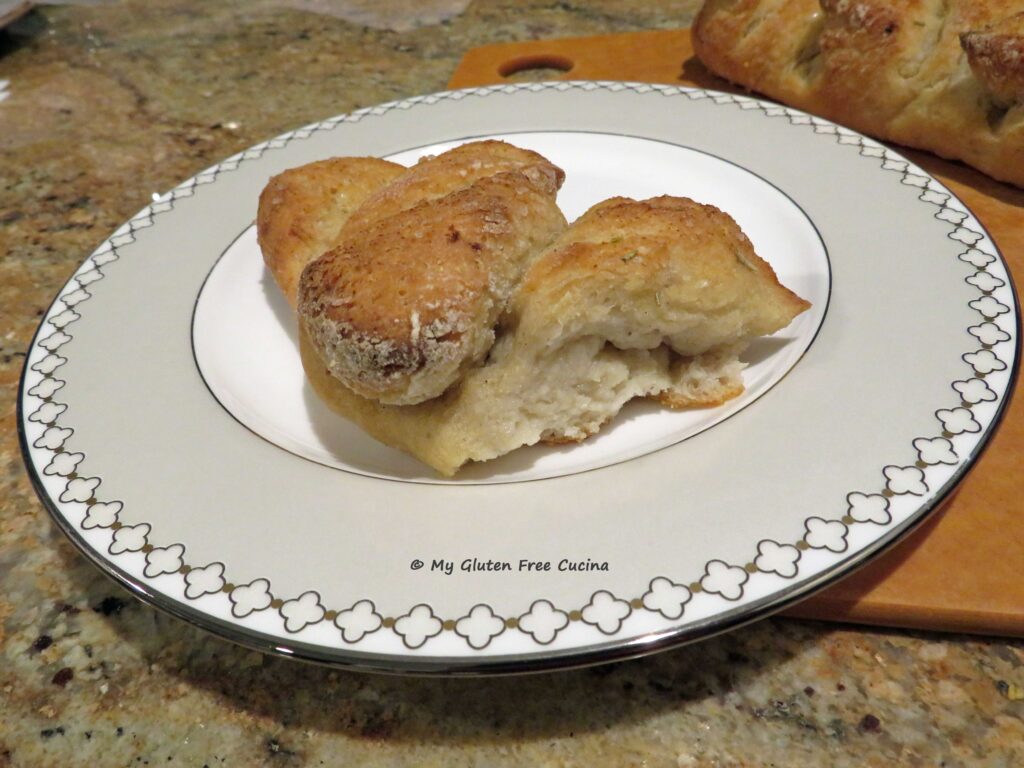
You can cut it into slices or just tear off a section and dip it in olive oil.  I made up a dipping oil with Tuscan seasoning, fresh garlic and rosemary.

This bread is best eaten the day it is baked.  Leftovers can be refreshed in the microwave or toasted.  Store at room temperature up to 1 day and freeze any remaining.

Notes ♪♫ A sourdough starter will take your gluten free baking to the next level with results you never dreamed possible.  Read about my sourdough starter Sophie here.

Print This Post Print This Post

Gluten Free Sourdough Discard English Muffins

The Adventures of Sophie the Sourdough

Recipes for sourdough discard are as plentiful as there are sourdough bread recipes.  These Sourdough Discard English Muffins were my first experiment using discard, as Sophie, my gluten free starter continues to develop.

So, what exactly is sourdough discard?  In simple terms, when feeding a new sourdough starter, you will be adding flour and water at least twice per day.  As your starter grows, part of the process requires that you discard some of the mixture.  This keeps the starter at a reasonable quantity while feeding the organisms that will eventually produce that wonderful sourdough flavor.

Even after your starter is well established and living in the fridge, you will still need to feed it regularly, and unless you are a prolific baker there will always be “discard”.

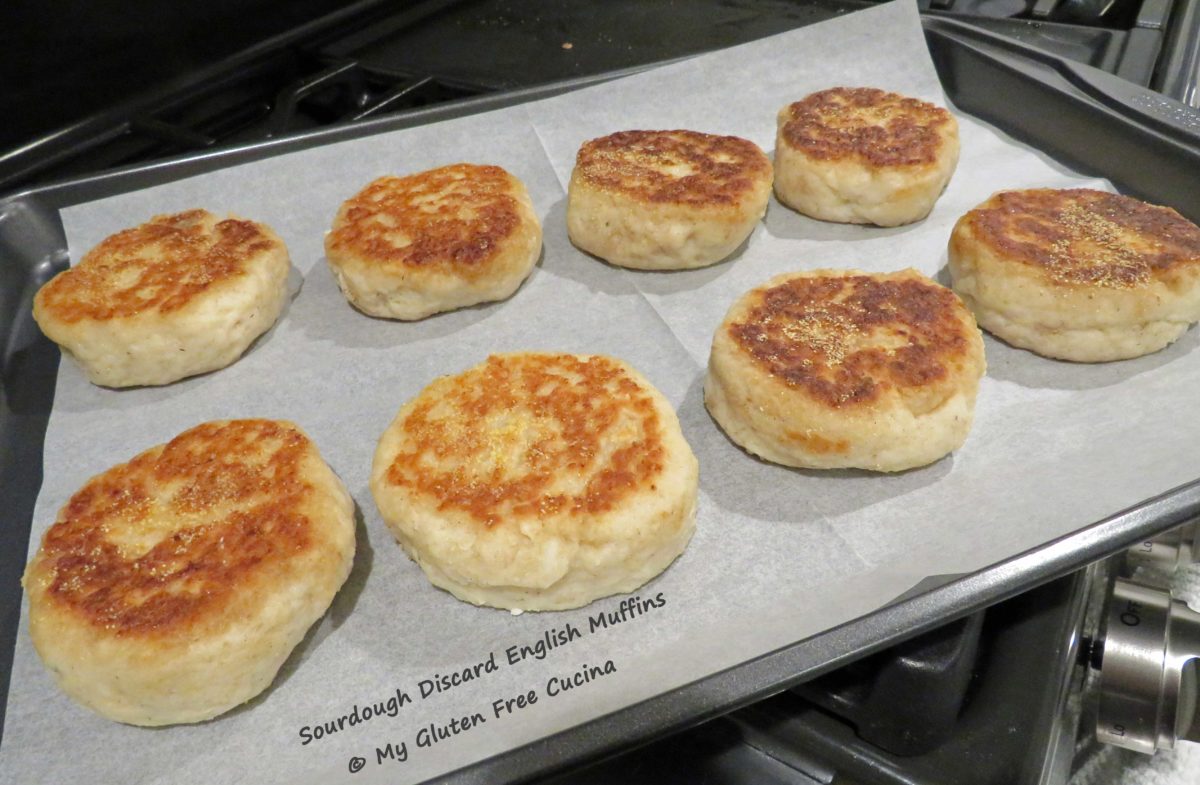
It’s all part of baking with sourdough, but that doesn’t mean your excess starter needs to be thrown in the trash.  I mean just look at those English Muffins!  I knew when I made this batch that Sophie and I were going to have some incredible BREAD adventures this year.

In some cases, recipes made with discard like this one are actually “sourdough enhanced”, meaning that they use the sourdough discard along with traditional leavening ingredients such as commercial yeast and/or baking powder.  When I first made these English Muffins, Sophie was about a week old.  Not mature enough to raise a loaf of bread by herself yet, but ready to enhance the flavor!  If you love bread like I do this recipe will make you very happy!

This post contains affiliate links.

Ingredients:

  • 75 g. (1/3 cup) milk (I used 2%) *See notes
  • 275 g. (1-1/8 cups) water
  • 15 g. (3 tbsp.) whole psyllium husk
  • 2 tsp. sugar
  • 2 tbsp. canola oil
  • 2-1/4 tsp. instant yeast
  • 140 g. (1/2 cup) gluten free sourdough discard
  • 240 g. (2 cups) gluten free flour (I used Better Batter Original Blend)
  • 2 tsp. baking powder
  • 1 tsp. salt
  • 1 tbsp. butter for the griddle
  • cooking spray
  • cornmeal for sprinkling

Shop Better Batter and use my Code MGFC30 for 30% off full price items!

Preparation:

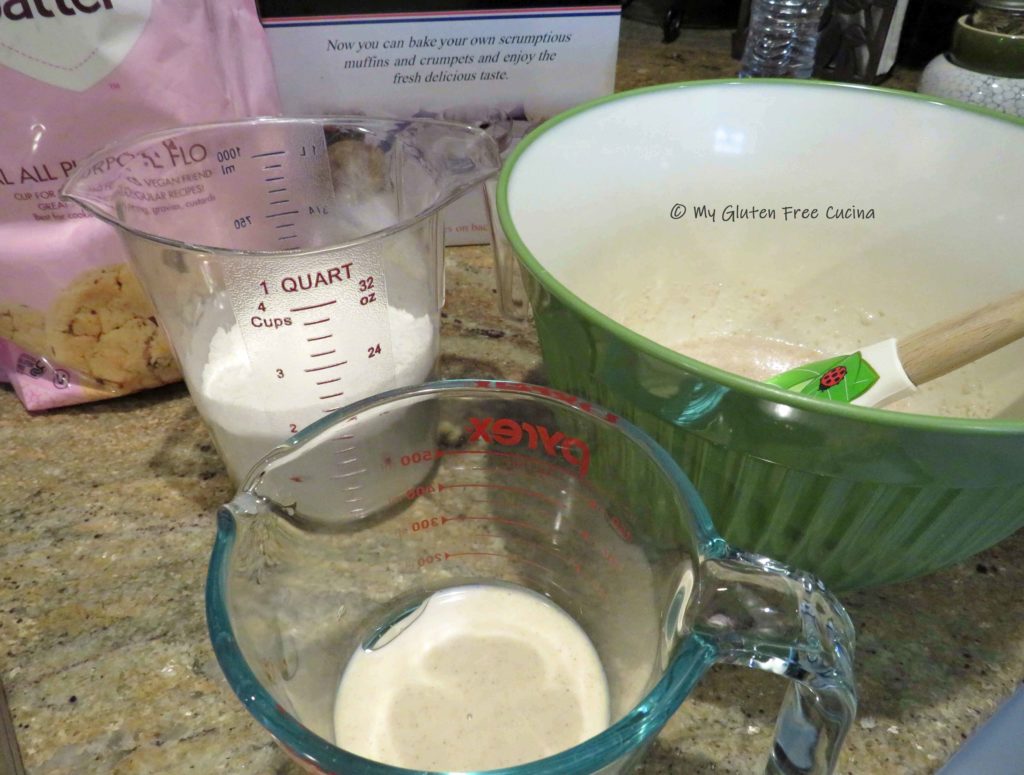
Combine the milk and water together and microwave 30 seconds.  Whisk in the whole psyllium husk, yeast, sugar and canola oil.

In a separate bowl, whisk together the flour, baking powder and salt.

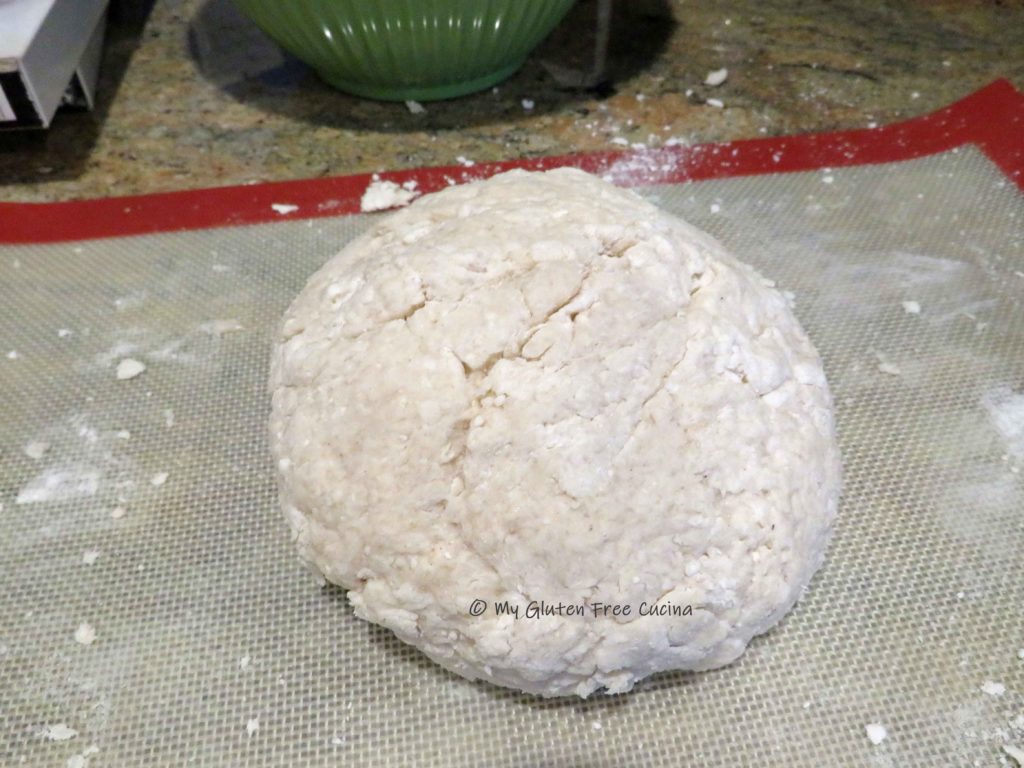
Use a dough whisk to combine the wet and dry ingredients with the sourdough discard.  Turn it out onto a floured work surface and knead a few times to form a cohesive dough.

Shape into a ball, wrap in plastic wrap and let it rest for 1 hour at room temperature.

Preheat the oven to 350º and heat a seasoned griddle on medium.

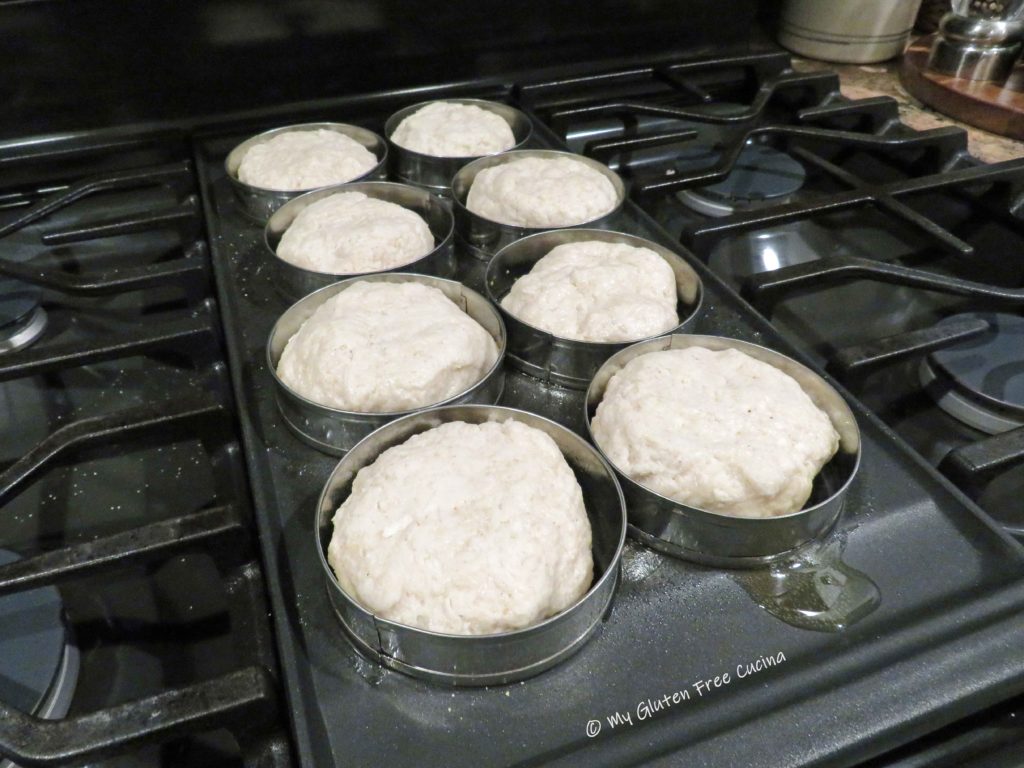
Butter the griddle and coat 8 muffin rings with cooking spray.  Arrange the muffin rings on the griddle and sprinkle cornmeal inside each.

(Note-muffin rings are optional, the muffins will hold together without them.)

Divide the dough into 8 equal pieces, about 95g. each.  Rub a little oil into your hands, then roll each piece of dough into a ball and flatten slightly with your palm.

Place one piece of dough into each muffin ring and sprinkle more cornmeal on top.

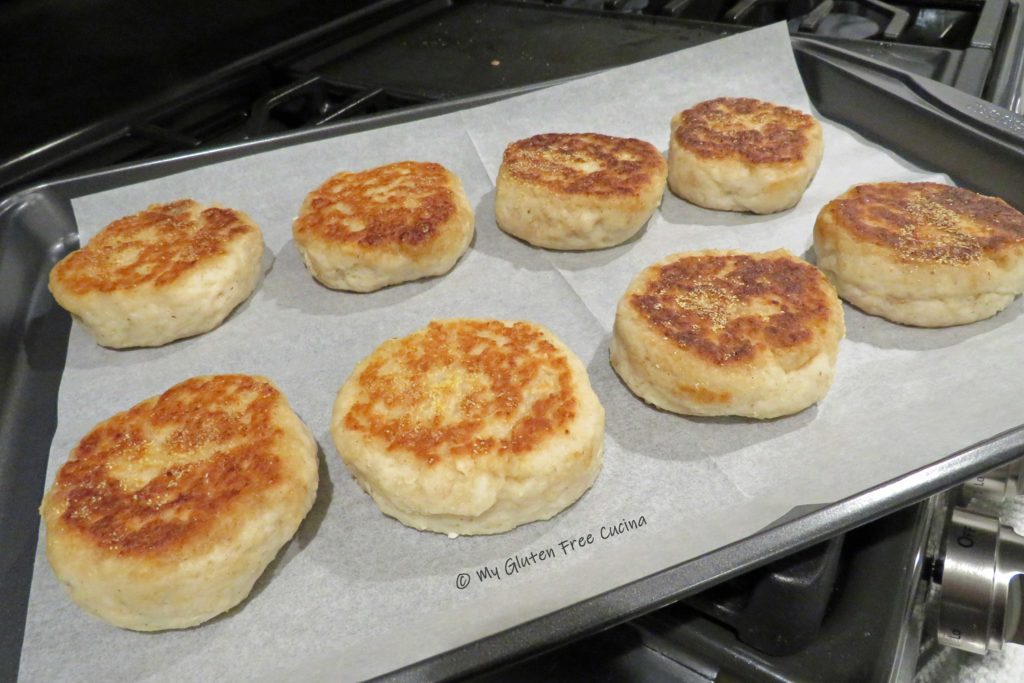
Cook on the first side for 5 minutes, then use tongs and a spatula to turn them over.  Carefully remove the rings with tongs and cook 5 minutes longer.

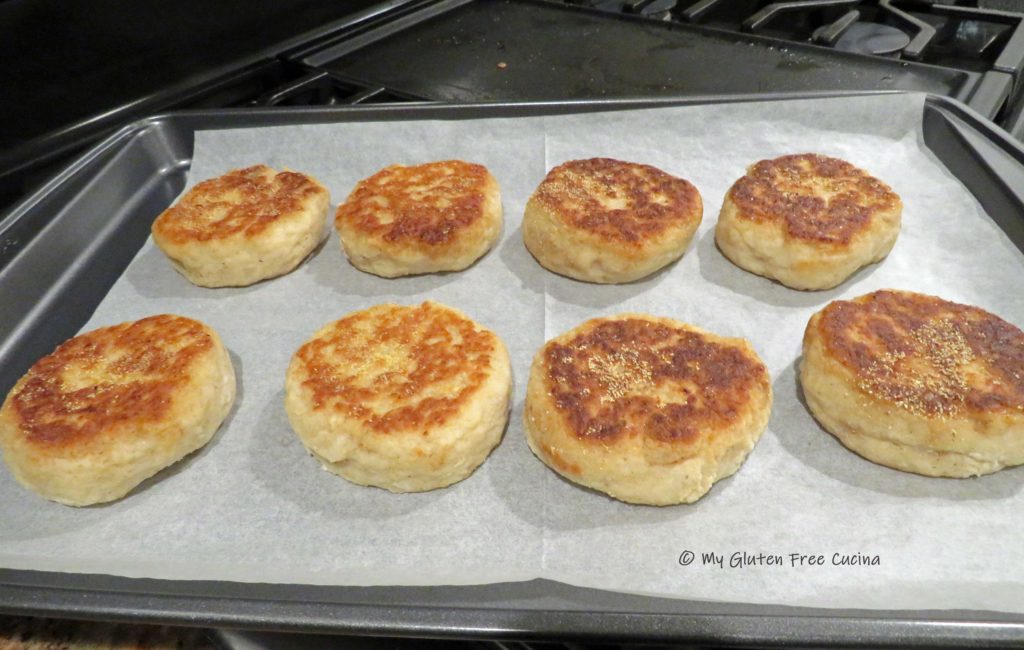
Transfer the muffins to a parchment lined baking sheet, and place in the oven for 10 minutes longer or until the internal temperature reaches 210º (check with a thermometer).

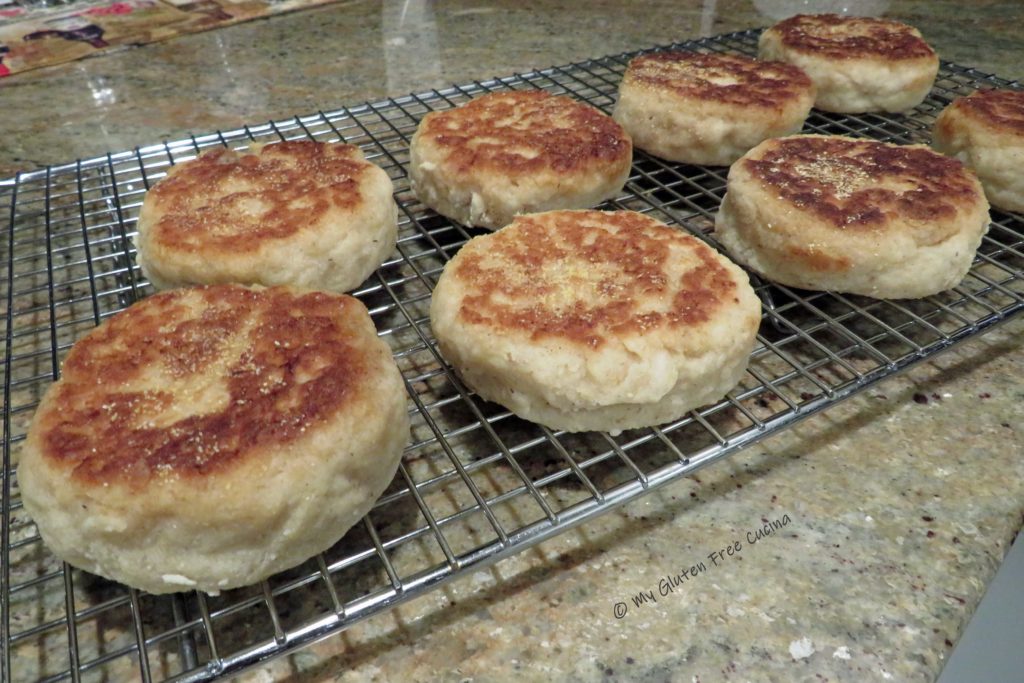
Cool several hours on a rack before toasting.  Wrap leftovers individually and place in freezer safe bags.

Notes

♪ Depending on time of year, temperature, humidity etc. you may need to add a little more liquid to the dough.  If it feels very dry you can add another 1/4 cup of milk.

I used and highly recommend Better Batter Original Flour Blend in this recipe (use the link for 30% off full price).  Remember, every gluten free flour blend is different, so if you use another brand you may need to adjust the flour to liquid ratio.

Print This Post Print This Post